Happy New Year RCCA Community! | | |
Three trends community college leaders should keep on the radar in 2026
If you are leading a community college right now, you have probably noticed something. The ground is moving under our feet, but not always in predictable ways. Here are three trends I believe higher education leaders, especially rural leaders, should have firmly on their radar this year, along with a few practical ways to go deeper.
1) GenAI is moving from a “tool” to “infrastructure” (and it's forcing assessment and policy decisions)
The AI conversation in higher ed has shifted. This is no longer just about whether students use AI or whether faculty like it. The real leadership challenge is governance. What are the rules, how do we teach with it, how do we protect privacy, and how do we design assessments that measure learning in an AI-saturated world?
EDUCAUSE’s 2025 AI Landscape Study emphasizes the need for institutional strategy, policy, and leadership alignment, especially given uneven capacity across institutions. The 2025 EDUCAUSE Horizon Report also frames AI as a major driver reshaping teaching and learning practices and the decisions institutions will need to make about instructional design and academic integrity.
Ways to dive deeper (and act):
-
Review EDUCAUSE’s AI Landscape Study and Horizon Report with your cabinet, then identify 2–3 “must-answer” policy questions (e.g., approved use cases, data and privacy guardrails, and faculty training expectations).
-
Start small but concrete by piloting a handful of AI-resilient assessment approaches (e.g., oral defenses, in-class application tasks, annotated reasoning). EDUCAUSE’s GenAI action planning resources are a useful roadmap.
2) Enrollment is rising in places, but demographics are still tightening (so planning needs to be more regional and more flexible)
Nationally, postsecondary enrollment has shown improvement, and community colleges have been a major driver of that rebound. In spring 2025, community colleges saw the largest undergraduate gains among sectors (+5.4%). At the same time, leaders are staring down the “demographic cliff” era, where the number of traditional-age students declines after the peak high school graduating cohorts. What matters most for strategy is that this is not a uniform national problem. It is highly regional, and rural areas can be hit harder depending on migration patterns and local labor market dynamics.
Ways to dive deeper (and act):
-
Pull your own last 5–10 years of enrollment by age, modality, and program type, and compare it to regional demographic projections (the “cliff” shows up differently by county and region).
- Treat adult learners as a core growth strategy, not a side project. Build schedules, advising, and short-format pathways that match working lives (because many students are coming back for economic reasons).
3) Workforce education is expanding fast, especially short-term and noncredit, but quality, data, and finance models are lagging
Students and employers want faster, job-aligned training. We are seeing growth in short-term credentials and increased attention to noncredit workforce programs. But there is a big leadership challenge hiding in the good news. Noncredit workforce education often lacks consistent national data, consistent student supports, and consistent quality/ROI transparency. Lumina’s 2025 brief flags that the noncredit workforce landscape is shifting rapidly, while also pointing out that national reporting and clarity about outcomes still lag.
Ways to dive deeper (and act):
- Inventory your short-term and noncredit offerings and ask three blunt questions: Who enrolls? What do they earn after? And what supports do they need to complete? (If you can’t answer those, that’s the project)
- Use a “stackability” lens: ensure short-term programs map cleanly into credit pathways where appropriate, and build employer feedback loops that actually change curriculum. National conversations on community colleges as workforce engines are increasingly focused on speed, alignment, and adaptability.
Closing thought
None of these trends is abstract for rural colleges. AI, demographics, and workforce training are all showing up as daily operational decisions, staff time, program design, student supports, and how we tell our story to policymakers and funders. RCCA will keep tracking these issues and lifting up rural examples that show what’s working (and what needs fixing).
If you are seeing something on your campus that fits one of these trends, good, bad, or “we didn’t expect that,” send it my way. Those real rural stories help all of us lead better.
| |
From the RCCA Board: Kicking Off the Year
and Our Federal Priorities
| | |
As we head into the new year, I want to use this month’s Board Column to share a brief update on who we are as an organization and where we are focusing our advocacy efforts on behalf of rural community colleges.
Rather than highlighting a single board voice, this January column reflects the collective perspective of RCCA’s board: leaders and advocates grounded in rural communities and deeply committed to expanding opportunity for rural students.
| |
|
Justina Wilhelm • Lynn Tincher Ladner • Ron Slinger • Ryan Carstens • Kyle Dalpe • Ryan Macall • Ryan Ruda • Leah Barrett • Susie Snelick • Lana Reynolds • Carrie Warick Smith • Jon Bauer • Jonathan Lord • Chris Parker • John Rainone
Together, this group brings experience across institutional leadership, workforce development, policy, philanthropy, and rural economic development. What unites us is a shared belief that rural community colleges are essential engines of opportunity, and that federal policy must better reflect rural realities.
| | | | |
Our Legislative Focus in the 119th Congress
RCCA’s legislative agenda emphasizes practical, high-impact priorities that directly affect rural students and the institutions that serve them. Several of our top issues include:
| | |
Strengthening and Modernizing Pell Grants
We continue to advocate for sustainable growth in Pell funding, expanded eligibility for high-quality short-term workforce programs, and reforms to how Pell interacts with tax and public-benefit systems. While Pell remains a cornerstone of college affordability, its purchasing power has eroded over time. Short-term Pell eligibility has yet to be enacted, and unintended benefit cliffs continue to affect many low-income community college students, particularly those balancing education with work and family responsibilities.
| |  | |
Investing in Rural Workforce Development
Rural economies depend on strong, locally rooted talent pipelines. RCCA supports increased investment in adult education, career and technical education, and programs such as the Strengthening Community College Training Grants, which help colleges respond quickly to regional workforce needs.
| | | |
Infrastructure and Broadband Access
Reliable broadband and modern facilities are no longer optional. They are essential for student success, instructional delivery, and employer partnerships, especially in rural areas where connectivity gaps remain a persistent barrier.
| | | |
Farm Bill Priorities That Include Community Colleges
RCCA advocates for the explicit inclusion of community colleges in agriculture and natural resource education funding, as well as improved access to supports such as SNAP for eligible students, particularly those enrolled in workforce and technical programs.
| | | |
Student Success and Basic Needs Supports
From TRIO and GEAR UP to child care assistance through CCAMPIS, RCCA supports programs that recognize the full reality of today’s rural community college students, many of whom are working adults, parents, or first-generation learners.
| | | Join Us at Rural on the Rocks | | |
If you are in Washington, D.C., for ACCT’s National Legislative Summit, we hope you will join us for Rural on the Rocks, RCCA’s informal networking event for rural college leaders and partners.
- Date: Monday, February 9, 2026
- Time: 4:30–5:30 p.m. EST
-
Location: Marriott Marquis conference hotel (room and location to be announced)
Rural on the Rocks is an opportunity to connect with peers, share what is happening on your campus, and help ensure rural community colleges remain visible and influential in national policy conversations.
We look forward to seeing many of you there and to sharing more board voices in future issues as our monthly Board Column series begins in February.
More details coming soon!
Christopher Breitmeyer
President, Rural Community College Alliance (RCCA)
| |
College Spotlight:
North Central Missouri College
| | NCMC to a Degree: Building Pathways to Student Success Through NCMC’s SAIL Program | | |
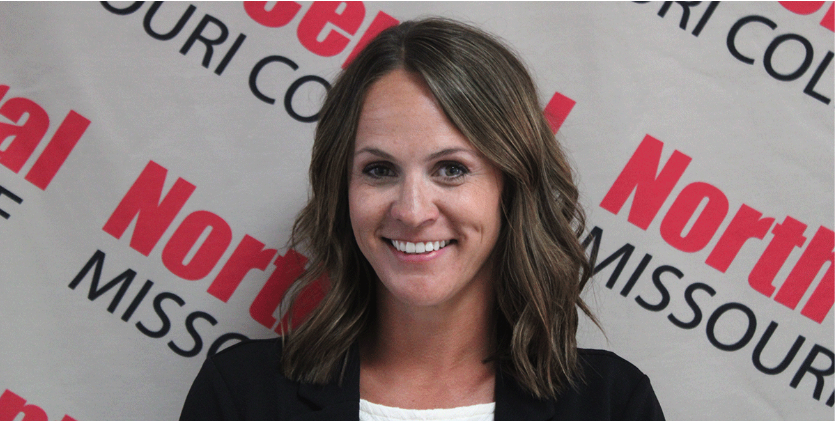
North Central Missouri College is proud to spotlight its SAIL (Students Accessing Individualized Learning) program, a two-year inclusive pathway that supports students with neurodevelopmental disabilities as they work toward certificates, degrees, real-world skills, and greater independence. Based at NCMC’s Trenton campus, SAIL students take classes alongside peers, participate in job shadowing and coaching, build employability skills, and fully engage with campus life in a supportive environment. Families and students alike praise the opportunity to build confidence and prepare for meaningful careers through this tailored experience.
Curious how SAIL is opening doors for students and shaping futures?
Read the full spotlight here.
| | |
Help Your Students Lead in Their Hometowns
Learn how Civics Unplugged partners with colleges to grow student civic leaders.
Our next RCCA Alliance Learning Series webinar is coming up, and this session focuses on something at the heart of rural community colleges. Helping students see their hometowns as places where they can lead, contribute, and build meaningful futures.
Join us on Wednesday, January 21, for Cultivating Place-Based Civic Leadership Among Students with Zoë Jenkins, Director of Civic Trust and Recruitment at Civics Unplugged.
Civics Unplugged prepares young leaders to build the future they want to live in by training them in the principles of civic innovation. The organization provides education, support, and an intergenerational community to help young people find their civic agency, strengthen mental well-being, and develop solutions to the challenges they care about most. Since its founding, Civics Unplugged has supported more than 6,000 young leaders and sparked hundreds of youth-led projects that have reached over 10 million people.
In this webinar, we will explore
- How Civic Unplugged’s civic innovation curriculum can align with your academic programs and community role
- Ways to support student flourishing and combat “brain drain” in rural regions
- Real examples of young people driving change in their hometowns
- What a partnership between Civics Unplugged and rural community colleges can look like
We hope you will join us and bring your questions, ideas, and experiences to the conversation.
| |
|
What does rural-responsive mentorship look like?
Insights from Students, Practitioners, and College Leaders
Our team at CCRI has released Data Note 3 in the Rural Learner Success series, which draws on interviews with students and mentors at rural-serving community colleges across the country, as well as conversations and reflections shared by community college leaders at the RCCA Conference around rural mentorship.
The data note offers an adaptive, rural-responsive mentorship model that highlights how trust, care, belonging, and resource connection take shape through relationships, place, and community. We invite RCCA members, practitioners, and leaders at rural-serving community colleges to explore how these insights resonate within their rural contexts and to join us in ongoing reflection that can continue to inform and strengthen our understanding of rural-responsive mentorship to better support rural student success.
Read the full Data Note 3 here.
| | | | Resources and Opportunities | | |
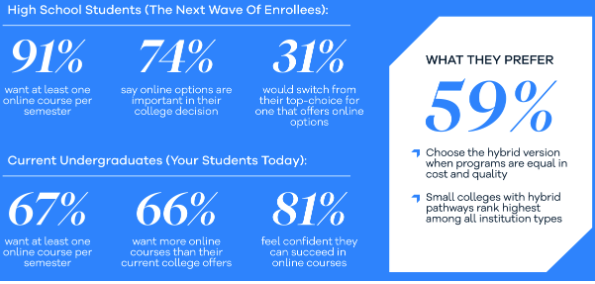
Enrollment decisions are increasingly influenced by learning flexibility.
Our new report, The Hybrid College Wins, highlights the following:
-
74 percent of high school students say online options influence where they apply
-
31 percent would change their first-choice college to access hybrid learning
-
Nearly 60 percent rank small colleges with hybrid programs as their top preference
| | These findings highlight both the opportunity for institutions that align with student expectations and the risk for those that do not. | | |
Update from the Community College Health Study and New Program Opportunity for Your Campus
We are pleased to share a brief update from The Community College Health Study, a large, NIH-funded research project conducted by researchers at iRT and focused on promoting college students’ sexual and relationship health and preventing sexual assault.
Across 34 community college campuses nationwide, more than 1,500 students and 50 faculty and administrators participated in this multi-year effort. As part of the study, researchers evaluated Media Aware, a new online sexual assault prevention and sexual health promotion program that uniquely addresses the influence of media on students’ attitudes and behaviors.
Key Findings
-
Many students are not receiving adequate sexual and relationship health education. Only 15 percent of students ages 18 to 19 reported receiving comprehensive sex education since beginning high school.
- Media Aware significantly improved students’ media literacy and sexual health beliefs.
- Students responded positively to the program:
-
More than 85 percent found the program interesting and engaging
-
96 percent agreed it is a good resource for young adults to learn about sexual health
You can review the full list of publications and access free copies of the research articles here.
About Media Aware
Media Aware is an evidence-based, online program designed to provide medically accurate sexual health information and behavioral skills to help prevent sexual assault, STIs, and unplanned pregnancy. The program:
-
Meets relevant educational requirements of the Campus SaVE Act and Clery Act
- Encourages students to think critically about portrayals of sex and relationships in media
- Is fully online, asynchronous, and self-paced, ideal for community college student schedules
- Is easy to administer, with options to enroll large groups of students and track participation
Program Availability
Media Aware is now available for purchase. To request more information or enroll in a free demo, please email CCHStudy@irtinc.us
Explore the program or purchase access for your students here.
| | |
Important Dates From ACCT
| | Follow the RCCA Facebook Page | | | | |