In January 2020, Hawai‘i’s executive and legislative branches came together around a package of initiatives aimed at lowering the cost of living and supporting low-income and working families.
Then the COVID-19 pandemic changed everything.
As state leaders turned their attention to an unprecedented public health and economic crisis, much of the momentum behind that package was disrupted. Yet two important education initiatives survived and became law: Act 46, which aims to expand access to prekindergarten for all 3- and 4-year-olds, and Act 72, which created a dedicated state agency focused on the development, planning, and construction of public school facilities.
On Sept. 15, 2020, Gov. David Ige signed Senate Bill 3103, which became Act 72 and established what is now the Hawai‘i School Facilities Authority (SFA).
The vision behind the new agency was straightforward but ambitious: create an organization with the flexibility and focus to approach school facilities differently — finding more innovative, efficient, and cost-effective ways to plan and deliver the educational spaces Hawai‘i’s students and educators need.
While the agency was established in 2020, its work began taking shape in earnest in 2022, when a governor-appointed executive director was named, and SFA began receiving legislative direction and appropriations.
In just four years, SFA has made significant progress carrying out the responsibilities entrusted to it.
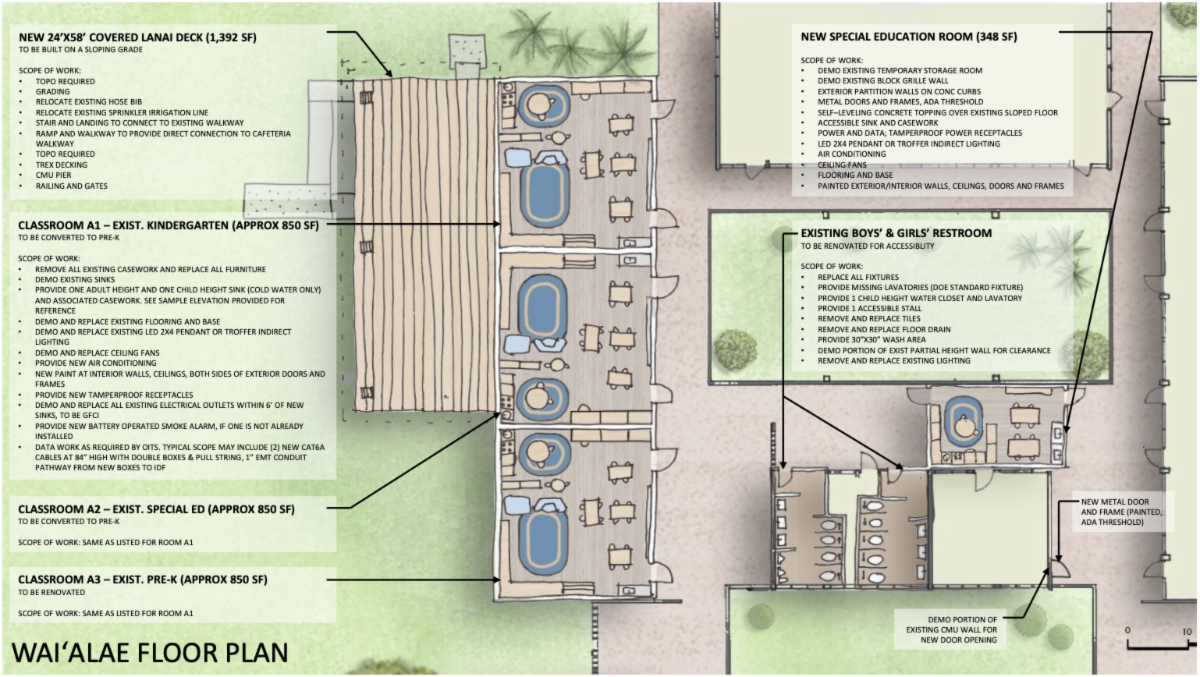
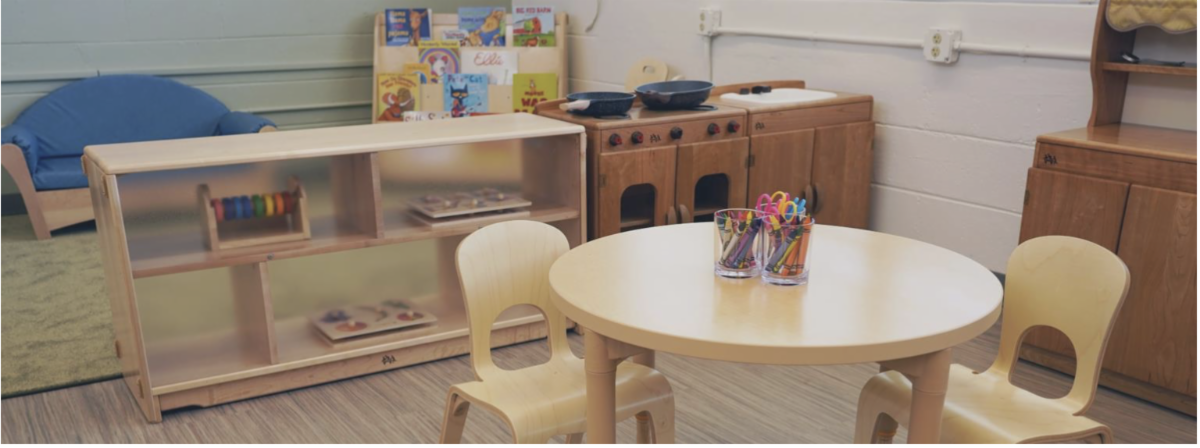
One of the clearest examples is the expansion of public pre-K. In just three years, SFA has added 1,620 new pre-K seats — the equivalent of 81 classrooms. By the end of 2027, we anticipate expanding that total to 2,560 seats, or 128 classrooms.
SFA is also advancing teacher workforce housing. At Mililani High School, our Kūmelewai Hale Teacher Workforce Housing project has reached important predevelopment milestones, including completion of a Final Environmental Assessment and a Finding of No Significant Impact.
Our work on new school facilities has also moved from planning into design. Through a series of focus groups with educators and staff, the project team has gained a deeper understanding of instructional practices, administrative needs, specialized student supports, and the infrastructure needed to accommodate multiple teaching modalities. Those insights are now helping shape campus layouts, building systems, and architectural character so that new facilities reflect both community priorities and the day-to-day needs of students, teachers, and administrators.
Most recently, during the 2026 Legislative Session, Act 123 directed SFA to plan, design, and build the new King Kamehameha III School, replacing the school lost in the Maui wildfires.
We see that responsibility as both an enormous privilege and a vote of confidence in SFA’s ability to deliver. King Kamehameha III School is deeply important to the Lahaina community, and we understand the significance of helping create a permanent school that will serve its students and families for generations.
Six years after Act 72 was signed into law — and four years after SFA began its work in earnest — the promise behind the legislation is becoming tangible. Pre-K classrooms are opening. Teacher housing is moving forward. New schools are taking shape.
SFA Making a Difference
Building Schools Differently Requires Policy Changes
The main objective for building school facilities is to ensure students have access to modern, updated settings that facilitate learning and development. This takes a lot of money. According to the Education Commission of the States, school construction is the nation’s second-largest capital investment for state and local governments, just behind road construction.
Across the nation, state governments provide financial support for school construction through direct appropriations and financing support. Securing adequate funding for school infrastructure is crucial but becomes challenging when state budgets are tight. New classrooms, renovations and workforce housing fall off priority lists. Without the necessary funding, construction plans are curtailed or delayed. Even with a dedicated entity like the SFA, without sufficient funding, the state is not able to provide safe, modern learning settings for students to flourish. Policy changes are required to ensure our keiki have access to modernized learning environments, now and into the future. Forward-thinking legislators have championed policy changes. The legislature has introduced other bills resulting in Act 217 in 2021 and Act 172 in 2023 to expand SFA’s powers to include staff housing, and changed the name of our organization from the School Facilities Agency to the School Facilities Authority. But more must be done for Hawai‘i to see the same positive outcomes as other states.
Other States Set the Pace
In other states, school districts maintain their autonomy, while the state government provides significant financial support. In Hawai‘i, we currently have one, statewide school district.
The Education Commission of the States provides an overview of how other states finance their schools. Did you know…
90% of states (45 states and the District of Columbia) offer financial assistance to school districts for school construction costs.
28 states provide both appropriations and financing options, while 10 states solely offer appropriations, and seven states along with the District of Columbia provide financing options.
At least 19 states have established dedicated revenue sources for school construction funding. This includes sales and use taxes, excise taxes, lottery revenue, and proceeds from the sale and use of state lands.
38 states provide aid to school districts for upfront planning or construction costs through appropriations.
28 states prioritize or provide more funding for projects for school districts with lower levels of property wealth.
35 states and the District of Columbia employ various financing mechanisms, such as bond issuance, to fund school construction costs.
How Do Other States Build Schools?
Dedicated Funding Sources
Massachusettsoften ranks at the top for its quality public education. The state also audits school facility conditions statewide and dedicates portion of the state sales tax to fund sustainable, modernized school construction, bypassing legislative cycles.
Equitable Access
Maryland is a pioneer in state-level facility oversight. It uses rigorous data collection to distribute funding equitably, ensuring that lower-income school districts receive disproportionately higher state cost-shares to offset disparities caused local property-wealth gap.
Wyomingruns uniform facility condition assessments across the state, evaluates educational functionality, and pays 100 percent of the cost for prioritized, critical projects so that a district’s wealth does not dictate the safety of its schools.
Built-in Enforcement Measures
West Virginiaevaluates and ranks proposed local projects using strict, transparent criteria. To receive state funds, local districts must prove they have an active, regularly scheduled preventative maintenance plan and that their facilities meet stringent health, safety, and regional planning standards.
Washington State operates an asset preservation program, requiring any local district that receives state construction assistance to continually evaluate and report on their building conditions, ensuring that state-funded infrastructure is actively protected from long-term decay.
Hawaiʻi School Facilities Authority | 2759 S. King Street | Honolulu, HI 96826 US