|
As autumn gives way to winter, the Chesapeake Bay begins to welcome a different kind of visitor. While recreational boating slows, thousands of migratory waterfowl make their annual journeys southward – finding refuge along the region's shorelines.
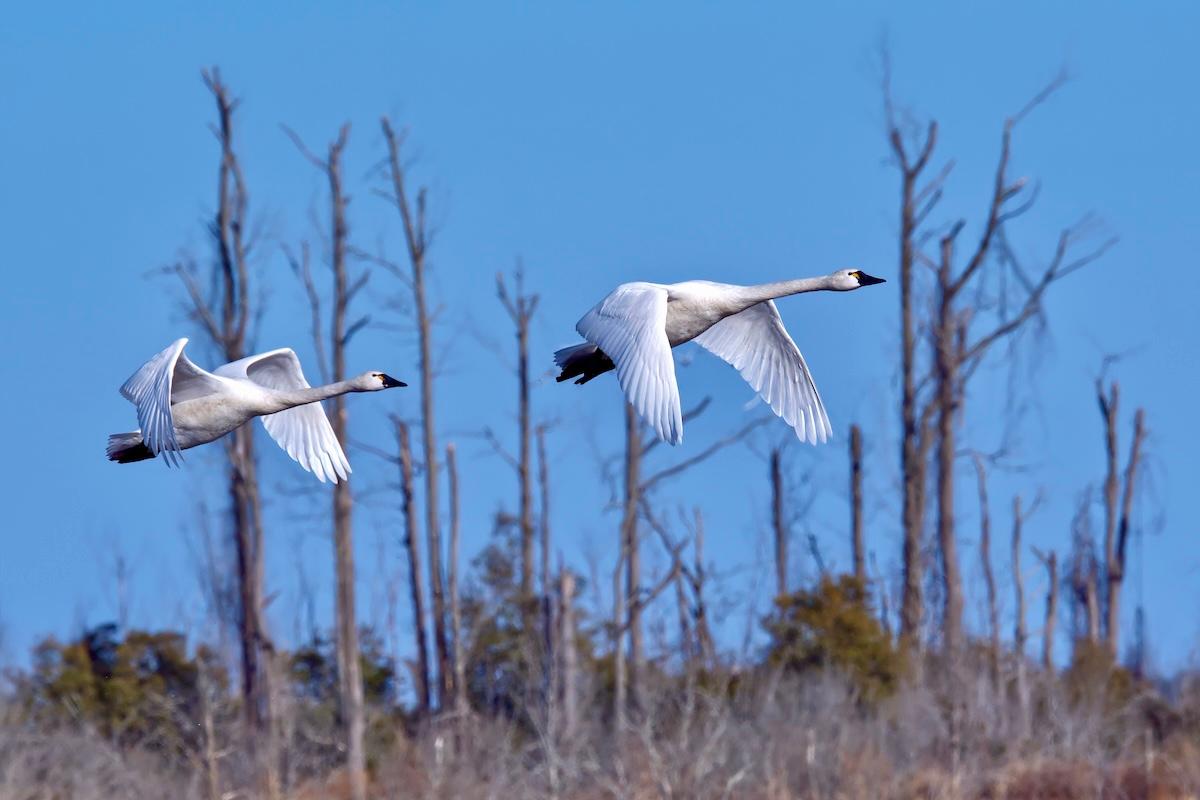
Among the most recognizable of these seasonal arrivals is the tundra swan, whose striking white plumage and distinctive calls have become familiar sights and sounds of winter on much of Maryland's Eastern Shore.
Just south of Rock Hall, Eastern Neck National Wildlife Refuge provides an important winter sanctuary for these birds. The 2,285-acre refuge sits at the mouth of the Chester River, where its tidal marshes, wooded areas, grasslands and shallow waters offer feeding and resting habitats for migrating wildlife.
According to the U.S. Fish and Wildlife Service, tundra swans typically begin arriving in mid- to late November – sometimes earlier – with waterfowl populations continuing to build into December.
Visitors to Eastern Neck can observe these birds feeding in the refuge's waterways or gathering in large groups along its shoreline. Bald eagles are another frequent sight, particularly as they begin establishing territories and preparing for their winter nesting season.
For nature enthusiasts, the coming months offer some of the year's best opportunities for birdwatching. And Eastern Neck features seven trails and boardwalks for visitors to take in expansive views of the surrounding wetlands and waterways. Binoculars and a little patience are recommended, as wildlife sightings vary throughout the coming months.
Off-season is a wonderful time to visit Rock Hall and the quieter side of the Chesapeake. Make a weekend of your wildlife excursion with a stay at our Inn at Haven Harbour. Enjoy waterfront accommodations, complimentary continental breakfast and convenient access to Eastern Neck and the many natural attractions Kent County has to offer.
|