Marjorie Hass l Vol. 3, Issue 3

I am pleased to welcome many new subscribers. If you enjoy this newsletter, please share subscription information with friends and colleagues.

Leading Well

How resilient is your institution? How resilient are your students? How resilient are you? Resilience isn’t strength or dominance. It’s the ability to regroup and get back on track after a stressful impact.


Resilience is fundamentally a property of a system, such as the human body, a social network, or a business. It measures a system’s ability to recover from impingement or injury. A resilient system adjusts to new impediments in ways that allow it to maintain its integrity and its capacity to thrive. I’ve been influenced by the model of resilience described by Eric H. Cline in his book, After 1177 B.C.: The Survival of Civilizations (Princeton University Press, 2024). He identifies three traits that support resiliency: complexity, flexibility, and systemic redundancy.


Think of the student trying to get to an early morning class on time. The more she is enmeshed within a complex system of relationships—with a roommate, a pet that needs walking, a friend who expects to meet her in the cafeteria for coffee—the more likely she is to still make it to class on the rare day that she forgets to set an alarm. There are many potential “wake-up” nodes and ways she might be roused in time. Along with relational complexity, her flexibility also matters. If she is obsessively tied to a specific wake-up-and-get-ready routine, then she isn’t going to be able to adjust to a delayed wake-up. And redundancy is key as well—the snooze button is basically redundancy insurance.


At the institutional level, these same factors make a difference in resiliency. Complexity might be measured by diversity of revenue streams or multiplicity of academic options for students. Complex systems will have various ways to cope and adjust when an individual node experiences trauma. Flexibility can be found in such things as a curriculum and a faculty able to adjust to emerging student interests. Redundancy can feel wasteful when times are good. Do we really need so much cross-training and coordination across silos? But it’s essential when part of the system becomes inoperable.


If you want the systems of which you are a part to become more resilient, you might focus on expanding their complexity, flexibility, and redundancy. If you want to help individuals become more resilient, help them consider where they might enhance the complexity of their relationships, the flexibility of their thinking, and the redundancy they build into the processes that get them back on track after a disruption.


Questions for reflection: How resilient is my institution? My students? My team? Myself? What are the resiliency strengths that I see? Where might resiliency be enhanced? Are there other factors besides complexity, flexibility, and redundancy that support resiliency?

Happening at CIC

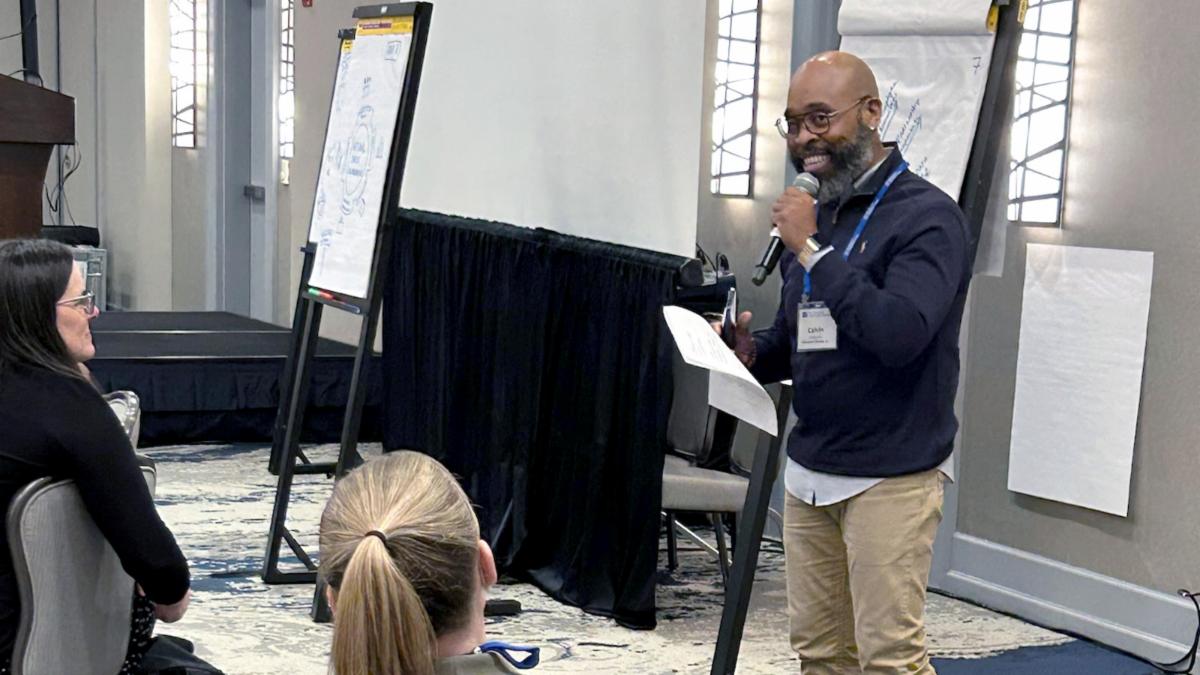
The CIC Alliance for Strategic Innovation held a three-day design workshop to develop a model for a national Center for Careers and the Liberal Arts. A lively and hard-working group of subject matter experts and practitioners gathered in Chicago for this hands-on experience. We’ll be taking the results into the next stage of planning. Stay tuned.


I had the pleasure of moderating the Presidential Panel at the spring conference of CUPRAP, a professional community dedicated to advancing higher education marketing and communications. It was a special honor to receive the Ciervo Award, named for CUPRAP founder and first president Arthur V. Ciervo, in recognition of my work supporting and advancing the understanding of higher education.


I also joined Laurie Patton, Grant Cornwell, and Sarah Igo for the webinar Faculty Leading for Pluralism, moderated by Eboo Patel. We examined how faculty can advance pluralism across campus—beyond the classroom—through broader institutional influence. The webinar clarified the role of faculty leadership in shifting campus culture toward pluralism and helped participants identify and pursue their own opportunities to promote pluralism in their communities.


Just this week, I spoke at the P3.edu Summit on Mergers, Affiliations, and Partnerships where I highlighted the creative collaborations taking place among CIC institutions and our Partnerships and Mergers project. I was delighted to see many of our member presidents in attendance.

A Spark of Inspiration

My workday ended yesterday as it often does. I joined my husband, Larry, for a glass of wine and a front-row view of the sunset. As we talked over the day, Larry grew reflective and said, “One of the most salient memories I have of falling in love with philosophy is the first time I read Plato’s Apology.” He said it slowly as he searched for just the right words. The content of his sentence interested me. What was it about that book that created such a strong and lasting impression? Spoiler alert: it was Plato’s ethics of knowledge.


In the moment, it wasn’t only the content of the sentence that struck me. I had a sudden and visceral reaction to its style. It was so deeply human. It was utterly surprising to me. I’ve known this man for almost forty years and yet as he spoke, I could not in any way predict what the next word would be. Read the sentence one word at a time and think about all the multiple directions it could have gone. Most salient what? What memory? With what or whom did he fall in love? And so forth. In addition to its novelty, Larry’s telling me this was also a relational gambit. He was sharing an internal revelation and one that mattered to him. It was a sentence about Plato and about memory but also about the specific quality of his attachment to philosophy and even about the way he had fallen in love with me.


Hearing him speak sparked in me a range of associations to our individual and shared lives. I could picture him in college discovering Plato. I could imagine why the contents of that particular dialogue were so fascinating to him at that point in his life. I could visualize him conveying his passion to generations of students. And on top of that, his sentence was relevant to the conversation we were having but only in a complicated and associative manner. To an outsider it would have seemed like a complete non-sequitur.


The best conversations are the ones that deepen a connection and spark insight. They are filled with the traits I have just mentioned: originality, relational resonance, and embodied relevance. When I am in the midst of such a conversation, I feel a sense of bliss, even if the content is difficult or upsetting.


I am moved to describe this kind of talking together because its preciousness seems striking at the dawn of AI language use. AI is built on predicting the future from the past. After input of billions of sentences and paragraphs human beings have strung together in print, a mechanical large language model (LLM) is able to write something informative and relevant by predicting what words go together in a given context. The sentences produced might be new in one sense, but they are deeply conditioned by past patterns and a prediction algorithm that prizes sameness and echoes. The sentences are not relationally resonant even when they spark an emotion in us. AI language production doesn’t include the odd timing cues, hesitations, and ellipses that unconsciously pepper our speech and reveal the emotional tenor of what we are saying as we say it. LLMs produce sentences that are relevant in an explicit semantic or syntactic sense. But they do not draw on unconscious associations or shared embodied meanings.


Experimenting with AI conversation is fun. But I much prefer the bliss of mind-to-mind connection through language and shared experience. Noticing the difference helps me appreciate the uniquely human even more. As we contemplate what we want to preserve in the era ahead, the conditions that make this kind of conversation possible are at the top of my list.

What I’m Reading

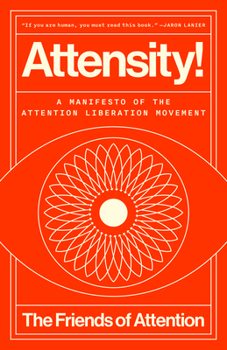
Attensity: A Manifesto of the Attention Liberation Movement

by The Friends of Attention


An urgent call to reclaim our attention from the attention economy. The collective authors (seasoned academics) draw on deep philosophical, psychological, and political theories but express them clearly and dynamically. A call to action for all those who care about our capacity to take in the world and respond to it in distinctively human ways. Join the movement! If I were teaching a freshman seminar in the fall, this would be my opening text.

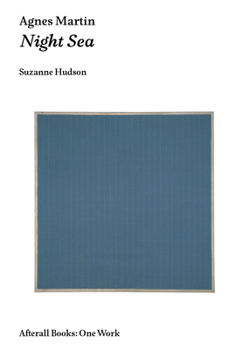
Agnes Martin: Night Sea

by Suzanne P. Hudson


A marvelous example of what deep attention can yield. This book—about one of my favorite paintings—is part of a series called One Work. In each volume, a theorist takes on a single work of art, providing in-depth description, interpretation, and historical context. To know a painting this deeply is to fall in love with it. I am eager to read other volumes.

Sobre Dios: Pensar Con Simone Weil

by Byung-Chul Han


This new book, originally in German, doesn’t yet have an English translation. I am making do with the Kindle Spanish edition so I can get a translation of every third word or so. Why the impatient effort to read in a language I barely know? Because Han on Weil is an event! For Weil, deep attention is love which is also G-d. For Han, she provides a third way between the impersonal attention of meditation and the grasping attention of so much of our daily lives.

Subscribe to Newsletter


Was this email forwarded to you? Sign up here to receive this newsletter directly.

LinkedIn