Marjorie Hass l Vol. 3, Issue 4

I am pleased to welcome many new subscribers. If you enjoy this newsletter, please share subscription information with friends and colleagues.

Leading Well

It’s fascinating to me that our campuses have retained the tradition of the presidential inauguration. The ceremony, which typically includes a charge from the board, well wishes from various constituencies, a solemn pledge from the new president, and a formal presidential address to the community, borrows from ancient rituals both religious and monarchical. It might seem that for many institutions, the presidential inauguration would be swept away as out of date. And yet, the ceremonies and their significance continue.


I think fidelity to inaugural events is a signal that the campus presidency continues to be understood as a quasi-sacred commitment. More than the mere acceptance of a job or a set of fiduciary responsibilities, taking up the presidency includes an assumed duty of care to a community and a loyalty to something beyond the self and the present moment.


But I have also come to see that there are differences in the ways presidents interpret this fundamental duty.


For some, the core duty is to the college’s mission. They measure success in the presidency by the extent to which that mission is served as evidenced in the ways students are transformed. Other presidents see their core duty as resting in the institution, i.e., to the flourishing of the college’s financial health and its ability to maintain institutional markers of success, such as its bond rating or ranking. And some see a third object of loyalty in a duty to the Board of Trustees. The president commits to deciphering and carrying out the direction set by those entrusted with ultimate authority.


The distinction between loyalty to a mission, an institution, or a board can be hard to see because for most day-to-day decisions they go hand in hand. “No mission without margin,” we say. No student transformation if we can’t keep the lights on. No ongoing presidency if we lose the confidence of the board. And so forth. Moreover, no president can completely ignore a responsibility to any of these three ways of interpreting a duty to the college or university.


But in times of extreme stress—times like today for instance—these paths can diverge, and painful priorities have to be established. Presidents are forced to take a hard look at what it is that they pledged their loyalty to in that heady moment of inaugurating ritual. Is it the mission? The institution? The board? Having to answer this question can make for really hard decisions. Should a president recommend closure if the mission can no longer be sustained? Should they resign if they lose confidence in the board’s ability to put the institution’s mission or financial health ahead of political concerns? I’ve watched presidents wrestle with these kinds of foundational questions. And I’ve occasionally wrestled with versions of them myself as a campus president.


I think presidential success—both material and moral—could be found in any of the paths of commitment I have laid out. But I do see that in troubled times especially, clarity about the object of loyalty—what it really means to you to say that you put the college or university first—is essential.

Happening at CIC

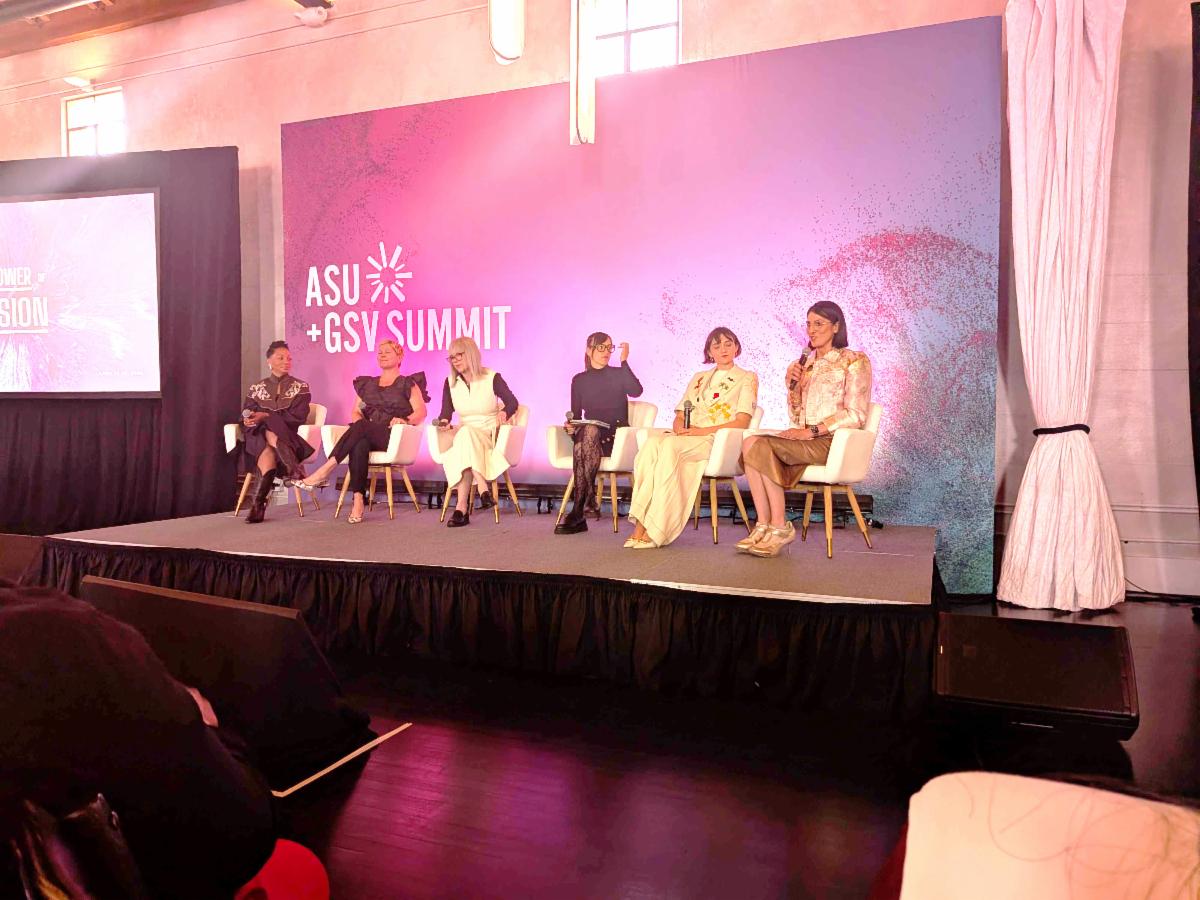
The CIC team had a busy time at the ASU+GSV Summit, founded by Global Silicon Valley and Arizona State University, in San Diego, California. This annual gathering brings together more than 7,000 funders, nonprofits, ed tech companies, educators, and thought leaders for conversation and debate. I was asked to participate on several panels and spoke on issues as diverse as educational affordability, the impact of the Jeffrey Epstein files on our understanding of what it means to be an elite, the ongoing importance of inclusion and access work for higher education, and the future of the liberal arts.


CIC brings a delegation of more than 40 presidents and provosts to ASU+GSV each year. They return home better informed about the latest innovations in ed tech and are able to lead deeper campus conversations about everything from the underlying technology to the ethics of implementation.

A Spark of Inspiration

Some of the most inspiring reading I am doing this season is self-reflective. By this, I mean that the author takes a deep and hard look at the unspoken assumptions of their own beloved identity group. To explain why I find this work so meaningful, I need to take a brief (and hence quite simplified) detour into the psychoanalytic theory of Melanie Klein.


Klein was Freud’s student and an influential theorist. She discovered that from our earliest conscious life, our psyches are grounded in a bifurcation between pleasant and unpleasant feelings and experiences. Good things like comfort, nourishment, human warmth are seen as fully distinct from bad things, like the cold wetness of an unchanged diaper, the pain of an empty stomach, or the feeling of helplessness when a needed caretaker is not available. This early dichotomy structures a way of thinking that she calls the P-S position. The letters stand for paranoid-schizoid, which sounds harsh. But what she means by it is that from this position, our experience is fragmented. It’s all good or all bad—there’s no capacity for nuance. The bifurcated quality of our experience is akin to what someone might experience in a paranoid or psychotic state.


As we grow, and assuming we have good enough caretakers to support our development, we are able to develop a second position. This is the D position and it is characterized by our capacity for ambivalence and complexity. From here, we can see that the same object can have both pleasant and unpleasant parts. The same caretaker who makes me angry by her absence can make me feel safe by her presence. The bottle or breast can be a relief or a demand depending on my hunger level. D stands for depressive because Klein recognized that such a state requires an ability to mourn the loss of the partial supposedly wholly good experience. The emotional depression of mourning gives this position its (deceptively negative) name.


Unlike developmental stages, each of which is superseded, Klein’s positions remain with us throughout our lives. We move between the P-S and D positions, accepting nuance and complexity on the one hand, but then reverting to a more binary way of thinking when under stress or in extreme circumstances. Unless we are in the grip of mental illness, we have the capacity to move between these positions and to accept a fluid and even dialectical relationship between them. It is from the D position that we make healthy relationships, engage in learning, and foster democratic values. It is from the P-S position that we respond to immediate dangers or idealize our romantic partners as we fall in love.


In a healthy society, leaders encourage this mental flexibility and support the D position except in rare situations. But we live at a time when P-S leadership is ascendent. Encouraging a regression to binary thinking and its consequent paranoid erasure of “them” and over-inflated idealization of “us” has fostered ugly societal divisions. When P-S takes the lead in our politics, violence and oppression are the result. A healthy adult society, like a healthy adult, learns to tolerate the complexity of the D-position even as it recognizes the pull and even some of the psychoanalytically primitive joys of the P-S position.


Much of the content we read today emerges from the P-S position. It focuses on half-truths and part-objects. It is inherently binary. It speaks from the moral certainty of the imagined purely good. It speaks with equal certainty of the imagined purely bad Other.


It’s refreshing then to read the in-depth, self-reflective thinking that emerges from a sophisticated balance of the D and P-S positions. It takes great courage to think and write this way since you are at risk of criticism from your friends as well as your supposed enemies. But when it is done well, it can be world changing. I admire writers who can take on the tenets of their own identities with deep love and at the same time with a deeply critical eye. This isn’t the shallow critique of “three things my political party should have done differently” or “why I am no longer a member of this club.” Nor is it the writing of the politically expedient who see the winds shifting and rush to flee a sinking ship. And finally, it’s not wishy-washy bothsideism. I am talking about the kind of writing that affirms a great and ongoing love for a way of being human and at the very same time, sees the deep often unspoken ways that P-S thinking is built into its marrow. This is writing that takes a moral and intellectual stand yet preserves the messy truth, even of the writer’s own identity, enemies, and desire. It’s tough to think and write this way. It’s even tough to read this way. Three examples of such thinking I’ve encountered recently: Afropessimism by Frank B. Wilderson III, Haifa Republic by Omri Boehm, and Embracing Alienation by Todd McGowan. I would love to hear additional suggestions from newsletter readers.


At a moment when the P-S position is culturally dominant, we will only see a way beyond our present troubles when we can more widely embrace the D position. It’s all too easy to believe we must start with our enemies. They are the ones in the wrong and the ones that need to change. But even if that is pretty much true, we can only ever start with ourselves and with those we love.

What I’m Reading

Vigil

by George Saunders


Thoughtful magical realism puts the reader near a ghostly angelic figure as she carries out her duty of bringing comfort to the dying. In this case, the last hours of mortal reckoning belong to a self-satisfied business magnate and are complicated by another ghostly angel intent on creating moral discomfort and a recognition of the true consequences of this life supposedly well-lived. Great writing makes this mortality tale comparable to A Christmas Carol in humor and character. Complex ethical questions make it hit deeper.

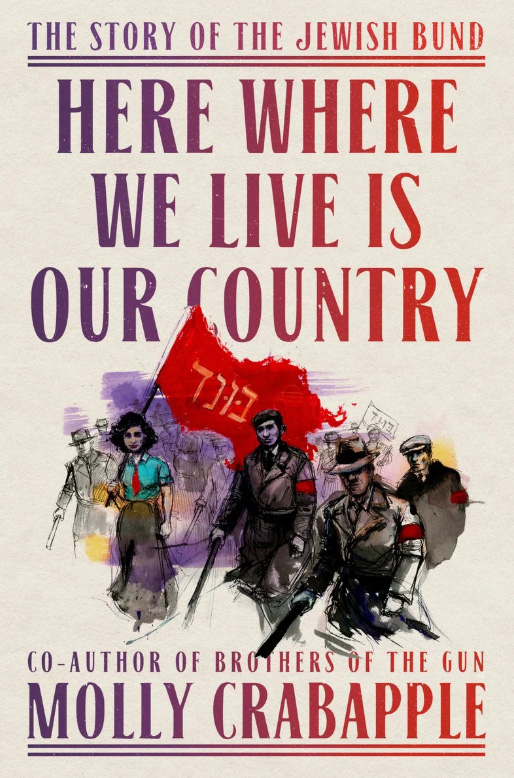
Here Where We Live Is Our Country

by Molly Crabapple


A fascinating history of the Jewish Labor Bund, the influential, distinctively Jewish arm of pre-war European and Russian socialism. Secular, anti-Zionist, and deeply committed to a vision of solidarity beyond religious and ethnic differences, the motivations and fate of the Bund and its leaders have lessons for today. Crabapple is a noted artist and journalist and the spiritual as well as biological descendent of these brave political actors.

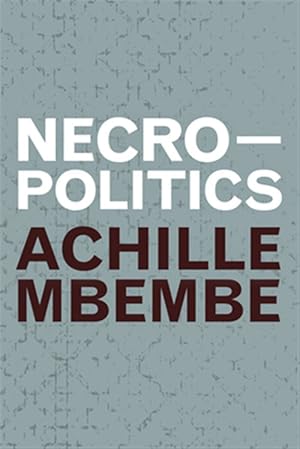
Necropolitics

by Achille Mbembe


Mbembe depicts the fate of democracies that fail to work through the repressed shadows of colonialism and enslavement. A fate we are living through. Drawing on Fanon, Foucault, and Afropessimist thinkers, Mbembe goes deep but in a way accessible to those unfamiliar with these traditions.

Subscribe to Newsletter


Was this email forwarded to you? Sign up here to receive this newsletter directly.

LinkedIn