|
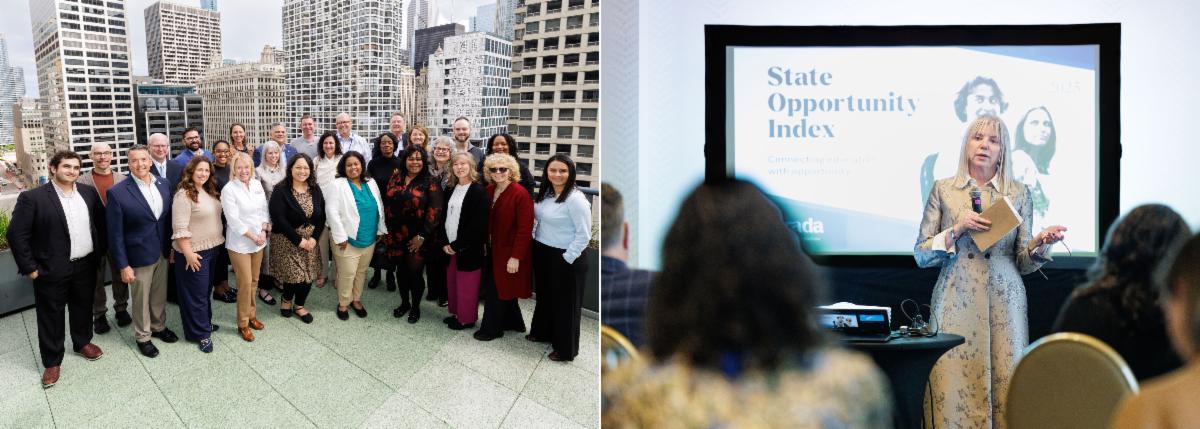
I recently heard a great summary of what students want from their college education. David Clayton, senior vice president of research at Strada Education Foundation, summed up some of his data by saying, “students want the promise they can become anything and the certainty they will become something.” In other words, college should be a place for dreams and exploration, but it should also provide a meaningful guarantee of professional level work and a stable lifestyle.
This strikes me as a useful heuristic for thinking about the ways we talk to students and families about the value of higher education. Unlike trade or professional school, the college curriculum requires breadth, creative investigation, and the integration of a wide range of perspectives, content areas, and skills. Unlike self-study or high school, the college curriculum leads to the skills demanded by professional employers, the knowledge needed to entrepreneurially design your career, and the freedom to find meaningful and well-paid work.
Each institution puts this into practice in its own way. For some institutions, the certainty of post-graduate success rests on the institution’s prestige: our name on your diploma guarantees a good job. For others, that certainty is communicated by reference to stellar placement data or by visible college to career pipelines. The promise of exploration might rest on the special requirements of the general education curriculum, unique opportunities for learning beyond the classroom, or the capacities of master teachers and scholars.
Clarity about the ways you make and meet these dual commitments to unbounded intellectual exploration and to bounded career preparation will help you be more persuasive in your messaging and more focused on ensuring you really live up to what you say you offer.
Questions for reflection: How does my institution present the promise of exploration and the certainty of post-graduate success to diverse audiences? Which of these dominate? Do we need a better balance? How do we support vocational exploration and creativity even for deeply career-minded students? How do we demonstrate a commitment to post-graduate career and life success in the midst of so much change in the economy and the future of work?
|