View as Webpage

Dear Colleagues, 


We are entering the fourth week of the semester. This is a pivotal time especially for first year students. Please be intentional this week to reach out to everyone in your classes with a word of encouragement, an offer for help, or just a check in.


This morning’s murmurations are from Professor Francesca Laguardia, Chair of Justice Studies. She shares very interesting research and reflects on the impact of this kind of work on current issues. I hope you enjoy it as much as I did. It is another illustration of the critical connective role of the scholarship of our faculty.  


Have a great week everyone,


Fatma

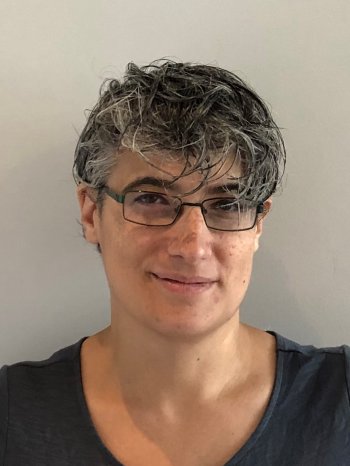
photo of Francesca Laguardia

I was excited to write about my current research, as it highlights many of the issues our society is confronting. We are in the crosshairs of new technology, with that technology creating a glut of information at the same time as it reinforces misinformation. Technology offers us an aid in testing our facts and our processes yet, also threatens our ability to interrogate the assumptions on which so much of our social order runs. My research, like so much of all of our research, is a reminder of the importance of human interruption of unspoken assumptions; an interruption that I believe is best achieved by the humanistic social sciences.


I am studying absence; specifically, the absence of the pregnant body in policy debates about reproductive medicine and reproductive control. I began by looking at judicial opinions, and the way judges speak about pregnancy when debating abortion access. I found they simply did not. Even in moments where the pros and cons of specific methods of delivery were the exact purpose of the sentence or paragraph, judges avoided addressing the actual experience, the pain, the common risks, of childbirth.[1] I am expanding on this finding, looking at major press, medical research, and my own surveys and interviews with people who have given birth.


These are questions for the humanities and social sciences. We know that painting a full picture of pregnancy and childbirth matters, because the narrative affects whether society takes action to change existing conditions. Sociological research on social movements, as well as a good deal of critical legal analysis, historical accounts of human rights, and research in political science all suggest that social change may be heavily reliant on deeply personal and emotionally evocative narratives, often involving detailed accounts of suffering. Lynn Hunt attributes the birth of modern notions of human rights to the birth of the novel and widespread narrative (written) accounts of suffering. She argues these humanistic efforts facilitated widespread deepening of capabilities for empathy, by teaching the public to imagine itself in someone else’s position. This was followed by popular and grotesquely detailed accounts of the torture of convicted criminals, stimulating a movement to restrict government abuses in criminal justice and, eventually, beyond criminal justice as well.[7] Detailed narratives of the brutal conditions of slavery were used by abolitionists to stimulate anti-slavery sentiments, and may have birthed modern legal understandings of rights to bodily integrity.[8] Through rich narrative, even non-humans, in purely imagined situations, may be “humanized” by detailed descriptions of their (imagined) suffering, as many of us have experienced when watching movies or reading novels such as “Black Beauty” or “The Wild Robot.”[9]

1 Laguardia, Francesca. "Pain that only she must bear: on the invisibility of women in judicial abortion rhetoric." Journal of Law and the Biosciences 9.1 (2022): lsac003.

7 Hunt, Lynn. Inventing human rights: A history. WW Norton & Company, 2007 at 32-33.

8 Id.; Clark, Elizabeth B. "" The Sacred Rights of the Weak": Pain, Sympathy, and the Culture of Individual Rights in Antebellum America." The Journal of American History 82, no. 2 (1995): 463-493.

9 Małecki, Wojciech, Bogusław Pawłowski, Piotr Sorokowski, and Anna Oleszkiewicz. "Feeling for textual animals: Narrative empathy across species lines." Poetics 74 (2019): 101334.

CHSS Faculty and Staff in the News

  • Daniela Peterka-Benton (Justice Studies, Global Center on Human Trafficking) collaborated with American and Austrian scholars and practitioners on an article comparing the prevalence, legal aspects and methods related to human trafficking in both countries.
  • Mark Rotella (Coccia Institute) wrote a feature for New Jersey Monthly  remembering pop legend Connie Francis

Kudos

Kudos is a space to celebrate one another—whether it’s expressing gratitude to a colleague, sharing milestones, or recognizing accomplishments and awards. Help us spotlight the people and moments that matter: send us your Kudos for an upcoming edition.

  • Pascale LaFountain (World Languages and Cultures) has been named the 2025 Post-Secondary Outstanding German Educator by the American Association of Teachers of German (AATG). This national award, the AATG's highest honor, recognizes innovation in teaching, extraordinary talent and exceptional leadership in German language education. 

Save the Date!

CHSS AI Distinguished Speaker Series

Join us for a yearlong exploration of how artificial intelligence is reshaping human systems, knowledge, and society. On Wednesday, October 8, we will welcome Yash Tadimalla for "An Imperative for AI Literacy for All," an interdisciplinary look at what “AI literacy” means, how it can be taught across contexts, and why it’s essential for everyone.

Date & Time: Wednesday, October 8, 10 a.m.

Location: Presentation Hall


NJ Center for Indigenous Justice Welcoming Ceremony

Join us in welcoming the NJCIJ, a new center on campus dedicated to upholding Indigenous sovereignty, immersing students in holistic educational experiences, and walking in partnership with Tribal communities to re-Indigenize New Jersey. The event will feature reflections from Tribal leaders, students, faculty, and staff. It will also include a performance by the Red Blanket Singers, a drum and dance group from the Nanticoke Tribe.

Date & Time: Wednesday, October 8, 2-4 p.m.

Location: Student Center Quad, rain or shine


CHSS New Student Mix & Mingle!

Join CHSS faculty, advisors and staff to meet and welcome CHSS first-year students. RSVP here

Date & Time: Wednesday, October 8, 3:30-5 p.m.

Location: Dickson Hall Front Lawn (rain location, Cohen Lounge)


Power of Latinas Conference: Your Rights, Your Voice, Your Future

This full-day event will bring together Latina voices in health & wellness, business, politics, and education. Senator Teresa Ruiz, the New Jersey Legislature Majority Leader, will deliver the keynote. If faculty members are interested in bringing their classes for a portion of the event, please contact Lady Jimenez Torres.

Date & Time: Friday, October 10, 9 a.m. - 5p.m.

Location: University Hall Conference Center

At Your Service

CHSS Resource Guide

This guide is designed to support our faculty, instructors, and staff by providing quick access to the tools, policies, and information you need to carry out your work effectively. Inside, you’ll find resources on office operations, administrative processes, technology support, and campus services all in one place. Whether you’re new or a tenured colleague, this guide will help you throughout the academic year. If you have a question and cannot find the answer in this guide, or don’t know who to contact, start with the Administrative Services Team.