|
This reflects the well known phenomenon of economies of scale. The bigger, the more efficient, up to a point. The physical explanation behind the 75% ratio –and why growth is ultimately bound– is fascinating. (hint: fractals)
Of more direct interest to us is the finding related to human made organisms, cities and businesses. Cities, like biological organisms, exhibit sublinear exponential ratios. The bigger the city, the more efficient it is in terms of resources and physical infrastructures needed per inhabitant. As in biology, the ratio is reproduced with an astounding fidelity and precision, although it is not 75% but 85%. Within the same country, a city that is 100% bigger uses 85% more resources. What is much more interesting is that its outputs are superlinear: wages, revenues, number of patents, pace, disease, crime, all increase by 115% when the size increases by 100%.
Bigger cities use fewer resources per inhabitant but also generate more ideas and more innovations, (yes and disease and crime) per inhabitant. The secret behind the constant 85% is also fractals (the self repeating structure of human social networks). In contrast with other organisms, cities have the unique characteristic that they do not die. Even when decimated by wars, they reemerge and grow.
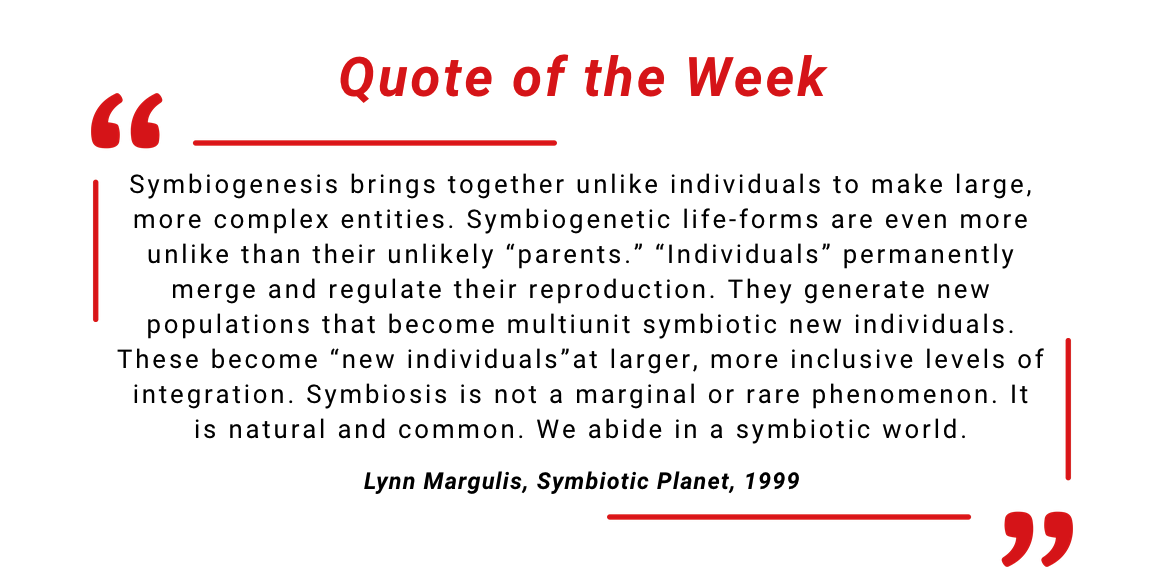
Is a college like a city or like a biological organism? There is a third category that is maybe more relevant: businesses. Businesses also exhibit similar patterns of growth, although with much more variability than biological and urban organisms. Businesses, like cities, exhibit economies of scale, but with much more variability. Businesses, unlike cities, have a bounded growth and lifespan. One significant difference is that cities diversify and expand their scope as they grow, while businesses tend to unify, conform, and narrow their focus. The range of problems, ideas, and people expand in cities generating symbioses and new combinations that stimulate further growth. The bigger and older businesses get the more they value repeatability, predictability, and uniformity of processes, experiences, and outcomes.
These are thoughts we may want to ponder as a college and as a university:
- Do we want to organize and grow more like a city—unbound and eternally adaptive? Or like a business—efficient but ultimately finite?
- What structures and culture will promote city-like features: diversity of backgrounds, commitment to an encompassing mission, and the symbioses that fuel perpetual growth?
- How do we reorganize to become an undying, always-changing, and thriving organization for generations to come?"
Thank you for indulging me in these reflections. I look forward to hearing more of your thoughts and reflections.
Have a great week everyone,
Fatma
|