Dear Fellow Alumni,
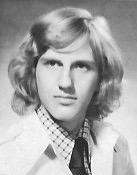
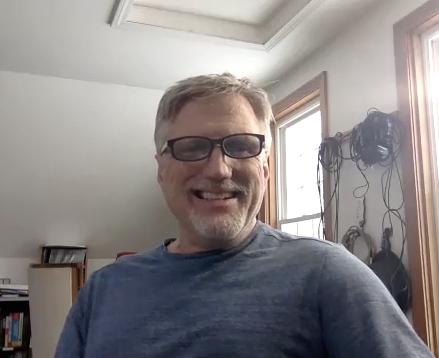
Today’s HawkTalk features Al Kryszak from the Class of 1979.
Al is truly a 21st century “Renaissance Man." He is a composer, musician, recording artist, filmmaker, producer, and visual artist. He teaches courses in music, film and production at the University of Maine.
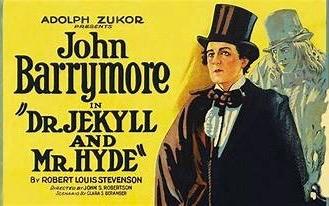
Al has been composing music for 35 years. You may have heard some of Al’s compositions watching the Turner Classic Movies channel. Al was commissioned to compose film scores for many silent movies from the early 1900s. He scored some of the most significant silent film ‘shorts’ in American history including Dr. Jekyll and Mr. Hyde and Nosferatu. Al, is also the only COHS graduate who has ‘collaborated’ with Thomas Edison on a film project! (Yes, I mean that Thomas Edison!)
In addition to composing, Al has released 14 albums in his career, 10 ‘solo’ albums and 4 with his Alt-Prog band REV. (I’ll always call them ‘albums’!) Eight of his ‘solo’ albums feature concert music while the other two are in the 'pop' music genre.
Al has produced four film documentaries. His latest will premiere in
Boston, Massachusetts this spring. On top of all that, he is a visual artist who works with acrylics and wood-burned art.
You might want to print this article and save it for historical purposes, as this will likely be the only article in the history of mankind that will ever contain the following names in the same article: Billy Sheehan, Jimmy Page, Neil Young, Sister Carmelita, John Cage, Michael Tilson Thomas, John Barrymore, Thomas Edison and Kashmir the dog. I hope you like it!
I offer my great thanks to the supremely talented, Al Kryszak, for sharing his story with us!
Go Hawks,
Dave Lovering ‘74
Alumni Relations Coordinator
|
|
An Unforgettable Dance
DAVE: Thanks Al, for taking this time to talk to me. Let’s start with my classic opener - did you have any input as to where you went to high school?
AL: My parents, Joseph and Gloria Kryszak, sent all of my older siblings to Kenmore West. I think all three of them, Linda, Sandi and Joseph told stories of some rough behavior there. My parents were concerned about my safety, so I attended O’Hara largely on it’s reputation as a safe school. My mom also was a proponent of a small school environment, one that would provide a personalized experience. It helped that I was the last one to go to high school so they only had to make one tuition payment.
DAVE: Where did the Kryszaks call home?
AL: We lived in the Thurston Park area in Kenmore, near Kenmore Mercy Hospital.
DAVE: What do you remember about starting out at O’Hara?
AL: Well, I was a budding musician at the time. I was just beginning to learn to play the guitar my freshman year. Music was fast becoming very important to me. The most vivid memory of my early days at O’Hara was attending a dance as a freshman. Now mind you, I had no intentions of dancing, I went to listen. The band Talas was playing that night. They were one of the best bands in the area, by far. Their bass player, Billy Sheehan, soon came to be recognized as one of the best bass players in the world. And they were playing at my high school’s dance. That was pretty cool.
I remember being at the dance, standing in the corner with a couple of other guys, watching the band. It was an epic event to be standing 10 feet away from such great musicians.
DAVE: Did you know that Billy Sheehan went to O’Hara his freshman year?
AL: No, I didn’t know that! Really? That’s really interesting.
|
|
"OK, Alan, hang it up."
DAVE: Do you have fond memories of your O'Hara teachers?
AL: I have very good memories of my teachers at O’Hara.
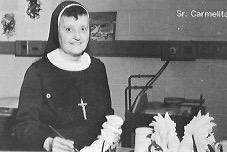
Sister Carmelita, the art teacher, (see photo) was great because she was ‘cool’ with my art, however weird it was. I’m not sure she ever understood it though. And I had her for all four years. Usually, after the class had finished an assignment, she’d display our work on a wall outside the room. Mine was always very different from the others. She’d look at my piece and I could see a quizzical look on her face but ultimately she’d always say, ’O.K. Alan, put it up on the wall.’ (Laughs) I have very fond memories of Sister Carmelita.
I also recall that she let me teach the class a few times. A lesson I still remember is teaching my classmates about perspective. It was the first time in my life that I did something like that.
Sister Carmelita also used to play music in class. The albums she played were usually from a Broadway musical like “Sound of Music” or “The King and I”. In fact, it was pretty much those two over and over again. (Laughs) I could only take so much. So one day, I made a deal with her. I told her, “ If I can play one of my albums each week in class, I’ll stop complaining about your album selections.” She agreed. So, the first album I brought in was by Gentle Giant. They were an English ‘progressive’ band. The music was experimental and somewhat complex. It wasn’t your typical AM radio fare. After I played the album Sister Carmelita said, “I thought you were going to bring in pop music. I don’t even know what that was!” (Laughs)
|
|
DAVE: Good for her that she gave you ‘space’ to express yourself.
AL: I found that most of my teachers were open-minded about letting me express myself in my art, my writing and in class discussion. Looking back, I appreciate that they provided that type of environment.
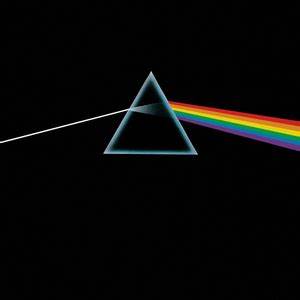
Other teachers were also open-minded and were willing to listen to students’ point of view. My English teacher, Sister Phyllis, was like that. She’d have poetry units and would indulge me as I recited lyrics from the band Pink Floyd and their Dark Side of the Moon album.
Father Charles was very cool and an interesting guy. He would talk about the philosophy of religion. He was really into that. He didn’t just tell us ‘do this’ and ‘don’t do that.’
I have really good memories of the teachers at O’Hara.
|
|
The Phantom of the Auditorium
DAVE: Is it true the there was a ‘Phantom of the Auditorium’ at O’Hara and that it was you?
AL: That may be overstating things slightly. (Laughs)
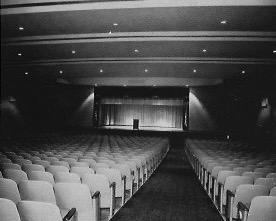
But, yes, I would often sneak down to the auditorium when it was unoccupied and sit at the piano, in the dark. That’s when I would teach myself how to play piano. I broke at least two O’Hara rules every time I’d sneak off to the auditorium. First, I’d carry food, mostly applesauce, through the hallway, which was not allowed. And second, I’d skip class, usually religion class, to practice when I discovered there was no one in the aud during my religion class period.
Is there a statute of limitations on skipping classes? Will anyone come after me?
DAVE: I doubt it. They’ve let me work at O’Hara for a couple of years, now, so it’s pretty obvious that my past indiscretions have been forgiven. Yours probably have been too.
AL: Good. It was in my high school years that I became very serious about music. It was my passion. I learned how to play guitar and piano. And it was also a time when I became interested in composing music. By my senior year I was practicing 6 hours a day, composing music and learning recording techniques.
|
|
The Dishwasher
DAVE: Did you hang around with other 'music kids'?
AL: One of the nice things about O’Hara, to me, was that while it had cliques, like all schools have, you know, the ‘jocks’, the scholars, the music kids, and so on, but it was such a small school there was a lot of ‘overlapping’ among the groups. You could really fit in any number of ways.
For example, I played hockey, so I hung around with athletes but I was also really into music so I fit in with those guys and girls. I was kind of an ‘outsider’ of my own volition. But I hung around with a variety of people. All high schools have their caste systems, right? That’s just the way it goes but O’Hara’s was not that rigid.
And, back then, I was never really comfortable with large groups. It’s funny now because I lecture to hundreds of adults at once. Avoiding large groups became an art form for me in high school. (Laughs) My senior year, I took a dishwasher job at the school during lunch so I could avoid the cafeteria ‘crowd’. Also, by washing dishes I got a free lunch. My mom was pleased because it saved my parents from having to pay for my lunch and she was proud that I was showing ambition. But really, it had nothing to do with ambition and everything to do with avoiding people at lunch. (Laughs)
|
|
Buffalo Music Scene
DAVE: You attended the University at Buffalo after you graduated from O’Hara.
AL: I did, but I took a year off between high school and college. I really wanted to hone my piano skills so I practiced a lot the year after I graduated from high school.
In 1981, I auditioned for a spot in the UB School of Music. For the audition, I played one of my original compositions on piano. They must have been pleased because I was accepted into the program. All of those clandestine practices in the O’Hara auditorium paid off, I guess. I pursued a degree in music composition at UB.
I couldn’t have chosen a better time to be a composition student at UB. There were so many internationally renowned musicians that were hanging around the UB School of Music at the time. We had people like John Cage, Michael Tilson Thomas, and Morton Feldman who were all giants in the field. It was incredible. I was exposed to new types of music and it really expanded my horizons.
My piano professor at UB was Yvar Mikhashoff, another renowned musician and teacher, and I studied composition with Bill Kothe and Morton Feldman. I completed my master’s from UB and graduated in 1988.
In addition to that experience at UB, WBFO radio, in Buffalo, sponsored a series of outdoor concerts called Classics Live starting in the late 1970s. It was free and it was held on Wednesday night. I was still in high school when I first started going. It was another opportunity to hear all different kinds of music, from classical to experimental, played by these exceptional musicians. It was really inspiring.
|
|
A Bite of the Big Apple
DAVE: So, it’s 1988, you have your Master’s degree, and you head out to … where?
AL: New York City, of course. I had my ‘Monty Python’ suitcase, with the inside lining hanging out and filled with cassette tapes of my compositions. I’d go to
publisher’s, theaters and different places trying to get my music heard and get my name ‘out there.’
DAVE: I worked at Cavages Record Store in the Boulevard Mall for two summers in my late teens. I suppose that's not considered part of the 'music industry'?
AL: (Laughs) No. The music industry is a ‘high-risk’ industry it’s not like your steadily employed and working 9 to 5. Especially starting out. It was slow at first, but I started to get work. I was hired in a number of capacities, both as a composer and performer. I was commissioned to write film scores for silent movies from the turn of the century and I wrote and performed music for theatre also.
While in New York, some of the companies I worked for were: Turner Classic Movies, the Film Society of the Lincoln Center, The Los Angeles Directors’ Guild and Kino International . My music was featured in many venues including the Lincoln Center where my live film score of Dr. Jekyll and Mr.Hyde premiered.
So, I had these ‘gigs’ in New York, but in 1991 I also took a job teaching graphic design at Bryant and Stratton in Buffalo. The Bryant and Stratton job was a ‘safe harbor’ position and was a steady source of income. I taught there two days a week and then I’d travel back to New York and perform Friday through Monday. Of course, all the while, I continued to compose.
|
|
The Age of Technology
The Bryant and Stratton position was great because that’s when I got into technology. I was working on Mac Computers there and was seeing how technology and the arts supported each other. The knowledge I gained from working with technology was very beneficial in many ways.
So, now I was gaining some expertise with technology. I was open to the idea of looking for a job in the tech field as a means of steady employment, because the music industry does not always provide that.
At that time, in the late 1990s school districts started to incorporate technology in their instructional programs. As districts purchased tech equipment, they realized they needed to hire people to implement and maintain the technology. As a result, in 2001, I was hired by the Orchard Park Central School District and became the Apple Service Specialist there.
DAVE: I remember meeting you at South Davis Elementary School in Orchard Park in 2001. Neither one of us knew that we were both O’Hara graduates. We didn’t come that realization until ten years later.
AL: That’s right. I was in Orchard Park for three years and learned quite a bit while I was there. I then became the Technology Director and CIO for the Cheektowaga-Sloan School District. I did that for ten years. My ‘tech’ job was always my safe ‘harbor’ in the high-risk music industry. But school districts were hit hard by the 2008 Great Recession and it caught up to me in 2013 when I was let go by Cheektowaga-Sloan due to budgetary reasons.
I spent much of 2013-2014 looking for a job but there were none to be found. Also In 2014, my wife, Joyce, lost her job when WBFO, the radio station she worked for, was sold. After months of searching, I found there was a Technology Manager position available at the University of Maine. I was offered the job. Joyce and I had vacationed in Maine a few times and we liked it there. We took a giant leap of faith and moved to north coastal Maine right on the ocean.
A couple of years ago, again due to the consolidation of technology positions, I assumed more teaching responsibilities at the University. Today, I teach in the Interdisciplinary Fine Arts department at the University of Maine – Machias campus. I really enjoy teaching. And it was Sister Carmelita from O’Hara, who gave me my first experience.
|
|
Maine
DAVE: I’ve been to Maine a few times. My dad was born in Calais and my wife, Jeanne ,and I, honeymooned at Kennebunkport. We loved it there.
AL: That’s very cool. Calais is one of the closest towns to us. It’s very small. It’s about an hour north of us and is right on the border of the U.S. and Canada.
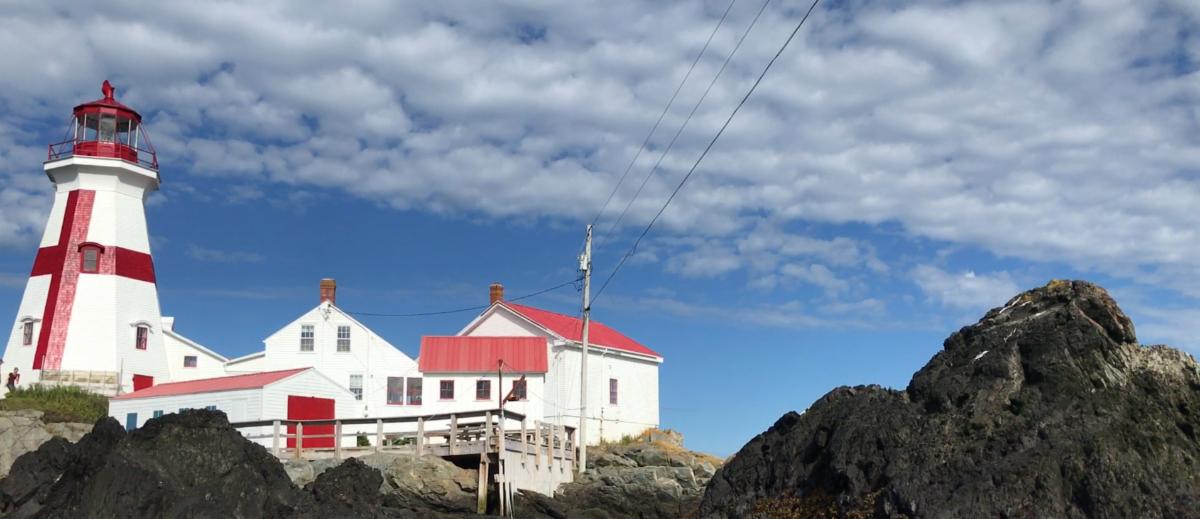
We live in East Machias, about 15 minutes from the ocean and the Quoddy Lighthouse. That’s the famous lighthouse with the red stripes. It’s in Lubec, Maine, the next town over from East Machias. (See photo)
It’s pretty remote where we live. In Maine, once you get away from Portland, Maine’s biggest city, things are pretty spread out. If we wanted to go to a movie theater or a place that had ten restaurants on the same street we would have to drive two hours.
|
|
COVID has been tough here, as it has been everywhere of course. The mom and pop restaurants here have been shut down since last March. Tourism is an important industry in Maine and that has been devastated by COVID.
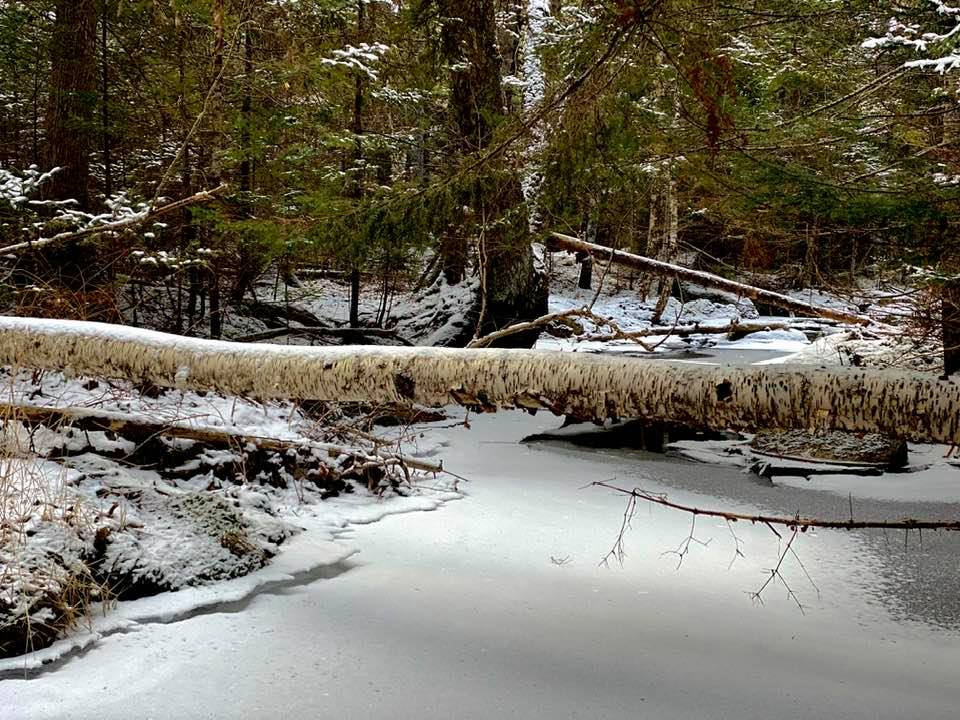
We do love it here. We have four acres of land, a creek that runs through our property and there are pine trees everywhere. I also have a 30 foot long studio in my house - so I’m not going anywhere! (Laughs)
|
|
The Studio
DAVE: Tell us a little bit about your studio.
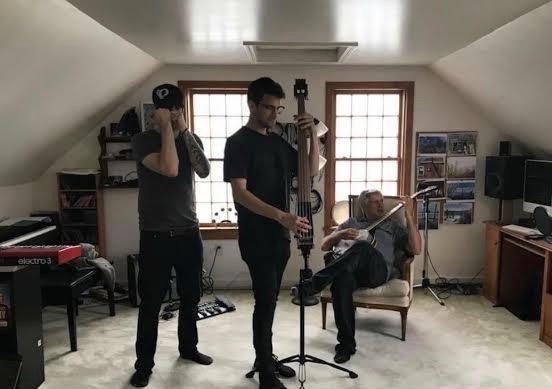
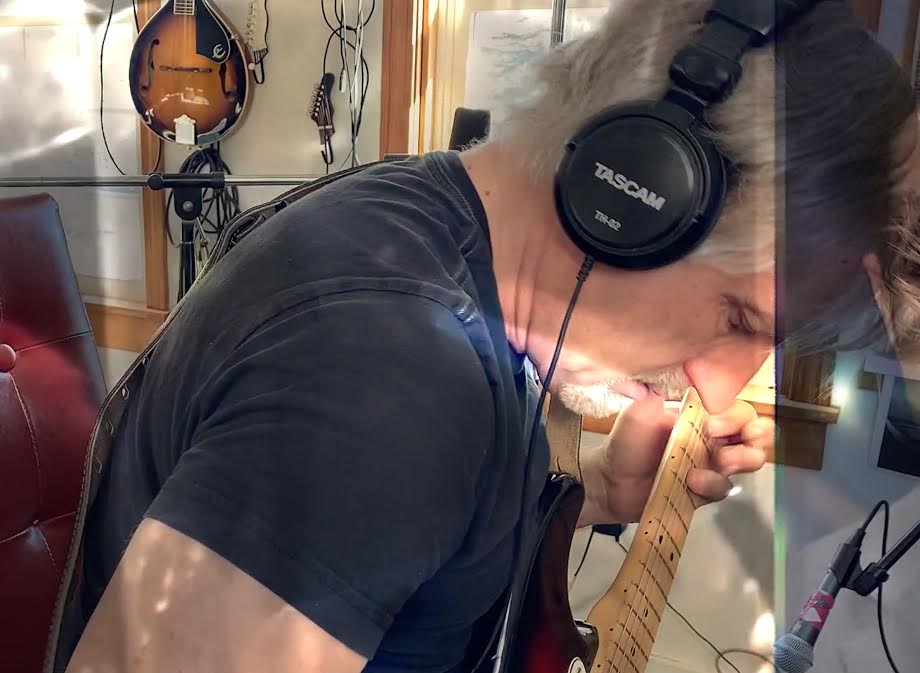
AL: The equipment that is used today for audio recording has changed a lot in the last 30 years. We’re no longer using big 'box equipment' anymore. The equipment has been miniaturized to the point where it’s easy to not even notice it. That’s nice because it allows me to have a more spacious studio and room for all the equipment. I am also able to bring in artists like vocalists and string quartets to record. It’s really nice.
It’s the same thing with doing video work. Everything’s in the studio but again,
the equipment has been made so small and so good, most of my video work is shot with my iphone and edited on my laptop. I produced a documentary for Maine PBS that was shot on my iphone. Pretty amazing.
|
|
The Musician
DAVE: You mentioned that you were a freshman at O’Hara when you first picked up the guitar.
AL: I started out when I was 13 or 14. My brother played guitar and he showed me a few chords. From there I’d listen to music, mostly Led Zeppelin at the time, and figure out the notes that Jimmy Page was playing in his solos. That’s really how I started.
Soon I began to buy sheet music for some of the artists that I liked such as Neil Young and Led Zeppelin. That’s when I became interested in writing music. Initially I’d dabble in rock music but I soon began writing more in the ‘progressive rock’ realm, in the style of bands like Yes, Genesis, and Pink Floyd. ‘Progressive rock’ is really challenging and demanding and it was kind of a stepping-stone for someone like me who wanted to eventually compose music for orchestra.
When I was a teenager I played in bands around Tonawanda and Kenmore. There were a lot of really good musicians in that area at the time, really good drummers and guitar players. To practice, we’d go to the drummer’s house, because they could not move their equipment around. We’d play until the police showed up and we’d go to the house of another drummer and we’d repeat the process. (Laughs)
DAVE: As you know, Al, I play guitar also. Unlike you, I am still a beginner after 40 years. I’m curious, and I bet some of our readers are too, about the guitars you play.
AL: I don’t have a lot of guitars. Each one I own serves a different purpose.
Let’s see, I have a Fender Stratocaster, a Gretsch slide guitar, a Danelectro baritone, an acoustic Taylor, an upright fretless electric bass, a mandolin, a dulcimer and a banjo.
|
|
The Composer
DAVE: You have been composing concert music for 35 years. You have written choral and orchestra music, ‘pop’ music, film scores and everything in-between. Let’s focus on the film scores.
AL: (Laughs) I’ve been writing film scores since 1990. I’ve written many scores for silent films made before 1920 that appear on Turner Class Movies including “Dr. Jekyll and Mr. Hyde” starring John Barrymore. I had the opportunity to conduct that score at the Lincoln Center in New York City.
Other classic films I’ve written scores for include: “Broken Blossoms” a 1919 film that starred legendary actress Lillian Gish and was directed by the famous D.W. Griffith. I also wrote the score for “Nosferatu”, the highly influential silent horror film based on Gram Stoker’s “Dracula.”
A couple of years ago, I was tasked with writing the scores for nine different Christmas ‘shorts’ (movies that are less than 40 minutes in length). Writing the scores for those movies was really interesting as most of those Christmas films were ‘dark’ and gritty. One of the movies was a 1910 film, an adaptation of “A Christmas Carol” produced by Thomas Edison. That particular film was challenging because it was only 11 minutes long but the story was told
in a ‘rapid-fire’ kind of way. To write the score I would watch the film with a pencil and paper at the ready to make sure the music would synch up with the quick plot changes that take place. I also wanted to make sure that the instruments that were used were authentic to the era in which these films were made. I wanted to use instruments like strings, harp and handbell, that were common in 1910.
These movies are broadcast on Turner Classic Movies. Turner also packaged them for release as a DVD collection.
DAVE: Your music has been performed in many places.
AL: My concert music has been performed at Carnegie Recital Hall, the World Financial Center, Symphony Space, The Los Angeles Director’s Guild, The Kitchen, Arts at St. Ann’s, Mabou Mines, The Atlantic Center for the Arts and other venues.
|
|
The Recording Artist
DAVE: You’ve released 14 albums. Four of the albums are with your band ‘REV’ and ten other albums that are Alan Kryszak projects.
AL: REV is my band. We formed in 2000 and have had one line-up change and that’s when Mike Brydalski came on board as our drummer. Rob Mazurkiewicz and I are original members. We have four albums out. We’ve been called an Alt-Prog Trio and I think that’s a pretty apt description.
I’ve also released ten solo albums two of which are ‘pop’ albums. And I’ve got another new album coming out soon.
(Click on the link below to sample a track from “2020s Got a Ring To It.”) https://www.amazon.com/2020s-Got-Ring/dp/B08X6PKLY3/ref=sr_1_1?dchild=1&keywords=al+kryszak+2020%27s+got+a+ring+to+it&qid=1614458080&s=music&sr=1-1)
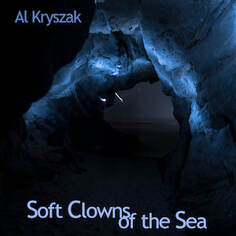
The last ‘pop’ album I released is ‘Clowns of the Sea’. It was released in 2018. I played all the instruments and recorded the album in my studio. I brought in Mike Brydalski from REV to play some drums on the album. The record tells the story of a father and his son dealing with current issues in America. I used a photo my son Neil took for the cover of ‘Clowns of the Sea.’
The other eight albums feature concert music. Russian-born pianist Svetlana Belsky played on the album ‘Lux Internum’ which features all piano music. She’s really, really great with 20th century concert music. It was interesting too because that album was recorded during the COVID pandemic so all of our collaboration was done through Facebook.
The other discs are concert compositions. Some feature orchestra and clarinet, some are quartet collections, and some are piano collections. On those discs, I conducted the pieces.
|
|
The Filmmaker
DAVE: You have written and directed a number of documentaries. “Whatever Works: Exploring Opiate Addiction” was an award winning documentary.
Your most recent film, “Privacy and the Power of Secrets” premiered at the Hague Global Cinema Festival in 2020 and will premier in the United States in Boston this spring.
AL: I involve my students in the creation of these documentaries. It’s really a hands-on learning exercise for them. I come up with the concept for the film and students work in partnerships to shoot and edit the film. It’s certainly a collaborative effort and an enriching experience for the students as they gain an understanding and appreciation of putting a film together.
“When the Chevy Breaks (How Small Towns Fix Big Problems)" looks at ways that people in Maine tackle problems big and small. We interviewed a number of people. It shows the different ways that people come together to tackle issues. We even told the story of the first
ship-to-ship battle of the Revolutionary War when the citizens of Machias took on the mighty
navy of Great Britain - and won!
We made “Who Made You in America” in 2018. That film was made to dig deeper into the political views of Americans after the 2016 election. We interviewed people from different backgrounds and with different perspectives. We talked to veterans of three different wars, Passamaquoddy Native Americans,a climate scientist, a fisherman, a prominent surgeon and right and left-leaning voters who shared their views on the political climate of today. It was very interesting and the responses were often surprising.
“Whatever Works: Exploring Opiate Addiction, which is a huge problem in rural America, and certainly here in Maine, provides information about the opioid crisis with the intent of helping to reduce the effect of addiction. That film has aired on Maine Public Television and has been presented in Maine schools.
|
|
The Visual Artist
DAVE: You continue to create visual art like you did in Sister Carmelita’s class. It seems that this is one artistic area where you have eschewed technology. What media do you work in?
AL: I work primarily in wood-burning and acrylic painting. And wood-burning would be considered ‘low-tech’.
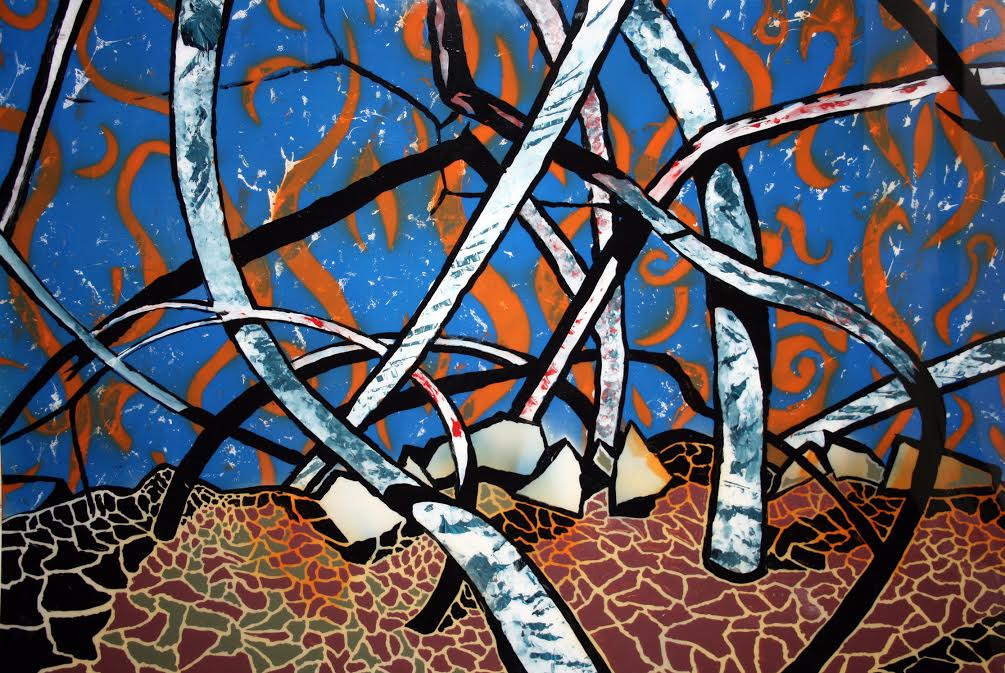
My paintings are done on plexiglass, and provide a kind of a stained-glass effect.
I guess the theme of my paintings is that they usually have patterns in them. I really get my inspiration for paintings from nature and in the different patterns I see.
For the wood art, I use a blow-torch. I’ve always been fascinated by the strange effects one finds in old cinematography. My wood-burning art reminds me of the same effect you see in old faded out, black and white movies.
DAVE: I wonder what Sister Carmelita would have said if you asked her if you could bring a blow-torch to class.
AL: That probably would not have gone over too well.
|
|
Family
DAVE: You and your wife, Joyce, have been married for over 20 years.
AL: Joyce grew up in the Cheektowaga area so she is a native Western New Yorker. We had known each other for decades and reconnected in the mid 90s and were married in 1998. Joyce was an Associated Press award-winning producer and reporter for WBFO radio. She won 26 awards for her work including the prestigious Edward R. Murrow Award. She is currently writing her first book, a novel.
Joyce is a woman of many talents. She’s a singer and we’ve performed together on occasion.
We’re a blended family so there are five ‘kids’ in all. They’re spread all over the place. We’ve had two sons, Kyle, our older and Neil, who is a photographer based out of Los Angeles.
And from the marriage with Joyce, we have a Brady Bunch thing going on. Faherty, is the youngest and she has a doctorate in history from Binghamton. David lives in Watertown, and Bryan is a contractor who has been in Tennessee for a long time.
|
|
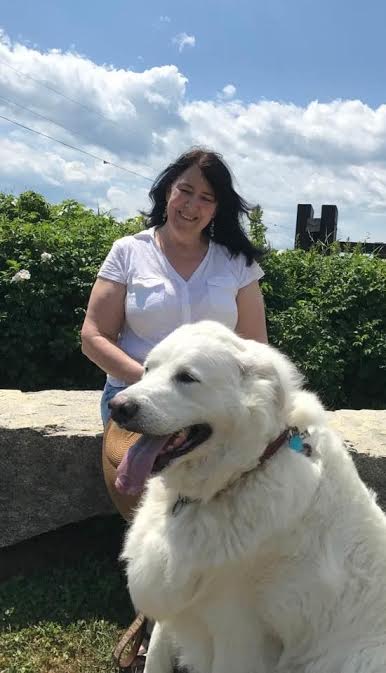
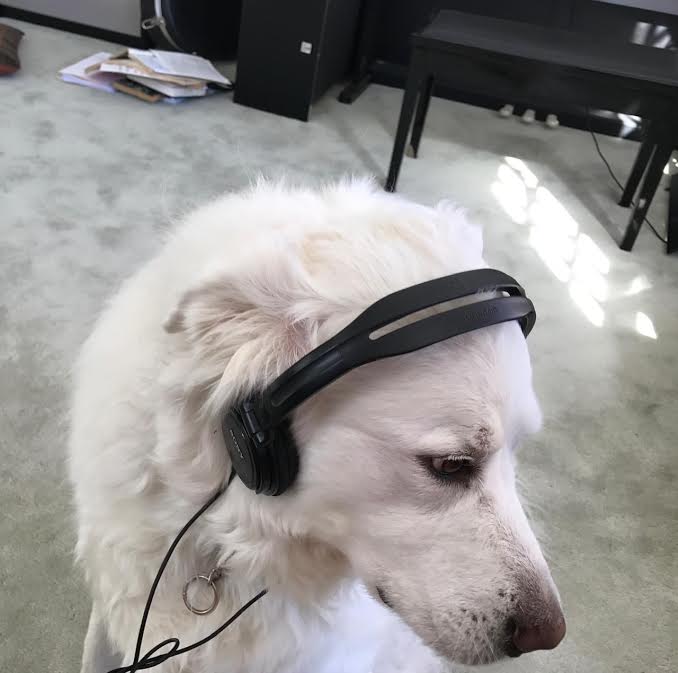
The final member of the family is Kashmir, our 10 year-old Great Pyrenees. She’s actually small for the breed. She weighs 120 pounds. Joyce says she is named after Johnny Cash and I say she is named after the Led Zeppelin song "Kashmir". She is a great help in the studio. (Laughs)
Al’s work is published by the Atlantic Screen Group and is available on Turner Classic Movies or by using an app through a TCM subscription. It is also available on DVD through Kino Lorber. Recordings are also available on Apple Music and Amazon.
by Dave Lovering '74
|
|
Thank you to everyone who has made a gift to the COHS Alumni Annual Fund. Your donations are so important to everything we do!
|
|
Don't forget about Amazon Smile! COHS is a participating organization in this program that gives back all year, not just at the holidays. Use is any time you shop Amazon to support COHS. Amazon donates a percentage of your order back to COHS. |
|
Please follow us on Facebook and Twitter to keep up with what is happening at COHS! |
|
|
ADVANCEMENT DEPARTMENT:
Reneé Orr, Director of Advancement
Dave Lovering '74, Alumni Relations Coordinator
Barbara Tucker, Public Relations Coordinator
|
|
|
|
|
|
|