ONLY TWO SPOTS OPEN!
Sign up your foursome today!
To register or to ask a question contact:
rorr@cardinalohara.com or
dlovering@cardinalohara.com
|
|
Come join fellow graduates as we celebrate O'HARAFEST, our All-Year Reunion, on Friday, July 28 beginning at 7:00 p.m.
Food and beverages!
Admission is $20 pre-sale - $25 at the door.
See you there!
www.cardinalohara.com/event-registration
|
|
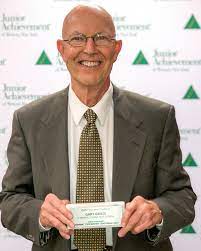
JOIN US TO SAY "HI" TO MR. GROSS!!!! |
|
Mr. Gary Gross is the longest-serving teacher in COHS history! Due to the COVID pandemic, Mr. Gross retired at a time when his students and friends could not say their proper "good-byes."
But we have some great news to share! Mr. Gross will attend O'HARAFEST on July 28, 2023 at Cardinal O'Hara. So if you would like to see Mr. Gross, and wish him well in his retirement, please RSVP at www.cardinalohara.com/event-registration
|
|
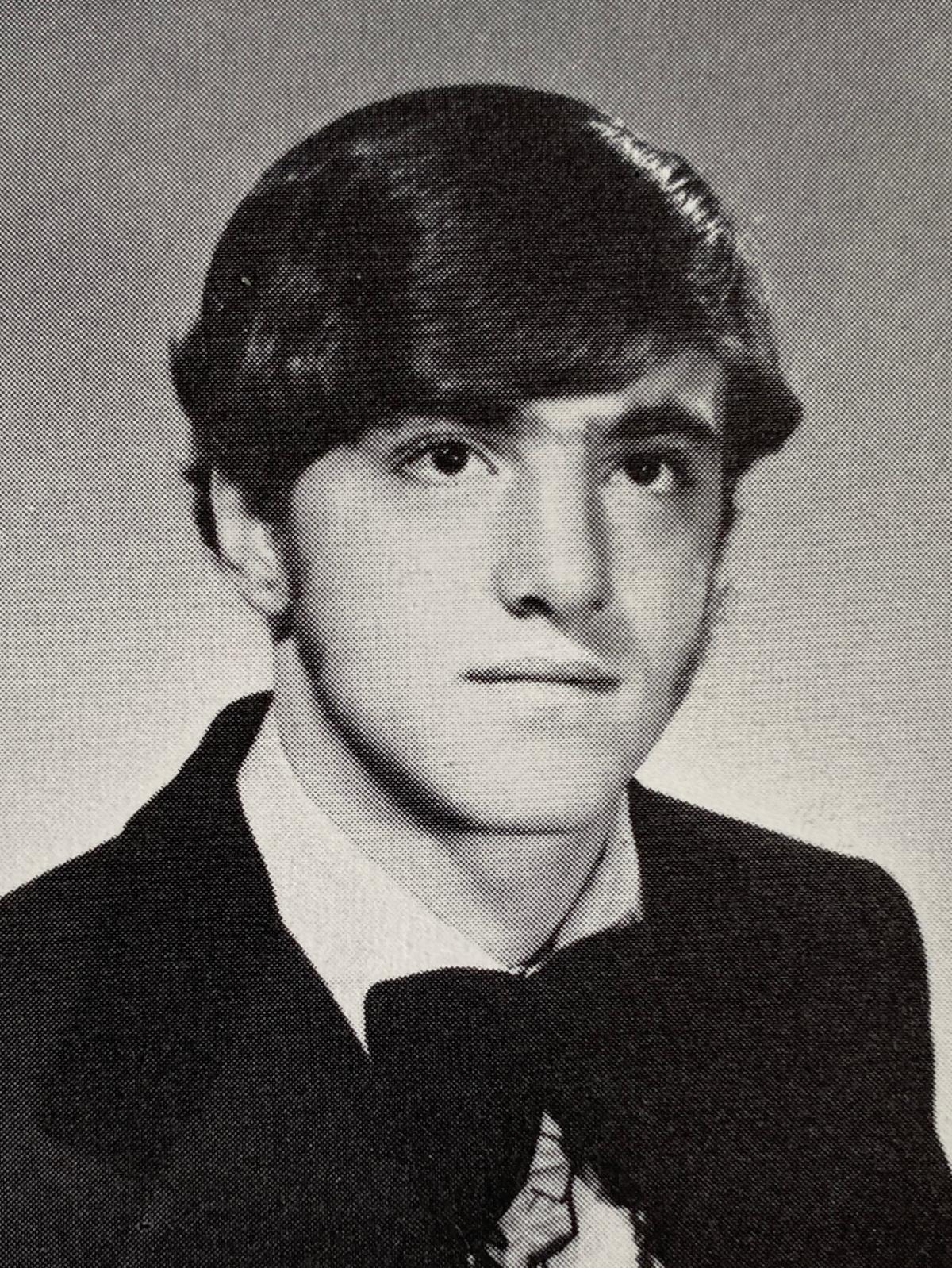
HAWKTALK: Col. James "Mouse" Neumeister, USAF, Ret., - COHS Class of 1973 |
|
On some devices, the article may get "clipped." You may have to click on "expand this message" at the bottom of the first page, to see the entire article. |
|
Dear Fellow Alumni,
Ready for another mouse story?
|
|
As you will (hopefully) remember, the previous HawkTalk article featured Class of '74 alum, Jeff Bachman, and the story of his 42 year career with the Walt Disney Company and a very famous cartoon mouse.
It was so much fun to write an article with a mouse theme, I thought I'd do another!
But this time, the "Mouse" is real!
In today's article, you will meet Col. James "Mouse" Neumeister, USAF, Retired.
You'll read of his remarkable careers - in the United States Air Force and in the Department of Homeland Security. (By the way, "Mouse" recently embarked on his third career, this one with The Aerospace Corporation.)
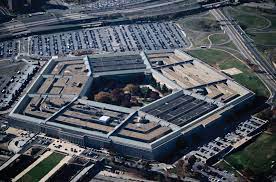
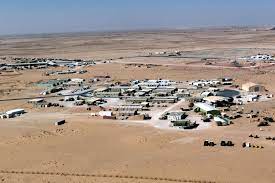
In the Air Force, Col. Neumeister wore many hats. He was a pilot, an aeronautical engineer, a commander and much more. He served in Saudi Arabia and he worked in the Pentagon. As an acquisitions expert he was involved in many vital Air Force projects.
After his Air Force career ended, he worked in the Department of Homeland Security for 15 years serving his country again.
In this HawkTalk, "Mouse" shares memories of his years at Cardinal O'Hara. It's all here, the triumphs, the joys and the worst moment of his O'Hara life!
In addition, "Mouse" talks about two men, an O'Hara teacher and a '73 classmate, both of whom impacted him greatly.
Finally, in a HawkTalk exclusive, you will read the true and unvarnished account of the origin of his "Mouse" moniker!
Thank you "Mouse", for sharing your story with us!
Thank you for all that you continue to do for Cardinal O'Hara High School!
Go Hawks!
Dave Lovering '74
Alumni Relations Coordinator
|
|
"MOUSE"
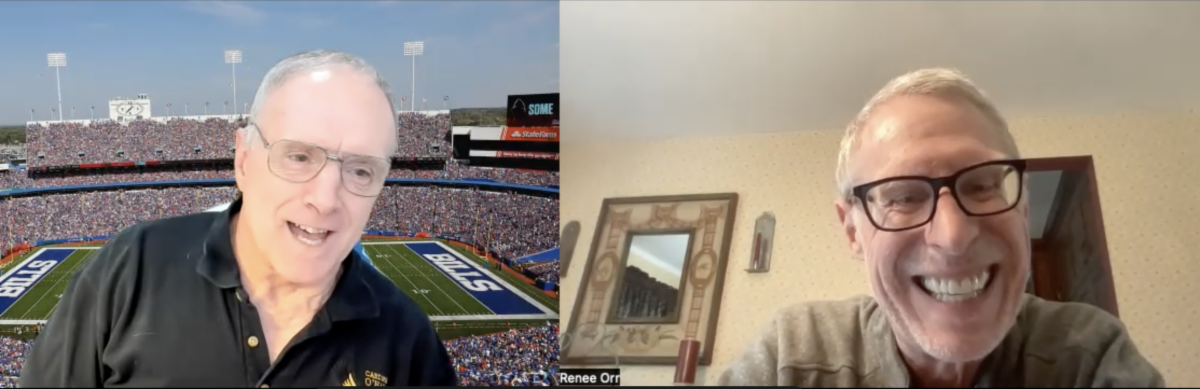
DAVE: I’ve known you a long time, Mouse, going back to our days at St. Christopher’s. At some point, I can’t remember exactly when, I came to realize that “Mouse” was your nom de guerre.
I never really knew the whole story behind it. So, for the record, how was it that you became known as “Mouse.”
MOUSE: (Laughs)
In my sophomore year, before our first cross-country meet, Mr. Markovich, my biology teacher and cross-country coach, took the team to Delaware Park. Our meets were at the park and he wanted us to become familiar with the course.
On that day, the track coach, Mr. Wilkins, decided to join us. As we walked the course, Mr. Wilkins approached each member of the team to ask if they had intentions of running track in the spring. When he got to me, he said, ‘What about you, Mouse?’ It threw me for a second. Nobody had ever called me that before. (Laughs) My friend and 1973 classmate, Bob Mann, used to pronounce my last name ‘New-Mouse-Ter’ but no one had ever called me ‘Mouse.' I'm still not exactly sure why Mr. Wilkins called me 'Mouse.' (Laughs)
Anyway, after Mr. Wilkins called me that, it just kind of stuck. (Laughs)
I’ve used that name throughout my life – including my career. The general officers I worked with in the Air Force only know me as “Mouse.” (Both laugh)
|
|
GREEN ACRES IS THE PLACE FOR ME
DAVE: You grew up in the Green Acres section of Tonawanda – across the railroad tracks from Parkview - where I grew up.
MOUSE: Yes, and I remember an earlier HawkTalk where you referred to Green Acres as the “wrong” side of the tracks. (Laughs)
DAVE: Ok Mousse can we just move on, please! (Both laugh)
How many siblings do you have?
MOUSE: I am the oldest of five. There was a pattern to the births. It was boy, girl, boy girl, boy. (Laughs)
We were all two years apart except for Mike, the youngest, who was born three years after Mary. I was first, followed by Donna (’75), John (’77), Mary (’79), and Mike (’82). We all graduated from O’Hara.
Years after my dad passed, I was visiting my mom at the home where I grew up. While there, I had occasion to go through some family papers and documents. I came across a couple of my father’s paystubs from his primary job and saw how little he made. At that moment I had an epiphany of sorts and realized he probably worked two jobs to put all five of us through 12 years of Catholic school – St. Christopher’s and Cardinal O’Hara for Donna and I, and St. Christopher’s, St. Edmund’s and O’Hara for the others.
I can’t thank my parents enough for sacrificing the way they did to send us all to a private school. I know that holds true for many of my O’Hara classmates.
|
|
NO REGRETS
DAVE: Did you consider any other high school?
MOUSE: Honestly, I don’t remember giving it a whole lot of thought.
I remember going to some event at St. Joe’s my eighth-grade year. In order for me to have gone there, I would’ve had to have been awarded a large scholarship.
Also, living in Green Acres, we lived fairly close to O’Hara. I don't think I would have chosen to go to St. Joe’s or any other school even if I had a choice.
Another factor was that St. Edmund's School and Parish were going to open soon. It would become our new parish. While the church was being built, the soon-to-be parish families were invited to attend Sunday Mass at Cardinal O’Hara's auditorium. My mom and dad started to take us to O’Hara for the St. Edmund’s masses. As a result, we became familiar with O’Hara.
At the end of the day, I am so very pleased that I went to Cardinal O’Hara for high school. There are no regrets.
|
|
A FAVORITE COURSE
DAVE: What was your favorite course at O’Hara?
MOUSE: Great question!
There was a religion course I took that I found very interesting.
In the course we studied the Bible. The teacher ‘walked’ us through the book and explained things and provided historical references about the times in which the Bible was written. He also explained the meaning behind some of the parables. It made the Bible more real, more relevant to me.
I can’t remember if the course was taught by Father Adrian or Father Roman but it would have been taught by one of those Franciscans.
|
|
THE CATHOLIC SPRIRT
DAVE: You mentioned Father Adrian and Father Roman.
When we were at O’Hara in the early to mid 1970s, I’d guess about one-third of the teaching staff was from a religious order. Most Catholic schools today don't have that same presence. Of course, that is not just at O’Hara. it is happening throughout Catholic schools in this area due to a number of factors.
MOUSE: I guess I would say that I wouldn’t necessarily rate the Catholicism ‘level’ of any school based on the number of religious faculty that they have.
To me, it is more about the Catholic spirit that is present in that school.
To illustrate my point, my wife, Lorrie, and I were back in Western New York during O’Hara’s Homecoming a few years ago. There was a Mass held the Saturday morning before the football game. There were a lot of students at that Mass, many of whom were not Catholic. I knew they weren’t Catholic because during communion, I watched as they were in the communion line. A large number of the students approached the priests with their arms in front of them indicating they were up there to receive a blessing - not receive the host.
I was very impressed by the number of students that were there and by the fact that so many received a blessing.
|
|
LEAST FAVORITE MEMORY!
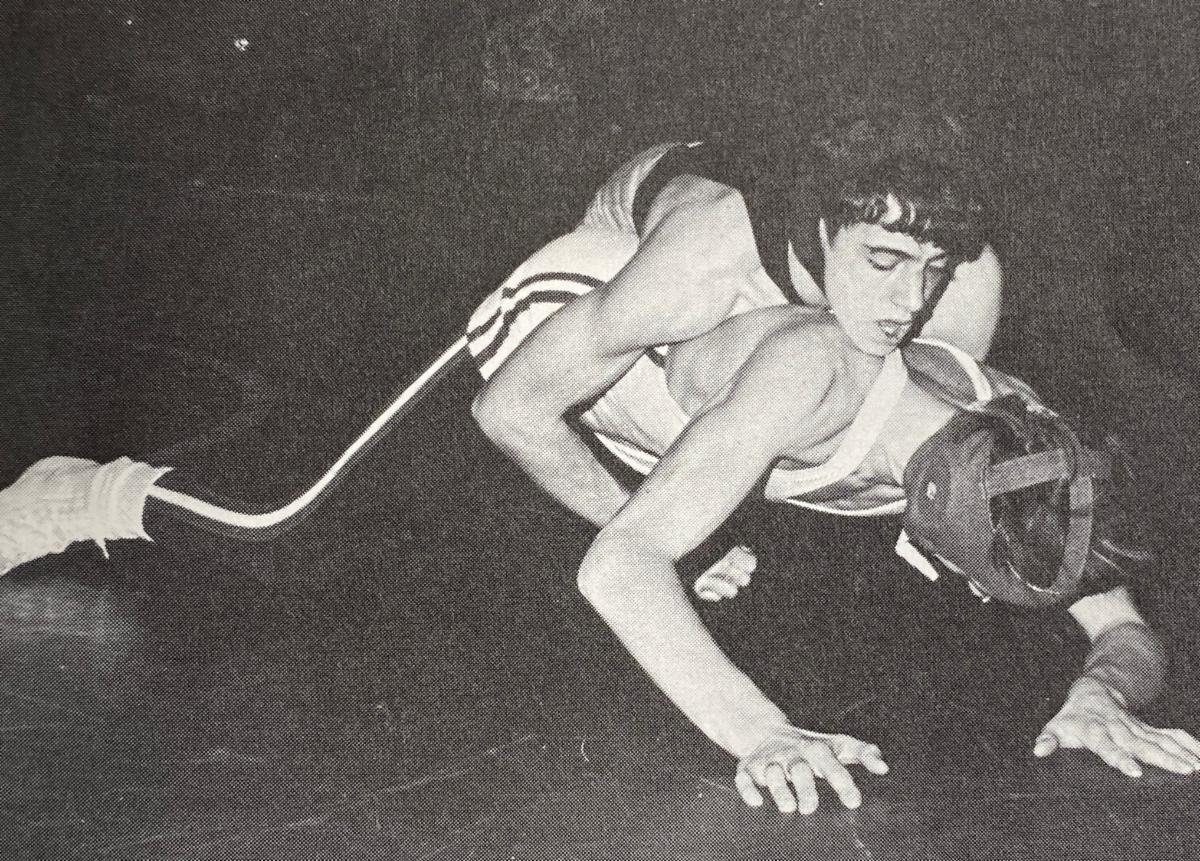
DAVE: Earlier, you mentioned that you ran cross-country and track for four years. But you also wrestled at O’Hara, correct?
MOUSE: I wrestled on the varsity team for my last three years.
We had some top wrestlers on our teams. We were competitive in most of our matches. I would describe myself as an average wrestler. I probably won and lost an equal number of matches in my career.
DAVE: Do you have a favorite memory from your wrestling days?
MOUSE: No. But I have a least favorite memory. (Laughs)
In my senior year we had a match at Bishop Neumann High School. It was the second or third period of the match and I was behind in points. The Neumann wrestler got behind me and tried to force me down to the mat. I put my arms are to break the fall. I dislocated my left elbow when we fell to the mat.
I remember going in an ambulance to the hospital where they re-set the bones and put them back where they were supposed to be. (Laughs) I still continued to go to wrestling practice. I did whatever drills I could do with my arm in a cast. I was a co-captain of the team and I wanted to be there for the team members. But, for all intents and purposes, that was the ignominious end to my wrestling career.
|
|
COHS HONORS
DAVE: Let’s finish up your O’Hara story. You were a three-sport athlete at O’Hara. You were in the Varsity Club and the National Honor Society. You were also the salutatorian of your class.
MOUSE: That’s correct.
I worked hard to maintain good grades. After that, most of my time and energy was focused on running. That’s why I am so laser-focused on fixing up the track behind O’Hara. I grew up on that track.
DAVE: I know that you closely follow current events at O'Hara. You’re aware that the outdoor athletic facilities are being upgraded. The track upgrade will be in the next phase.
MOUSE: I am aware of that. And as you know, I am looking forward to contributing to that cause. We need to address the track.
|
|
DAVE: Oops! I almost forgot one of your honors!
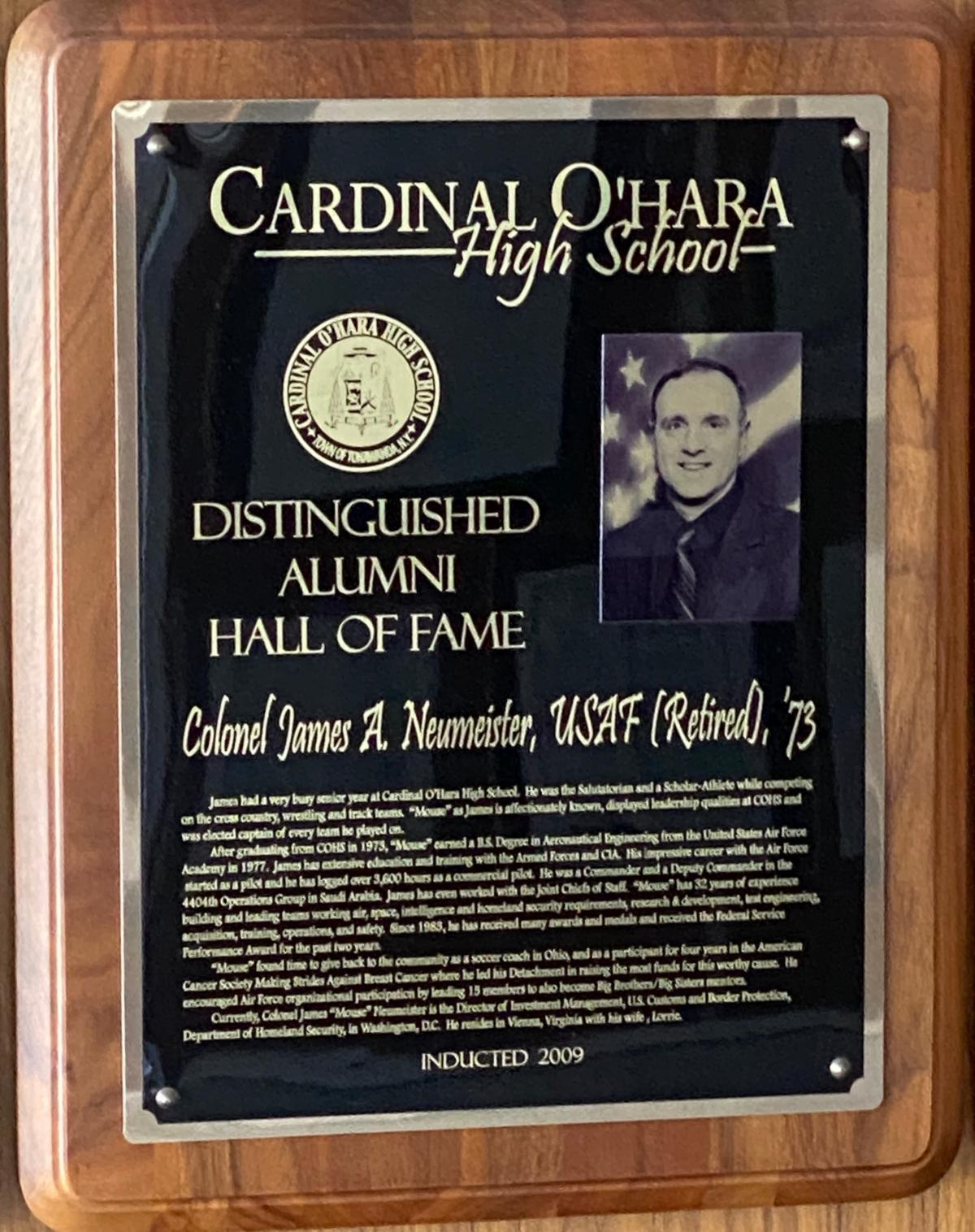
In 2009, you were inducted into the COHS Distinguished Alumni Hall of Fame!
MOUSE: That was very special. I am still humbled by it even after so many years.
In my acceptance speech, I spoke about two men who each had a profound impact on me: My '73 O'Hara classmate Mike Brannen and my teacher and running coach Mr. Paul Markovich.
DAVE: Would you share what you said?
|
|
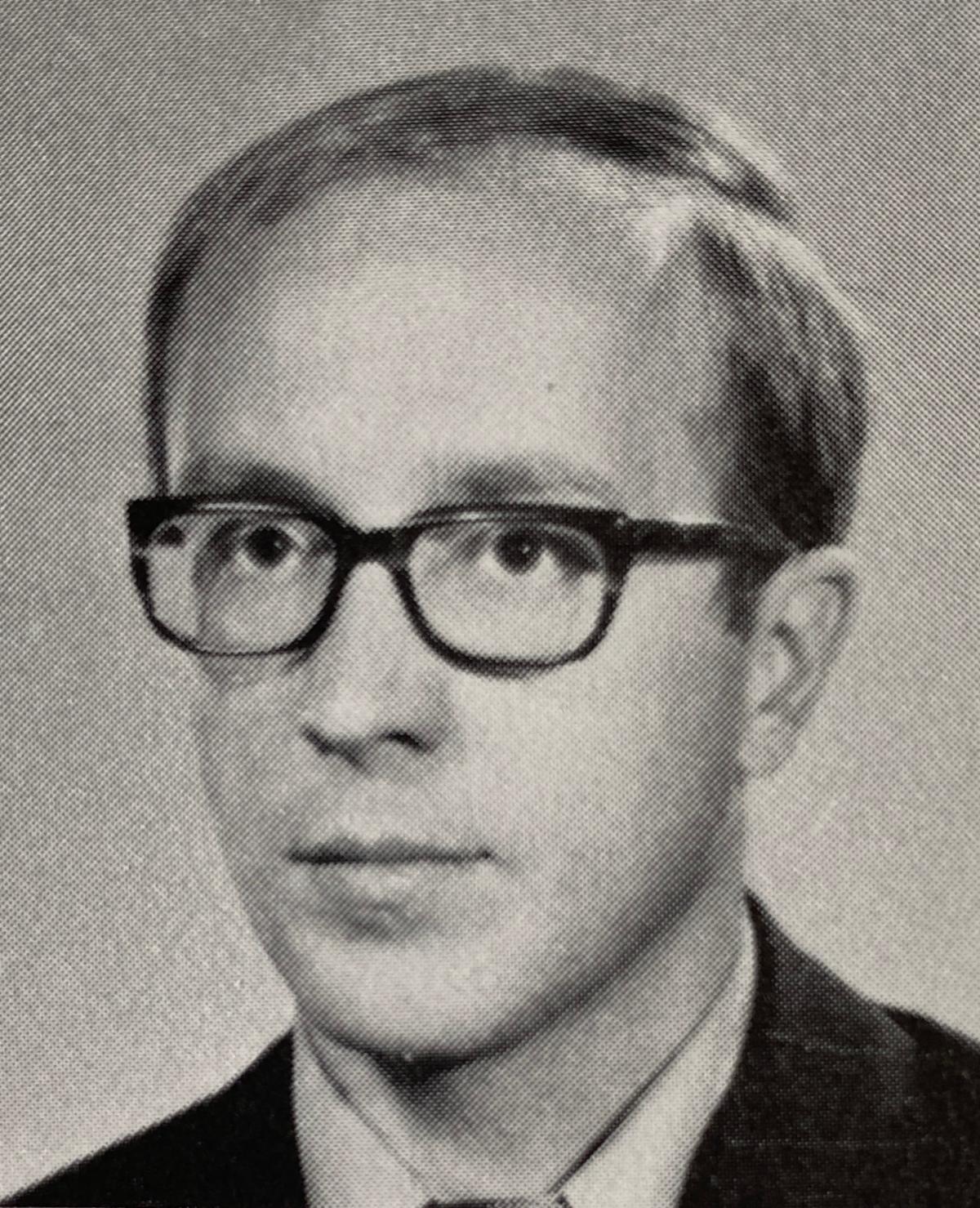
Mike Brannen
MOUSE: I talked about Mike’s great spirit and his service to others.
In my address, I talked about meeting Mike about a week after he and his family moved into Parkview in 1967.
My initial interactions with Mike at St. Christopher’s concerned our 7th grade spelling tests. (Laughs)
After a spelling test, our teacher had us exchange papers with the person behind us. I sat in front of Mike so we exchanged our spelling tests and graded each other's papers. That’s really how our friendship began.
We were great friends at O’Hara and even better friends after we graduated.
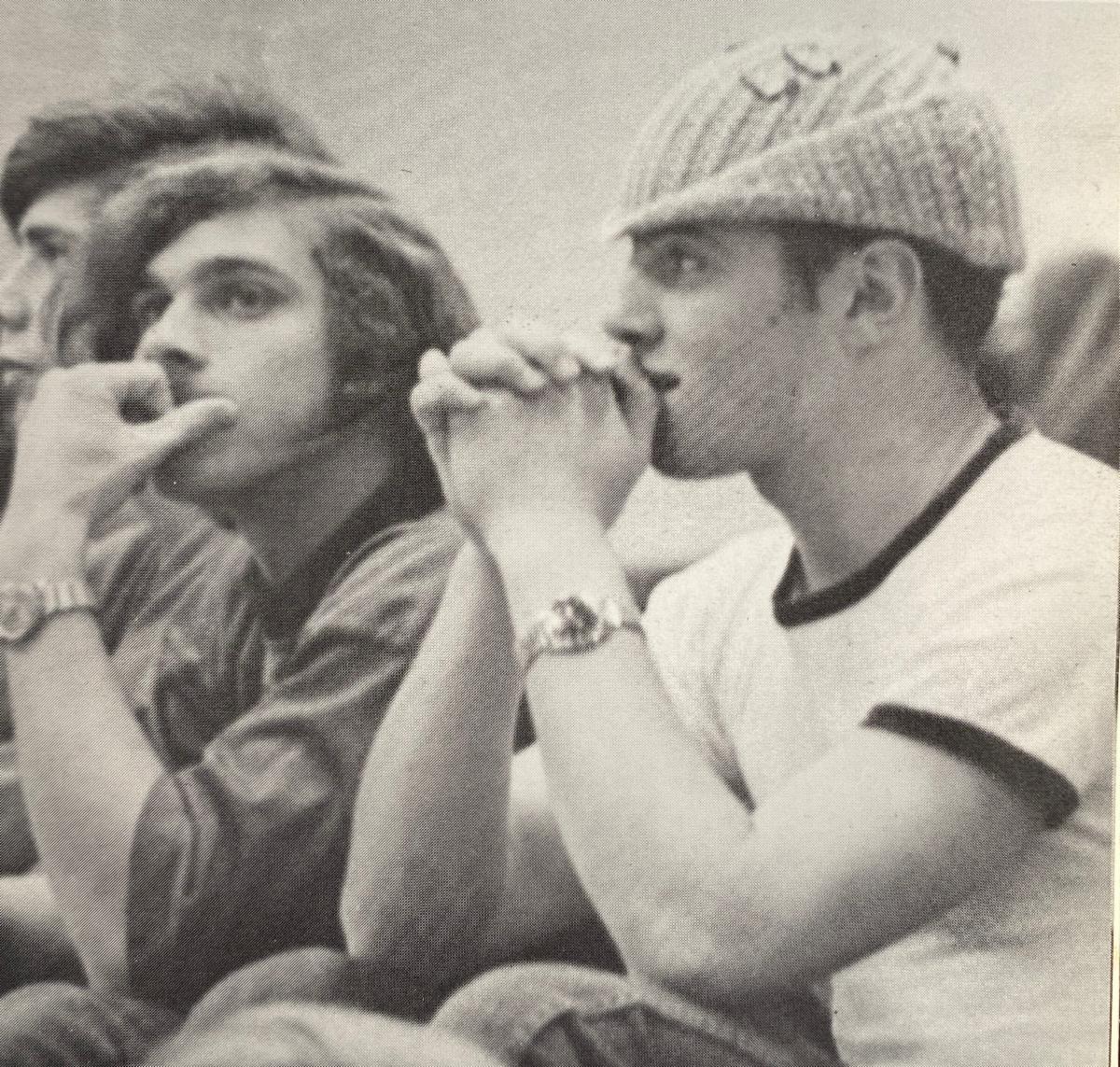
(Photo: Mike (l) and Mouse (r) return to O'Hara, as alumni, to take in an event)
|
|
We ran track and cross-country together for three years, from sophomore year through senior year. We were co-captains of the cross-country team and tri-captains oof the track team, along with Mike Yeates.
I was with Mike a lot. He and I were part of a group of four friends from St. Christopher’s, that frequently attended social events at O’Hara: Mike O’Neil, Bob Mann, Mike and I.
After high school, whenever I came home from the Air Force Academy I’d always try to see the guys. Over time, as life moved on, it was often just Mike and I.
I was very close with The Brannen family. Mike’s parents often referred to me as their fourth son after Don, Mike and Patrick. I was also close with Mike’s sisters: Karen and Colleen.
Mike passed in 2007 after a two-and-a-half-year battle with cancer.
|
|
DAVE: Mike was a great guy.
I remember hearing the news of his last days. His sister, Karen, told me that as the end approached, the family took Mike to New York City to see his beloved Mets play. Sadly, he was too sick to go to the game.
MOUSE: Yes. Instead of going to the game, they propped Mike up with pillows and had him sit at a window in the hotel room overlooking Queens, where Mike had lived until they moved to Tonawanda.
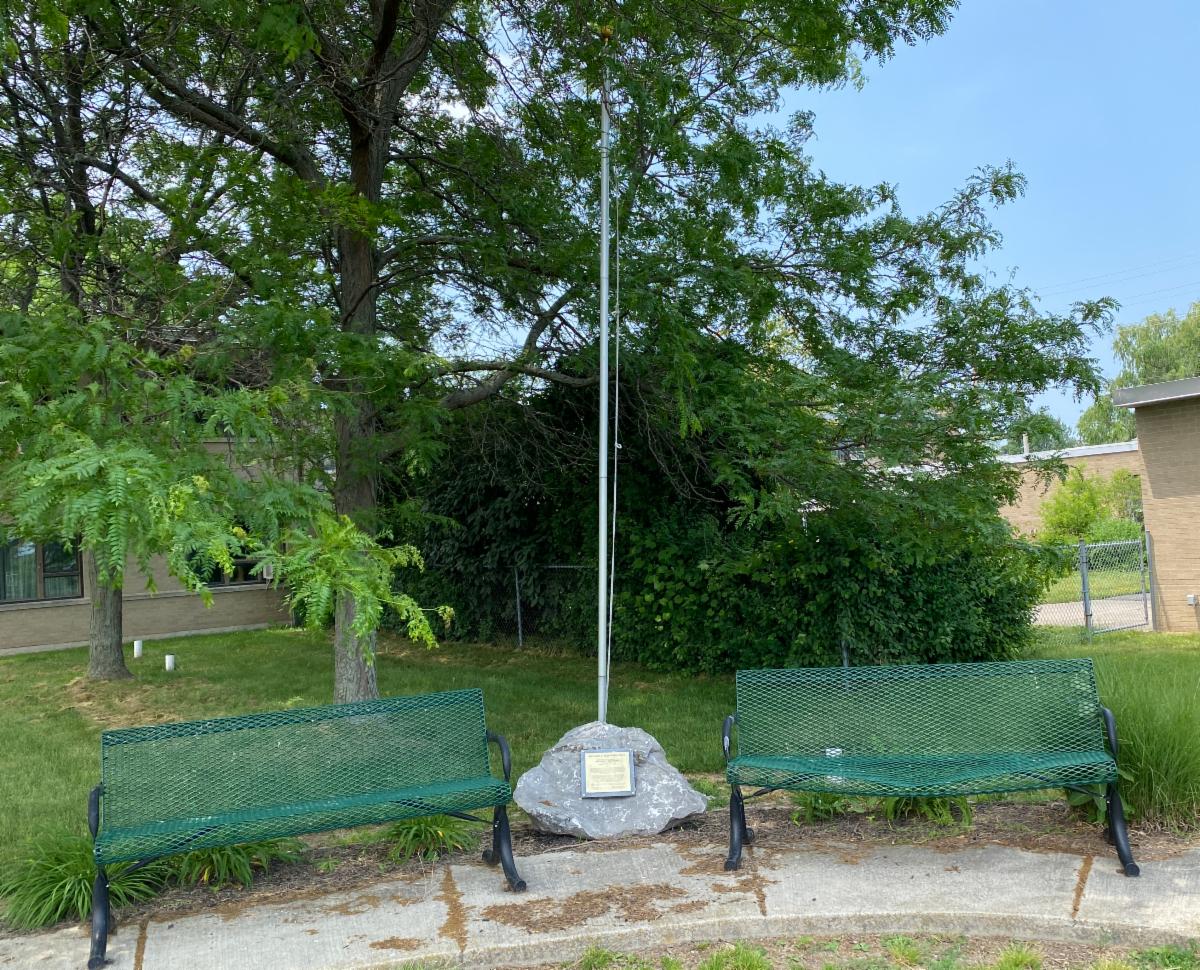
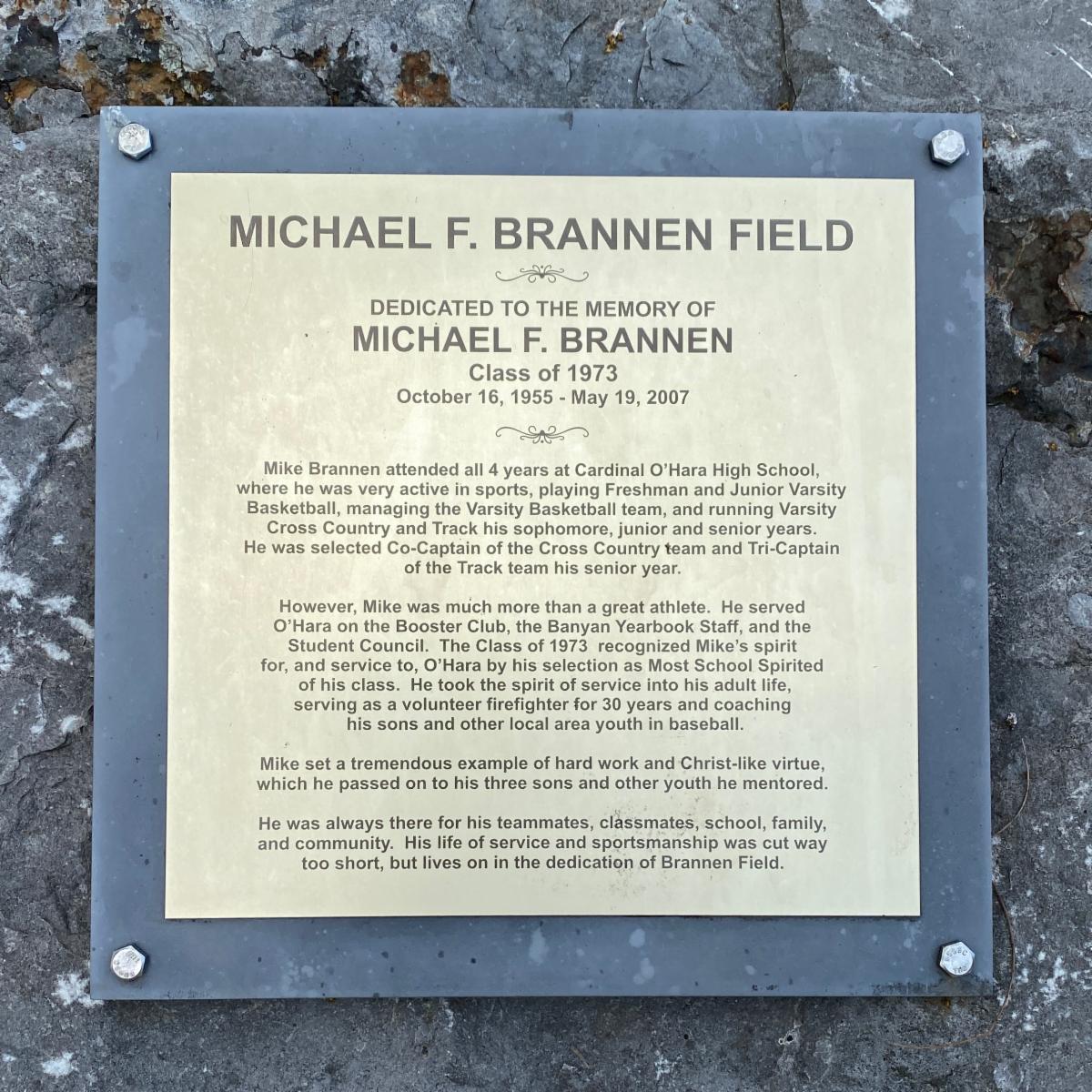
DAVE: You arranged for a memorial to be placed at O’Hara in Mike’s honor.
MOUSE: It’s between the old friary and the baseball diamond - now known as Michael F. Brannen Field. It’s my tribute to my dear friend.
|
|
Paul Markovich
MOUSE: The other person I spoke about was Paul Markovich, my earth science teacher, and coach for cross-country and track. I did not fully appreciate all the things that the teachers and staff at O’Hara did for me when I was a student. I began to appreciate their efforts shortly after I graduated – especially Mr. Markovich. He coached me for four years in two sports so I knew him better than any other teacher. He did so many extra things for us. He ran a winter track program, drove us to Rochester to practice and New Jersey to compete. Those were all things he did that went ‘above and beyond.’
MOUSE: I could talk forever about Paul Markovich. He is such a wonderful man.
DAVE: People occasionally asked me if I know where Mr. Markovich is. I never was able to find out - but it sounds like you know.
MOUSE: When I tracked him down, I discovered that he was the Assistant Principal at a public high school in Florida. He got his PhD and became Dr. Markovich. He is retired now and lives on the west coast of Florida.
The colors for the school where he was Assistant Principal are …
DAVE: Black and gold?
MOUSE: You got it! (Both laugh)
|
|
PAYING IT FORWARD
DAVE: You have been a generous donor to your alma mater.
MOUSE: O’Hara was a very special place for me.
All the interactions with classmates and teammates were special as were going to the dances, going to sporting events and going to the off-campus parties we shouldn’t have gone to. (Both laugh). It was a special place and a special experience.
I sometimes ask myself, 'Why are O’Hara alumni so lucky?' In my sophomore year, your freshman year, Bishop Fallon and Bishop Ryan closed. Next was Bishop Gibbons. Soon after you and I had graduated, Bishop Neumann closed. I was shocked about that. I never would have imagined Neumann would ever close.
Yet, O’Hara withstood it all. And today, O’Hara is still there.
Through all the downsizing, throughout all the transitioning at the Diocese, we still have our high school. We can go back and walk through the hallways. We can take our grandchildren to see where we went to high school. I think of all the graduates from the Catholic schools that have closed and I realize they can’t do that. We can.
It doesn’t happen by accident. I credit the Board of Directors the administration, staff, parents and the O’Hara community. But it is also up to us - the alumni - to step up.
I encourage all alumni to get involved and support your alma mater. You still have one. So many others who graduated from Catholic high schools in the Buffalo area - don’t. Don’t take it for granted.
DAVE: Is that the reason you donate?
MOUSE: That’s part of the reason. But, as I’ve said earlier, O’Hara was always a special place and experience for me and I'd like to see other young men and women have an opportunity to experience the same thing.
|
|
O'HARA'S IMPACT
DAVE: How did COHS impact you?
MOUSE: I’d have to say that the most direct impact was that I got a great education at O’Hara.
My O'Hara education set me up for success at the Air Force Academy.
My experiences at O’Hara also taught me the importance of relationships and working with others and supporting others. I had wonderful friendships at Cardinal O’Hara that were built on the foundation of our faith.
I would say those are the things that O’Hara did for me that had the greatest impact on my life.
|
|
THE AIR FORCE ACADEMY
DAVE: You were accepted to attend the Air Force Academy in Colorado. That’s a big deal!
MOUSE: I love military ‘stuff’ and I have for a long time. I knew that I wanted to serve my country. The Air Force Academy was the only service academy I applied to. I was interested in the science of aviation and I wanted to be a pilot.
At Easter time, my senior year at O’Hara, I finally heard from the Air Force Academy that I had been accepted. It was back in the prehistoric days so I found out by telegram. (Laughs) My mother had the good sense to hang onto that telegram. She had it framed and I still have it today.
|
|
I was thrilled to be accepted. There is no better pathway to the Air Force than graduating from the Academy.
DAVE: What was your major?
MOUSE: I have a B.S. in Aeronautical Engineering. It’s probably the most challenging degree program they offer.
I remember upperclassmen approaching me and asking, “Why are you doing that to yourself.’ (Laughs) But that was the major I was most interested in. It was challenging - but I made it through.
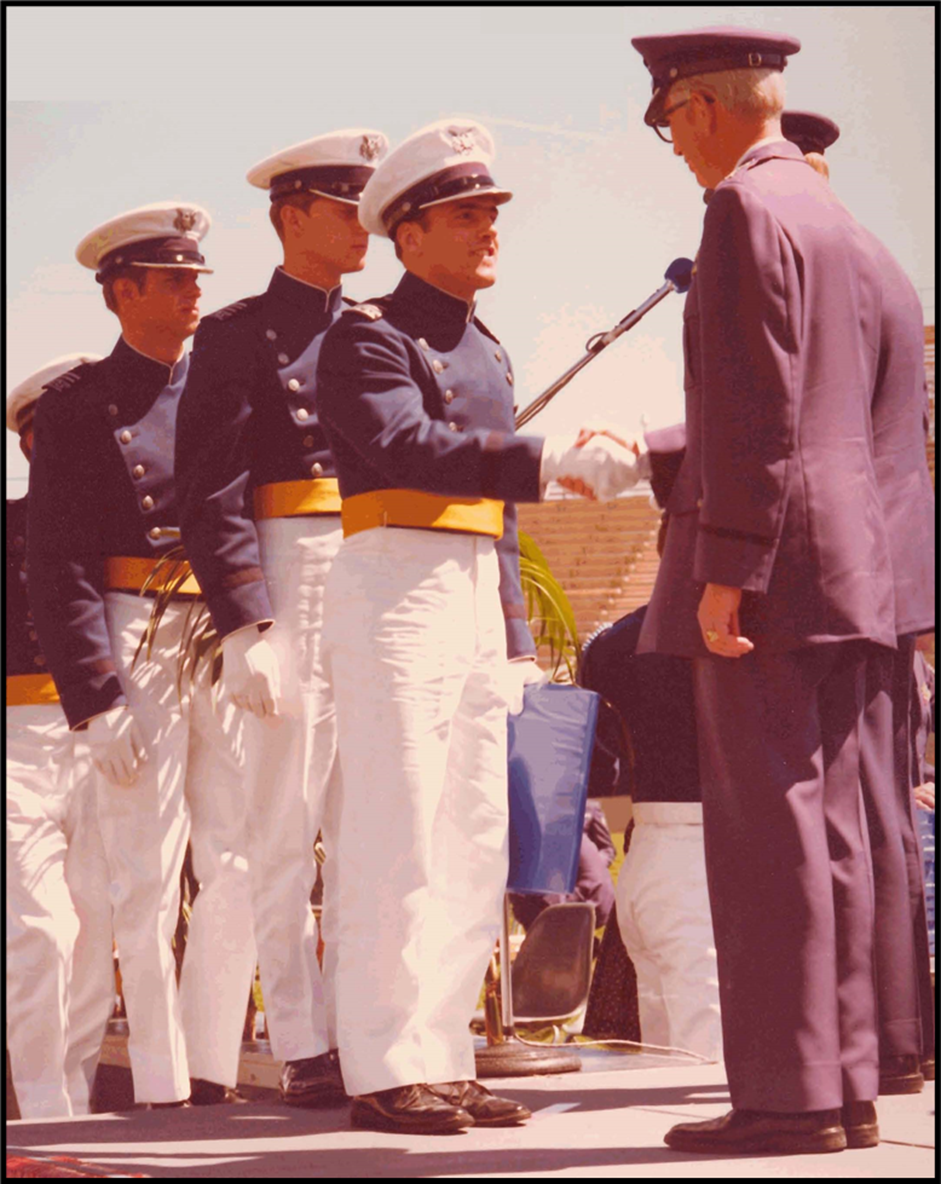
(Photo; Mouse graduates from the AFA)
In my senior year at the Academy, I distinctly remember thinking to myself… ‘Counting kindergarten, I’ve been in school now for 17 years. I have always enjoyed school but it's time to begin my career!’ (Laughs)
|
|
AIR FORCE CAREER (1977 - 2007)
(Mouse enjoyed a highly successful, 30-year career, with the United States Air Force. He flew planes and tested them. He commanded units. He worked in acquisitions. He served in Saudi Arabi. He had two assignments at the Pentagon. The following is an abbreviated look at his Air Force career.)
Air Force Pilot – Altus Air Force Base (AFB), Altus, Oklahoma
MOUSE: I graduated from the Air Force Academy in 1977 and was sent for pilot training for a year.
After I completed my training, I was stationed at Altus Air Force Base in Oklahoma for 4½ years. In that assignment, I flew KC 135 tanker planes. The KC 135s were primarily used to refuel planes that were already in flight.
|
|
Aeronautical Engineer – Wright Patterson AFB
MOUSE: In 1983, I left Oklahoma and moved to Wright-Patterson AFB in Dayton, Ohio.
At Wright-Patterson, my responsibilities included flying and testing new systems and new capabilities for the Air Force. I was attracted to that work because I saw it as a combination of flying and leveraging my aeronautical engineering degree.
|
|
Deputy Director, Chief of Training for JSTARS
MOUSE: My next assignment was in Melbourne, Florida. Here, I moved into the broader business of acquisitions where I was involved in the development and production of new systems for the Air Force, specifically, I dealt with the JSTARS initiative.
I was the Deputy Director, Chief of Training, for the Joint Surveillance Target Attack Radar System (JSTARS) platform, a $7B initiative. JSTARS was a surveillance system platform. It helped identify moving targets on the ground.
I led development and testing of the JSTARS system. It was my job to evaluate the laboratory, ground, and flight tests. I also directed flying, ground, and systems safety programs.
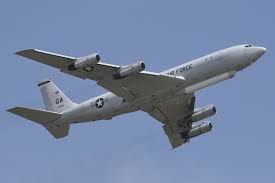
I was actually the very first pilot in the Air Force to fly a JSTARS E-8C aircraft.
(Photo above: E 8C aircraft)
I did that for a couple of years. I did far less flying as my responsibilities began to center on acquisition.
DAVE: What do you mean when you say “acquisitions?”
MOUSE: Acquisition refers to research, development, design, testing, production, and modification of weapons and other systems, supplies, or services intended for use in or support of military missions. I worked in acquisitions for most of the second half of my Air Force career.
|
|
Program Manager; Chief, Current Operations Division; Air Force Technical Application Center
MOUSE: My next move was to Patrick Air Force Base, in Florida, where for three years, I led a cross-discipline team in the acquisition of a $33M advanced airborne collection capability to provide threat information.
|
|
Commander, 31st Test & Evaluation Squadron - Edwards Air Force Base
MOUSE: In 1993 I was assigned to Edwards Air Force Base in California for one year.
I got back into the cockpit when I was named commander of a unit at Edwards Air Force Base. Edwards is known as a flight test site. It was a wonderful assignment, I really enjoyed it.
At Edwards, I was in charge of over 300 aircrew members, systems engineers, and logisticians conducting operational test and evaluation of Air Force combat systems, including the B-1, B-2, B-52, and F-15E aircraft, and Tri-Service Standoff Attack Missile. The focus was to assess and improve operational effectiveness and suitability.
|
|
Joint Warfighting Capability Analyst, Joint Chiefs of Staff, Pentagon, Washington, DC
MOUSE: After one year, I came back to DC and went to school, sponsored by the Air Force. Once I completed the year of school, I served on the staff of the Joint Chiefs at the Pentagon.
I developed military assessments for the Chairman of the Joint Chiefs of Staff. I personally wrote the Chairman's Program Recommendations and his Program Assessment. I did that for two years.
|
|
Deputy Commander, 4404th Operations Group at Prince Sultan Air Base, Saudi Arabia
MOUSE: Next, I went to Saudi Arabia for a year. It was between the “shooting wars” of Desert Storm and Iraqi Freedom. We were enforcing the “no-fly” zone over Iraq. Our mission was to prevent Saddam from bombing his own people.
I led the Air Forces largest, most diverse combat operations group composed of over 2,300 personnel and 16 squadrons at three operating locations flying attack, electronic combat, command-and-control reconnaissance, air refueling, combat search and rescue and airlift operations
|
|
Commander, Deputy Commander, 93rd Air Control Wing at Robins AFB, Georgia
MOUSE: When I returned from Saudi Arabia, I was assigned to Robins Air Force Base in Georgia. There, I was in the operations unit, flying the E-8C JSTARS aircraft that I had helped develop earlier in my career.
At this point, it’s 1999 and I have been in the Air Force for 22 years. I was pretty much done with flying aircraft after that.
|
|
Materiel Wing Commander, System Program Director at Kirtland AFB, New Mexico
MOUSE: My next assignment was at Kirtland AFB. I worked in the Air Force’s outer-space program. This was during the time when the Air Force led the U.S. space program.
Throughout its history, the Air Force was always involved in outer space. It was something I was interested in even though my experiences and training were in aeronautical engineering not astronautical engineering.
I was leading a program that was responsible for demonstrating new technologies for operational space systems. We built spacecraft and had technologies integrated into them as payloads. We’d get them into orbit and prove out the concepts and capabilities so that they could be used on future operational spacecraft.
|
|
Senior Military Assistant, Deputy Director of Requirements, Under Secretary of Defense for Intelligence, The Pentagon, Washington , D.C.
MOUSE: I returned to the Pentagon and served in the office of the Secretary of Defense as a Senior Military Assistant supporting one of the Under Secretaries. I was basically an executive assistant.
Chief, Intelligence, Surveillance, & Reconnaissance (ISR), Functional Integration Office (FIO) National Security Space Office, The Pentagon, Washington, D.C.
|
|
MOUSE: My final tour, was again working on space “stuff” in what used to be the National Security Space Office in Washington, DC.
I worked across all the services and also with the Department of Defense and the intelligence community, looking at broad space capabilities to support our nation.
DAVE: In 2007, you retired from the Air Force.
MOUSE: I didn’t have a choice. (Laughs) In the Air Force, colonels must retire when they reach 30 years of service. So, when that time came, the Air Force told me I couldn’t play anymore. They kicked me out. (Laughs)
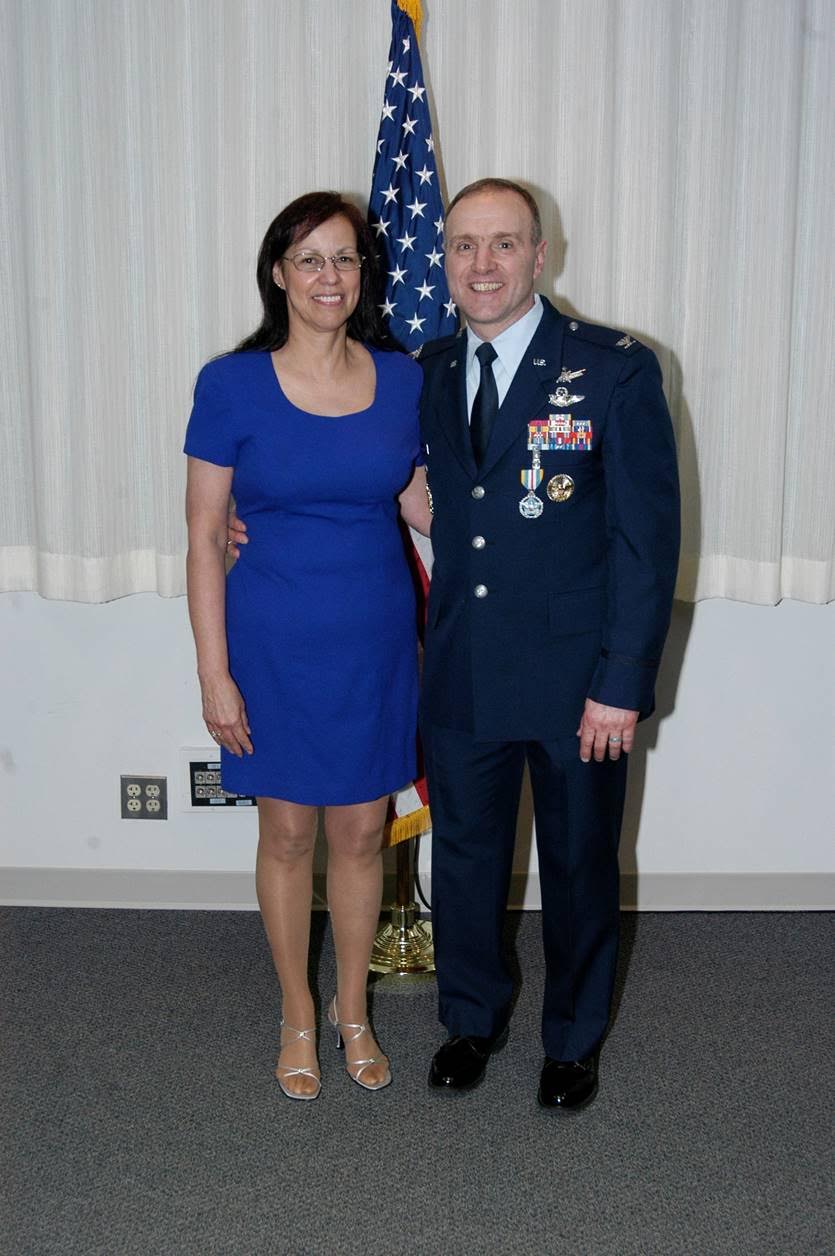
(Photo: Lorrie and Mouse at his Air Force retirement ceremony.)
|
|
DEPARTMENT OF HOMELAND SECURITY (2007 - 2022) |
|
MOUSE: So, here I am retired form the Air Force.
The thing was, I wanted to continue serving my country.
I focused on finding a position in the federal government. An Air Force colleague of mine, also a colonel, had retired a few years before me. He had a couple of different jobs with the federal government after he retired. One of his jobs was with the U.S. Customs and Border Protection Agency within the Department of Homeland Security (DHS).
My friend knew that I was looking for a new career and he knew that DHS was looking for someone with a background in acquisitions, in developing and delivering new capabilities, new systems for federal government customers.. That’s how I ended up in DHS.
I spent the next 15 years in DHS - all in acquisitions.
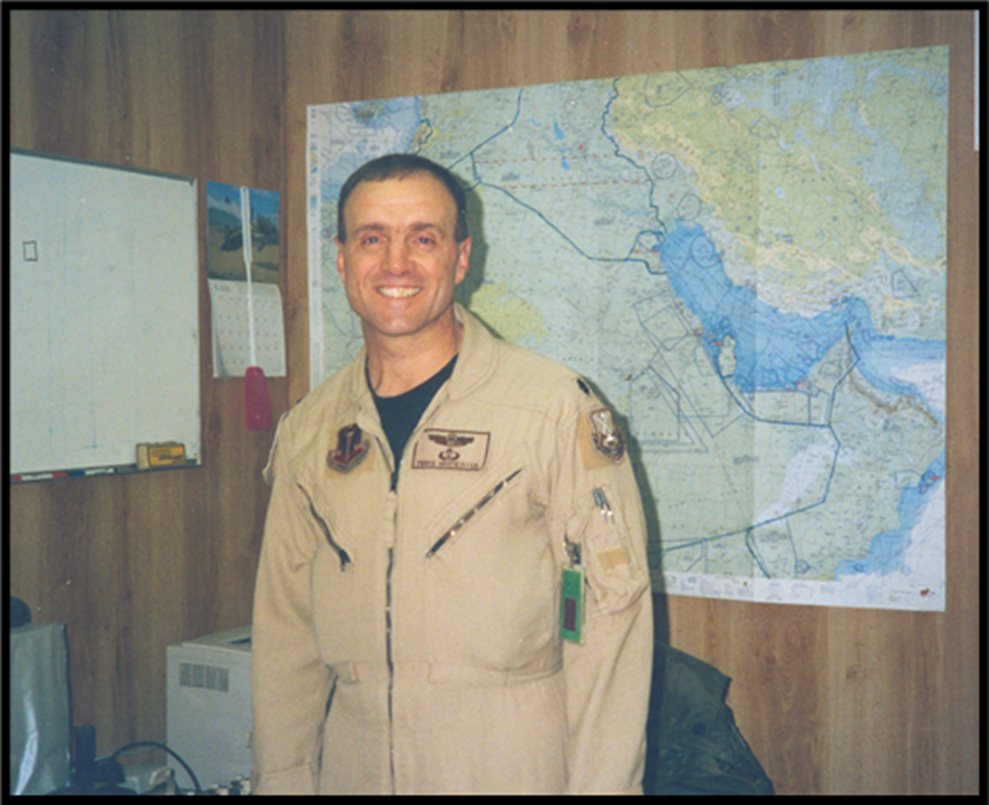
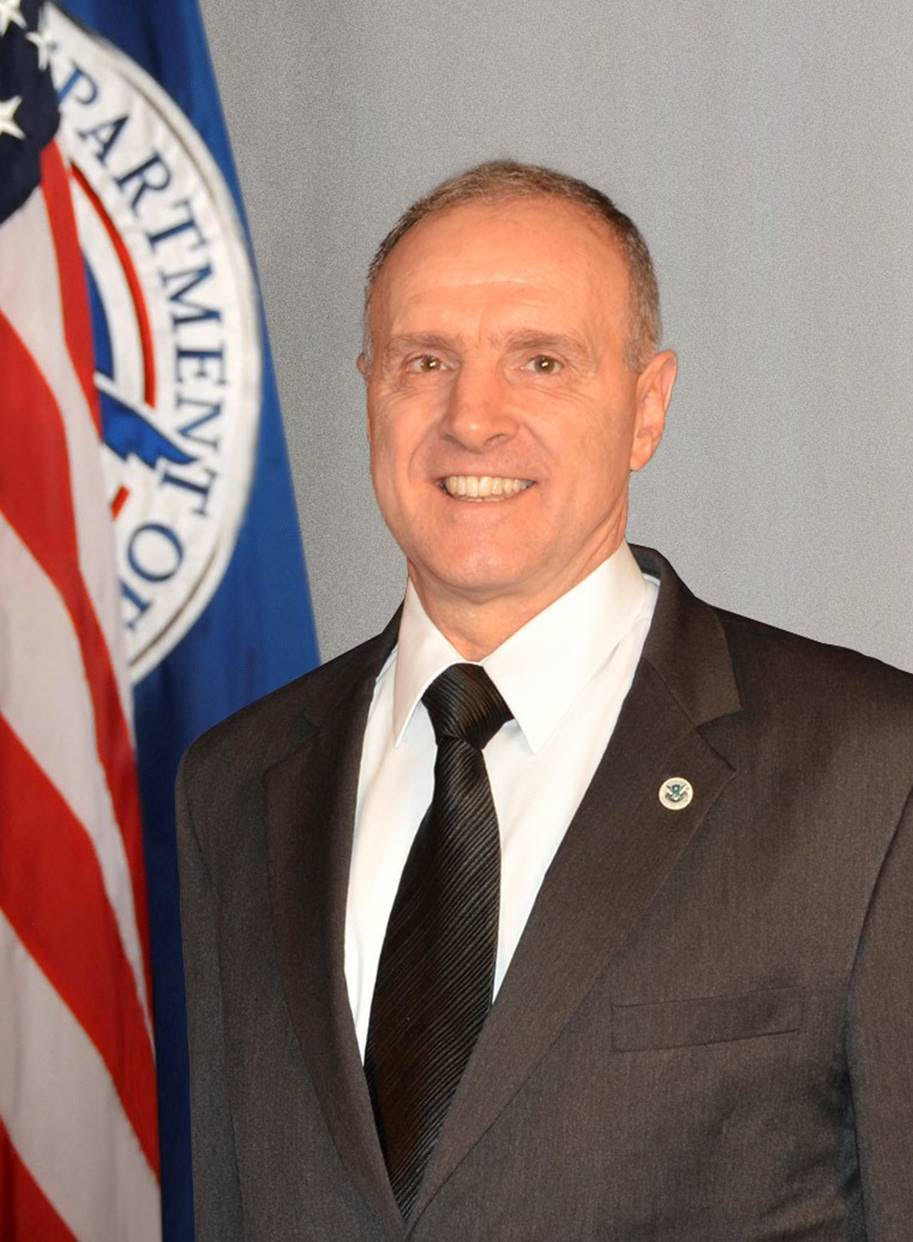
(Photo: Mouse as an employee of The Department of Homeland Security)
Customs and Border Protection
DHS Headquarters
MOUSE: I started out in Customs and Border Protection. From there I went to DHS headquarters and then to the Coast Guard, which is also a branch of DHS.
Coast Guard
MOUSE: The five years I spent with the Coast Guard was the longest I ever spent on any job I had so far! (Laughs)
I was the Deputy Assistant Program Executive Officer for Surface Programs. 'Surface programs' refer to all of the Coast Guard’s cutters, or all of their ships and many of their boats. I love to tell people, “What else do you do with 30 years active-duty service in the Air Force, then buy ships and boats for the U.S. Coast Guard.” Makes perfect sense, right? (Laughs)
All kidding aside, they were obviously more interested in my years of acquisition experience with the than my “expertise” with the Coast Guard.
Transportation Security Administration (TSA)
Director
MOUSE: After my stint with the Coast Guard, I worked for TSA where I led the Checkpoint Solutions and integration Division in planning and execution of the Passengers Screening Program, Security Technology Integrated Program, and Threat Assessment Capabilities.
Department of Homeland Security (DHS)
Senior Advisor, Undersecretary for Management
MOUSE: My final position was back to DHS where I was Senior Advisor and led Department-wide initiatives. I retired from my 15-year DHS career in 2022.
|
|
THE AEROSPACE CORPORATION (2022 – PRESENT)
Senior Engineer/Acquisition Specialist
|
|
DAVE: But, it wasn't like you actually retired! (Laughs)
MOUSE: (Laughs) No. In 2022 I started working for the Aerospace Corporation.
The Aerospace Corporation is one of about 18 organizations in the United State that are referred to as federally funded research and development centers (FFRDC). Our corporation provides technical guidance and advice on all aspects of space missions to military, civil, and commercial customers.
We are a contractor but we have a unique relationship with the federal government as a nonprofit. We are really there to support the federal government.
During my active-duty career in the Air Force, when I began working in aerospace initiatives in Albuquerque, New Mexico, I worked with people from the Aerospace Corporation. I was always impressed with them - and the work they did. Even back then, I was interested in someday working for them.
DAVE: Wow, Mouse! You have had a remarkable career! I mean careers!
MOUSE: (Laughs) Thank you, Dave. I have certainly enjoyed them.
|
|
CAREER HONORS
DAVE: I know that you were frequently recognized for your service. Is there one honor in particular that is of great significance to you?
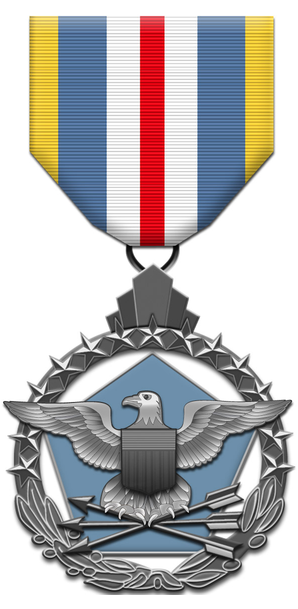
MOUSE: I was awarded three Defense Superior Medals which was somewhat unusual for my grade and length of service.
DAVE: Why does one receive the Defense Superior Medal?
MOUSE: It is given to members of the armed forces who perform superior meritorious service in a position of significant responsibility.
(Photo: Defense Superior Medal)
While I was in Homeland Security, in federal service, I was ultimately promoted to Senior Executive Service – the federal government’s executive level. For the last five years, working for the government, I worked in that capacity.
|
|
FAMILY AND FUN
DAVE: We are almost at the finish line! As a former runner, I’m sure you’re glad to hear that! (Both laugh)
I have had the privilege of getting to know your wife, Lorrie, a little bit. What a wonderful lady!
MOUSE: She certainly is. We live in Virginia.
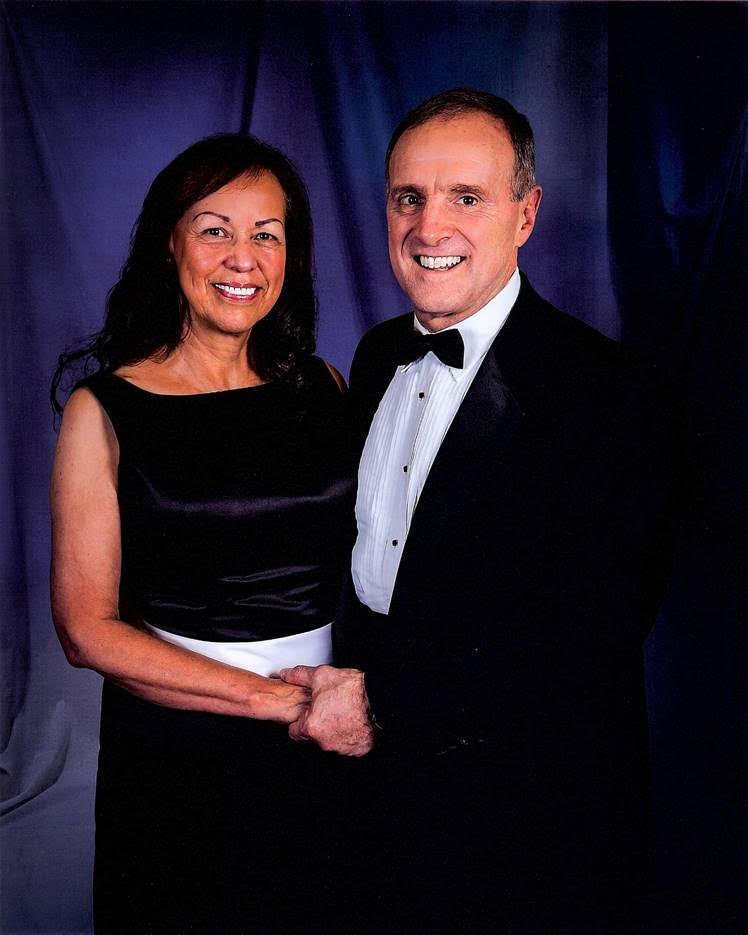
(Photo: Jim and Lorrie at the Coast Guard Commander's Ball.)
Lorrie is a Records Specialist at George Mason University in Arlington, Virginia. We will celebrate our 19th wedding anniversary when we are in town for the COHS Class of 1973 50-year-reunion!
We are really looking forward to it!
DAVE: The 1973 Reunion Committee has worked very hard to put your reunion together. I am sure that all the attendees will have a wonderful time!
|
|
Any children?
MOUSE: We have three children.
The oldest, Eric, lives in Santa Fe, New Mexico. He is a construction foreman and does very well. He has two children.
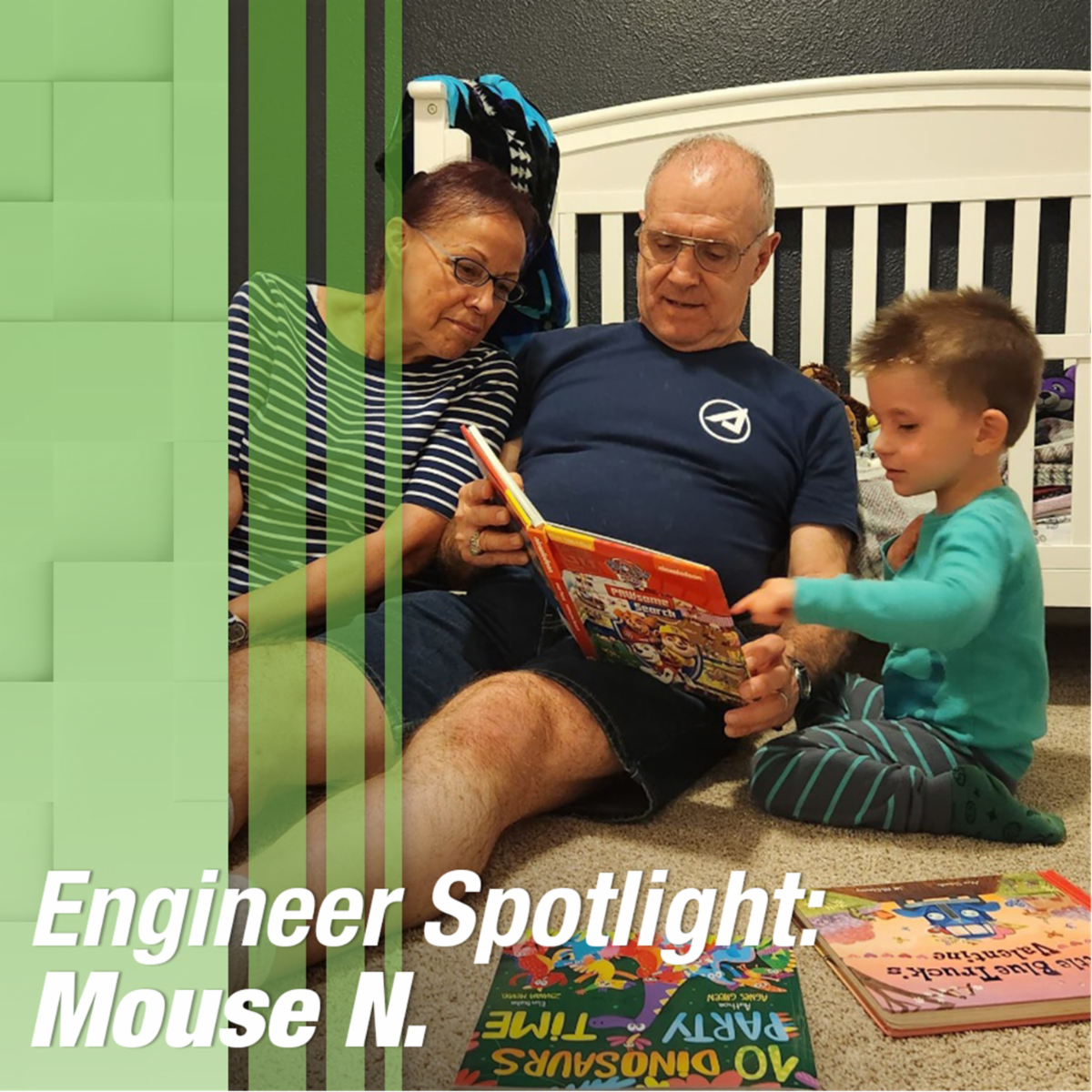
(Photo: Lorrie and Mouse read to one of their grandchildren)
Jeff, our middle son lives in Bakersfield, California. He has his own financial accounting services business. His company is continually growing. I think he’s got a staff of close to 25 people now.
Jaclyn lives in Colorado Springs and is expecting her second child, another boy, very soon! She is an animal lover and has worked in veterinary services. She has worked in an animal ophthalmology office and an animal dentistry office. I tease her and ask “What animal body part are you working on next?” (Laughs)
DAVE: What do you do for fun?
MOUSE: My kids would tell you that I do projects around the house for fun. I guess they're right. (Laughs)
Life can get a little crazy at times and it’s easy for plans to get knocked off track but Lorrie and I always keep our Saturday 'date night.' That is our pizza and movie night. (Laughs)
|
|
FINAL WORD
I am giving the 'final word' for this HawkTalk article to Mouse ...
"I believe O’Hara’s impact on its students, community, and the lives of others only continues to grow.
As alumni blest with such a special alma mater that has survived where so many other Catholic educational institutions have not, we are called to support our fellow Hawks that follow us and to support O’Hara in continuing to deliver the values of a Catholic faith-based educational experience to the Western New York community."
|
|
Col. James Neumeister, USAF, Retired, (COHS Class of 1973) |
|
Thank you to everyone who has made a gift to the COHS Alumni Annual Fund. Your donations are so important to everything we do!
|
|
Please follow us on Facebook and Twitter to keep up with what is happening at COHS! |
|
|
ADVANCEMENT DEPARTMENT:
Reneé Orr, Director of Advancement
Susan Denn, Advancement Assistant
Dave Lovering '74, Alumni Relations Coordinator
Barbara Tucker, Public Relations Coordinator
|
|
|
|
|
|
|