|
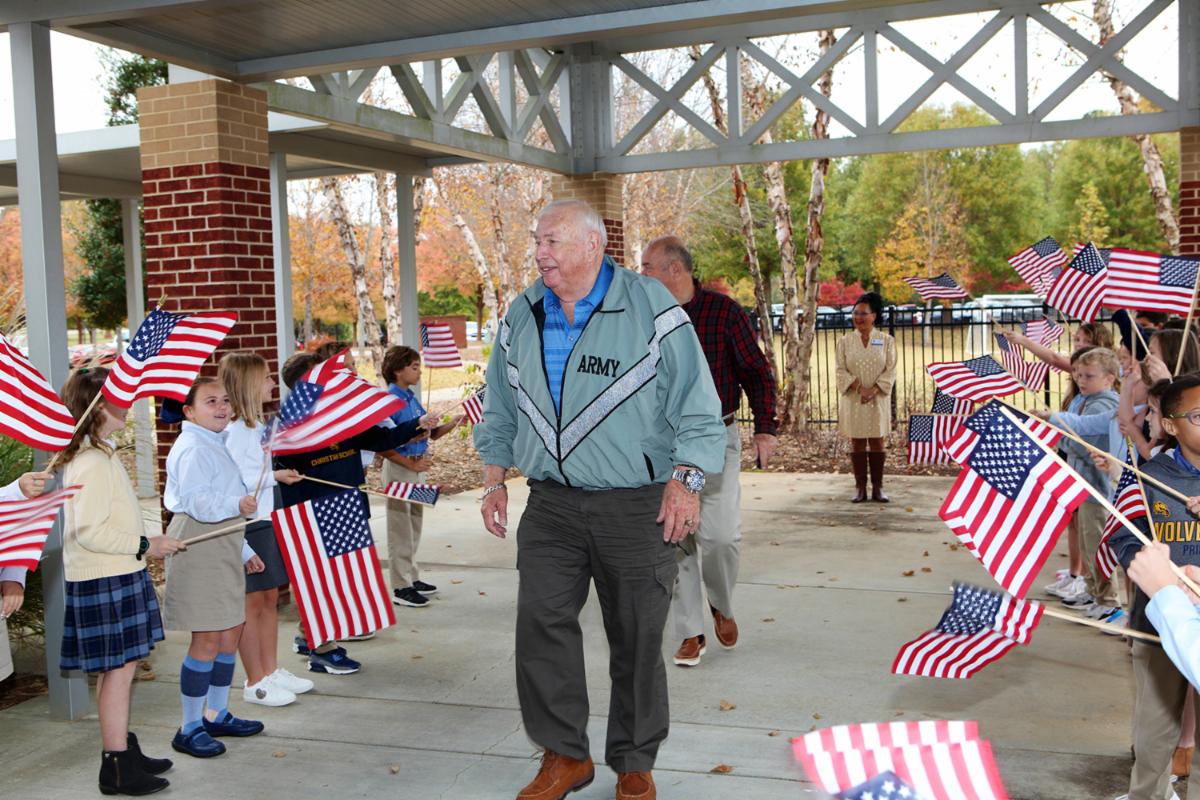
November 11 is a national holiday called Veterans Day, a day set aside specifically to honor the men and women who have served in our nation's armed forces to preserve our freedom and our American way of life.
Originally called Armistice Day, it was founded to recognize the end of World War I (1914-1918) when major hostilities were formally ended at the 11th hour of the 11th day of the 11th month, or November 11, in the year 1918. On that date and time, the Allied Powers (United States, England, France, Russia, and Italy) entered an Armistice with the Axis Powers (Germany, Austria-Hungary, and Turkey). The word Armistice comes from the Latin word "arma" meaning "arms" (as in weapons), and "stitim" meaning "a stopping" or "arms stopping." After World War I ended, the United States observed Armistice Day on each November 11 until 1954, when it was renamed Veterans Day by President Dwight D. Eisenhower, a five-star Amy general who served as the First Supreme Allied Commander in Europe during World War II before becoming our nation's 34th president.
On Veterans Day, we recognize those men and women who have served in one of our nation's six military branches: Army, Marine Corps, Navy, Air Force, Coast Guard, and Space Force. With a few minor exceptions, to be considered a veteran a service member must serve a minimum of six months on active duty with an honorable discharge from their branch of service.
Teaching your student not to confuse Veterans Day with Memorial Day is important. Veterans Day in November celebrates the service of living U.S. military veterans, while Memorial Day in May is set aside to honor those who died while serving in the United States Armed Forces. As we celebrate Veterans Day, I encourage you to take a moment to discuss this important American holiday with your student.
With warm regards and in His service,
|