|
Florida Legislative
SESSION 2023
| |
Week 4
Health Care UPDATE
and a Look AHEAD to WEEK 5
| |
|
|
Weekly summary of health care legislation being considered by the Florida Legislature.
THIS upcoming week hits the MIDPOINT for Session 2023.
It's a short week, with legislative committees only meeting
through Wednesday.
| |
Bills UP this week
Week 5
| |
|
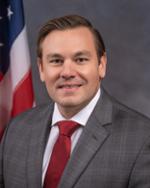
Rep Ralph Massullo, MD
HB 583 - Health Care Practitioner Titles and Abbreviations
Creates s. 456.0651, F.S., for health care practitioner titles and designations. The bill defines “advertisement,” “educational degree,” “misleading, deceptive, or fraudulent representation,” and “profession.” The bill provides that if someone other than an allopathic or osteopathic physician attaches to his or her name any of the titles or designations listed in the bill, in an advertisement or in a manner that is misleading, deceptive, or fraudulent, the person is practicing medicine or osteopathic medicine without a license and is subject to the provisions of s. 456.065, F.S., relating to the unlicensed practice of a health care profession.
The bill amends s. 456.072(1)(t), F.S., to provide that a practitioner’s failure to wear a name tag, which must include his or her name and profession, when treating or consulting with a patient, is grounds for discipline unless he or she is in his or her office where the practitioner’s license is prominently displayed in a conspicuous area, and the practitioner must verbally identify himself or herself to all new patients by name and profession.
The bill further amends s. 456.072(1)(t), F.S., to provide that any advertisement naming a practitioner must include the practitioner’s profession and educational degree and to require practitioner regulatory boards, 1 or the Department of Health (DOH) if there is no board, to adopt rules to determine how their practitioners must comply with this paragraph of statute.
| |
|
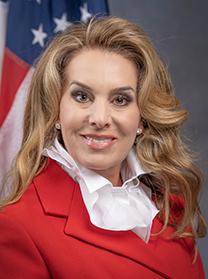
Senator Jennifer Bradley
SB 1344 - Medical Treatment Under the Workers’ Compensation-Payment Parity
Increases limits on witness fees reimbursed to physicians from $200 to $300 to mirror the amount the Division of Workers Comp reimburses their own expert witnesses. Increases maximum reimbursement allowances for physicians for patient care and surgical procedures to 200% of Medicare. Currently Florida physicians are reimbursed the lowest in the nation to provide care for patients in the Workers Comp system.
| |
|
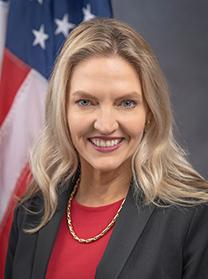
Senator Doug Broxson
SB 2510 Health- including the Slots for Docs Program
Though part of a bigger bill, SB 2510 includes a provision that amends s. 409.909, F.S. to create the Graduate Medical Education Slots for Doctors Program to address the physician shortage by increasing the supply of highly trained physicians through the creation of new resident positions. The bill requires the Agency for Health Care Administration to allocate $100,000 to hospitals and qualifying institutions for each newly created resident position that is accredited by the Accreditation Council for Graduate Medical Education or Osteopathic Postdoctoral Training Institution in an initial or established accredited training program that is in a physician specialty or subspecialty in a statewide supply-and-demand deficit as identified in the General Appropriations Act. The bill further prohibits funds from the program to be used for resident positions that previously received funding under the Statewide Medicaid Residency Program.
| |
|
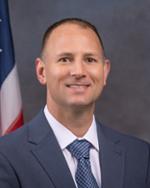
Rep Kevin Steele
HB 601 - Referral of Patients by Health Care Providers
Healthcare providers routinely refer patients to other healthcare providers if more specialized care is required. The Florida Patient Self-Referral Act of 1992 prohibits a Florida health care provider from referring a patient to an entity in which the health care provider holds an investment interest. There are limited exceptions to this prohibition, including an exception which allows health care providers to refer patients to hospitals in which the health care provider holds an investment interest. The federal Physician Self-Referral Law, commonly referred to as the Stark law, prohibits physicians from referring patients to receive "designated health services" (DHS) payable by Medicare or Medicaid from entities with which the physician or an immediate family member has a financial relationship, unless an exception applies. Financial relationships include both ownership/investment interests and compensation arrangements. HB 601 amends s. 456.053, F.S., regulating financial arrangements between referring health care providers and health care service providers, to alter a safe harbor provision for permitted referrals from a health care provider to another provider for DHS that solely serves patients of the referring health care provider. The bill removes the direct supervision requirement and the requirement that the physician be present in the office suite, allowing general supervision of such services from locations outside of the office where the services are provided. The bill allows self-referring health care providers to avoid the cost of having a physician present while health care services are provided. The change in state law also aligns with federal Stark law provisions regarding self-referrals by a health care provider to another provider in which the referring physician has a financial or other pecuniary interest.
| |
|
Rep Adam Anderson
HB 1043 - Medicaid Coverage of Rapid Whole Genome Sequencing
Genetic disorders are a leading contributor to morbidity and mortality in the neonatal and pediatric intensive care units in the United States. Approximately 7 percent to 10 percent of the 4 million infants born in the U.S. each year are admitted to a neonatal ICU for the diagnosis and treatment of an acute illness. About one percent of all neonatal ICU admissions have an indication of a genetic disorder, and approximately 15 percent of babies admitted to high acuity units appear to have a genetic disorder. All organisms have a unique genetic code, or genome, comprised of nucleotide bases. If the sequence of the bases in an organism are known, its unique DNA fingerprint is known. Determining the order of bases is called sequencing. Whole genome sequencing is a laboratory procedure that determines the order of bases in the genome of an organism in one process. Rapid whole genome sequencing (rWGS) completes such sequencing quickly, and can produce a much quicker diagnosis. HB 1043 requires the state Medicaid program to cover rWGS as a fee-for-service benefit for Medicaid recipients who: Are 21 years of age or younger; Have a complex or acute illness of unknown etiology that has not been caused by environmental exposure, toxic ingestion, an infection with normal response to treatment, or trauma; and Are receiving inpatient treatment in a hospital ICU or high-acuity pediatric care unit. The bill restricts the use of any genetic data resulting from rWGS only to assist in diagnosing and treating the patient, and considers such data protected health information under the Health Insurance Portability and Accountability Act. The bill permits genetic data generated by rWGS to be used in scientific research only if the patient, or the patient’s guardian if he or she is a minor, expressly consents to such use. Such consent may be rescinded at any time.
| |
|
Rep Karen Gonzalez Pittman
HB 183 - Medicaid
Step-Therapy Protocols for Drugs for Serious
Mental Illness
Creates an exception from step-therapy prior authorization requirements within the Florida Medicaid program for a drug product that is prescribed for the treatment of a serious mental illness, as that term is defined in the bill, or a medication of a similar drug class if prior authorization was previously granted for the prescribed drug and the medication was dispensed to the patient during the previous 12 months.
| |
|
Rep Joel Rudman, MD
HB 1403 - Protections of Medical Conscience
Authorizes health care providers & health care payors to opt out of participation in or payment for certain health care services by conscience-based objections without discrimination or threat of adverse actions; requires health care provider to notify the patient and the health care provider’s supervisor or employee, if applicable, in writing when such health care provider declines to participate in certain health care services & retain copy of such notification; prohibits certain boards and DOH from taking certain disciplinary actions under certain circumstances.
| |
|
Senator Colleen Burton
SB 252 - Protection from Discrimination Based on Health Care Choices
Protection from Discrimination Based on Health Care Choices; Repealing a provision relating to prohibiting public employers from imposing COVID-19 vaccination mandates; prohibiting business entities and governmental entities from requiring COVID-19 testing to gain access to, entry upon, or service from such entities; prohibiting such entities from requiring persons to provide certain documentation or requiring COVID-19 testing as a condition of contracting, hiring, promotion, or continued employment; prohibiting business and governmental entities from refusing to hire persons, discharging persons, depriving or attempting to deprive persons of employment opportunities, adversely affecting persons with respect to employment, or otherwise discriminating against any person based on knowledge or belief of a person’s COVID-19 vaccination or postinfection recovery status or failure to take a COVID-19 test, etc.
| |
Bills on the Move this past week (Week 4) | |
|
Rep Jennifer Canady
HB 1545 - Health Insurance Identification Cards
The bill requires that health plans regulated by the state of Florida print the letters “FL” on the back left of the health-related identification card accompanied with a quick response (QR) code that links to DCS consumer complaint website. For health plans regulated by the federal government, the letters “FED” must be printed on the back of the health-related identification card accompanied with a QR code that links to consumer complaint website of the Centers for Medicare and Medicaid Services.
| |
|
SRep Joel Rudman, MD
HB 1335 - Payment of Health Insurance Claims
In the instance of a retroactive denial, the provider may have already verified that the patient had active health insurance, provided services based on that verification, and in some cases already received payment. Retroactive denials can result in the provider or the patient covering the loss, despite the verified eligibility. CS/HB 1335 amends ss. 627.6131 and 641.3155, F.S., to prohibit a health insurer or health maintenance organization (HMO) from retroactively denying a claim at any time because of insured ineligibility. The bill establishes one exception – a health insurer or HMO may retroactively deny a claim within one year of payment if the provider was convicted of insurance fraud under s. 817.234, F.S.
| |
|
Rep Chase Tramont
HB 1413 - Health Care Expenses
CS/HB 1413 increases patient access to health care cost information, and offers a measure of protection from medical debt. The various provisions apply to hospitals, ambulatory surgical centers, health insurers, and HMOs. The bill brings provisions from recent federal law and regulation into state law; in doing so, the bill requires compliance by facilities and insurers as a condition of state licensure, thus ensuring that these provisions will be fully adopted and adequately enforced in Florida. Specifically, the bill: Requires hospitals and ambulatory surgical centers (ASCs) to post a consumer-friendly list of standard charges for at least 300 shoppable health care services on a facility website, consistent with federal rule. Requires hospitals and ambulatory surgical centers to automatically provide patients with personalized pre-treatment estimates on the costs of care within certain timeframes. Requires a health plan, upon receipt of a facility cost estimate, to develop an advanced explanation of benefits, in accordance with the federal No Surprises Act of 2020. Prohibits hospitals and ASCs from taking actions to collect medical debt in certain circumstances. Requires hospitals and ASCs to establish an internal grievance process for patients to dispute charges. Increases exemptions from attachment, garnishment, or other legal process to include a single motor vehicle and personal property of a debtor of a value up to $10,000 when debt is incurred as a result of medical services provided in a licensed hospital facility, and establishes a 3-year statute of limitations on bringing legal action to collect medical debt. Specifies that shared savings incentives offered by health plans are to be counted as medical expenses for rate development and rate filing purposes, consistent with recent federal regulations.
| |
|
Rep Dianne Hart
HB 1045 - Certified Peer Specialist Gateway Pilot Program
CS/HB 1045 creates the Certified Peer Specialist Gateway Pilot Program (Program) within the Department of Corrections (DOC). The purpose of the Program is to provide participating inmates with a path to become certified peer specialists by offering such inmates the necessary training hours and experience needed for certification while incarcerated and assisting inmates who complete the Program with post-incarceration employment. The bill requires DOC to develop criteria for selecting qualified applicants for the Program. However, the bill prohibits a person from participating in the Program if he or she has been convicted of: Any offense that would prohibit the person from becoming a certified peer specialist; Murder or a felony sexual offense as those terms are defined in s. 98.0751(2), F.S.; An offense under s. 787.01, F.S., relating to kidnapping; An offense under s. 806.01, F.S., relating to arson; or An offense under s. 784.045, F.S., relating to aggravated battery. The bill exempts a person who completed the Program from the background screening requirements for certified peer specialists. The bill requires a person who completes the Program to provide his or her prospective employer with a copy of his or her incarceration record prior to being hired. A person who completes the Program must also receive a signed informed consent from any potential client seeking treatment that notifies the client that he or she has completed the Program’s requirements and is a certified peer specialist.
| |
Establishes a PBM regulatory program in Florida. Specifically, the bill: Amends the PBM regulatory structure from registration to a certificate of authority as an insurance administrator under part VI of ch. 626, F.S., regulated by OIR. Requires PBMs to submit to examinations and investigations, make available certain documents and records, and comply with recordkeeping requirements. Regulates PBM contracts with pharmacy benefit plans and programs (insurers, HMOs, self-insured employers, etc.). Regulates PBM contracts with pharmacies, including claims payment requirements, and various prohibitions on multiple current contract practices.. Imposes specific pharmacy network standards on PBMs. Requires drug manufacturers and nonresident drug manufacturers to notify the Department of Business and Professional Regulation and the Agency for Health Care Administration of drug price increases and submit forms and reports for public availability. The bill also requires all prescription drug manufacturer and nonresident drug manufacturer permitholders under chapter 499, F.S., to notify the state of certain drug price increases. | |
|
Was this email forwarded to you and
you would like to be included in our weekly
Session Health Care Emails?
| | | | |