Healdsburg Farmers' Market Newsletter
May 2021 SPECIAL EDITION 5!
|
|
We continue on with vendor's stories...Thanks to all who appreciate them, and feel free to comment, good or bad, if you have feedback. For me I'm finding it a great joy to learn the histories and dreams of the people I've worked with for years. |
|
Dry Creek Peach and Produce |
|
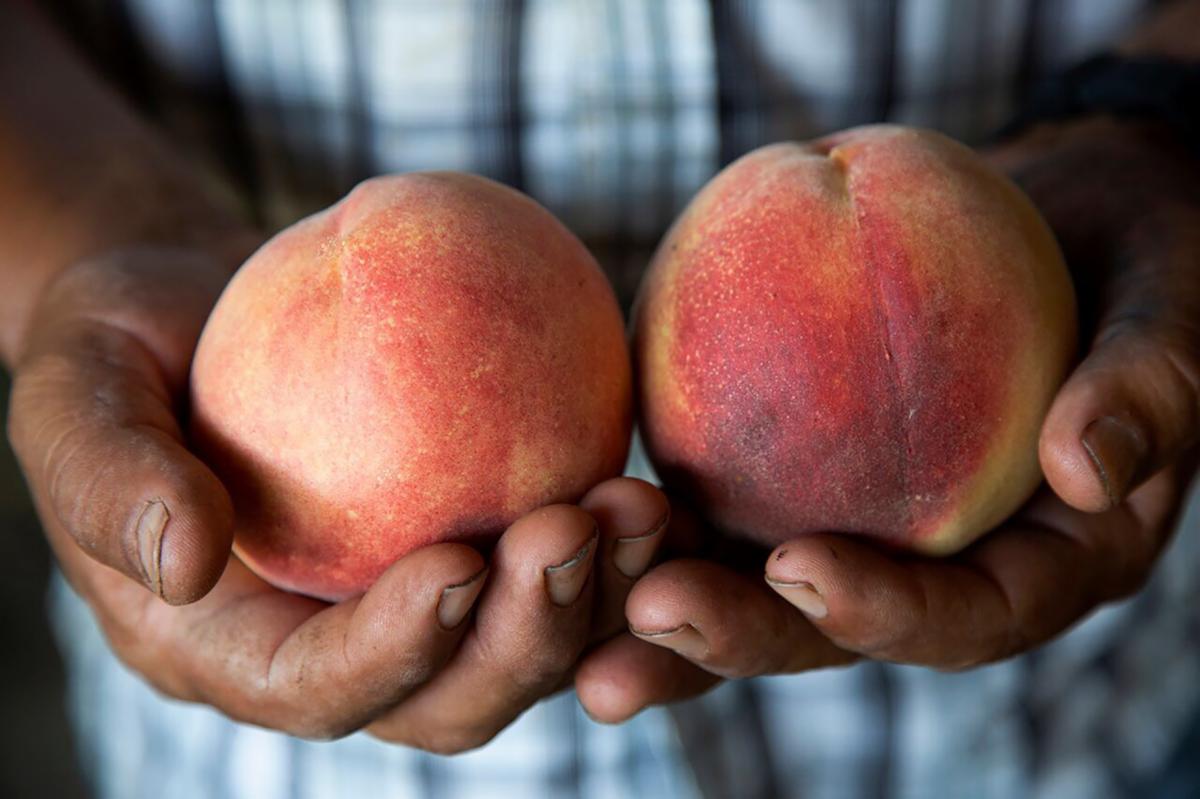
"When is Dry Creek Peach coming in?" This
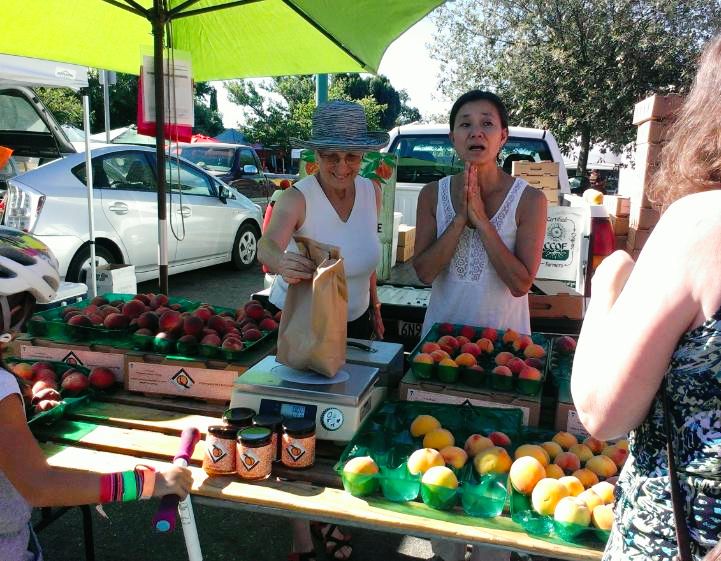
question gets asked about a dozen times each Saturday market during the month of May. When they finally arrive the question becomes, "Where's that peach booth?" While conducting this interview, car after car pulled into their little farm stand on Yoakim Bridge Rd, inquiring if they had any peaches left. They didn't. They'd sold out in three hours.
I've managed the market since 2017, so for five years have wondered about this seemingly famous produce grower. What's made them so popular?
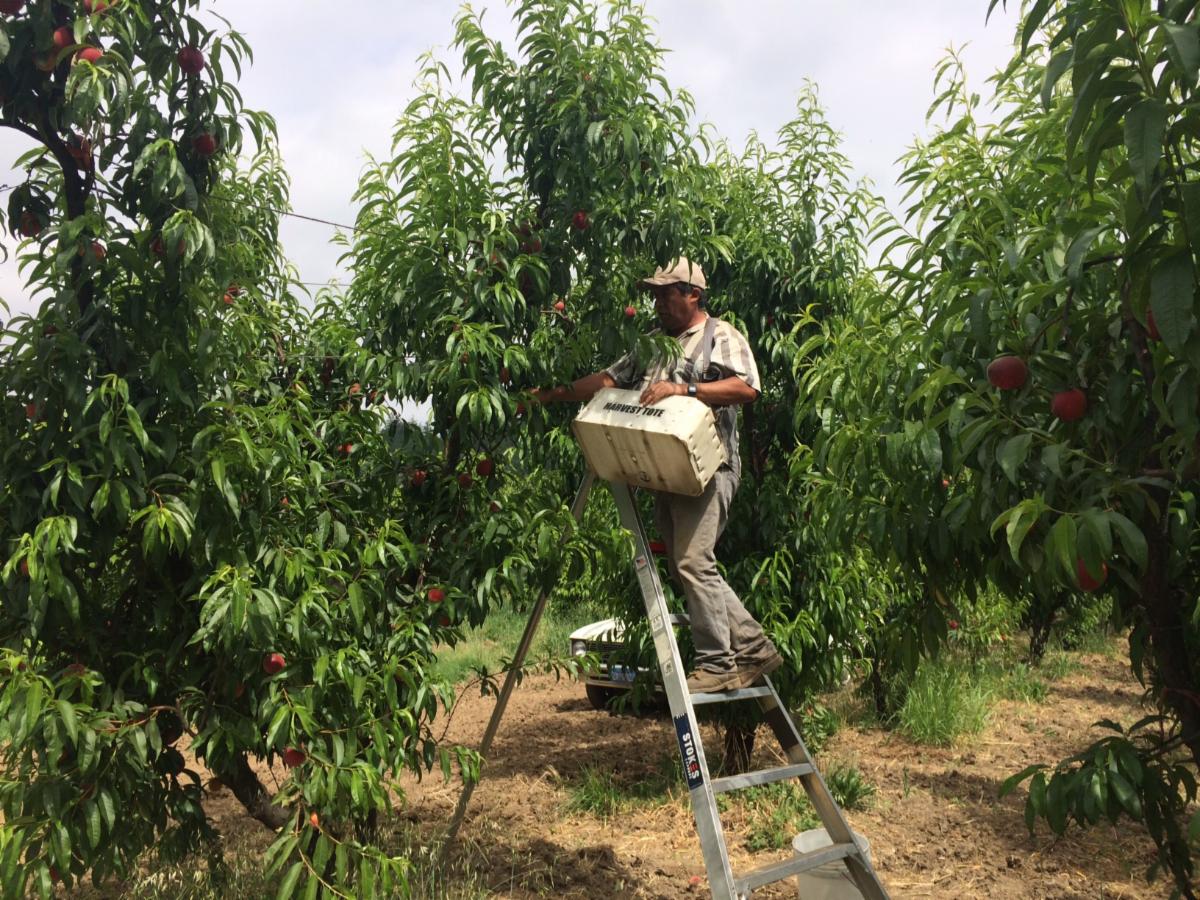
"We're the only ones growing a substantial amount of peaches in wine country, and we grow organically," owner Brian Sullivan explains as we walk through a small section of the five-acre orchard.
I'd wondered why no one else was farming them. Clearly they thrive in this climate. The orchard was abundant with fruit. Brian explained the laborious nature of farming peaches. There's little down time. They're constantly trimming out the excess fruit or picking it. All the work has to be done by hand on ladders. Two acres of peach production is equal to twenty-five in grapes. And they're delicate at certain stages; moisture can ruin them.
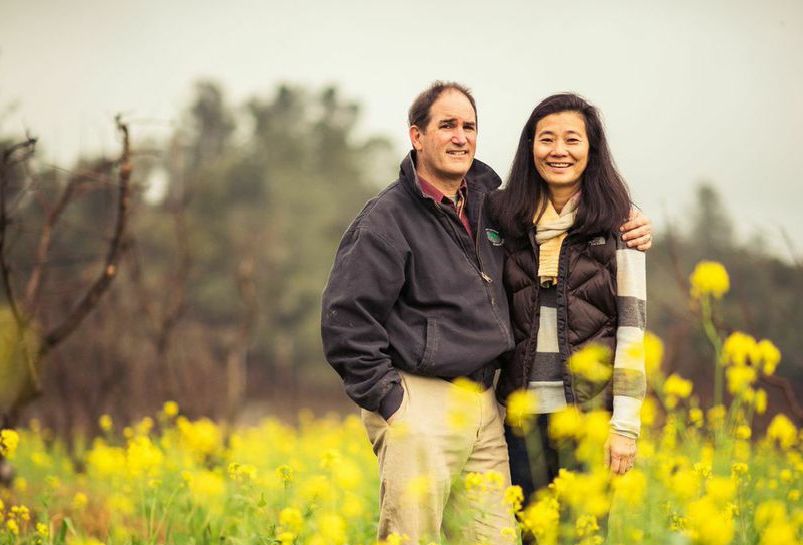
So it seemed surprising that Brian and his wife Gayle had chosen this life, given neither of them had any prior farming experience. They'd been living in San Francisco, with Brian selling convertible bonds and Gayle doing direct marketing for tech companies. Gayle wanted to own a piece of land, and they stumbled upon the already-established Dry Creek Peach for sale in 2000. The deal included the master farmer, Eusebio Sayago, and his family, who had worked the orchard for years.
The orchard has a long history, beginning with Yael and Paul Bernier, who planted the first trees back in the 70's. It went through a series of owners, but it was Steve Monroe who created Dry Creek Peach, and established a strong following of both retail and wholesale customers, including the grocery store chain Food For Thought, which eventually became Whole Foods. He was a mentor to the Sullivans on their journey from city folk to skilled peach farm owners. Steve's calendar of farm to-dos each month is still used today.
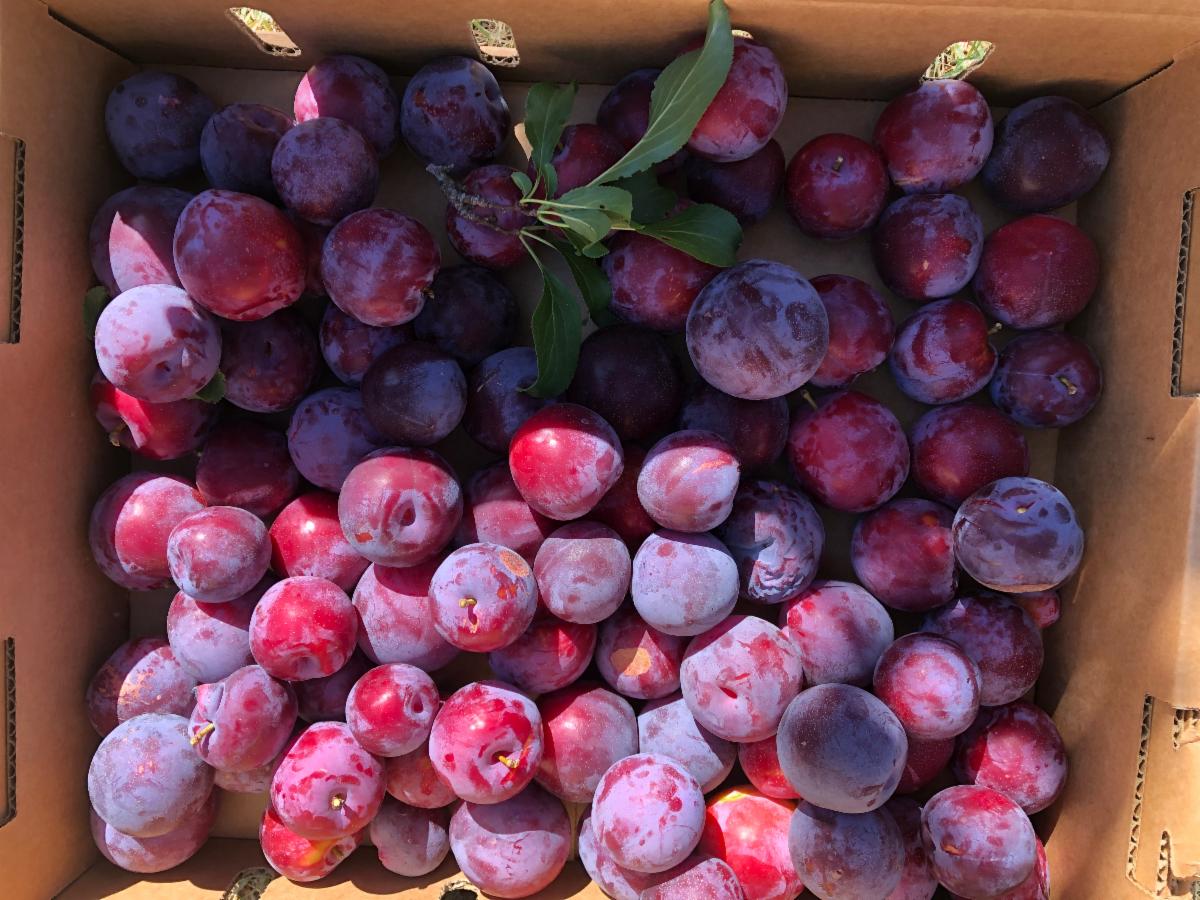
The trees are planted in order of when the fruit ripens, so different varieties are growing in neat rows, with some ready now, and others, as we continue to walk down the path, ripe for the picking in July, August, maybe even a few weeks of September. O'Henrys, Red Haven, Arctic Gems, and Last Chance are a few of their varieties. They grow other crops too, including cherries, nectarines, plums, figs, and a variety of produce they sell during the season at their farm stand, which opens at noon and closes when they've been wiped out.
|
|
The Sullivans are the marketing, distribution, product developers, compliance navigators, 'chief cook and bottle-washers' of the operation, and help Eusebio as needed on the farm. Gayle also spends a lot of time working with Healdsburg Jazz Festival, an organization which sparked her musical passion when they first moved here 21 years ago, and became more important in their lives when their son Patrick became a jazz drummer. |
Dry Creek Peach supports itself via the market, which they began doing in 2001, some wholesale, and their farm stand. Some years are light, some heavy. Whenever there's any extra money it all gets poured back into the operation. Such is the life of a farmer, Brian's matter-of-factness suggests. But when the orchard is alive with eye-popping pink blossoms in the early spring, the bees humming and the cycle beginning again, it can't be denied; this is a peachy life. |
|
Greek Table
"You probably don't want to come here to interview me," Sam Salim's email politely informed. "Currently we're sharing a commercial kitchen, so work between 11:30pm and 5:30am."
He was right. I love writing these newsletters, but that would be over-the-top dedication. So a phone interview was arranged.
|
|
Born to Iraqi parents in Kuwait, his family moved back to their homeland briefly when he was quite young, but then returned to Kuwait, where they settled for good, and where Sam was raised.
At nineteen he got a job working for a large food service company, making meals for the military and large corporate clients, and it was there he first found a joy in cooking.
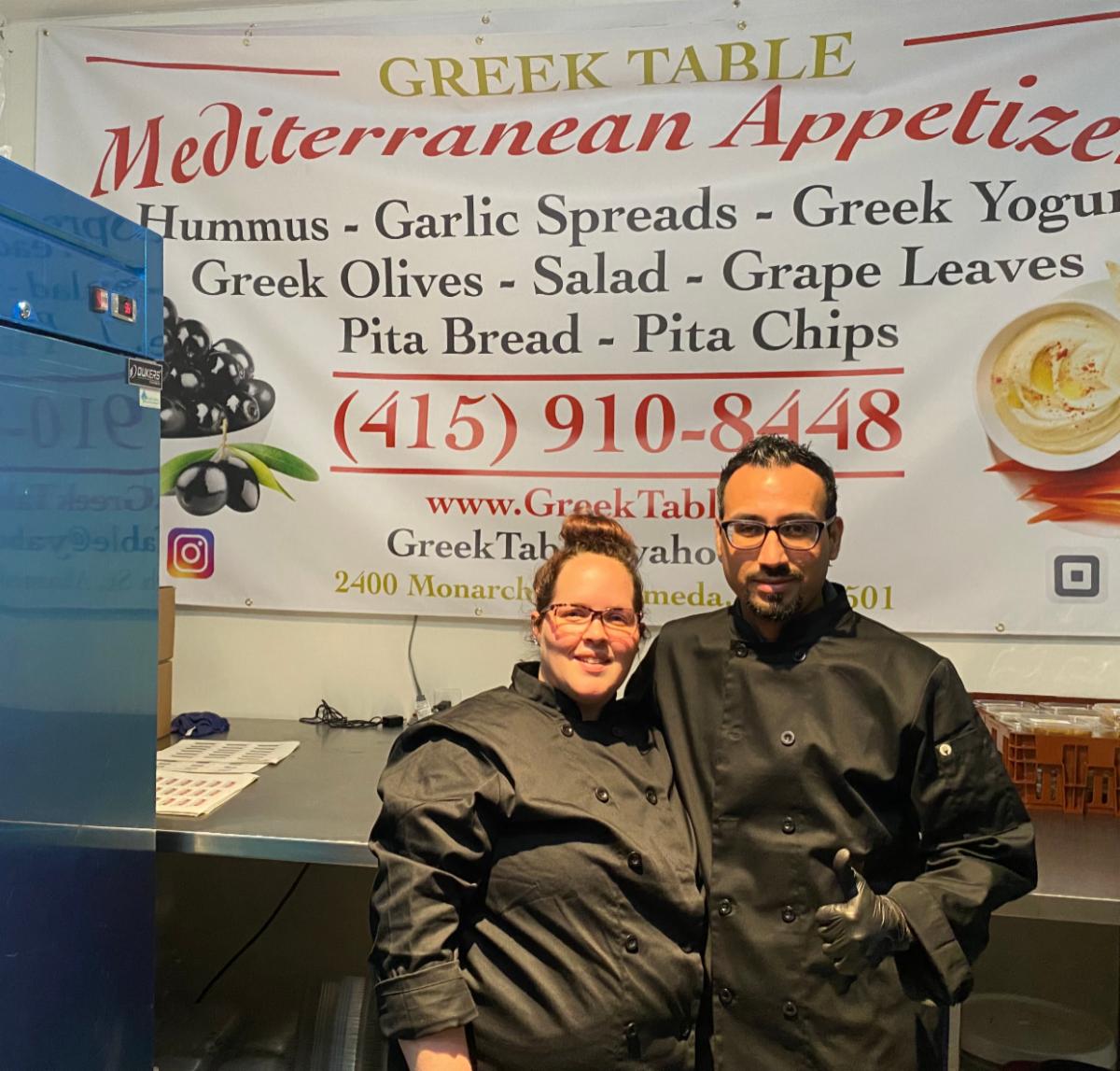
He came to Los Angeles as an international student at twenty-three and went to Glendale Community College. He got a job with a Greek family learning to make traditional Mediterranean food, and sold for them at farmers' markets. He worked for their company for seven years before deciding to move to the Bay Area and start his own, utilizing the knowledge he'd gained working for his mentors, but also not competing with them. He started Greek Table with his wife Nicole in 2017. They're currently producing their goods in the aforementioned shared kitchen in Alameda, but hope to be back in their own space soon, as it had closed due to Covid concerns.
|
The field of hummus production is a competitive one. My personal experience running markets and events is there are a half dozen, at least, throughout the Bay Area. Our market had a different hummus maker when I first started as manager, but in 2019 Sam applied for Tuesday market, while the other company did Saturdays. Soon customers were commenting they liked Sam's better, and began coming to Tuesday market just for his products. The following season I decided Greek Table should be at both.
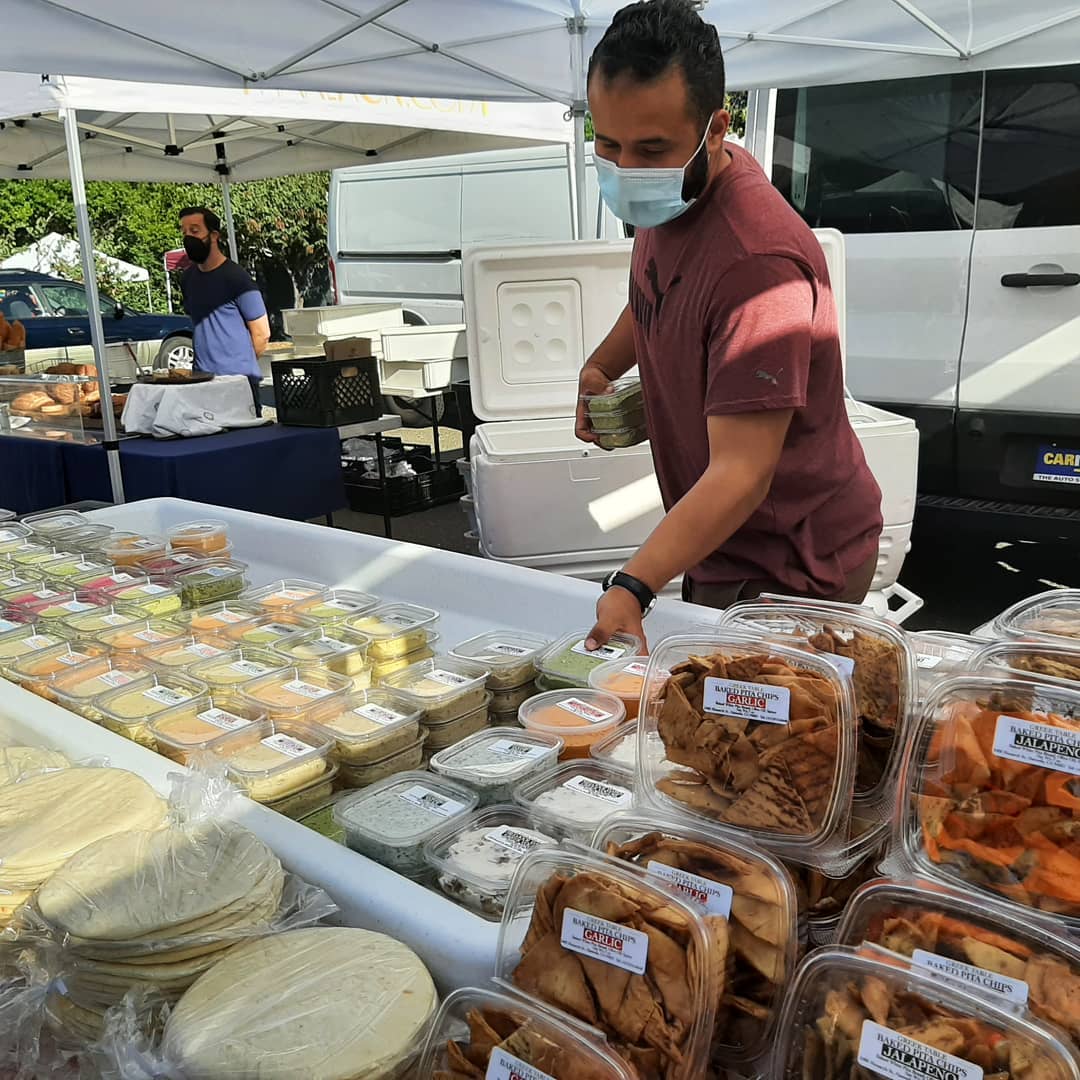
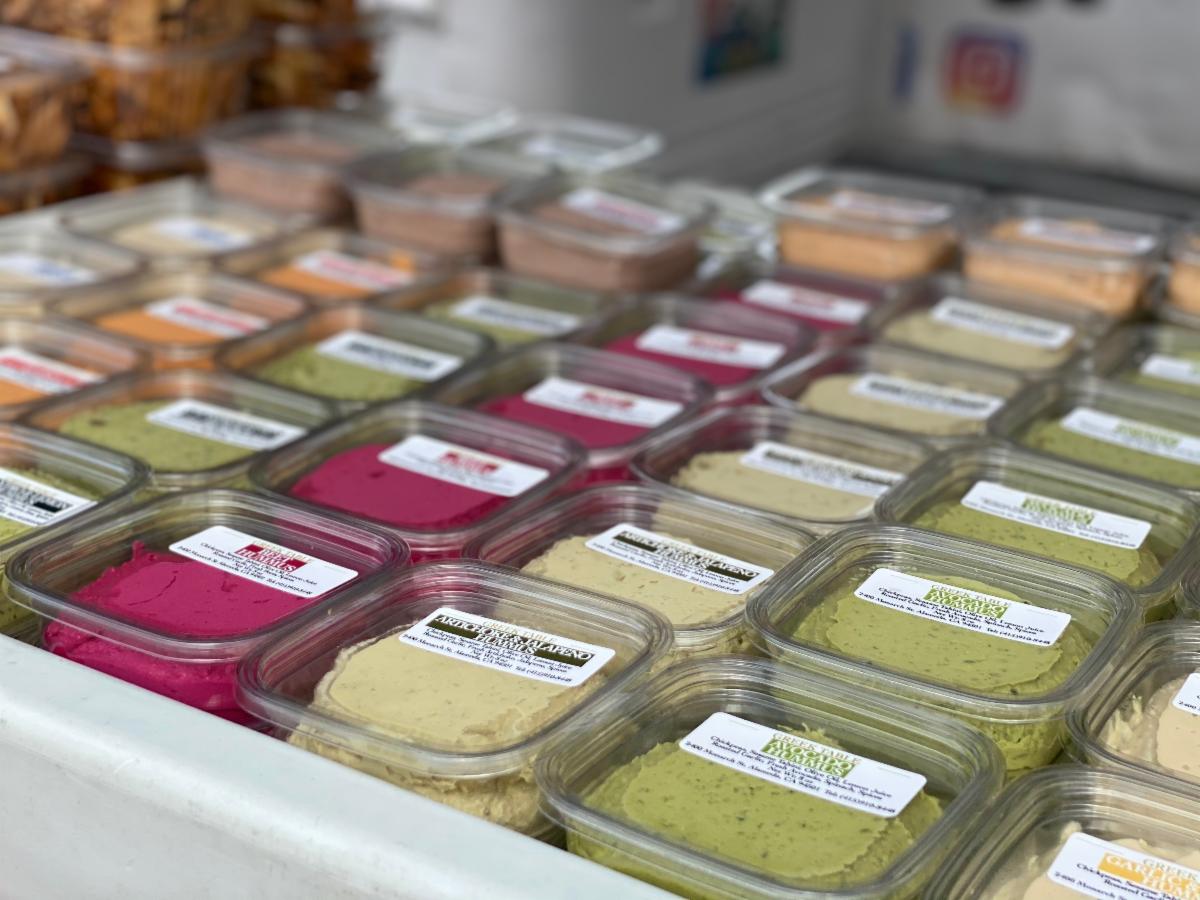
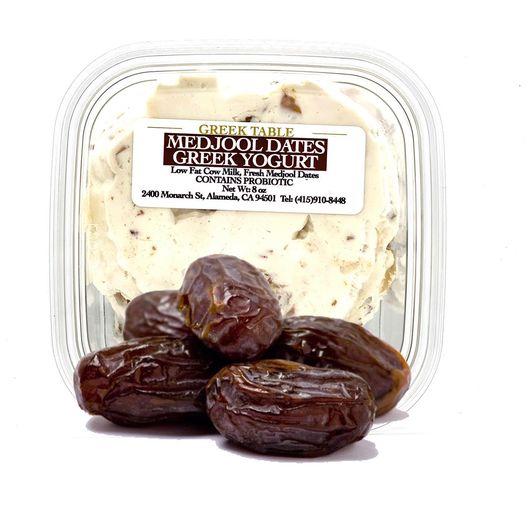
Those reading this who've tried Greek Table's endless varieties of hummus, dangerously addictive pita chips, flatbreads, dolmas, salads, olives, and Greek yogurt will attest to their excellence, and their ever-changing options.
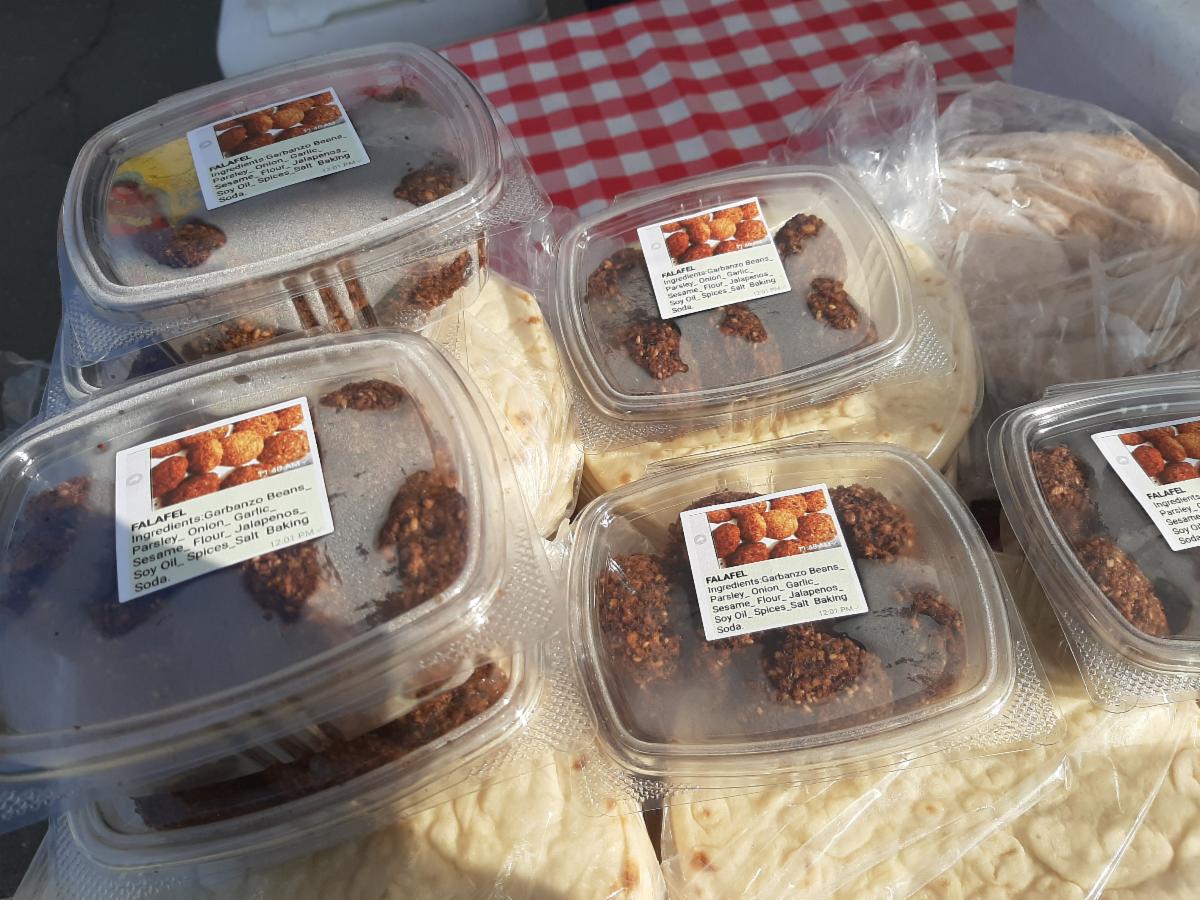
Sam loves to experiment and try new combos. He sees the basic recipe for hummus as one which invites different flavors to join it. Regular favorites are Beet Hummus, Carrot and Ginger, Artichoke and Jalapeno to name a teeny few. Cactus hummus? Habenero and Parmesan? He's got it. But his creativity goes well beyond this chickpea dip. His Basil Garlic spread is the best thing to happen to sandwiches ever. He occasionally makes falafel balls, which come still warm to the market. Some weeks you might find a white bean salad or peppers stuffed with feta, even baklava, hidden among the containers of olives. No two markets have the same goods.
|
|
Louie Essid, the smiling face we see selling Greek Table at our market, is an accidental assistant in the business. Originally from Libya, he came to the US on a student visa, graduated, and went to work as an IT consultant for an LA company, where he still works, albeit remotely these days. He moved up to the Bay Area temporarily to help out his long-time friend Sam, who was struggling to find employees to do farmers' markets, and was meant to be here a few months. However, he's just relocated and will continue to do markets and his tech work from his new Sonoma County home.
Sam enjoys the fresh nature of selling at markets. He doesn't want to wholesale to stores as he wants customers to experience his goods at their peak. His ever-changing product line gives all of us the opportunity to discover new and different taste treats each week: just made the night before. If there was ever a pitch for shopping farmers' markets, a company like Greek Table epitomizes it. You can't get these goods anywhere else.
|
|
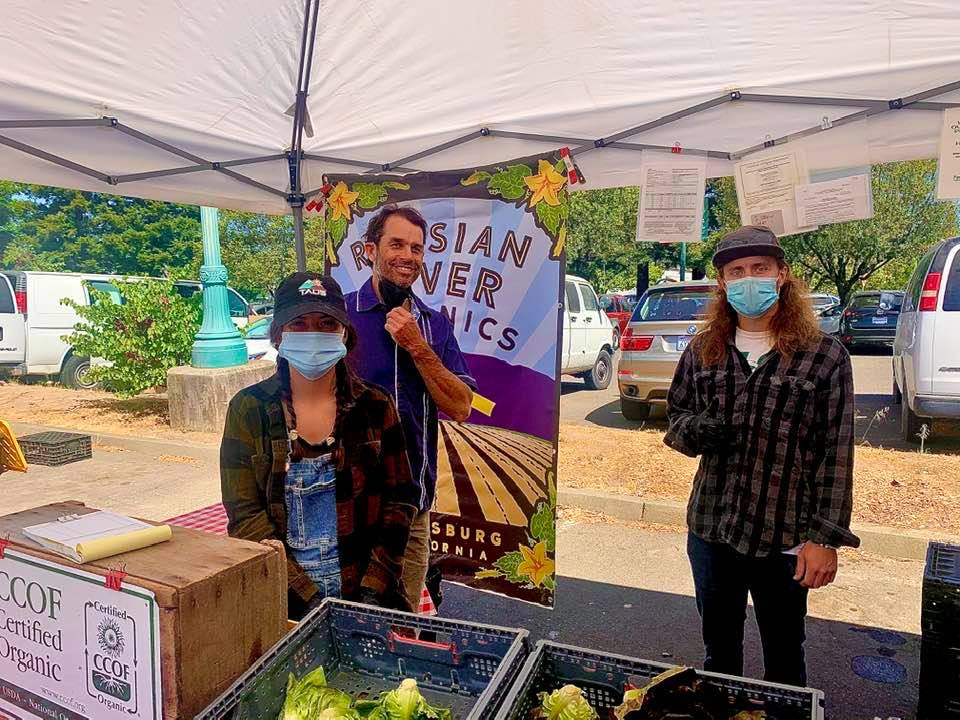
Russian River Organics
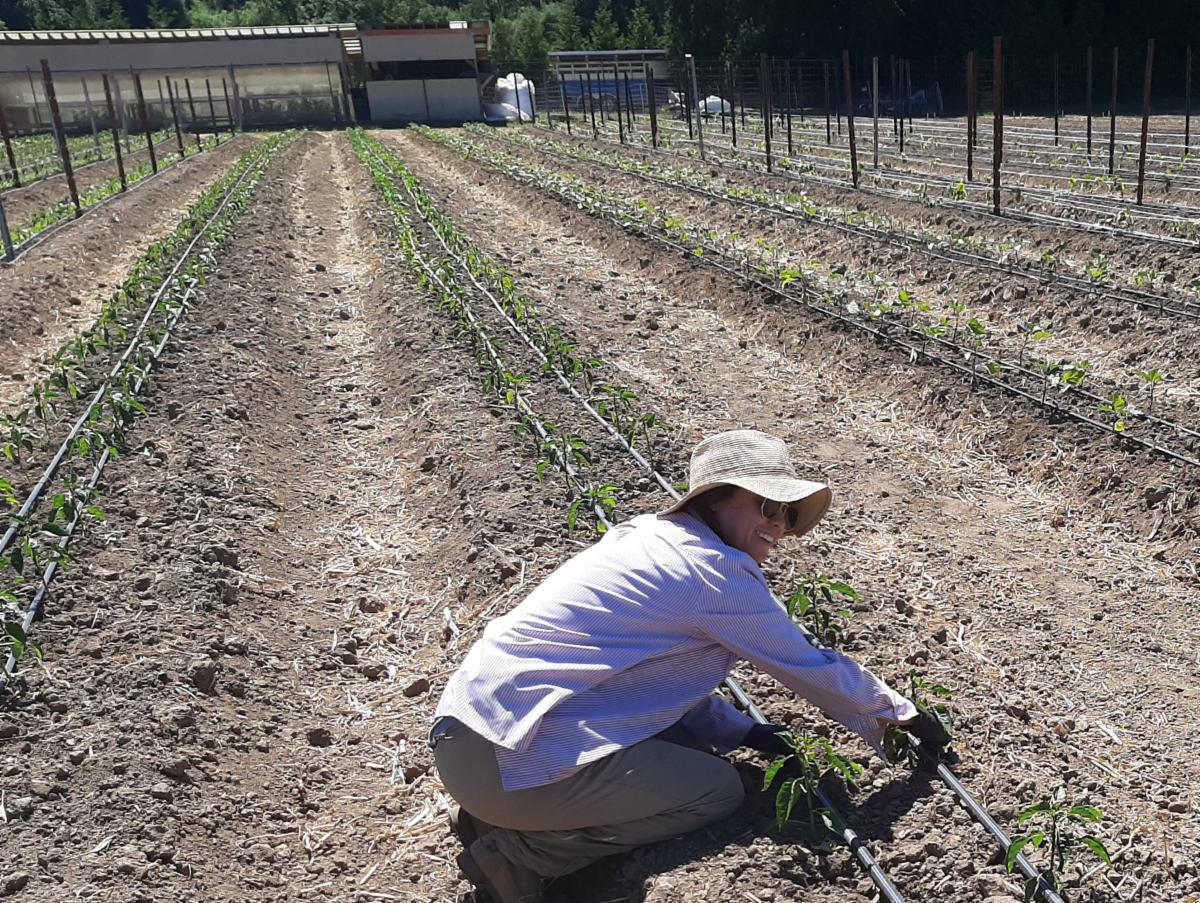
"Which driveway?" I'm looking for any indication of an address on Westside Rd to find Dave Pew's farm. I know I'm in the general area, via Google, but Russian River Organics ends up to be tucked among vineyards, well hidden from the public eye.
Dave has no interest in changing that. He likes his perfect little farm, just under three acres, to be a place to grow, but not a place to sell.
As a kid in Tucson, Arizona, some of his fondest memories are working with his dad in their huge garden. He studied geology at UC Berkeley, eventually finding a job in the field. During this time he found an abandoned garden and took it over, working his geology desk job during the day and, headlamp on, farming his little plot at night.
He made friends with some people selling produce at farmers' markets, and this piqued his interest, as some of what they were selling he'd never seen before. He began to realize some very cool people were farmers, like their boss, a Santa Cruz surfer dude named Joe Shumer who owned Dirty Girl Produce. Dave became fascinated by the farming world, and for the first time saw the potential for farming as a career.He left geology and went to work for Dirty Girl, and got into the organic farming program at UCSC. He then moved to Route One Farm where he was inspired by Jeff Larkey, another 'super-cool' mentor, who, at 60, was working the fields intensely during the day and going to punk shows at night.
|
|
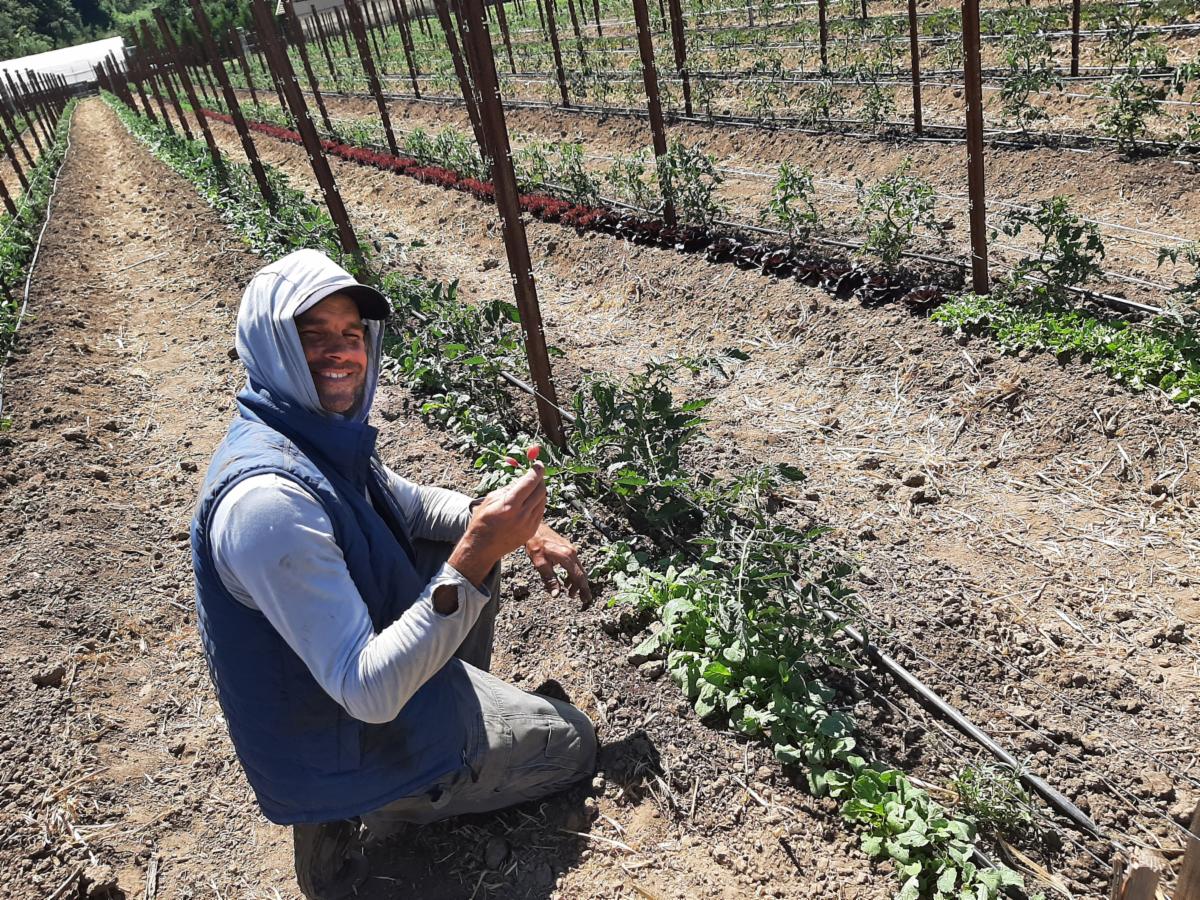
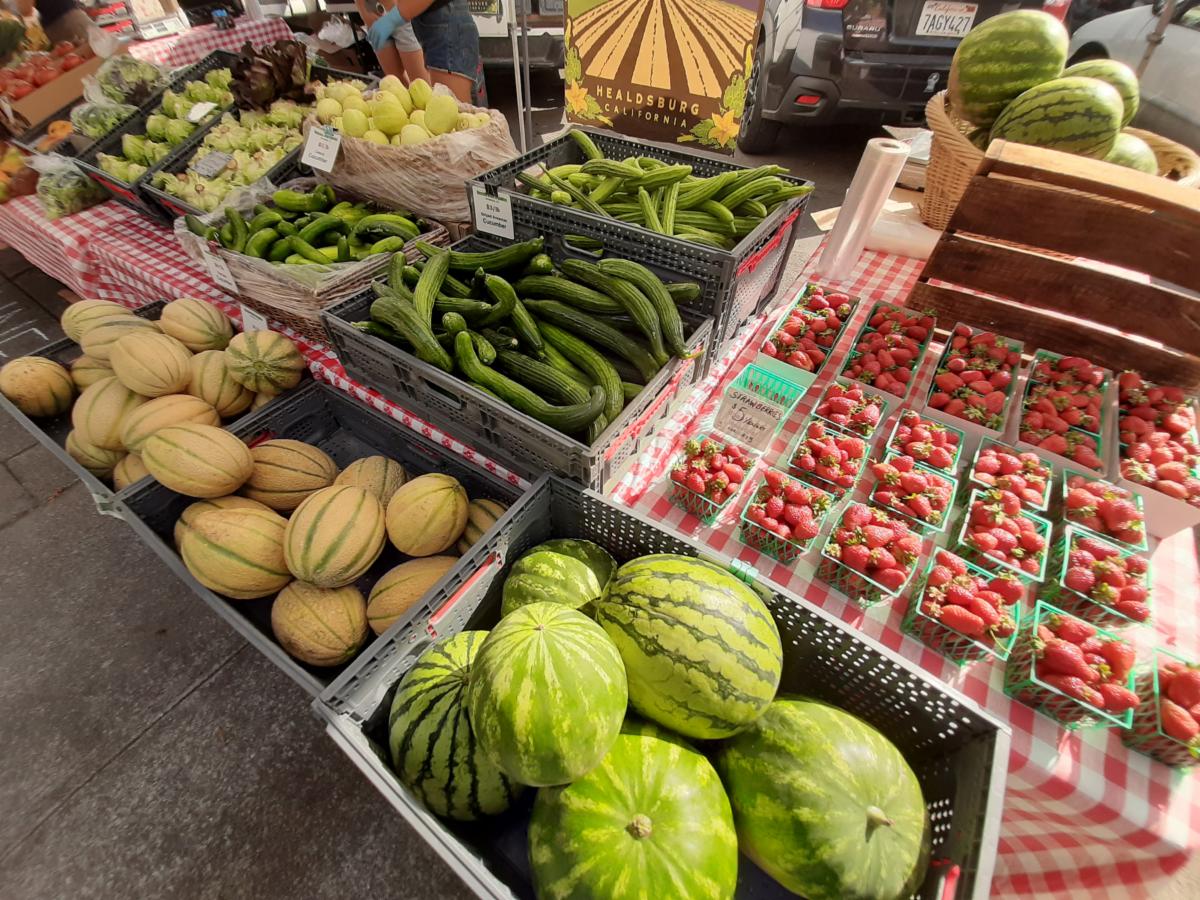
In deciding what to grow, Dave plants by the "give the people what they want" directive. Rather than growing a wide variety of crops, he focuses on his strong sellers like strawberries, gem lettuce, spring mix, several varieties of peppers, cucumbers, melons, and squash.
Besides the markets, and the small amount he sells to a few local restaurants such as Campofina, Spoonbar, and Diavola, his primary sales outlet is through a cooperative food network distributor called Feed Sonoma. They represent dozens of farms and businesses which sell to restaurants, grocery stores and corporate clients throughout the Bay Area, including retailers like Oliver's Markets. This allows him maximum time working on the farm, and minimal time dealing with buyers.
|
|
For several years Dave worked at various farms, ending up in Geyserville at Six Oaks Farm. He did our market for them from 2012-2014, but a thought bubbled to the surface to start his own. He pictured a farm between three and five flat, arable acres, with a good well, near major roads, and the potential for a long lease. Almost immediately he found a sub-parcel of a vineyard with a ten year lease and an option for another ten, with great owners and everything he'd envisioned. He started Russian River Farm in 2015, and was certified organic in 2018, changing the name to Russian River Organics. |
Although he loves selling directly to his market following, he's aware that sometimes market customers buy out of loyalty. He likes the anonymity of Feed Sonoma, where high quality is what sells, which inspires him to make sure his produce is the best it can be.
He's comfortable with the size and compactness of his operation. He's had landowners offer him parcels to farm, but enjoys having only three full-time employees, and the ability to scale down to himself and one other person, if the need ever arose.
Watching his dog, Roo, scampering around the field, waving goodbye to his employees, Sophie Short, Jorge Ibáñez and Scott Fatyol, as they head off after a long day, Dave looks the picture of a contented farmer. His crops, in various stages of maturity, are in neat rows in front of him, lush vineyards abut his field, and the Mayacama mountains in the distance. The afternoon heat is abating as I drive out his secret driveway, appreciating this hidden gem of a farm we're so fortunate to have at our markets.
|
|
Part Italian, part Texan, Franco Dunn embodies not only the culinary aspect of these two worlds, but the joie de vive of both as well.
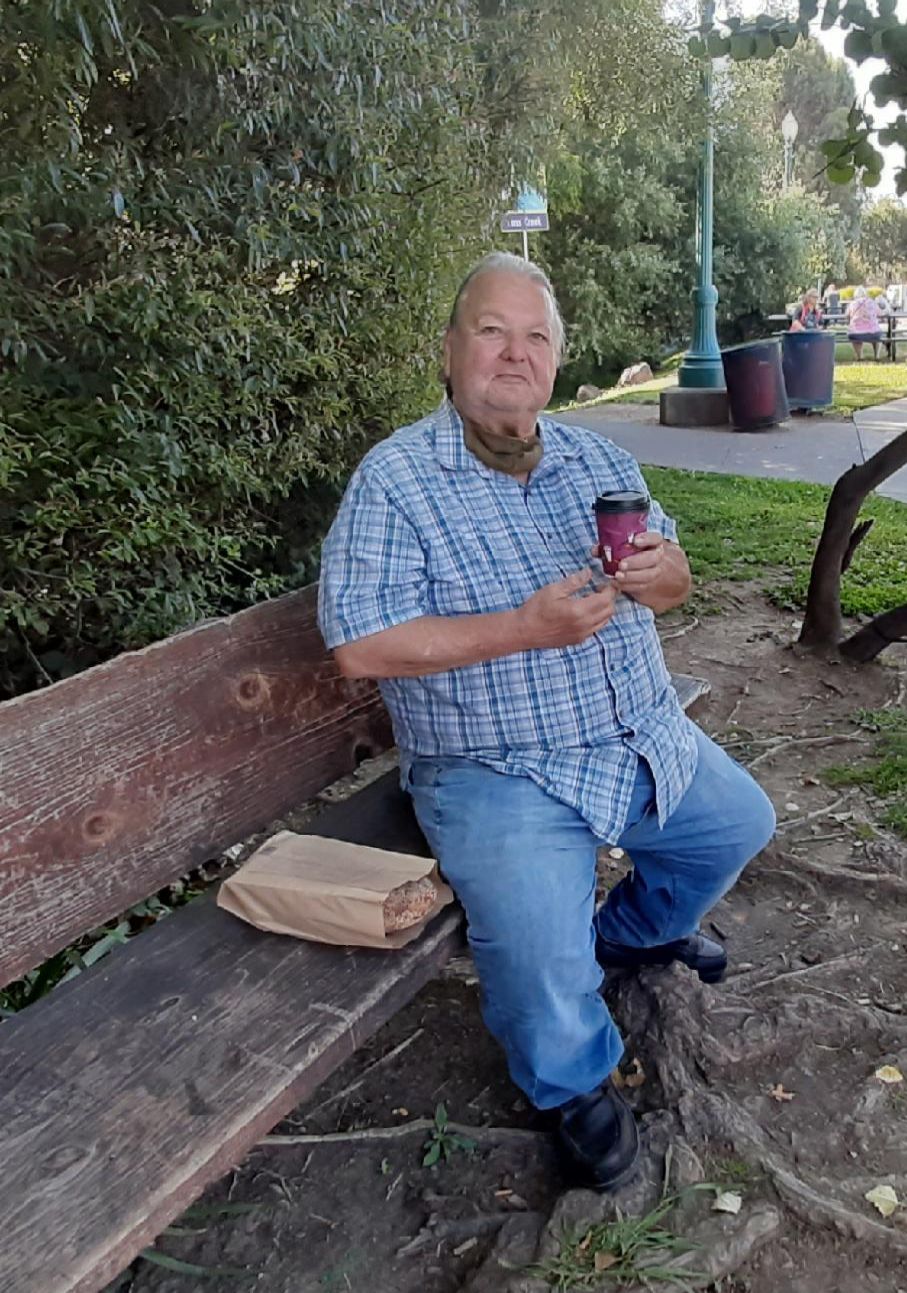
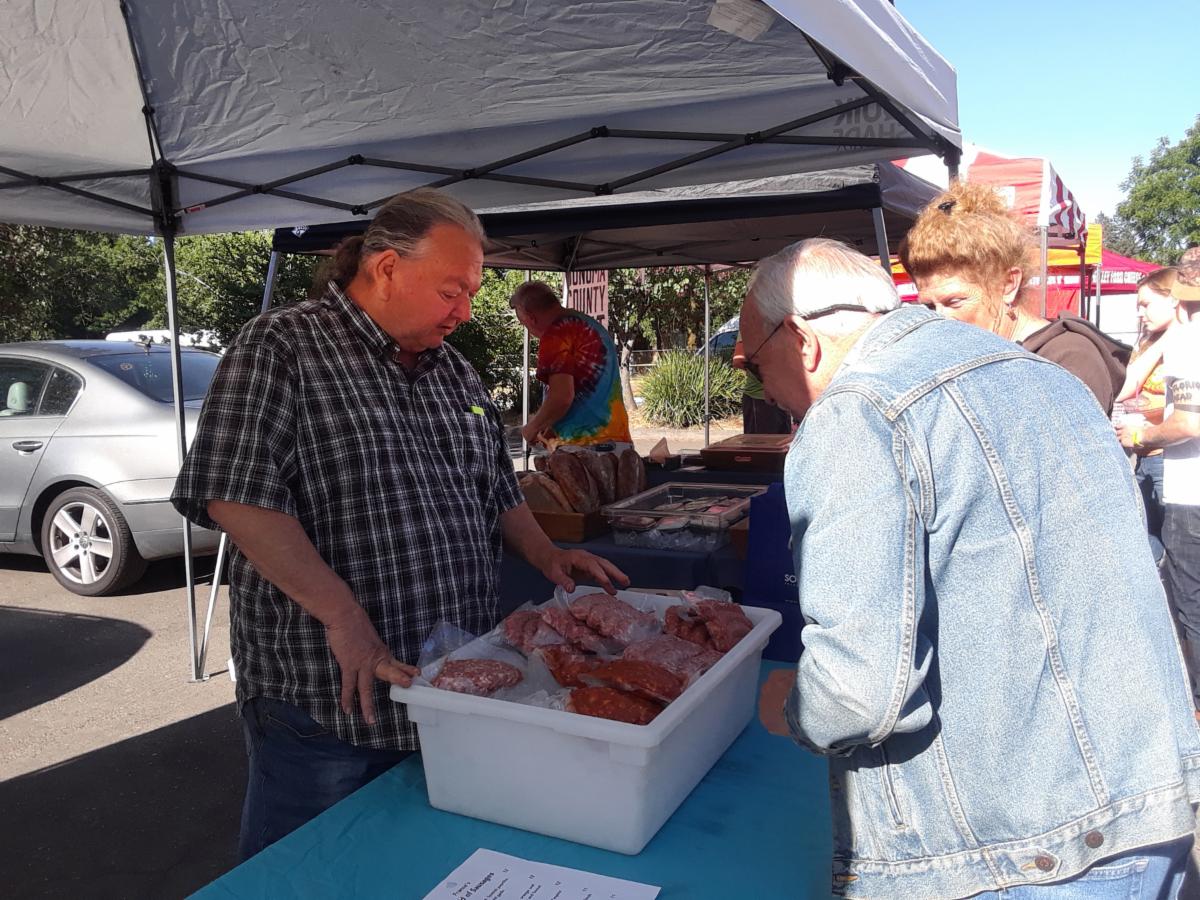
Our market is filled with unique characters, but when I met Franco I knew I'd found someone who shared my twisted sense of humor, and sly sarcasm. His delightful demeanor, coupled with his creativity in the world of sausage-making, draws a steady stream of regulars to his booth every week. He quickly sells out, and spends the last hour on his favorite bench behind our booth watching the market go by...enjoying a hot afternoon. See you there, Franco!
|
|
Franco's Old World Sausage
When Franco Dunn's father was growing up as one of a financially-struggling family of five in rural Texas, his father taught him how to use all parts of the cow: an education Franco had handed down to him. His mother and grandmother were the Italian influence, and through them he came to love the kitchen: the smells, tastes, and the process. In his 20's he was collecting cookbooks and knew preparing food was his destiny.
A discerning palate is what Franco would say is one of his strongest assets. Indeed, it was that ability to parse apart flavors that won him a scholarship to complete his education at the California Culinary Academy in the early 80's. He'd started courses there but ran out of funds. So he vied for one of four spots in a competition held by Berringer Vineyards, looking for those with exceptional wine knowledge. These four contestants would attempt to cook their way into winning full tuition, room and board, and a private chef position with the company owner's family. Franco won.
He worked for the family for seven months, then was hired as a chef for Jordan Winery, and was there for over five years. There he felt he "cooked over his head," making dishes for important clients and events which surpassed his culinary knowledge.
During these years Franco was roommates with Bruce Aidell, and together they began Aidell's Sausage in their house.
At forty, Franco left for Italy, and spent two-and-a-half years working in over a dozen different places, including several Michelin-rated restaurants and small tratorrias throughout the country. He brought the knowledge back home, did some catering, and went back to Jordan Winery for awhile.
Deciding it was time to have his own business, he opened Santi, a restaurant in Geyserville (where Catelli's is now located) with friend Tom Oden. While running the restaurant, he began making sausages and selling them at local farmers' markets. After five years he sold the restaurant, but continued doing markets with his "weiners." Franco has been doing our market for twenty years.
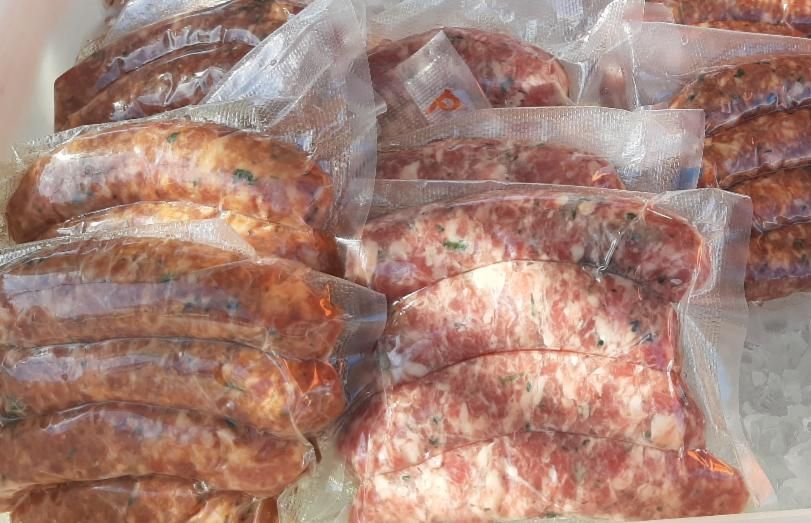
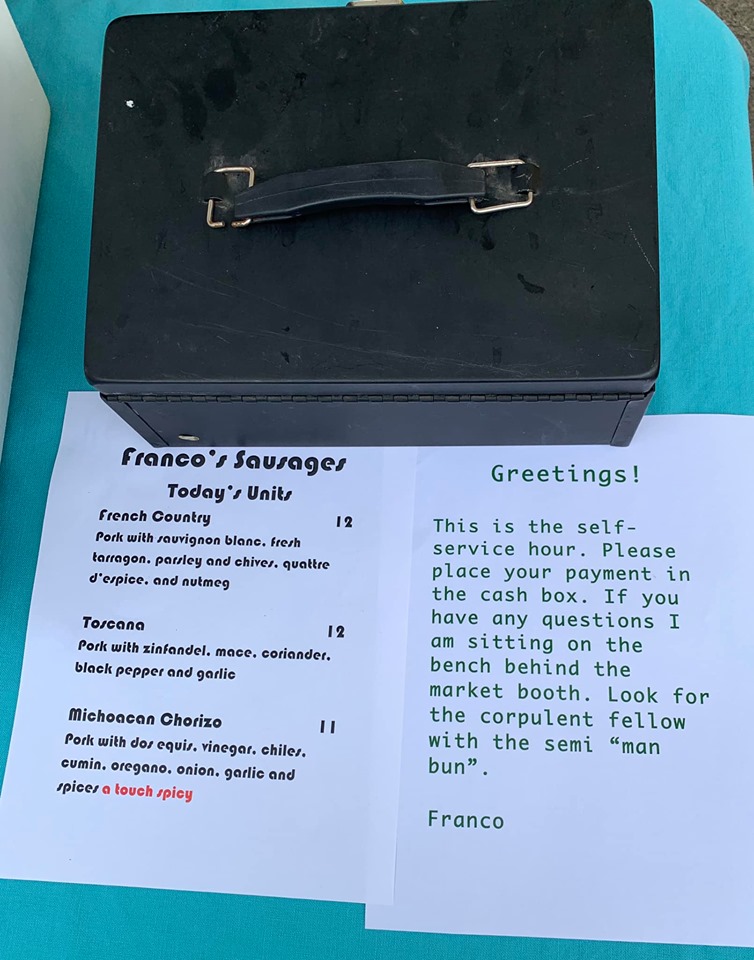
His "Old World Sausages" are just that: made up of spices and ingredients which replicate traditional recipes from all over the globe. He has over sixty recipes, including Thai sausage, an Ethiopian sausage, and Mexican chorizo. He mostly uses pork, but occasionally beef. Every week he brings something new and different: sometimes cased, sometimes in bulk.
Franco's exceptional taste buds have played a big role in his life, not only as a chef, but as a chef educator and an olive oil judge. He has participated in tastings all over the United States, and is a founding member of the twenty-three-year-old California Olive Oil Association Tasting Panel.
|
|
|
|
|
|
|