December 9, 2025

View as Webpage

X Share This Email
LinkedIn Share This Email

Did a friend forward this email to you? Subscribe here to receive daily readings and reflections in your own inbox.

ADVENT WEEK 2:

Healing our Relationships with God and Ourselves

Tuesday, December 9 – Healing Relationships by Looking at Ourselves

READ

Matthew 15:29-39

After Jesus had left that place, he passed along the Sea of Galilee, and he went up the mountain, where he sat down. Great crowds came to him, bringing with them the lame, the blind, the maimed, the mute, and many others. They put them at his feet, and he cured them, so that the crowd was amazed when they saw the mute speaking, the maimed whole, the lame walking, and the blind seeing. And they praised the God of Israel.


Then Jesus called his disciples to him and said, “I have compassion for the crowd because they have been with me now for three days and have nothing to eat, and I do not want to send them away hungry, for they might faint on the way.” The disciples said to him, “Where are we to get enough bread in the desert to feed so great a crowd?” Jesus asked them, “How many loaves have you?” They said, “Seven, and a few small fish.” Then ordering the crowd to sit down on the ground, he took the seven loaves and the fish, and after giving thanks he broke them and gave them to the disciples, and the disciples gave them to the crowds. And all of them ate and were filled, and they took up the broken pieces left over, seven baskets full. Those who had eaten were four thousand men, besides women and children. After sending away the crowds, he got into the boat and went to the region of Magadan.

REFLECT

The Christmas season is a time of feasting. In my first ministry we used to have a feast at Christmas. We would cook a couple of turkeys and people would volunteer to peel potatoes and to bring salads. None of us had very much money but we celebrated the goodness of the Creator providing for us. 

Christmas was also the time when people would ask me to put their name into the food bank for a Christmas hamper. If you didn’t have enough, then the food bank along with other charities would give away hampers for Christmas which included some gifts for the children and enough food and fixings for a Christmas dinner. Doing good for the poor. 


There is a trap when you think about people who are different than you because they have less money. 

I remember a class I took on community development from someone who used to work for World Vision.

He asked us a series of questions: 

  1. What are the words that come into your mind when you think of the poor? We came up with 10 different words. Poor health, infirm, destitute, etc. 
  2. Are each of your words positive or negative? Almost all of our words were negative, except for one, one person said the poor are blessed. 
  3. Based on the majority of your words, do you have a positive attitude or negative attitude toward the poor? It was clear we had a negative attitude.
  4. Do you think you have something to offer the poor? I remember thinking that I did because I know how to work. None of my immediate family had ever been on welfare. 
  5. The final question is where I realized I was trapped by my own thoughts: Do the poor have anything to offer you? 


I realized that I had been looking at a whole group of people as if they had nothing to offer me. I was paternalistic at best and racist at worst. The instructor went on to say we need to realize we are all impoverished in some way, we need others. And we all have something to offer. Others need me. This is all based on the reality that all human life is worth saving, Jesus demonstrates this. At Advent time we all feast together, not because one is more worthy than the other but because of the grace of the Creator who feeds us all.

PRAY

Father, give me the grace to understand what I have to offer and to see where I can give. Open my eyes to understand where I am needy and lead me to those who I need. Amen.

From gardener to entrepreneur: 

a journey to success

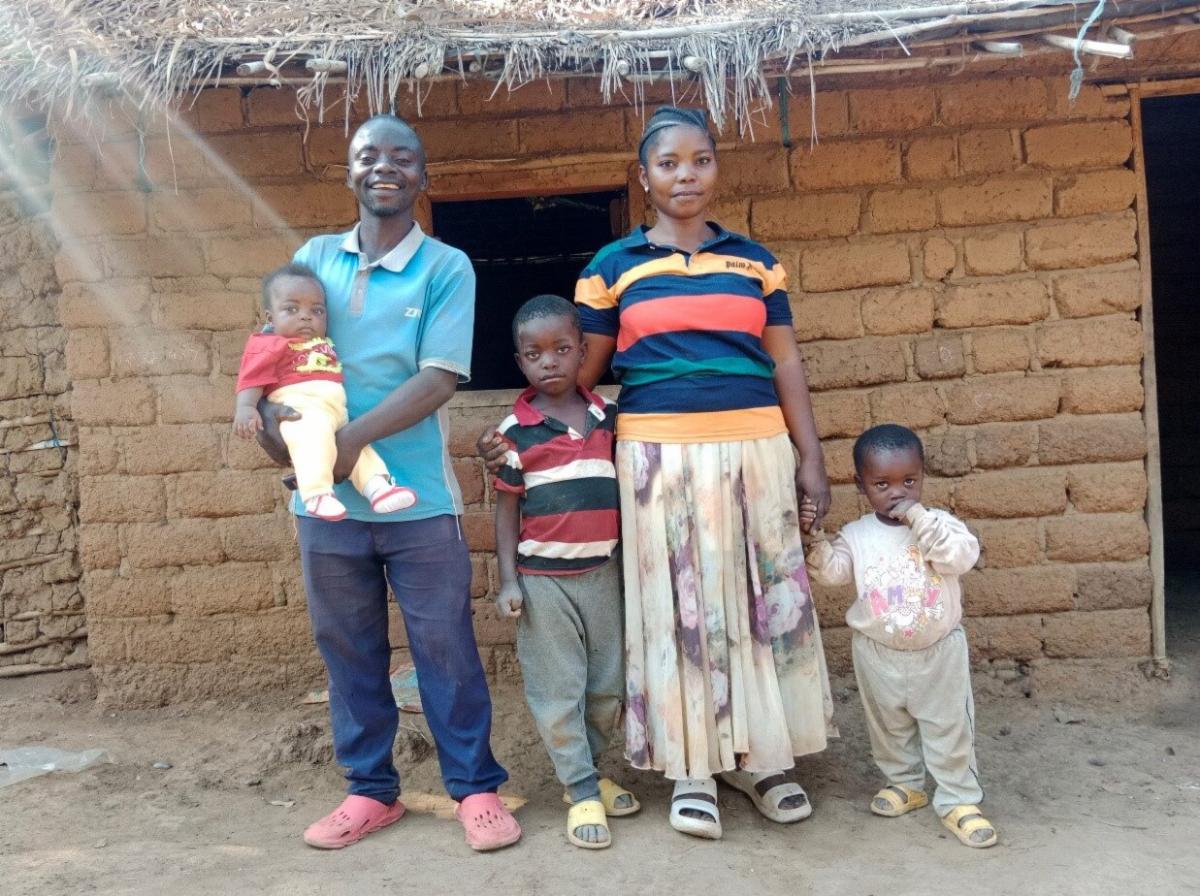
After fleeing conflict in the Democratic Republic of Congo, Seluwa Said and her family faced extreme hardship in Tanzania’s Nyarugusu Refugee Camp – until joining the Sustainable Vegetable Farming Project run by Alongside Hope partner Church World Service, which empowered her to grow nutritious food, start a business and build a more secure future.

Did a friend forward this email to you? Subscribe here to receive daily readings and reflections in your own inbox.

ABOUT THE AUTHOR

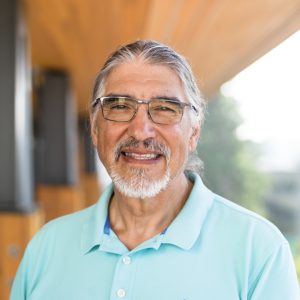
The Reverend Doctor Ray Aldred is a husband, father, and grandfather. He was first ordained with the Christian and Missionary Alliance in Canada and is now ordained with the Anglican Church of Canada. He is status Cree from Swan River Band, Treaty 8. Born in Northern Alberta, he now resides with his wife, Elaine, in Richmond, British Columbia, Canada. Ray is the director of the Indigenous Studies Program at the Vancouver School of Theology whose mission is to partner with the Indigenous Church around theological education. Ray and Elaine have also been involved in ministry that trains people to facilitate support groups for people who have suffered abuse. Elaine and Ray have also coordinated Marriage Encounter. Ray has had the privilege of addressing several college conferences and meetings and his passion is to help as many as possible hear the gospel in their heart language. Together with Matthew Anderson, he is the author of Our Home and Treaty Land: Walking our Creation Stories (Friesen Publishing, 2024).

Alongside Hope

Facebook  Instagram  LinkedIn  YouTube