|
What's Below
- CFH Spotlight: Advocating at City Hall
- CAB Spotlight: Open Mic & Voter Empowerment at Susan's Place
- Understanding the Housing Crisis: What "The Gap" Report Tells Us
- Take Action: Tell City Council to Create Truly Affordable Housing
- Proposed Federal Rule Threatens Housing for Mixed-Status Families
- Sign On Today! Join the RISE UP Campaign
- The Busy Advocate's April Calendar
| | |
CFH Spotlight:
Advocating at City Hall During Preliminary Budget Hearings
Over the past month, Care For the Homeless (CFH) has provided testimony during the New York City Council’s Preliminary Budget Hearing process. We have included the voices of our consumers, providers, and community members in these discussions at City Hall. Our testimony has emphasized a core truth: health and housing are deeply interconnected, and meaningful investment in both are essential to addressing homelessness in New York City.
| | At the General Welfare hearing, CFH highlighted the role of housing vouchers like CityFHEPS in helping New Yorkers exit shelter and maintain long-term stability. While these programs are proven to work, our testimony underscored how administrative barriers, such as delays in processing and voucher issuance, continue to prevent people from securing housing in a highly competitive market. We urged the city to both expand access to rental assistance and improve how these programs function day-to-day. | |  | During the Health Committee hearing, we focused on protecting access to care amid looming federal Medicaid changes. We raised concerns about how increased administrative requirements will lead to widespread coverage loss for people experiencing homelessness, reversing years of progress in expanding access to care. At the same time, we called for increased investment in community-based initiatives like Access Health NYC, which play a vital role in connecting underserved New Yorkers to health insurance and essential health services. | | |
Finally, at the Housing & Buildings hearing, we emphasized the urgent need to invest in deeply affordable housing. Despite a focus on affordable housing production in the last decade, most units remain out of reach for extremely low-income New Yorkers, including those exiting shelters. Our testimony called on the city to prioritize building housing that is truly affordable, particularly for those most at risk of homelessness, and to address the structural mismatch driving the current crisis. | | | | Across all hearings, CFH’s message was consistent: solving homelessness requires coordinated investments in housing, healthcare, and the systems that connect people to both. We are proud to continue advocating for policies that reflect the realities our community members face every day. | |
In addition to CFH staff testimony, one of our newest Consumer Advisory Board (CAB) member, Hattie Fernandez, submitted her first public testimony. Since joining the CAB, she has quickly embraced storytelling as a powerful advocacy tool. Her testimony highlighted the real-life impact of New York City’s housing crisis, sharing that despite doing everything “right,” systemic barriers and a lack of truly affordable housing led to ongoing housing instability. Hattie's story is a powerful reminder that behind every policy debate are real people navigating complex systems that too often fall short. | | | | |
CAB Spotlight:
Open Mic & Voter Empowerment at Susan's Place
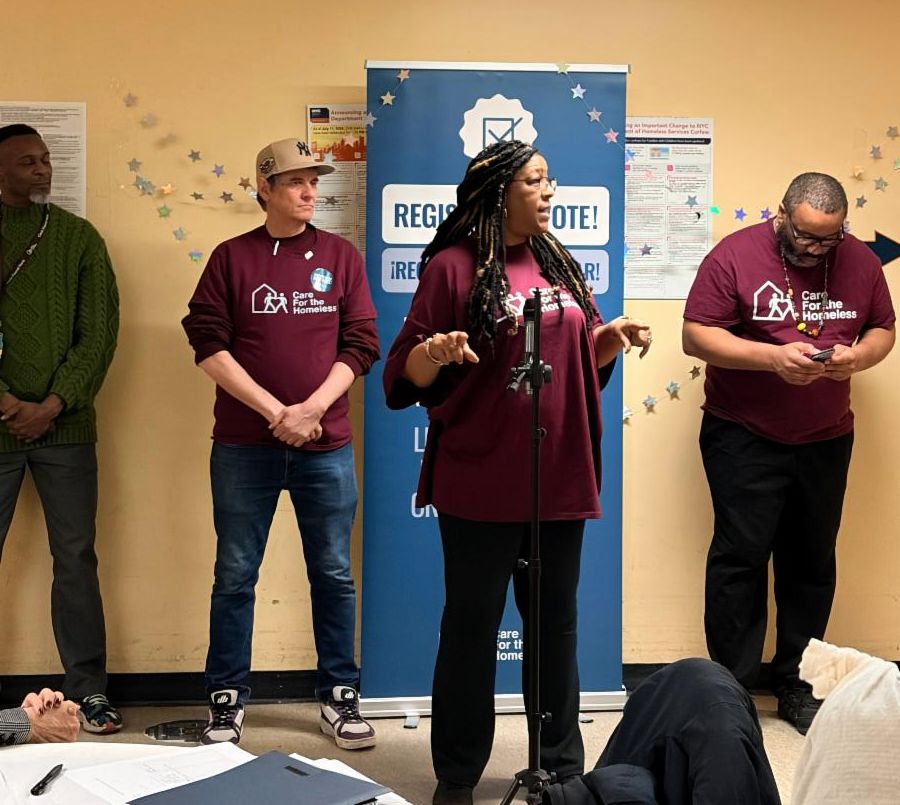
Earlier this month, our Consumer Advisory Board hosted an open mic and storytelling workshop at Susan’s Place, centered on voter engagement and civic power. Led by CAB Chair and Mentor, Cynthia English, the event created a space for the residents to reflect on their lived experiences and recognize the power of using their voices to create change, particularly at the ballot box. While many shared the very real frustration of navigating support systems that are lacking in impact, the message emphasized that meaningful change requires participating in the processes available to influence change.
Participants brought that message to life through poetry, music, and even stand-up comedy, making it a deeply moving and joyful space. The event was a powerful reminder: our stories are powerful, and so is our vote.
| | |
Understanding the Housing Crisis: What "The Gap" Report Tells Us
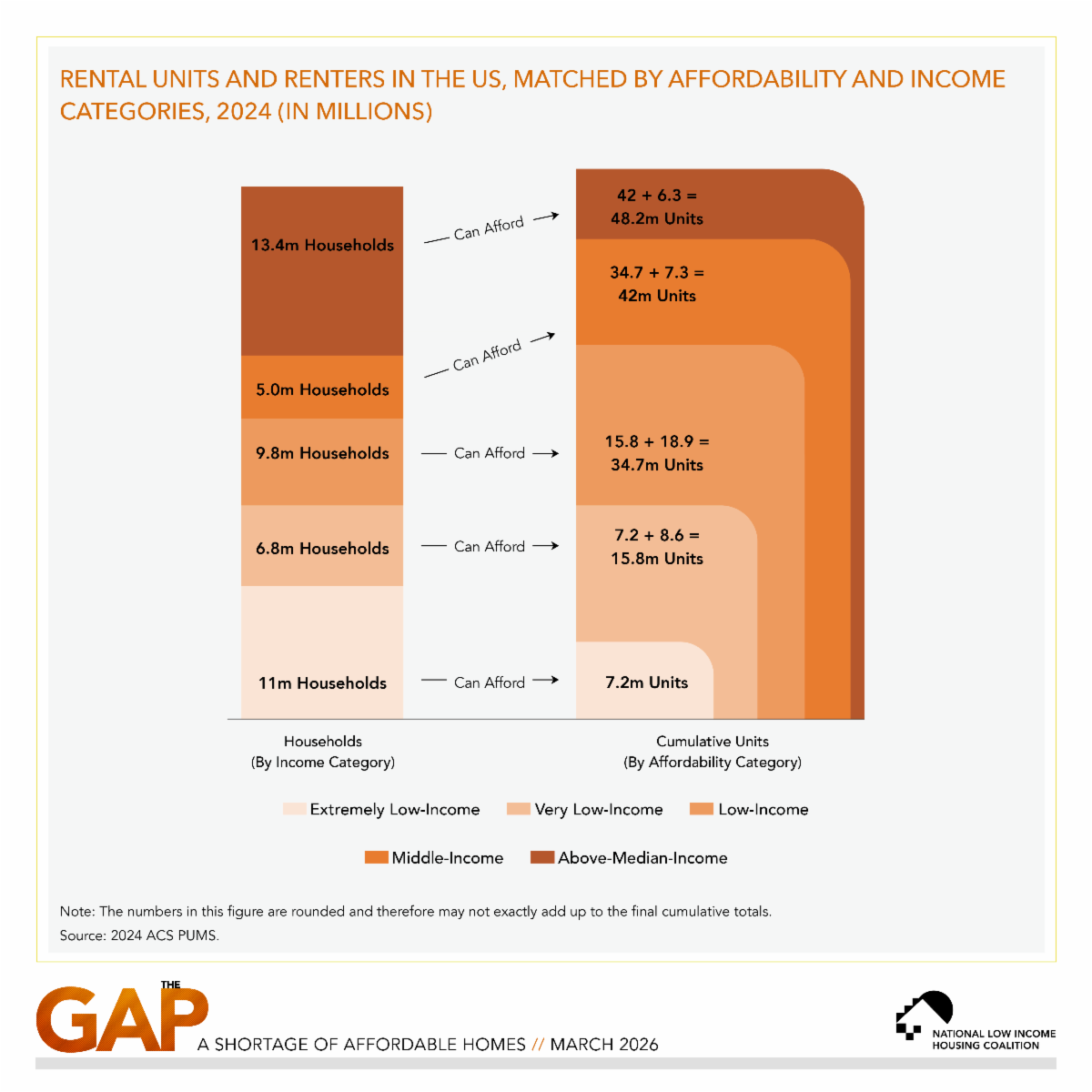
A new report from the National Low Income Housing Coalition, The Gap: A Shortage of Affordable Homes, offers a stark reminder of just how deep the housing crisis runs, and why local action in New York City is so urgent. The report examines the availability of housing for extremely low-income (ELI) renters, defined as households earning at or below 30% of Area Median Income or the federal poverty level (whichever is greater), with a national average of about $26,111 for a two-person household. What they find is clear: the housing market is fundamentally not built to serve those with the lowest incomes.
Nationally, there is a shortage of 7.2 million affordable and available rental homes for extremely low-income renters. For every 100 households in this income group, only 35 homes are both affordable and available; this is the case in New York as well. This means that the majority of the lowest-income renters are competing for a severely limited number of units or are pushed into housing they cannot afford. As a result, 74% of extremely low-income renters are severely cost-burdened, spending more than half of their income on rent.
| |
Importantly, this crisis is not limited to a few regions; it exists everywhere. No state or major metropolitan area in the country has enough affordable housing for extremely low-income renters. Even in regions like New York where the area median income is higher, the shortage of available homes for the lowest income households remains severe. This mirrors what we see every day in our work: individuals and families navigating an impossible housing market where the units that exist are simply out of reach.
The GAP makes clear that incremental solutions are not enough. The scale of the shortage requires bold, targeted investment in deeply affordable housing and rental assistance. As New York City continues its budget negotiations, this national data underscores the urgency of local action to ensure housing policies truly meet the needs of those most at risk of homelessness.
|
| |
Call to Action:
Tell City Council to Create Truly Affordable Housing for Extremely Low-Income Households
Despite record levels of “affordable” housing production in recent years, most of the housing created in NYC excludes households who are experiencing homelessness and/or extremely low-income. A recent report from the Coalition for the Homeless, Build from the Bottom Up: Affordable Housing for Homeless New Yorkers, emphasizes the city's need to shift their housing development strategy to focus on the City’s lowest income renters and those experiencing homelessness.
Send City Council a message and urge them to build 60,000 new units over the next five years targeted to the lowest income New Yorkers to help end homelessness for many!
| | |
Proposed Federal Rule Threatens Housing for Mixed-Status Families
A newly proposed federal rule could have serious consequences for families across the country, and particularly in New York. The policy would prohibit households from receiving federal housing assistance if even one member is ineligible due to their immigration status, effectively ending a long-standing policy that allowed support to be prorated for eligible family members.
Under current policy, mixed-status households, families that include both eligible and ineligible members, receive partial assistance to ensure that U.S. citizens and eligible immigrants can still access housing support. The proposed rule would eliminate this system entirely, forcing families into an impossible choice: separate from one another or risk losing the assistance that keeps them housed.
The impact in New York would be significant. Thousands of families across the state, including nearly 3,000 households in New York City alone, could be at risk of losing housing assistance, affecting more than 11,000 individuals, including thousands of children. More broadly, New York is home to a substantial share of the nation’s mixed-status households receiving federal rental assistance, meaning the effects of this policy would be deeply felt in our communities.
Policies that restrict access to housing assistance increase the risk of homelessness, worsen health outcomes, and destabilize families. At a time when housing costs are already out of reach for many, removing support from eligible individuals within mixed-status households would only deepen the crisis.
| | This rule is currently open for public comment. We encourage advocates, providers, and community members to submit comments and make their voices heard. Public input is critical in shaping federal policy, especially when the stakes are this high. | | |
Sign On Today!
Join the RISE UP Campaign
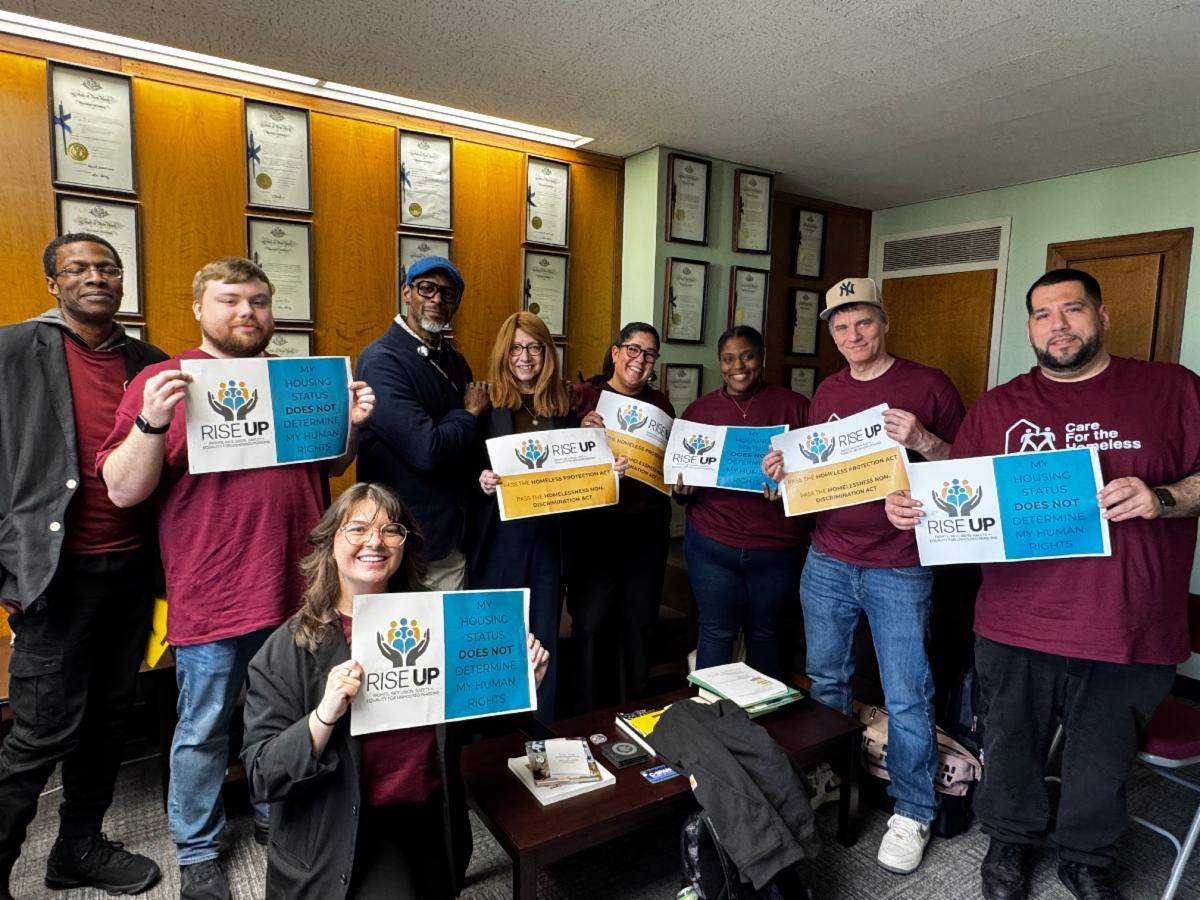
Care For the Homeless is proud to co-lead the RISE UP Campaign, a statewide effort to advance protections against discrimination and violence that people experiencing homelessness experience in their daily lives. This legislative package includes the Homeless Protection Act (HPA) and the Homelessness Non-Discrimination Act (HONDA), which would establish homelessness as a protected class under New York law and create mechanisms to track and address harm.
Grounded in the leadership of people with lived experience, RISE UP centers the voices of those most impacted and works to ensure that every New Yorker is treated with dignity and respect.
| | We are actively building support from individuals and organizations across the state. If you are interested in signing on or learning more about the campaign, we’d love to connect. Please reach out to Chelsea Rose, crose@cfhnyc.org to start the conversation. | | |
The Busy Advocate's April Calendar
| | |
Thursday, April 9, 10:00 AM – New York City Council Committee on Public Housing: Oversight Hearing. Sign up to testify here. View here.
Friday, April 10, 10:00 AM – New York City Council Committee on Aging: Oversight Hearing. Sign up to testify here. View here.
Thursday, April 16, 1:30 PM - New York City Council Stated Meeting. View here.
Tuesday, April 28 1:00 PM – New York City Council Committee on Immigration: Oversight Hearing. Sign up to testify here. View here.
Thursday, April 30, 1:30 PM - New York City Council Stated Meeting. View here.
| | | Care For the Homeless | 30 E. 33rd St. Fifth Floor | New York, NY 10016 US | | | | |