NYHER 115 Waiver -- Chautauqua Health Network Chronic Care Management -- Protecting Patient Privacy -- Blindness Epidemic from Staring at Phones -- Report: Protein Helping to Prevent Breast Cancer Metastasis

Pictures not showing? Click "Download Images" or click here to view as webpage.

NYHER 155 Waiver Amendment Overview

The Office of Health Insurance Programs (OHIP) has posted a recording of the New York Health Equity Reform 1115 Waiver Amendment Overview Webinar for interested stakeholders. This recording can be found on the New York 1115 Medicaid Waiver Information webpage under the ‘MRT 1115 Waiver Amendments’ section. A direct link to the recording is available here.  


On January 9, 2024, OHIP announced the Centers for Medicare & Medicaid Services (CMS) approval of the New York Health Equity Reform (NYHER) section 1115(a) demonstration waiver amendment. The waiver amendment will allow the State to advance health equity, reduce health disparities, support the delivery of health-related social needs (HRSN) services, and promote workforce development. This webinar outlines the key initiatives included within the waiver amendment. 


Questions regarding the NYHER 1115(a) waiver amendment should be directed to NYHER@health.ny.gov

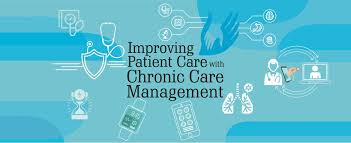
Chautauqua Health Network Introducing Chronic Care Management Services to Chautauqua County

Exciting news! The Chautauqua Health Network (CHN) and the Chautauqua Integrated Delivery System (CIDS) are rolling out Chronic Care Management (CCM) services. Guiding this initiative are two exceptional nurses, Shelly Wells RN and Jessica Cronk RN, who bring a wealth of experience and dedication to patient care. 


This service marks a significant milestone in our commitment to patient-centered care and practice excellence. By providing CCM, your practices not only enhance patient outcomes but also streamline their path toward Patient-Centered Medical Home (PCMH) certification. Through regular check-ins, medication management, and care coordination, Shelly and Jessica will empower patients with chronic conditions to better manage their health. This proactive approach not only reduces hospital readmissions but also fosters stronger patient-provider relationships. With CCM, practices can anticipate improved patient satisfaction, reduced healthcare costs, and ultimately, healthier, more engaged communities. 


For more information, please contact Jason Carmen Practice Development Manager at: Jason.Carmen@chq.health.

Protecting Patient Privacy: Beware of Fraudulent Requests

Recently, there have been reports of fraudulent communications targeting healthcare practices like yours. These communications falsely claim to be from Walgreens Pharmacy and request sensitive patient information such as notes, visit summaries, medication lists, and more. 


It's crucial to be aware that these requests are not legitimate. After thorough investigation and confirmation from Walgreens, it has been verified that these requests are fraudulent. Walgreens has assured us that they would never solicit such information from healthcare providers. 


To ensure the safety and privacy of our patients' data, we urge all team members to be vigilant. If you receive any communication requesting patient information, especially from purported entities like Walgreens Pharmacy, please refrain from fulfilling the request. 


Instead, report any suspicious communication immediately to your designated contact or security department. Additionally, take this opportunity to educate yourselves on identifying signs of fraudulent requests to better protect patients and practice integrity. 

Gen Z'ers Face "Blindness epidemic" Due to Lack of Sunlight from Staring at Phone

Gen Zers are getting increasingly near-sighted from staring at their electronic devices all day and face a blindness epidemic if they continue to stay indoors while phone-addicted, a leading eye surgeon warns in a new report. 


The rates of near-sightedness, or myopia, have been skyrocketing across the world with an increase of 46% in the UK over the last three decades, according to the Daily Mail. Dr. Joern Jorgensen, a world-renowned eye surgeon at Laser Eye Clinic London, warned that the situation will only get worse because Gen Zers — people born between the mid-1990s and mid-2010s — aren’t getting enough dopamine. In the retina, high levels of dopamine tunes vision for daylight conditions. 


Time spent in the sun boosts dopamine levels while staying indoors reduces the amount of the important neurotransmitter – leading to serious eye problems. 


In the US, a study from California says myopia has spiked a staggering 59% among teenagers. 

And Zoomers face mounting risks of developing serious vision problems – even leading up to blindness – after missing out on natural sunlight during puberty, the outlet reports.


Meanwhile, the amount of time spent staring at electronic devices a few inches away from the face can lead to myopia. 


“During a critical time of their lives, they are not getting natural sunlight, and that in turn is causing a very noticeable rise in myopia. It is alarming and what we are seeing is an epidemic,” Jorgensen told the Daily Mail. 


“Going outside in the daylight to play football, sports of any kind or just to play with friends causes a chemical process which releases dopamine,” he said. 


For the full article click here: Gen Zers Face Blindness Epidemic Due to use of Electronic Devices

Study: Protein Helps Prevent Breast Cancer Metastasis


While better screening and improved treatments are leading to better outcomes for patients with breast cancer, 90% of breast cancer deaths are a result of metastasis, or cancer growing and spreading to other parts of the body. 


University of Cincinnati Cancer Center researchers in the lab of Jun-Lin Guan, Ph.D., have identified a new protein that helps prevent metastasis of a subset called HER2-positive breast cancer. About 20% of patients have HER2-positive breast cancer, and these cancers tend to be more aggressive than other types. 


Autophagy Background 

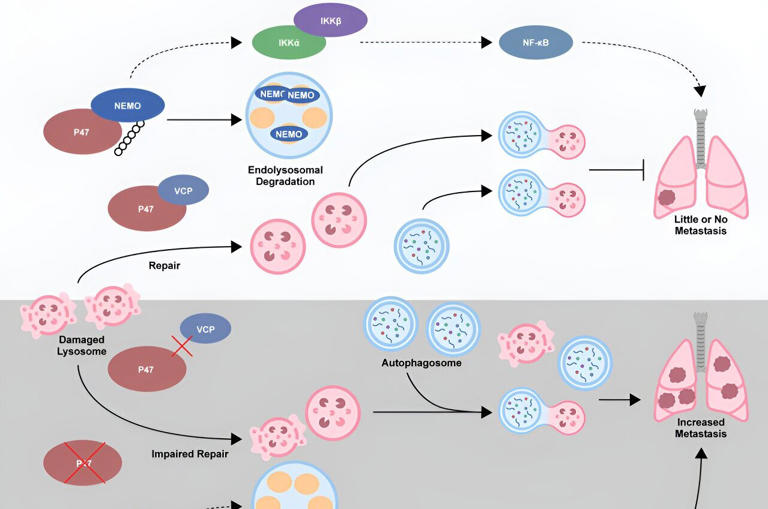
Guan's lab has focused on how autophagy, or the cell's "recycling" function, affects cancer metastasis. 


"Autophagy can be likened to a self-cleansing mechanism within cells," said Mingang Hao, Ph.D., first author of the study and research scientist in Guan's lab. "It allows them to eliminate undesirable or harmful components and emerge stronger and unharmed. In the context of cancer, dysfunctional autophagy has been linked to the development and progression of tumors." 


Research published in 2021 led by Hao found that blocking autophagy in HER2-positive breast cancer cells helped eliminate cancer development in an animal model of the disease. 


However, it was not clear whether the autophagy blockade also inhibited the process of cancer metastasis, as the lack of metastasis could be due to the elimination of the primary tumor growth in the model. 


For the full article click here: Protein Helps Prevent Breast Cancer Metastasis

Did someone forward this to you?

We want to keep in contact. Please consider signing up on our mailing list. Keep up to date with health workforce development information when you add your name to our growing list.

Sign up here

Do you have care coordinator news?

Let us know about your program, event or best practice we can share with our regional list. We would love to highlight your good work.


Did you initialize a new practice that is working well? An unsung partner? Any compliance issue bite you recently that we could all benefit from? Share the knowledge!


Email us at the link below.

Email us!

This e-newsletter is for anyone in, and interested in, care coordination and accountable referral Chautauqua County. We'll look at resources and educational opportunities in the area with the goal of increasing care coordination, wellness and overall quality of life in the Southern Tier; please forward this email freely!


Your feedback is important. Drop us a line and let us know what you want to hear more about.

Issue 2403