Second Annual Rural Mobile Medical Unit Health & Wellness Initiative -- Breast Cancer Awareness Month -- Mental Health and Seasonal Changes: Addressing Seasonal Affective Disorder (SAD) -- Implementing the AHC Screening Tool -- Flu Season Preparedness
| |
Second Annual Rural Mobile Medical Unit Health & Wellness Initiative | |
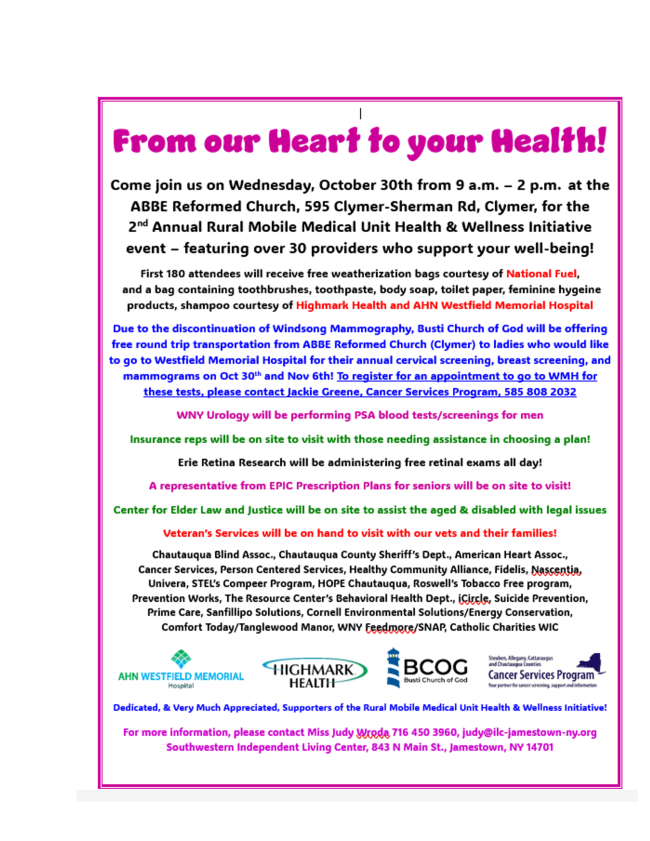
The second annual Rural Mobile Medical Unit Health & Wellness Initiative will take place on Wednesday, Oct. 30th from 9 a.m. to 2 p.m. at the ABBE Reformed Church in Clymer.
With over 30 providers focused on your well-being, the first 180 attendees will receive weatherization bags and essential toiletries courtesy of National Fuel, Highmark Health, and AHN Westfield Memorial Hospital.
Free transportation for breast screenings and mammograms will be available from ABBE Reformed Church to Westfield Memorial Hospital. Men can benefit from PSA screenings provided by WNY Urology, and many other services will be offered, including retinal exams, insurance assistance, elder legal aid, and support for veterans.
Contact Miss Judy Wroda for more info at 716-450-3960 or judy@ilc-jamestown-ny.org.
| |
Breast Cancer Awareness Month: Supporting Early Detection and Care Coordination | |
|
October is Breast Cancer Awareness Month, a critical time for us as healthcare providers to reinforce the importance of early detection, education, and compassionate care for those affected by breast cancer. As professionals dedicated to the health and well-being of our patients, we play a vital role in promoting awareness and encouraging regular screenings, such as mammograms, which are key to detecting breast cancer at its earliest and most treatable stages.
Early detection can significantly improve outcomes, and it's our duty to ensure that patients receive timely and accurate information about their screening options. As nurses, care coordinators, and healthcare providers, we must advocate for our patients by discussing their risk factors, facilitating access to screenings, and addressing any barriers they may face in seeking care. Collaboration across our teams, from community-based organizations to primary care, can enhance patient outreach and engagement, ensuring that no one falls through the cracks.
This month, let's focus on strengthening our care coordination efforts to support individuals navigating their breast cancer journey. Whether through patient education, support groups, or connecting patients with the right resources, every action we take can make a profound difference. By working together and leveraging our collective expertise, we can improve patient outcomes, provide hope, and continue to make strides in the fight against breast cancer. Let's use October as a reminder of our shared commitment to patient-centered care and the power of early intervention.
| |
Mental Health and Seasonal Changes: Addressing Seasonal Affective Disorder (SAD) | 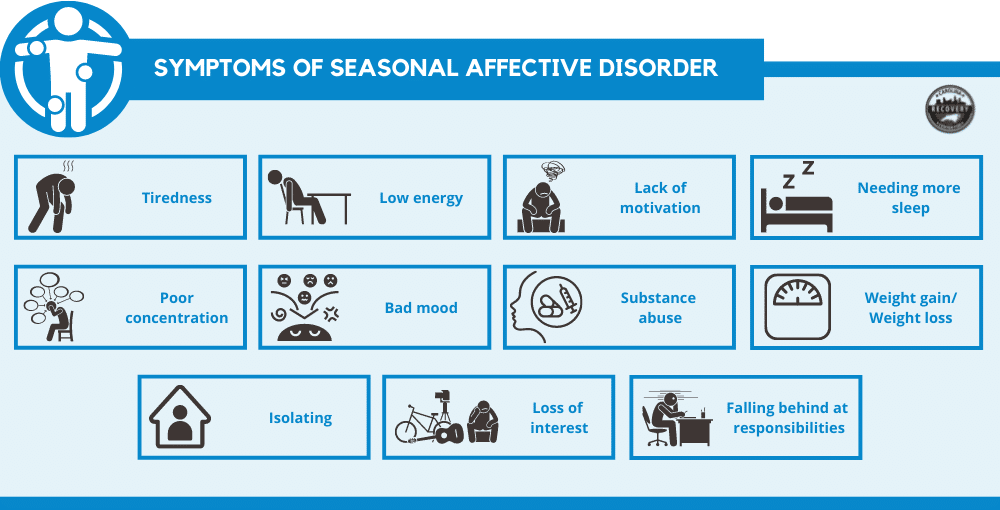 | |
As we transition into the fall and winter months, healthcare providers are likely to see a rise in Seasonal Affective Disorder (SAD) among their patients. SAD is a form of depression that typically occurs as daylight hours decrease, with symptoms peaking during the colder months. Common symptoms include low energy, mood swings, difficulty concentrating, oversleeping, and changes in appetite, particularly craving carbohydrates. For care coordinators, understanding how to identify and support those experiencing SAD is essential, as this disorder can significantly affect a patient's quality of life.
Recognizing and addressing SAD early can prevent more severe episodes of depression. Care coordinators and healthcare providers play a vital role by screening for seasonal changes in mood during routine check-ins and suggesting lifestyle modifications that can help. Encouraging exposure to natural light, regular physical activity, and maintaining a consistent sleep schedule can be beneficial. Light therapy, which uses a special lamp that mimics natural sunlight, is another non-pharmacological approach that can be recommended. Additionally, for more severe cases, cognitive-behavioral therapy (CBT) and medication may be appropriate treatments, underscoring the importance of a comprehensive care plan tailored to each individual's needs.
Community-based organizations (CBOs) are uniquely positioned to support individuals struggling with SAD by offering resources, such as support groups, mental health education, and access to counseling services. Providers and coordinators can work closely with CBOs to connect patients with these services and reduce the stigma often associated with mental health issues. By fostering open discussions around mental health and seasonal changes, we can collectively create supportive environments to help those at risk of SAD manage their symptoms and improve their overall well-being during the fall and winter seasons.
| |
Implementing the AHC Screening Tool: Enhancing Care Coordination in Preparation for NY’s 1115 Waiver
| |
|
As New York State prepares for the implementation of the 1115 waiver, healthcare providers, care coordinators, and community-based organizations (CBOs) have an opportunity to enhance patient care through the use of the Accountable Health Communities (AHC) Screening Tool. This tool is designed to identify social determinants of health (SDoH) that may impact a patient’s well-being, such as housing instability, food insecurity, and transportation barriers. The optimal time to use the AHC Screening Tool is during patient intake or annual visits, as it allows for comprehensive identification of needs that could influence health outcomes. Once completed, responses should be reviewed promptly, and patients who screen positive for social needs should be connected to appropriate resources and support services within the community. This integration of social care into healthcare aligns closely with the goals of the 1115 waiver, aiming to improve overall health and reduce health disparities across populations.
The AHC Screening Tool should ideally be administered by care coordinators or other trained healthcare staff, and the frequency of use can vary based on the patient's situation—typically, once a year or whenever a significant change in circumstances is noted. The tool’s actionable insights help care teams proactively address social factors that may hinder a patient’s ability to manage chronic conditions or access care. Regular use of the AHC Screening Tool not only aligns with the state’s push for value-based care but also strengthens partnerships between healthcare providers and CBOs by ensuring that patients' social needs are met in a timely and effective manner. By implementing this tool consistently, care teams can better prepare for the upcoming 1115 waiver changes and enhance overall patient care and community well-being.
| |
Flu Season Preparedness: Strategies for Vaccination and Prevention
| |
|
As the cooler months approach, healthcare providers and community-based organizations must gear up for the upcoming flu season. Influenza can lead to severe illness, hospitalizations, and even death, particularly among vulnerable populations such as the elderly, young children, and those with chronic conditions. To mitigate the impact of flu season, it is essential to encourage early vaccination, as it remains the most effective way to prevent infection and reduce the spread of the virus. Care coordinators can play a pivotal role by helping patients understand the benefits of the flu vaccine, dispelling myths, and ensuring that high-risk patients have easy access to vaccination services.
In addition to vaccination, providers and care coordinators should promote preventive practices to reduce flu transmission. These practices include regular hand washing, covering coughs and sneezes, and staying home when sick to prevent infecting others. Many healthcare organizations host flu clinics, offering convenient vaccination opportunities for patients, staff, and the wider community. Leveraging telehealth services during peak flu season can also help manage care for patients experiencing mild flu symptoms, reducing the burden on clinics and emergency rooms while minimizing exposure risks.
Community-based organizations are crucial partners in expanding flu prevention efforts and reaching underserved populations. By providing educational materials, setting up vaccination events, and fostering partnerships with healthcare providers, CBOs can help increase vaccination rates and flu awareness. This collaborative approach ensures a comprehensive, community-wide response to flu season, reducing the incidence and severity of influenza-related illnesses and improving overall public health outcomes during the fall and winter months.
| |
|
This e-newsletter is for anyone in, and interested in, care coordination and accountable referral Chautauqua County. We'll look at resources and educational opportunities in the area with the goal of increasing care coordination, wellness and overall quality of life in the Southern Tier; please forward this email freely!
Your feedback is important. Drop us a line and let us know what you want to hear more about.
| | | | |