Visible Progress as Brooks-TLC Prepares for New Hospital in Fredonia -- JCC Preparing to Launch New LPN Program -- ER Boarding Poses Growing Threat for Dementia Patients -- Mental Health Awareness Month: Turning Awareness into Action -- National Physical Fitness and Sports Month: Promoting Active Communities
| | Visible Progress as Brooks-TLC Prepares for New Hospital in Fredonia | |
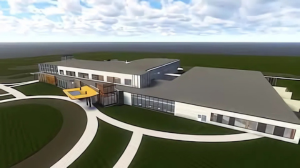
Fredonia will have to wait a little longer to see updated sketch plans for the new Brooks Memorial Hospital. However, a major milestone in site preparation has taken place. Recently, a large white barn, once part of the grape farm that previously occupied the property along East Main Street, was demolished. By early evening, the barn had been cleared down to its foundation pad, marking the most visible progress yet on the long-anticipated project.
Prior work on the site included removing grapevines and digging drainage ditches on the far end of the property, but the barn’s removal is the most substantial change the public has seen so far.
Brooks-TLC officials had originally planned to present new sketch plans at the April meeting of the Fredonia Planning Board, but that presentation was delayed as the designs were reportedly not finalized. The plans are now expected to be shared at the board’s May meeting.
The project has seen numerous adjustments over the years. Progress remained stalled until 2024, when Governor Kathy Hochul announced the long-awaited release of state funding that had been awarded nearly a decade earlier. The demolition and upcoming presentation signal new momentum for a project crucial to the future of healthcare in the region.
Original reporting credited to M.J. Stafford. To view the article in The Post-Journal, click here.
| | SUNY JCC Preparing to Launch New LPN Program | | |
SUNY Jamestown Community College is moving closer to launching a new Licensed Practical Nurse (LPN) program this fall. Vice President of Academic Affairs Jessica Kubiak told the JCC Board of Trustees that paperwork is being submitted to SUNY officials for final approval. The program is designed to address local healthcare workforce needs and provide a pathway for students to transition into JCC’s Registered Nursing (RN) program.
Initially, the program will focus on Job Corps participants, supporting underserved students seeking stable careers in healthcare. As it grows, JCC plans to expand enrollment to the wider community. Students can expect a mix of academic, clinical, and simulation-based training to prepare for the NCLEX-PN exam and workforce entry.
In related news, Paula Snyder, Executive Director of JCC’s Cattaraugus County Campus, announced she will retire in December after 33 years of service to the college.
Original reporting credited to Michael Zabrodsky. To view the article in The Post-Journal, click here.
| |
ER Boarding Poses Growing Threat for Dementia Patients | | |
Emergency room boarding — where patients wait hours or even days for inpatient beds — is increasingly putting vulnerable patients, particularly older adults with dementia, at risk. A report by the Associated Press highlights the story of Bill Speer, a dementia patient who waited over 12 hours in an Illinois ER, restrained and agitated, before getting appropriate care.
Experts warn the situation will worsen as the U.S. population ages. Despite a rising demand for healthcare services, hospital bed capacity has remained largely stagnant over the past two decades. Research shows long ER stays can lead to higher risks of delirium for dementia patients, compounding the health dangers of prolonged waits.
Emergency physician groups have lobbied for reform, but systemic issues persist — hospitals often prioritize scheduled procedures over emergency admissions due to higher reimbursement rates, while fewer adult day centers and nursing homes make hospital discharges harder.
Families like Tracy Balhan’s, who watched her father endure distressing waits, are calling for change. As Balhan said, “It didn’t feel to me like he was being treated with any dignity as a person.”
AP data journalist Kasturi Pananjady contributed to this report. To view the article in The Post-Journal, click here.
| | Mental Health Awareness Month: Turning Awareness into Action | |
May is Mental Health Awareness Month, a critical time to focus on the mental well-being of the individuals and communities we serve.
This year’s theme, "Turn Awareness into Action," is a call for healthcare providers, care coordinators, and community organizations to move beyond education and toward real support and change.
Mental health impacts every part of a person’s life — from physical health to employment, housing, and relationships. As frontline partners, we have the power to reduce stigma, identify early signs of mental health struggles, and connect individuals to the support they need. Whether through screenings, warm hand-offs to behavioral health providers, or supportive programming, small actions can create lasting impact.
Action Steps:
- Integrate regular mental health screenings (such as PHQ-2 or PHQ-9) into routine visits and care coordination calls.
- Share updated mental health resource lists with patients and community partners.
- Host or promote a mental health awareness event like a wellness fair, virtual support group, or community education session.
- Offer training sessions for staff on trauma-informed care and mental health first aid.
Let’s commit to integrating mental health into all aspects of our care models this month — and beyond.
| | National Physical Fitness and Sports Month: Promoting Active Communities | | |
May is also National Physical Fitness and Sports Month, a perfect opportunity to highlight the role of physical activity in building healthier communities and preventing chronic disease.
For healthcare teams, care coordinators, and CBOs, promoting physical activity — even in small, accessible ways — can significantly improve health outcomes.
Movement can help manage chronic conditions like diabetes, hypertension, and depression, and it builds connections among community members.
Action Steps:
- Prescribe physical activity during patient visits (e.g., recommending 150 minutes of moderate activity per week).
- Partner with local parks, recreation centers, or fitness groups to share free or low-cost activity options.
- Organize a community walk, dance class, or fitness challenge to encourage group participation and build momentum.
- Promote simple movement tips through newsletters, social media, and patient education materials (e.g., "Take 10-minute walking breaks throughout the day").
Together, we can help make fitness a regular and accessible part of everyday life for the communities we serve.
| | |
This e-newsletter is for anyone in, and interested in, care coordination and accountable referral Chautauqua County. We'll look at resources and educational opportunities in the area with the goal of increasing care coordination, wellness and overall quality of life in the Southern Tier; please forward this email freely!
Your feedback is important. Drop us a line and let us know what you want to hear more about.
| | | | |