|
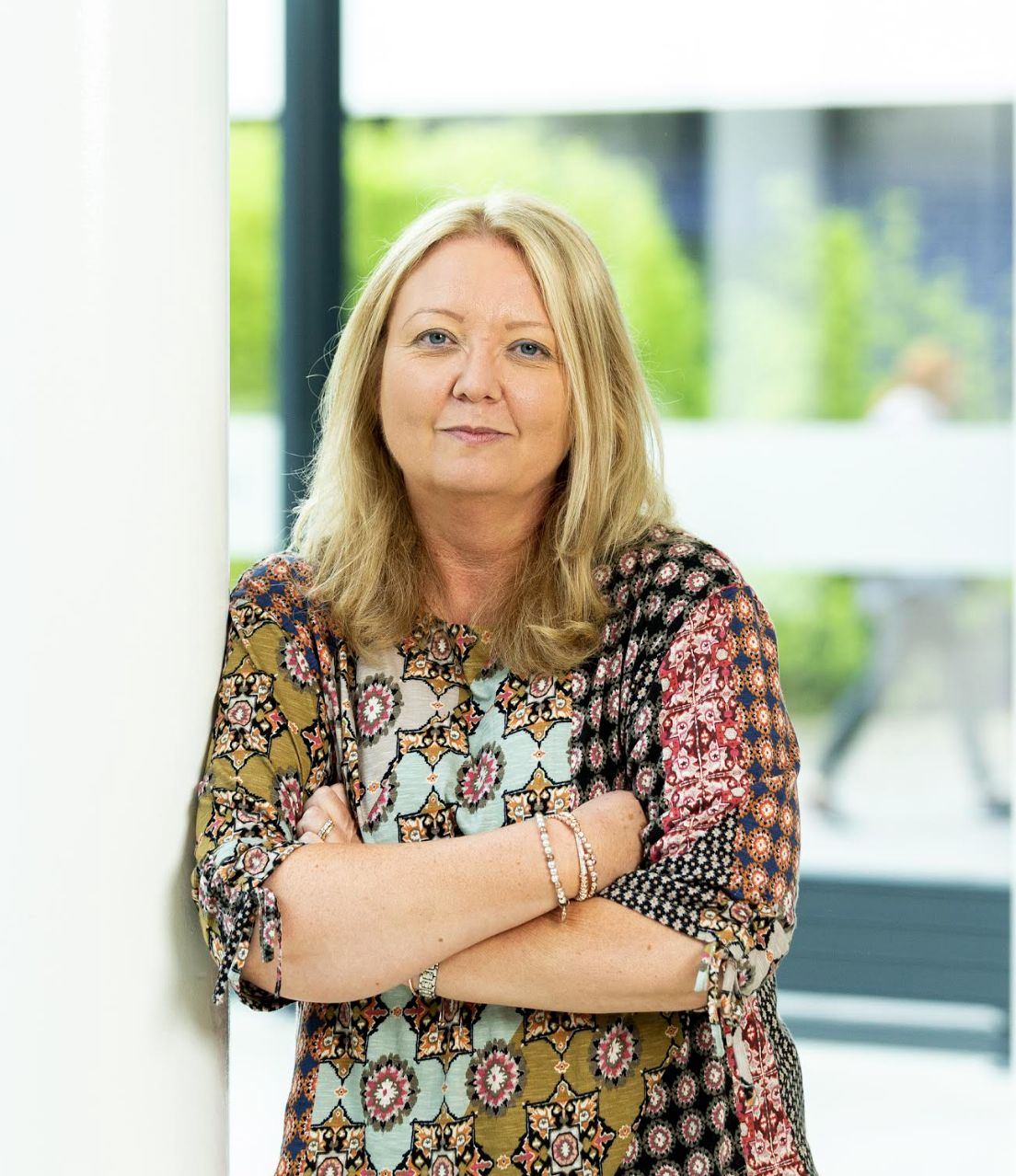
Dr. Kate Frazer
Training and Current Position:
1. What is your academic background and current affiliation?
I’m an Associate Professor at School of Nursing, Midwifery and Health Systems, University College Dublin (UCD), Ireland. My first career was as a Registered General Nurse at the Royal Victoria Hospital, Belfast. Clinically I worked in Northern Ireland, UK and in Ireland in various settings including: specialist cardiothoracic surgical unit, unscheduled care, and at the National Liver Transplant Union in Ireland. I was appointed as a Clinical Nurse Specialist (Hepatitis C), and subsequently as Assistant Director of Nursing (Practice Development). During this time, I graduated with a BSc Health Sciences from Queens University Belfast in 1995– the first cohort of graduate nurses and midwives.
I joined academia (University College Dublin) after completing my MPH degree as a research assistant at the Department of Public Health and Epidemiology following a substantial clinical career. I subsequently was awarded a Fellowship from Health Research Board, Ireland and completed my PhD in Public Health at UCD. I joined the faculty at the School of Nursing, Midwifery and Health Systems over 15 years ago. In 2024 I was awarded a Fulbright Scholarship and I’ll be based at UCSF Center for Tobacco Control, Research and Education during 2025.
2. What led you to pursue a career in health equity research and tobacco-related disparities in particular?
I grew up in Belfast, Northern Ireland during a political conflict ‘The Troubles’ arising from systemic religious discrimination for the minority population. During my childhood I recognized tension, fear and ‘where not to go’. The tobacco industry was also embedded in Belfast –two major companies from circa 1810 to 2005. I remember a teacher in primary school smoking during class. As a student nurse I cared for people impacted by structural and systemic barriers – the social determinants of health. I trained as a nurse at the Royal Victoria Hospital and the hospital is situated in West Belfast an area with substantial areas of deprivation. Patients at that time could smoke while in hospital. Smoking cigarettes was normalized and within my family my dad smoked. So I have always been aware of discrimination and inequity in society- you can’t unsee it. I also was aware of the detrimental impact of secondhand smoke exposure as I cared for my mum in 1995.
3. What are your current research interests?
Specifically how we can support communities to reduce exposure to secondhand smoke. I am interested in what we can learn from at-risk, marginalized communities using engaged research methods to understand their solutions, and to support healthcare practitioners in making every contact count. Nurses comprise the largest number of professionals working in healthcare settings. At UCSF I will be engaging with recently housed families and other marginalized communities to learn more. This is a wonderful opportunity to be located at a Center of Excellence with leading academics in tobacco control.
Other funded research examines 1) how we support people with cancer to quit in Ireland; 2) examining cancer prevention strategies for the Irish minoritized ethnic Traveller community and 3) cohort study of impact of e-cigarettes in pregnancy and for two years follow up.
I engage in research that supports engaged methods with and for marginalized communities.
4. Two important “take home points” from your research:
Using engaged research methods is critical to seeking solutions – we need more funding to ensure this is a reality.
We need to consistently look beyond the person to unpack the structural and systemic barriers that exist in their lives to advise policymakers.
5. What has been the most surprising thing you have learned in your career thus far?
People are interested in what I say. I am the first person in my family to go to university - there was no script. Dream big and don’t give up!
6. What do you hope your career in research will change in the field of tobacco control?
- That people who continue to smoke will no longer be stigmatized and blamed.
- The sustained impact of the commercial determinants of health (in addition to social determinants) will be increasingly reported and called out.
Mentorship:
7. What is the most valuable piece of advice you have received from a mentor?
Believe in yourself. Yes, you can!
8. What is the best advice you have for students and postdoctoral trainees who are just beginning their research careers?
Be brave. Find a mentor early and remember that more that one mentor is required over a career. Many times, we think it’s ‘one mentor’ – and remember to be a mentor for others. Keep passing the ladder down – there’s enough research and opportunity for everyone.
Non-research:
9. What is your favorite thing to do when you are not working?
In the last 10 years I have had major surgeries, and this curtailed life and travel. It also identified my favorite pastime – it’s spending time with my family. Making memories and laughing. That could be watching a film, travelling [and all that entails] or listening to my daughters’ stories and ambitions. We only have one life – enjoy.
|