|
In This Issue
Health Policy in Action: Bridging the Gap Between Developers and Implementers in Health AI
Policy Impact: Duke-Margolis Strongly Represented at AcademyHealth's Annual Research Meeting
Upcoming Events: 2025 Duke Summer Research Showcase
| | |
Action to Advance Whole-Person Care in North Carolina
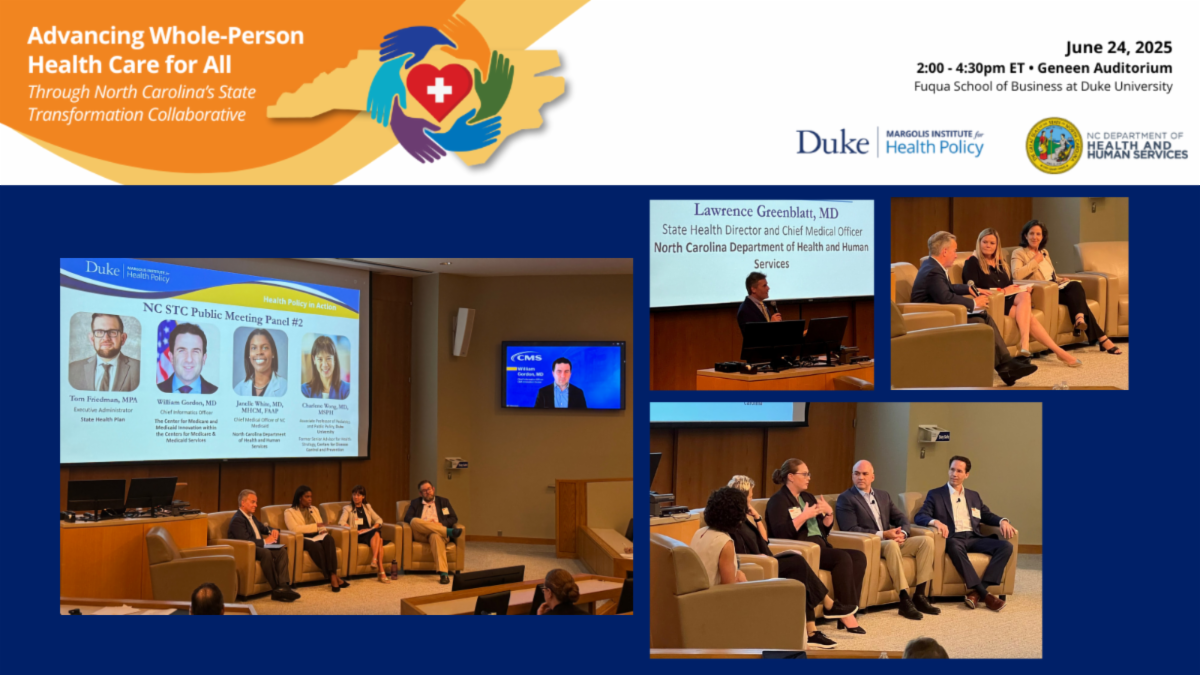
The North Carolina State Transformation Collaborative (NC STC) has released their Alignment Proposal, a document that outlines the NC STC's strategies to advance whole-person care in the state. Over 30 organizations signed on to the Proposal, affirming their commitment to the NC STC’s approach. This month, Duke-Margolis hosted at Duke the collaborative’s third annual public meeting, detailed the initiatives progress so far, including the Alignment Proposal, “Advancing Whole-Person Health Care for All Through North Carolina’s State Transformation Collaborative.” The NC Department of Health and Human Services supported this event and the State Health Director and Chief Medical Officer, Larry Greenblatt, gave opening remarks, along with Duke-Margolis Director Mark McClellan. Both emphasized the importance of collaboration and leadership for the state to continue to make lasting progress.
A panel of engaged collaborative members discussed the importance of the NC STC initiative and why their organizations signed onto the Alignment Proposal. They also noted opportunities to build on existing innovation and resources in North Carolina. A second panel considered how the NC STC might explore new topics, such as advancing high-value specialty care in rural areas, leveraging artificial intelligence, and addressing non-medical drivers of health, particularly highlighting the continued disparities in maternal health.
In a fireside chat, Susannah Bernheim and Kate Davidson from the Center for Medicare and Medicaid Innovation at the Centers for Medicare & Medicaid Services (CMS), explored synergies between the NC STC’ s efforts and the three pillars of CMS’ recently-released strategy. In particular, they noted that the NC STC has an opportunity to build on recent federal action, particularly around prior authorization, to drive greater data transparency and access for patients.
Improving health care for all is at the heart of the NC STC’s mission and its progress to-date can help other states. To that end, Duke-Margolis co-published an issue brief with Milbank Memorial Fund that details the process of how the NC STC, and its eventual Alignment Proposal, was created so that other states might use this knowledge to start their own initiatives.
Watch the event recording here.
| | |
Building a Holistic View for Patient-Focused Evidence
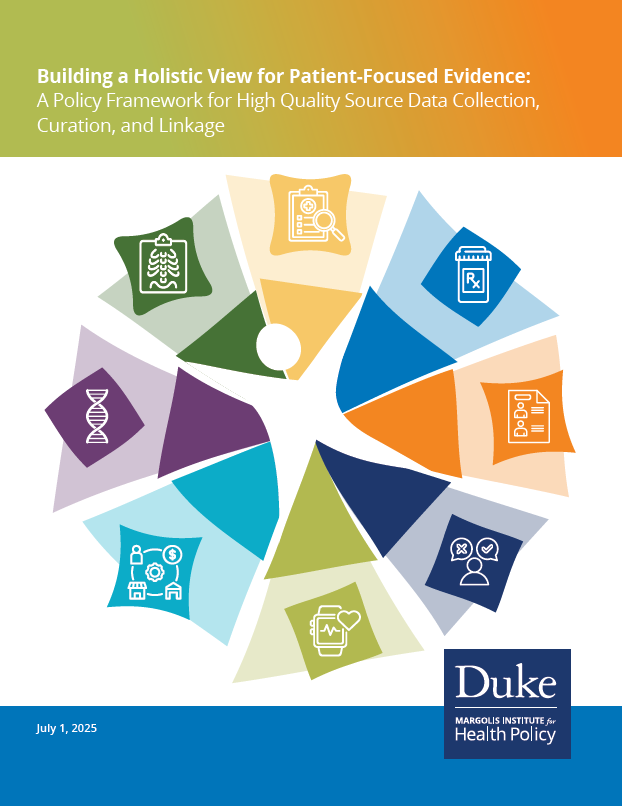
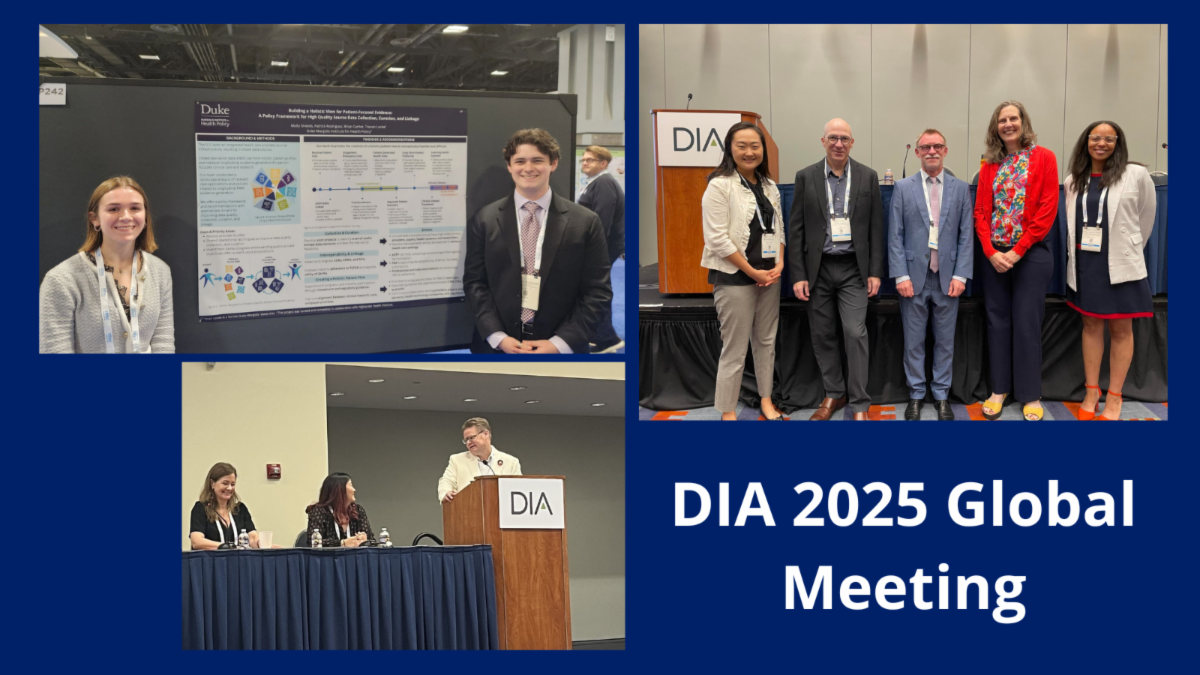
Policy Analyst Patrick Rodriguez, Policy Research Assistant Molly Shields, Assistant Research Director Brian Canter, and former Duke-Margolis researcher Trevan Locke co-authored a white paper that lays out a policy framework for supporting a patient-focused learning health system. This work responds to the lack of an integrated, interoperable infrastructure for linking multi-sourced patient data collected in real-world settings. The authors’ framework builds from an extensive landscape analysis and 41 real-world use cases to highlight policies that catalyze innovation and align stakeholder incentives across clinical research and care. Key findings show that investing in a powerful, limited set of shared data elements and interoperability of tools can enhance the availability, quality, and connectivity of longitudinal patient data to facilitate better outcomes, faster discoveries, and smarter health care spending. Read the article here.
| | |
Synthetic Data Generation
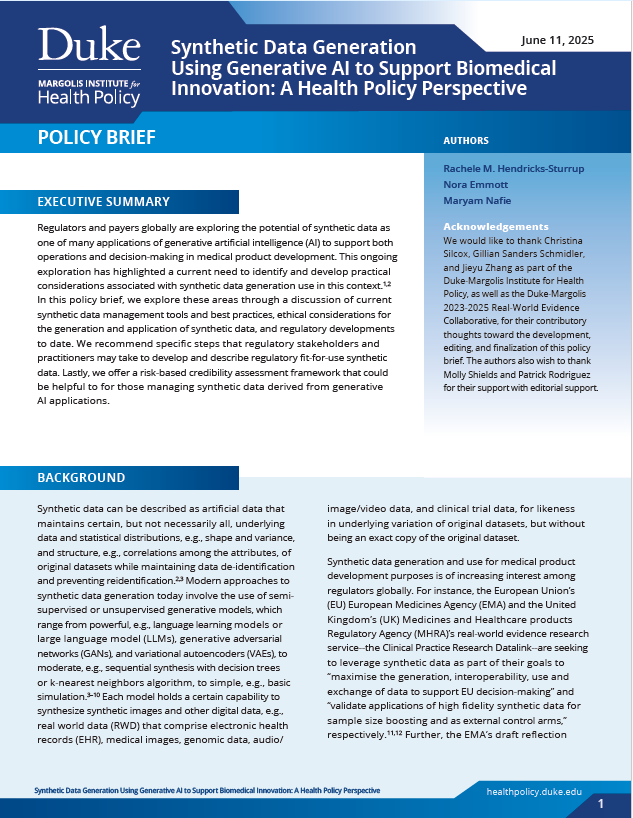
Duke-Margolis has released a policy brief, co-authored by Research Director Rachele Hendricks-Sturrup, Policy Research Associate Nora Emmott, and Policy Analyst Maryam Nafie, that explored how synthetic data—powered by generative artificial intelligence—can accelerate drug development and research. They also gave an overview of synthetic data tools and best practices and incorporated ethical, legal, data, and regulatory considerations into their analysis. Read more here.
The Evidence Base included this policy brief in their weekly roundup of news—read it here.
| | |
North Carolina's Healthy Opportunities Pilots
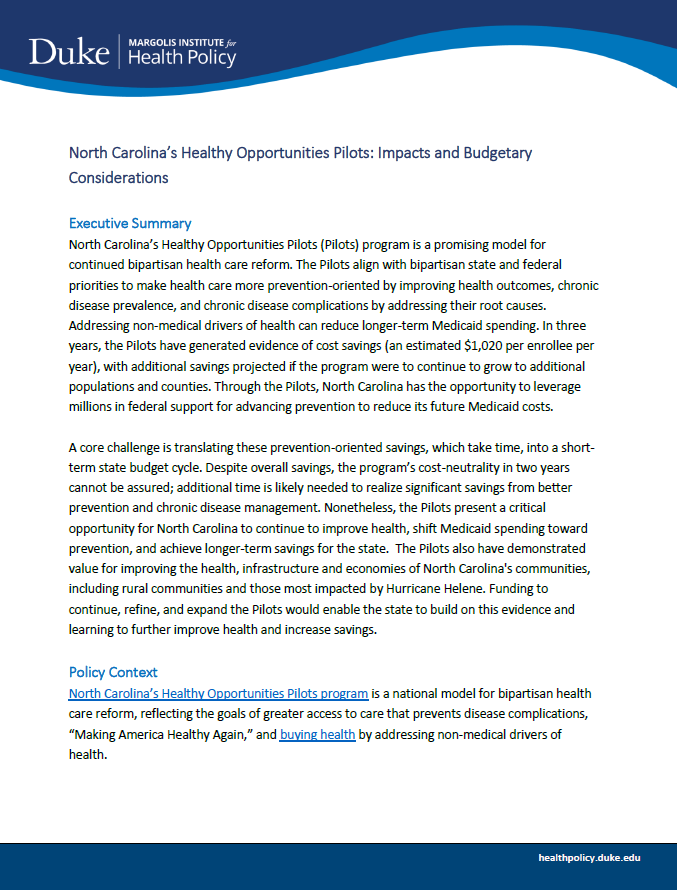
Duke-Margolis researchers have co-authored a brief on the impact and budgetary considerations of North Carolina's Healthy Opportunities Pilots program, which was designed to improve health outcomes and reduce chronic disease prevalence by addressing their root causes. The authors found that addressing these non-medical drivers of health could reduce Medicaid spending long-term, as in the past three years, the program has already generated cost savings. Read more here.
| | |
Updating Payment Systems for Hospitals
In response to CMS’ proposed updates to payment policies under the “Hospital Inpatient Prospective Payment Systems for Acute Care Hospitals and the Long-Term Care Hospital Prospective Payment System,” Duke-Margolis has released a comment letter with recommendations to help ensure the changes are effective. Read more here.
| | |
Medicare Drug Pricing Negotiation Program
Duke-Margolis also released a comment letter to offer suggestions on CMS’ IPAY 2028 Medicare Drug Price Negotiation Program Draft Guidance. The letter discusses CMS’ comparative effectiveness framework, Part D formularies, and negotiations’ impacts on Part B drug pricing and use. Read more here.
| | |
A Population-Based Payment Model for Obesity Treatment
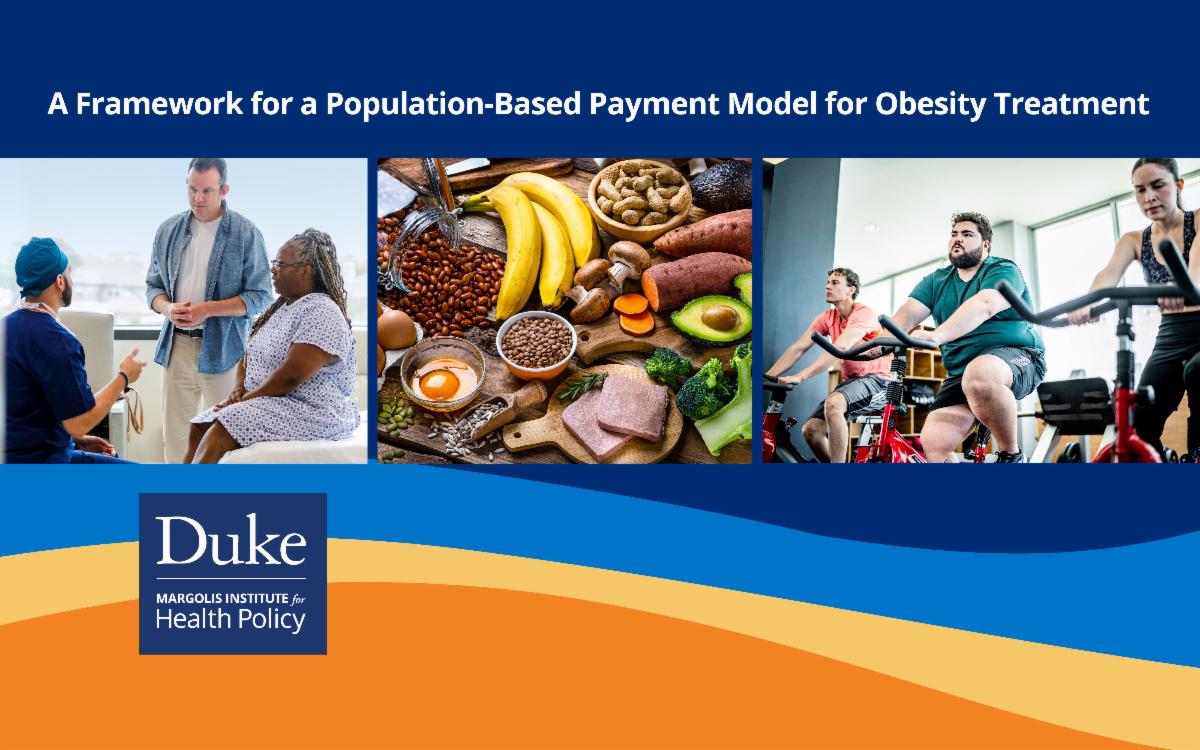
Although a range of effective treatment options exist for obesity that could reduce disease burden and health care spending, patients face persistent barriers to access and engage with treatment. Senior Policy Analyst Sabine Sussman, Area Lead Nitzan Arad, and Research Director Beena Bhuiyan Khan, and former Duke-Margolis researchers Hannah Graunke and Christina Bush, co-authored a white paper that laid out a framework for care and payment models to address these barriers, support greater access to obesity treatment, and lower the associated health and spending burden. This paper is part of the work done by the Duke-Margolis Value for Medical Products Consortium. Read more here.
| | |
Advancing the Learning Health System
Duke-Margolis researchers Rob Saunders, Rachel Bonesteel, Cameron Joyce, and Mark McClellan, together with Future of Health members, co-authored a paper in Health Affairs Scholar to identify opportunities for action in a learning health system. They highlighted three areas in their recommendations: leveraging data and AI to support clinical decision-making, creating an organization culture of learning, and engaging patients and caregivers. Read the paper here.
| | |
Bridging the Gap Between Developers and Implementers in Health AI
Research Director Christina Silcox and Mark McClellan co-authored a Viewpoint article in JAMA Health Forum with researchers from Duke Health, which highlighted how health care organizations can put AI innovations into practice by leveraging external partners, local governance tools and services, and tool certifications and assurances. Ultimately, these organizations could form evidence-generating networks to ensure AI’s real-world utility and safety. Read more here.
| | |
Advancing Health Priorities that Matter to the IDD Community
Policy Research Associate Montgomery Smith, and Core Faculty members Brystana Kaufman, and Michelle Scotton Franklin, released a Brief Report on Research Priorities that was co-developed with adults with intellectual and other developmental disabilities (IDD), family caregivers, and other IDD experts. The report outlines health priorities that matter most to the IDD community, particularly in the context of aging. Read the Brief Report on Research Priorities here.
Duke-Margolis also hosted a webinar on this topic—watch the recording here.
| | Duke-Margolis Strongly Represented at AcademyHealth's Annual Research Meeting | | |
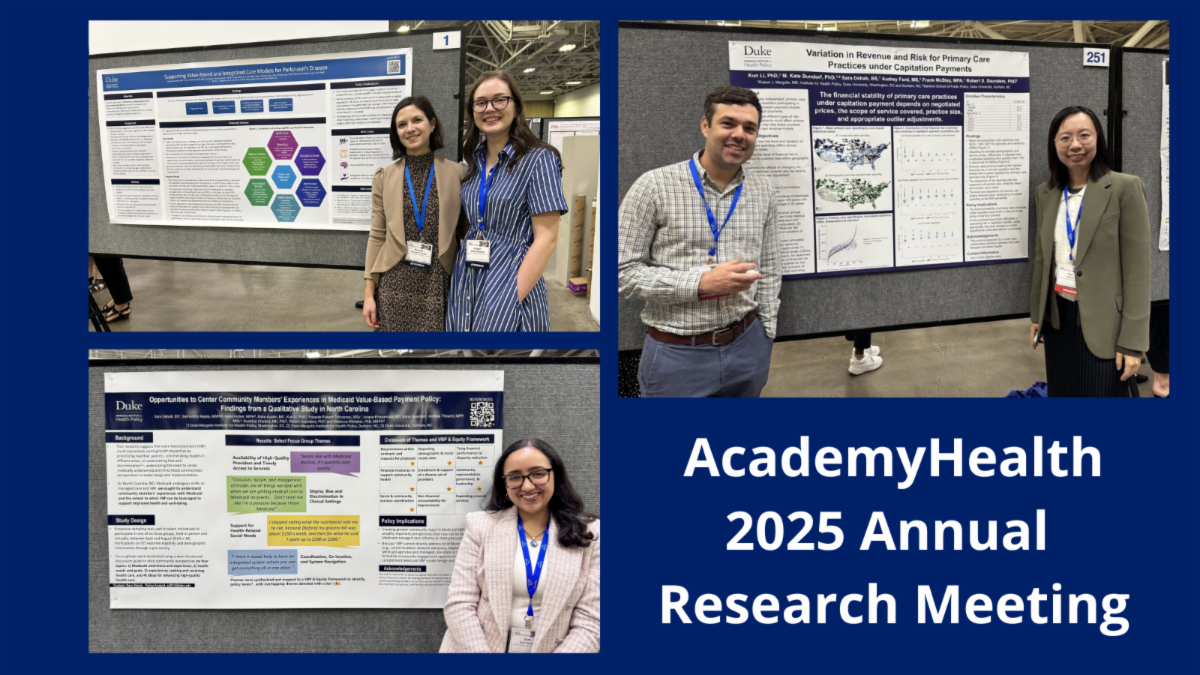
AcademyHealth’s 2025 Annual Research Meeting featured many podium and poster presentations from Duke-Margolis researchers, faculty, and students, who showcased work across the Institute’s health policy research portfolio. Notably, Senior Policy Analyst Kristin Podsiad and Hannah Graunke were nominated for Best Poster for their presentation on “Supporting Value-Based and Integrated Care Models for Parkinson’s Disease,” summarizing a Duke-Margolis white paper co-authored by Duke-Margolis researchers Beena Bhuiyan Khan, Nitzan Arad, and Marianne Hamilton Lopez.
Mark McClellan chaired a policy roundtable on “Developing the Next Generation Health Policy Workforce to Advance Health and Health Care,” where he and Core Faculty Member Corinna Sorenson, Faculty Director of Undergraduate and Graduate Studies, discussed the Duke-Margolis Health Policy Core Competency Framework.
Podium presentations included:
-
“Patients As Partners: A Community-Driven Outreach Initiative to Improve Care Access and Reduce Uncontrolled Hypertension for Women in the South”—co-authored by Bradi Granger
-
“Effect of Electronic Health Record-Based Medication Cost Estimator Availability on Diabetes Control”—co-authored by Caroline Sloan, Virginia Wang, and Matt Maciejewski
-
“Assessing Social Risk Adjustment for Children with Medicaid: Lessons from Analyses of North Carolina Medicaid Claims Data”—co-authored by Kun Li, Katie Huber, Alida Austin, Rushina Cholera, Rob Saunders, and Rebecca Whitaker
-
“Accounting for Social Risk in North Carolina Medicaid Payments: Lessons for Social Risk Adjustment in State Medicaid Programs”—co-authored by Kun Li, Katie Huber, Alida Austin, Rushina Cholera, Rob Saunders, and Rebecca Whitaker
-
“Family Caregiver Emotional Wellbeing May Influence Veteran Long-Term Nursing Home Stays”—co-authored by Megan Shepherd-Banigan
Poster presentations included:
-
“Opportunities to Center Community Members’ Experiences in Medicaid Value-Based Payment Policy: Findings from a Qualitative Study in North Carolina”—co-authored Sara Debab, Samantha Repka, Katie Huber, Alida Austin, Kun Li, Rushina Cholera, and Rebecca Whitaker
-
“Acute Diabetes Complications after Transition to Low-Deductible Health Plans”—co-authored by Frank Wharam and Rhea Dash
-
“The ACA Goes to Texas: Premium Alignment in Texas’ Health Insurance Marketplace”—co-authored by Brystana Kaufman and Gillian Sanders Schmidler
-
“A Framework for an Integrated Population-Based Payment Model for Obesity”—co-authored by Sabine Sussman, Beena Bhuiyan Khan, Nitzan Arad, and Kristin Podsiad
-
“Advancing State-Based Health Reform through the NC State Transformation Collaborative: A Multi-Stakeholder Initiative in Action”—co-authored by Brianna Van Stekelenburg, Rebecca Whitaker, Samantha Repka, Emily Proehl, Catie Armstrong, Aparna Higgins, Hilary Campbell, and Rob Saunders
-
“Evaluating North Carolina Integrated Care for Kids’ Novel Approach to Care Management for Children in Foster Care”—co-authored by Claire Sibold, Chelsea Swanson, and Rushina Cholera
-
“Factors Influencing Caregiver Engagement in Pediatric Care Management: Insights from North Carolina Integrated Care for Kids”—co-authored by Rushina Cholera and Chelsea Swanson
-
“Building Collaborative Systems to Promote Federal Nutrition Program Enrollment: A Qualitative Evaluation of the Nutrition Insecurity Cross-Enrollment (NICE) Pilot in North Carolina”—co-authored by Vibhav Nandagiri, Chelsea Swanson, and Rushina Cholera
-
“Associations between Social Risks and Obesity in High-Risk Veterans”—co-authored by Matt Maciejewski
-
“Using Early Engagement to Identify Coverage and Evidence Needs for Novel Technologies: Tricuspid Valve Interventions”—co-authored by Bheena Bhuiyan Khan and Hannah Graunke
-
“Drivers of Respite Service Use Among Veteran Caregivers”—co-authored by Megan Shepherd-Banigan and Courtney Van Houtven
-
“Insurance Coverage and Home Dialysis Utilization Among Patients Initiating Dialysis in Colorado”—co-authored by Virginia Wang, Caroline Sloan, and Matt Maciejewski
-
“Long COVID Clinics in the Veteran Health Administration: Implications for Care Innovations Needed As Demand Grows”—co-authored by Matt Maciejewski
-
“Impact of COVID-19 Pandemic on Mortality and Hospitalization Among Veterans Receiving Dialysis in VA and VA Community Care”—co-authored by Virginia Wang and Matt Maciejewski
-
“From Outreach to Outcomes: A Telephonic Strategy for Community-Based Blood Pressure Self-Monitoring in Marginalized Populations”—co-authored by Anna Tharakan and Velda Wang
-
“Breast and Gynecologic Cancer Care Experiences Among Women Veterans and Oncology Providers within the VA Healthcare System”—co-authored by Megan Shepherd-Banigan
| | |
2025 Duke Summer Research Showcase
July 25, 2025 | 10:00 am – 12:00 pm ET
Location: Mary Duke Biddle Trent Semans Center for Health Education, Durham, NC
Student research at Duke doesn’t slow down over the summer! Students from summer programs across Duke will gather to share their research in natural sciences, health policy, medicine, engineering, and more. You're invited to stop by Trent Semans Great Hall to show your support and get a sense of the vast research being done on campus this summer! All are welcome to attend; the event is free and registration is not required.
| | |
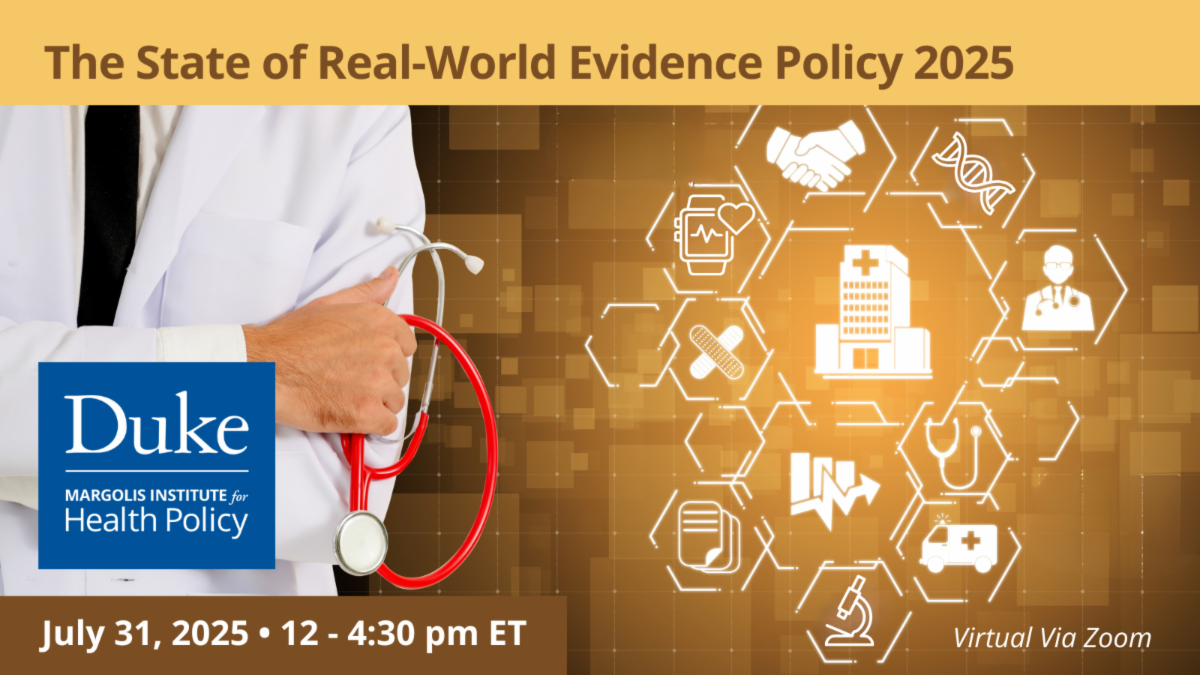
The State of Real-World Evidence Policy 2025
July 31, 2025 | 12:00 – 4:30 pm ET
Location: Virtual via Zoom
This virtual public meeting, convened with the Duke-Margolis Real-World Evidence Collaborative, will explore the latest developments in the real-world data and real-world evidence (RWD/E) landscape. This year, panelists will discuss a few timely topics:
- Opportunities to harmonize, collaborate, and make progress globally in the RWD/E community
- How to cultivate research into routine care and advance pre- and post-market evidence generation
- Uses of RWD/E to support pricing, coverage, and payment
- Ways that RWE can support regulatory decision-making, using recent use cases to illustrate lessons learned
Learn more and register here.
| | |
Prioritizing Community Voices to Enhance Medicaid Policy and Program Design
During this webinar, panelists representing state and federal perspectives on Medicaid policymaking and community engagement discussed strategies that can help center the community member voice within Medicaid value-based payment design, implementation, and oversight to advance community health and well-being.
To accompany the event, Duke-Margolis released a fact sheet—with English and Spanish translations—that summarized community feedback on how Medicaid can better serve beneficiaries and offered suggestions on how to translate that feedback to policy reforms.
Watch the webinar recording here.
| | Policy Research Associate Beth Boyer and Core Faculty member Gavin Yamey co-authored a paper in Vaccine to explore the inequities in global COVID-19 vaccination rates and identify strategies to ensure vaccine equity in future public health emergencies. The authors found that vaccine nationalism, supply chain and manufacturing constraints, and the greater purchasing power of wealthy nations all contributed, and urged regions to build not just manufacturing capacity but also in regulatory approval and financing vaccine procurement at scale. | | |
Core Faculty member Nathan Boucher co-authored an article in the Journal of Applied Gerontology that took lessons learned from Japan’s approach to integrating medical and social care and considered how those may be applied to address the rapidly-growing ageing population in the U.S.
Nathan was quoted in a Public News Service article that discussed a federal budget bill that outlines major cuts to assistance programs, including Medicaid. Nathan noted that the cuts may exacerbate poor health outcomes amongst vulnerable populations, such as those living in rural areas, older adults, disabled individuals, and children.
Nathan also wrote two op-eds on the proposed budget cuts:
-
“HHS budget cuts threaten America’s health and innovation—including in NC” in NC Newsline
-
“Viewpoints: Federal Attack on Safety Net Jeopardizes Disaster Response” in Chapelboro
| | Margolis Scholar Jill Sergison (PhD ’30) created a podcast about how trust manifests across society, including episodes touching on research, politicians, health care providers, and the media, among others, with interviews with individuals such as Associate Professor Jay Pearson from the Sanford School of Public Policy and North Carolina State Representative Julie von Haefen. Listen to the podcast here. | | Research Director Rebecca Whitaker presented at the NC Food is Medicine Symposium, organized by BlueCross BlueShield of North Carolina, to discuss how HOP intentionally integrated community-based organizations to help lead health transformation. In particular, Rebecca emphasized the critical role the Network Lead, or Community Care Hub, played in creating a coordinated and trusted network for addressing health-related social needs. | | Core Faculty member Brystana Kaufman co-authored an article in Health Affairs Forefront, which discussed a strategy to meet the needs of people with serious illness and the needs of their families. The strategy outlines actions across four dimensions—Engage, Design, Integrate, and Bundle—to guide state strategies for scaling palliative care. Read the paper here. | | Maryam Nafie and Rachele Hendricks-Sturrup, and former Postdoctoral Associate Sandra Yankah, co-authored an article in the Journal of Personalized Medicine that evaluated a national sample of payer coverage policies to better understand the role of real-world evidence in supporting coverage decisions across for-profit/mutual fund and non-profit/governmental payers with coverage policies and decisions for pharmacogenomic testing in psychiatry. | | Assistant Research Director Stephen Colvill was a panelist at the Summit on Resilient U.S. Medical Supply Chains, organized by the Center for Strategic and International Studies and Cencora. He discussed how increased domestic manufacturing capabilities for critical pharmaceutical products could secure the U.S. drug supply and noted the need for incentives and measurable goals that encourage competition on supply chain resilience over low-price competition. | | WUNC-FM interviewed Core Faculty member Donald Taylor to discuss recent federal budget changes, including cuts to research funding, Medicaid, and Medicare, as well as the proposed university endowment tax, and their combined impact on Duke University. Donnoted the interconnected nature of these funding sources and Duke’s commitment to keeping as many employees as possible during their restructuring. Read more here. | | Postdoctoral Associate Kun Li co-authored a paper in JAMA Health Forum on state-directed, value-based payments (VBPs) in Medicaid managed care. The authors found that state-directed payments offer a potential mechanism to improve patient outcomes by accelerating VBPs in Medicaid managed care, and suggested CMS action could accelerate the adoption of advanced payment arrangements. | | Core Faculty member Tyson Brown has been appointed as the new director of the Samuel DuBois Cook Center on Social Equity at Duke University, a research hub on the causes, consequences, and potential solutions for inequality. Congratulations to Tyson on this new role! | | Core Faculty member Adrian Hernandez was quoted by Newsweek in their article on the Trump administration’s commitment to address the chronic disease crisis in the U.S. Adrian said that such an effort would require further investment in science and health and noted cuts to key federal health agencies may have a detrimental effect on chronic disease risk. Read the article here. | | Mark McClellan spoke about the accomplishments and future of the Affordable Care Act (ACA) at AHIP 2025, a conference that gathers leadership from health insurance provider organizations. SmartBrief reported on the event in an article that quoted Mark and noted that the ACA has fostered innovation in state Medicaid expansion, leading to programs like HOP. | | |
Alison Lim joins Duke-Margolis as a Policy Research Assistant on the Biomedical Innovation team. She will support projects across the pricing, coverage, and payment portfolios, including the design of alternative payment models for drugs, disease-specific care and payment approaches, and the implementation of drug pricing initiatives. Alison is a recent graduate from the University of Virginia with a BA in Human Biology and was a research assistant as well as a teaching assistant at the university. She was also a dental assistant at the Charlottesville Free Dental Clinic and a Student Advisory Board Member of the Global Health Case Committee at the Center for Global Health Equity.
| | Do you want to be part of health policy in action? Do you want to work on the leading health policy issues confronting cities, states, the nation, and the globe? The Duke-Margolis team is a dynamic, high impact national leader in leveraging policy to ensure high quality, affordable care for all. Multiple positions are currently available with new ones added frequently. Click here to view all of our career opportunities. | | | | |