|
In This Issue
Monthly Highlights: New Advisory Board Member
Health Policy in Action: Modernizing Risk Adjustment
People: Gavin Yamey
| | |
New Initiative to Reform Accountable Care: The West Health Accelerator at Duke-Margolis
Over the past decade, accountable care—focused on delivering personalized, holistic, and coordinated care—has emerged as a key pathway to improve quality and population health outcomes while managing costs in the Medicare program. In 2025, more than half of Traditional Medicare beneficiaries are in accountable care relationships, with more than half of all Medicare enrollees participating in Medicare Advantage plans. Building on a long-standing partnership, Duke-Margolis and West Health launched an Accelerator to collaborate with providers, patients, payers, states, and the Centers for Medicare & Medicaid Services (CMS) to enhance and expand the adoption of meaningful accountable care models.
To mark the launch of the Accelerator, Duke-Margolis and West Health brought together leading health policy experts and public and private sector leaders to outline and discuss the vision and priorities for advancing accountable care reform. This event explored actionable strategies to deliver better health outcomes and higher-quality care for all, starting with views from the administration from CMS Chief of Staff Stephanie Carlton.
Across all discussions, one common theme that arose was the promising role of technology to catalyze progress in accountable care, from data interoperability and real-time data transparency to supportive tools for patients and clinicians. Another theme was the need for collaboration, alignment, and rapid learning involving all sectors of the health care system. Lastly, panels emphasized that improving the patient experience—including empowering informed choice, coordinating care for patients with complex needs, promoting prevention and wellness, and enabling access to the latest effective therapies—will require transformed and innovative payment and delivery models that offer the right incentives, tools, and shared data.
We look forward to continuing our partnership with West Health and working together to advance better health and health care for all. Watch the event recording here.
Following this event, Duke-Margolis researchers Valerie Lehman, Kylie Brown, Wenbo Bai, and Mark McClellan published an article in Health Affairs Forefront on rapid learning for accountable care adoption, particularly highlighting how to leverage collaborative action through efforts like the Accelerator initiative. Read more here.
| | |
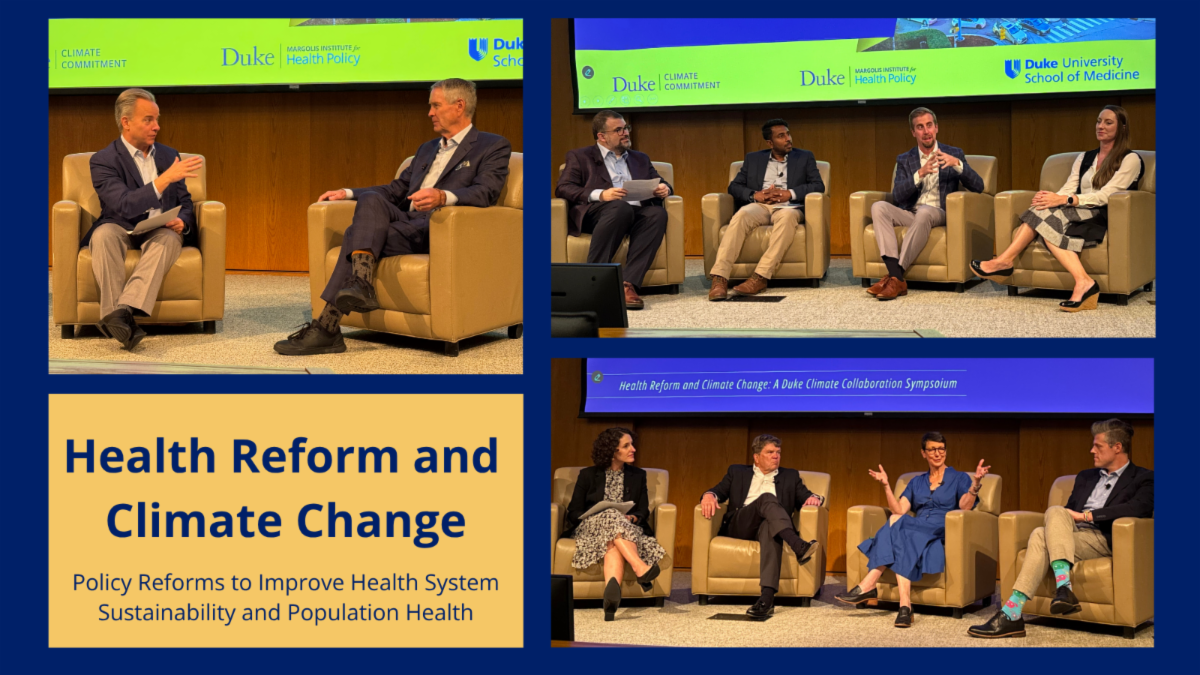
Health Reform and Climate Change
Duke-Margolis and the Duke School of Medicine, with support from the Nicholas Institute for Energy, Environment, & Sustainability, hosted a symposium on “Health Reform and Climate Change.” As climate change and health are deeply intertwined, this complex problem requires an interdisciplinary approach to address it. Experts from across Duke University and beyond met to explore policy reforms that would advance complementary goals for a more sustainable, resilient, efficient, and responsive health care ecosystem that delivers high-quality care for patients.
The event opened with a fireside chat between Institute Director Mark McClellan and Former Senate Majority Leader Bill Frist, who discussed the dynamics that shape the relationship between health and the environment. Duke-Margolis policy research was highlighted throughout the day—first, speakers discussed the ReVAMP Drug Supply Chain Consortium’s work in context with synergistic efforts at the Nicholas School and School of Medicine. A later panel built upon Duke-Margolis’ work with North Carolina’s Health Opportunities Pilots. It showcased three Western North Carolina leaders who recounted their experience with Hurricane Helene, underlining the value of proactive, holistic health infrastructure and cross-sectoral relationships in building community resilience to climate-driven challenges. Other Duke-Margolis speakers included Stephen Colvill, Mike Pignone, and Rebecca Whitaker.
Community- and person-centered interventions were a key theme throughout the day. During open discussion, many participants emphasized the need to frame sustainability and climate-readiness in terms that resonate with the tangible priorities of patients and their communities. One insightful conversation between Duke undergraduate students and The Joint Commission CEO Jon Perlin prompted more discussion about what constitutes true resilience in practice. This collaborative symposium celebrated the interdisciplinary spirit of Duke with students, faculty, and staff involved in this important topic. Duke-Margolis was proud to be part of this event—learn more here.
| | |
New Advisory Board Member: Marcelle Abell-Rosen
Dr. Marcelle Abell-Rosen, a board-certified internal medicine physician in Fort Lauderdale with over two decades of experience in clinical practice, joins Duke-Margolis as our newest Advisory Board member. Dr. Abell-Rosen has been in private practice since 2006 and is currently affiliated with SignatureMD, a network renowned for its focus on personalized, patient-centered care.
In addition to her clinical work, Dr. Abell-Rosen has had a number of medical leadership roles. She serves as a member of the SignatureMD National Advisory Committee and is an active member on the Board of Advisors of Columbia University’s School of General Studies in NYC. She was an influential voice on the Board of Duke University’s Sanford School of Public Policy with a focus on Health Policy for a decade and is a past president of the Caducean Medical Society of Greater Fort Lauderdale.
A Duke University graduate, Dr. Abell-Rosen earned a Master’s in Public Health from the University of California at Berkeley. She received her medical degree at Albert Einstein College of Medicine and completed her residency at Mount Sinai Medical Center in New York.
| | |
Advancing Home-Based Care
Policy Research Associate Montgomery Smith and Assistant Research Director Frank McStay co-authored a blog post in Health Affairs Forefront on policy surrounding home-based care. With the homebound population increasing, the need for home-based care continues to grow as well. The authors identified a few strategies for accountable entities to start building home-based care ecosystems, from initial assessment to eventual monitoring.
Policy Research Assistant Inga Morken, Montgomery Smith, and Frank McStay also co-authored a policy memo on a similar topic: how to enhance financial sustainability of home-based primary care for high-need and homebound older adults. They outlined three short-term policy actions that Medicare can take to advance more sustainable models. Read more here.
| |
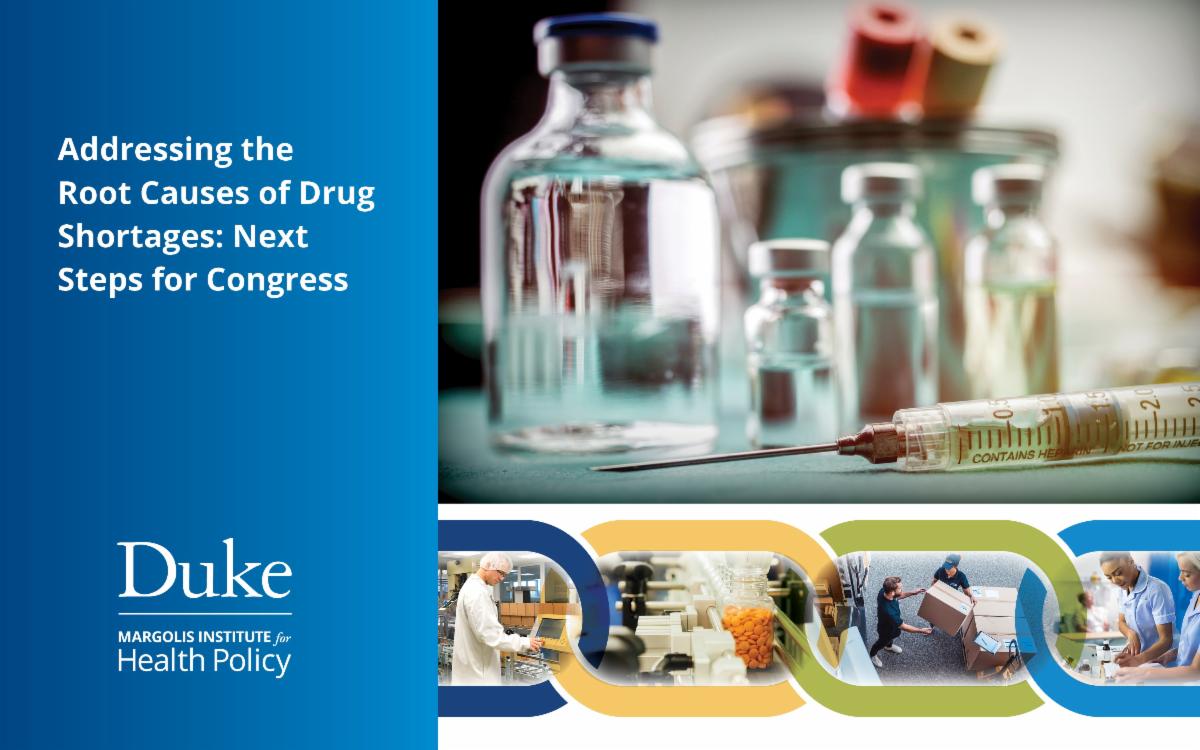
Drug Supply Chain Resilience
Assistant Research Director Stephen Colvill, Policy Research Associate Thomas Roades, and Mark McClellan co-authored a white paper that proposed next steps Congress could take to create a more reliable and resilient pharmaceutical supply chain. In particular, the authors recommended that Congress could provide funding and authority to Medicare to implement a payment program to incentivize a shift to a more reliable supply of critical generic drugs. The authors also outlined opportunities to simplify the original Senate Finance Committee proposal while retaining and improving upon its original intent: to ensure that patients can access the critical drugs they need.
| |
Modernizing Risk Adjustment
Mark McClellan and Policy Analyst Sara Debab co-authored a new JAMA Health Forum Viewpoint article that outlined steps that reduce clinician burnout by modernizing Medicare’s risk adjustment mechanism. Risk adjustment continues to rely on fee-for-service claims, which exacerbates burden on clinicians in accountable care programs. CMS has implemented reforms to alleviate this burden, but the authors recommended that CMS could advance their reforms further by shifting risk adjustment to rely on key electronic health data that are already part of quality measurement reform.
| |
Drug Repurposing
Policy Research Associate Beth Boyer and Visiting Fellow Tanisha Carino co-authored a white paper in collaboration with EveryCure that explored the potential of drug repurposing. The authors defined four distinct archetypes of drug repurposing opportunities—frontier explorers, clinical gems, unsung heroes, and known entities—and outlined policy solutions to unlock their full potential for patients. Read more here.
| | |
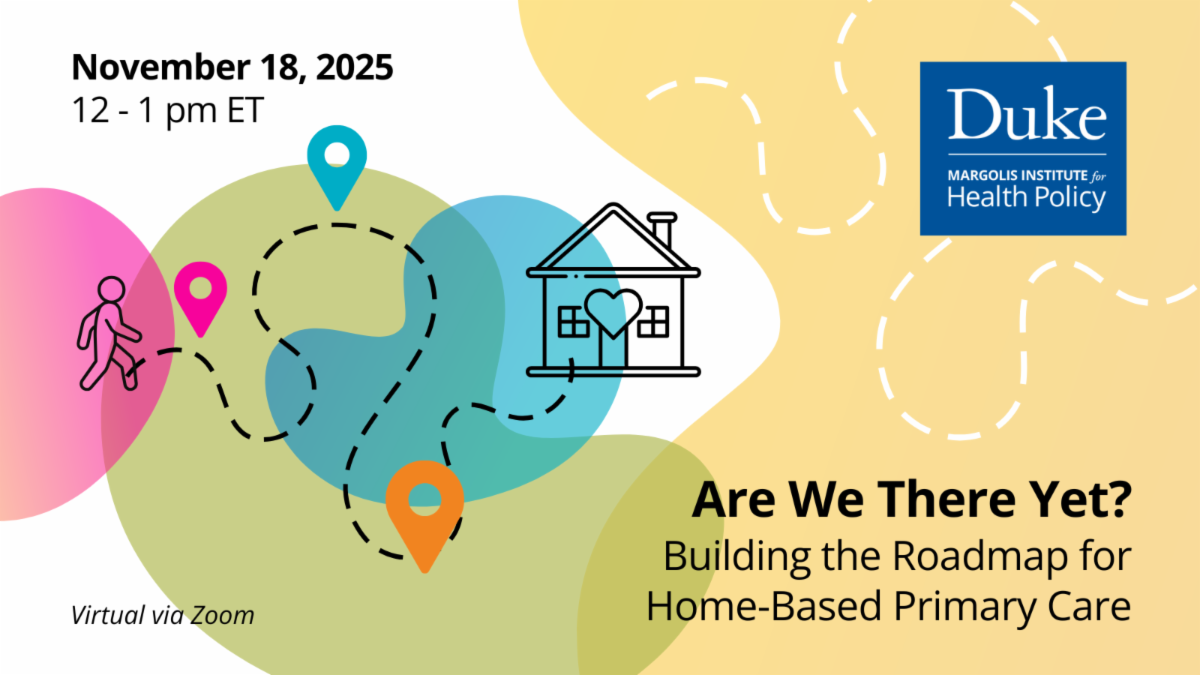
Are We There Yet? Building the Roadmap for Home-Based Primary Care
November 18, 2025 | 12:00 – 1:00 pm ET
Location: Virtual via Zoom
The population of homebound individuals—those who cannot easily leave their homes without assistance—is growing. Next month, Duke-Margolis is hosting a webinar to explore opportunities to advance home-based primary care (HBPC). Join us to learn more about the impact of HBPC in improving health outcomes and strategies for how Medicare can leverage HBPC to enhance value and outcomes for homebound beneficiaries.
Learn more and register here.
| |
|
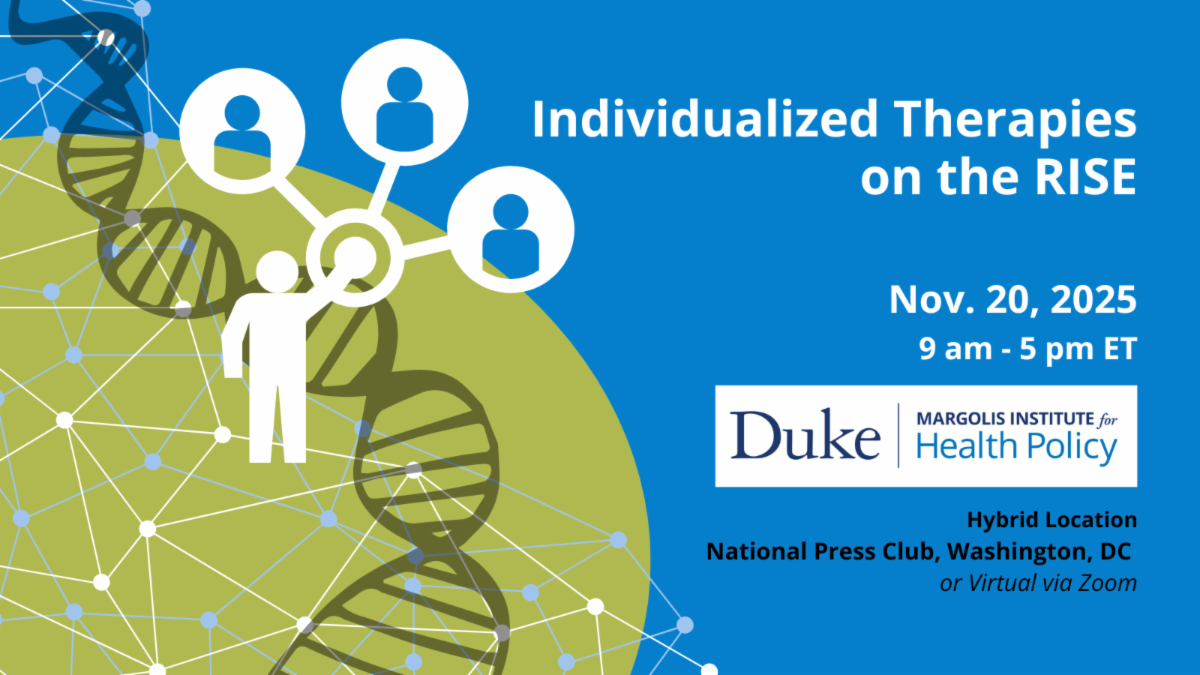
Individualized Therapies on the RISE
November 20, 2025 | 9:00 am – 5:00 pm ET
Location: National Press Club, Washington, DC (or Virtual via Zoom)
This public workshop, co-convened by the Duke-Margolis Institute for Health Policy and the Rare Disease Innovation Hub at the FDA, will examine the emerging science and regulatory environment for individualized medicine programs, including nonclinical data recommendations, clinical assessments, regulatory submission structure, and additional information necessary to support the development, evaluation, and potential commercialization of these treatments.
Learn more and register here.
| | |
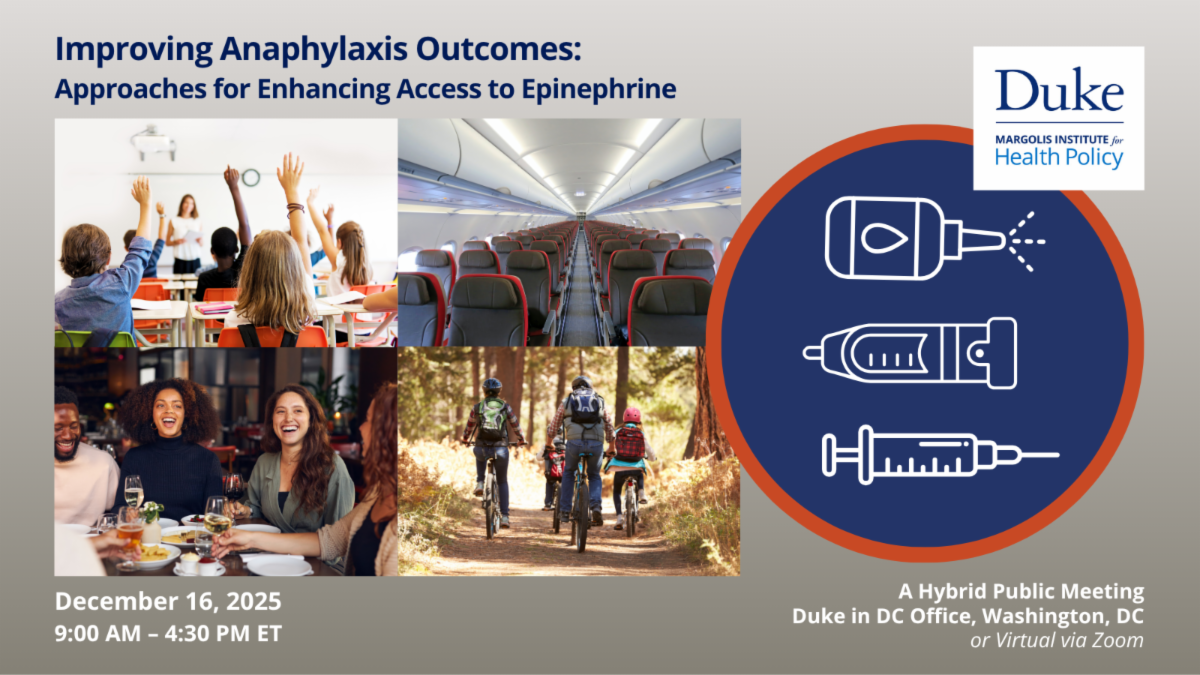
Improving Anaphylaxis Outcomes: Approaches for Enhancing Access to Epinephrine
December 16, 2025 | 9:00 am – 4:30 pm ET
Location: Duke in DC Office (or Virtual via Zoom)
This hybrid public workshop will initiate a discussion on expanding epinephrine accessibility and use, including in community settings, to reduce anaphylaxis-related morbidity and mortality.
Key topics attendees will hear more about:
- Allergic diseases, anaphylaxis, and treatment of anaphylaxis in the community setting
- Regulatory pathways for epinephrine products, including considerations for prescription and nonprescription development
- Current accessibility to epinephrine for treating anaphylaxis
- Opportunities to enhance access to and use of epinephrine
Learn more and register here.
| | |
Core Faculty member Gavin Yamey was interviewed for “Intersections at Duke,” a video series that highlighted the power of collaboration to address complex challenges. In this interview, Gavin discusses a paper published last year that used game theory to design incentives for vaccine markers. Watch the video interview here.
POLITICO quoted Gavin in an article that reported on recent trends in many nations to cut back on foreign aid funds. Global health experts expressed their concern that cuts could lead to more disorganized response to future emergencies like COVID-19.
| | |
Research Director Rachele Hendricks-Sturrup spoke at several events this month:
STAT also quoted Rachele in an article on the use of artificial intelligence (AI) in insurance billing. She emphasized the importance of creating guardrails and maintaining human supervision to ensure AI can work most effectively.
| | Assistant Research Director Brian Canter spoke at the 9th Annual Patient-Centered Approach to Clinical Trials Conference, where he discussed ways to advance real-world evidence by integrating research and care delivery. Learn more here. | | Frank McStay spoke at the National Association of Accountable Care Organizations’ fall conference, particularly focusing on opportunities to make risk adjustment in value-based care work more effectively together. Learn more here. | | Stephen Colvill was a panelist at the National Academies’ workshop, “Improving Resiliency in the U.S. Pharmaceutical Supply Chain Through Make-Buy-Invest Strategic Actions.” Stephen and his fellow panelists discussed how manufacturers, investors, and policymakers could evaluate make-buy-invest decisions. | | |
LRV Health interviewed Mark McClellan for their podcast series, Healthcare is Hard, to discuss how to adapt to a rapidly changing health care landscape. In particular, he explored the misalignment of innovation and outcomes, the evolution of value-based care, and the need for private capital to advance public health. Listen to the podcast here.
| |
 | | Rachel Upton joins the Health Care Transformation team at Duke-Margolis as a Statistician after nearly a decade of federal service, where she held a variety of statistician roles at the Census Bureau, as well as Health Resources and Services Administration and the Administration for Community Living within the U.S. Department of Health and Human Services. Rachel also is an author and co-author for multiple peer reviewed manuscripts, with publications in journals such as the Psychology of Women Quarterly, Child Development, Cultural Diversity and Ethnic Minority Psychology, and the Journal of the American Medical Association. During her federal service, she conducted studies on a variety of topics and data, including Medicare enrollment data and the development of annual, model-based Congressional budgetary estimates for Title III services under the Older Americans Act. Dr. Upton holds a PhD and MA in Quantitative Psychology from UNC and a BS in mathematics from the University of Tennessee, and is proficient in SAS, Mplus, Tableau, R, Stata, and PowerBI.
| | |
Berkeley Yorkery joins Duke-Margolis as an Assistant Research Director on the Health Care Transformation team and serves as Managing Director for a new initiative aimed at improving health and well-being among North Carolina’s perinatal-to-three population. She is a seasoned policy analyst and researcher with a strong track record of leading cross-sector collaborations and developing evidence-informed solutions to challenges in local, state and federal child and health policy.
Before joining Duke-Margolis, Berkeley was the Scientific Manager at the Duke Center for Child and Family Policy. In that role, she led strategic initiatives across the Center’s research, education, and engagement portfolios; managed partnerships with state and community stakeholders; and oversaw communications and dissemination efforts. Previously, she served as Associate Director at the North Carolina Institute of Medicine, where she led Task Forces focused on enhancing the health and well-being of North Carolinians. Her work spanned a broad range of issues, including Medicaid transformation, perinatal health, young children’s social and emotional development, mental health and substance use, rural health, and access to care.
| | Do you want to be part of health policy in action? Do you want to work on the leading health policy issues confronting cities, states, the nation, and the globe? The Duke-Margolis team is a dynamic, high impact national leader in leveraging policy to ensure high quality, affordable care for all. Multiple positions are currently available with new ones added frequently. Click here to view all of our career opportunities. | | | | |