|
July is Disability Pride Month
Disability Pride Month is observed every July to celebrate disability identity and community, mark the anniversary of the Americans with Disabilities Act (ADA), and push for full inclusion in everyday life.
Selected by The Arc’s National Council of Self-Advocates, the 2026 Disability Pride Month theme is “The World Works Better With Us.” It’s a clear statement about inclusion. When people with disabilities are included, respected, and supported, communities work better for everyone.
| |
2026 Spring Webinar Series
Exploring Healthcare Topics for Women with IDD
Did you miss any of our spring webinars? See below!
-
April 16, 2026 - Oral Health for Women with IDD (Recording | Slides)
-
May 28, 2026 - Pap Camp: Expanding Access, Empowering Care (Recording | Slides)
-
June 2, 2026 - Lifelong Gynecology Needs and Hormonal Interactions with Other Common Medical Conditions for Women with IDD (Recording | Slides)
-
June 18, 2026 - Sexuality and IDD: An Introduction (Recording | Slides)
| |
Important Changes to the Medicaid Fair Hearing Process
Effective July 1, 2026, the NJ Division of Medical Assistance and Health Services (DMAHS) implemented changes to the Medicaid Fair Hearing process, which is utilized when appealing the reduction, termination, or denial of Medicaid benefits.
Due to the expiration of temporary waiver flexibilities, originally approved by the federal Centers for Medicare and Medicaid Services (CMS) as a result of the COVID-19 Public Health Emergency (PHE), certain rules and regulations around the Fair Hearing process have now changed.
The major changes include:
1. Expiration of Waiver Allowing Certain Initial Decisions to be treated as Final Agency Decisions
2. Reinstatement of Federal 90-Day Final Administrative Action Requirement
3. Reinstatement of the 20-Day Fair Hearing Filing Requirement
To read the Medicaid Communication describing these changes in detail, click here.
To access the related legal notice, click here.
| | DHS Awards Nearly $4 Million in Grants to Address Social Isolation among Older Adults & Individuals with Disabilities | | |
On June 15th, NJ Department of Human Services (DHS) Commissioner Dr. Stephen Cha announced that grants totaling nearly $4 million have been awarded to local governments and community organizations to support new initiatives focused on strengthening social connections and support for older adults and people with disabilities at risk of social isolation in their communities.
The Senior Wellness Pilot Program Grants were made available to government and nonprofit entities to implement new initiatives that improve socialization and support the health and well-being of older adults, individuals with disabilities who are homebound, and residents of institutional settings. These grants are intended to both decrease social isolation among participants and provide data that can inform future opportunities to support these populations.
Read the full press release in English or Spanish.
| |
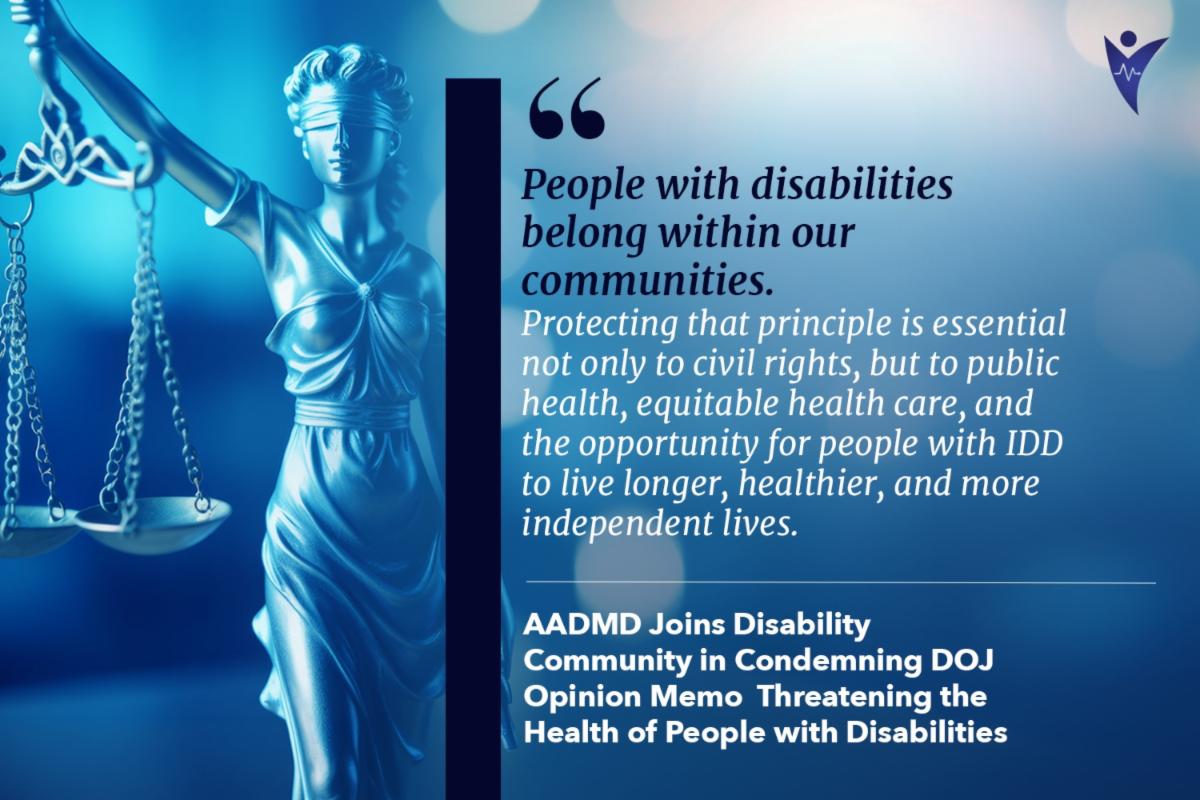
AADMD Joins Disability Community in Condemning DOJ Opinion Memo Undermining Olmstead and Threatening the Health and Rights of People with Disabilities
The American Academy of Developmental Medicine and Dentistry (AADMD) strongly condemns the U.S. Department of Justice’s recent opinion memorandum asserting that the landmark Supreme Court decision Olmstead v. L.C. do not require states to provide services in the most integrated setting appropriate to a person’s needs.
| |
"This opinion threatens one of the core protections for people with disabilities: the right to live, receive services, and access health care in the community rather than in segregated institutional settings. If allowed to stand, it could weaken decades of progress toward community integration and put people with disabilities, especially people with intellectual and developmental disabilities (IDD), at greater risk of isolation, poorer health outcomes, and preventable harm…"
Read the full AADMD statement.
| |
Hurricane Season
June 1st – November 30th is hurricane season and the best way to stay safe is to stay informed. Below are several resources to help you and your loved stay ready.
The ADA National Network can answer ADA-related questions and provide other information and referrals as needed.
NJ Office of Emergency Management
NJ Register Ready | NJ 2-1-1 Partnership
NJ Register Ready helps people with disabilities to register their special needs with their county office of emergency management. NJ residents with special needs are encouraged to complete the online registration annually. This information is used by emergency planners for their disaster preparedness planning. This way, when a disaster occurs, the county has properly prepared to meet the needs. If they don't know in advance the needs of their residents with disabilities, they will not be able to adequately prepare.
Watch the NJ Register Ready video in (ASL)
| |
Supporting People With Co-occurring IDD and Mental Health Needs Through a Trauma-Informed Lens
Many behaviors exhibited by people with intellectual and developmental disabilities (IDD) can be understood in the context of their traumatic histories. For example, noncompliance with directions or lashing out in fear are examples of behaviors that may occur as a result of past trauma.
People with IDD are more likely than people without disabilities to experience trauma. A Bureau of Justice Statistics report confirms that people with disabilities are victimized almost four times more frequently than people without disabilities, and that those with cognitive disabilities experienced the highest rate of violent victimization.
Experts in the IDD field believe that what people may think of as behavioral issues are actually often manifestations of trauma and trauma-based responses. Attempts to address behavioral issues through the use of behavior modification strategies have only increased the trauma they have already experienced. The root issue— the trauma—is not being addressed, but rather the focus is on trying to stop or fix the behavior.
Read the full brief.
|
Practical Tools to Improve Dental Care for People with IDD
A visit to the dentist can be stressful for a lot of people, especially people with intellectual and/or developmental disabilities (IDD). Communication can be challenging, and people with IDD want to be heard, respected, and cared for.
The Institute for Exceptional Care (IEC) partnered with Delta Dental New Jersey and Delta Dental Foundation to create the IEC Dental Toolkit. This toolkit was made to help people with IDD, their support teams, and dental providers have more successful dental visits. Each tool is free to download and use.
| |
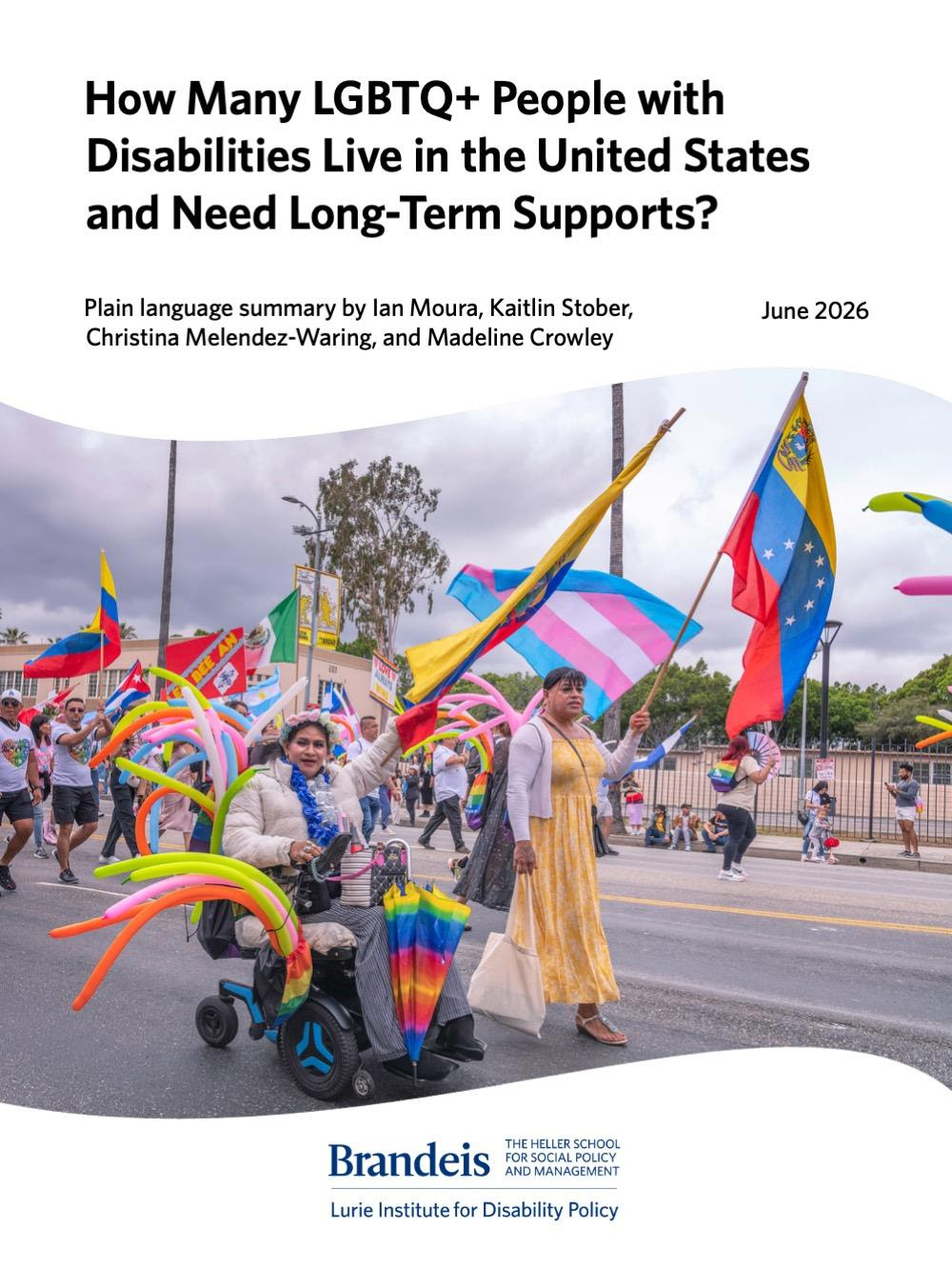
How many LGBTQ+ people with disabilities need long-term services and support (LTSS)?
Some research says that people with disabilities might be more likely to be lesbian, gay, bisexual, transgender, and queer (LGBTQ+) than people without disabilities. However, we don’t know enough about how many people with disabilities are also LGBTQ+. We also don’t know how many disabled people who need long-term services and supports (LTSS) are LGBTQ+.
This study tried to answer four questions:
- How many people with disabilities are LGBTQ+?
- How many people who need long-term services are LGBTQ+?
- Are people with disabilities more likely to be LGBTQ+ than people without disabilities?
- Are people who need long-term services more likely to be LGBTQ+ than people with disabilities who do not need long-term services?
Explore this resource on the Brandeis website.
| | CMS Requires More Restrictive Definition of Medical Frailty in New Medicaid Work Requirements Rule | | |
On June 1, 2026, the Centers for Medicare and Medicaid Services (CMS) issued an interim final rule to guide state implementation of Medicaid work requirements.The 2025 reconciliation law requires 43 states (including New Jersey) to condition Medicaid eligibility for adults in the Affordable Care Act (ACA) Medicaid expansion group on meeting work requirements starting January 1, 2027.
Most Medicaid adults already work, or face barriers to work, and the Congressional Budget Office estimates the new requirements will not meaningfully increase employment, but that millions of people will become uninsured.
Highlighting two key takeaways from the final rule:
- The rule adopts a more restrictive definition of medical frailty that differs from states’ early expectations.
- The rule temporarily allows for self-declaration in limited circumstances to verify work or exemption status, including for medical frailty.
Read the full KFF article.
| |  | |
The government is asking for public comments about new Medicaid rules.
Please write your comment in your own words. Add your own thoughts, experiences, or reasons why Medicaid matters to you.
Comment on the CMS Interim Final Rule by July 31, 2026
| |
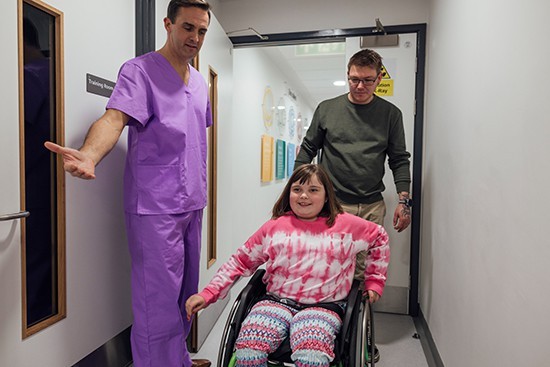
Accessible Medical Diagnostic Equipment Rule Takes Effect this Summer
New requirements for accessible medical diagnostic equipment take effect this summer impact health care professionals who participate in Medicaid, the Children's Health Insurance Program (CHIP), Medicare and other government funding programs. The requirements also apply to public hospitals, health care clinics and college and university health care systems. The changes include new standards regarding accessible medical diagnostic equipment (MDE) such as exam tables, exam chairs, weight scales and X-ray machines. Practices must comply by July 8, 2026; the compliance deadline for government entities is Aug. 9, 2026.
Medical facilities must have 10% of exam tables and 10% of weight scales, or a minimum of one per facility, that are disability accessible. 20% of MDE must be disability accessible at facilities that specialize in treating people with mobility disorders. Every room does not need an accessible table and every scale does not need to be wheelchair accessible, as long as minimum requirements are met. Depending on the patient population, offices may identify that having a higher proportion of accessible MDE better meets their needs. Any new exam tables or scales purchased, rented or leased must be accessible MDE until requirements are met.
Read the full article.
| |
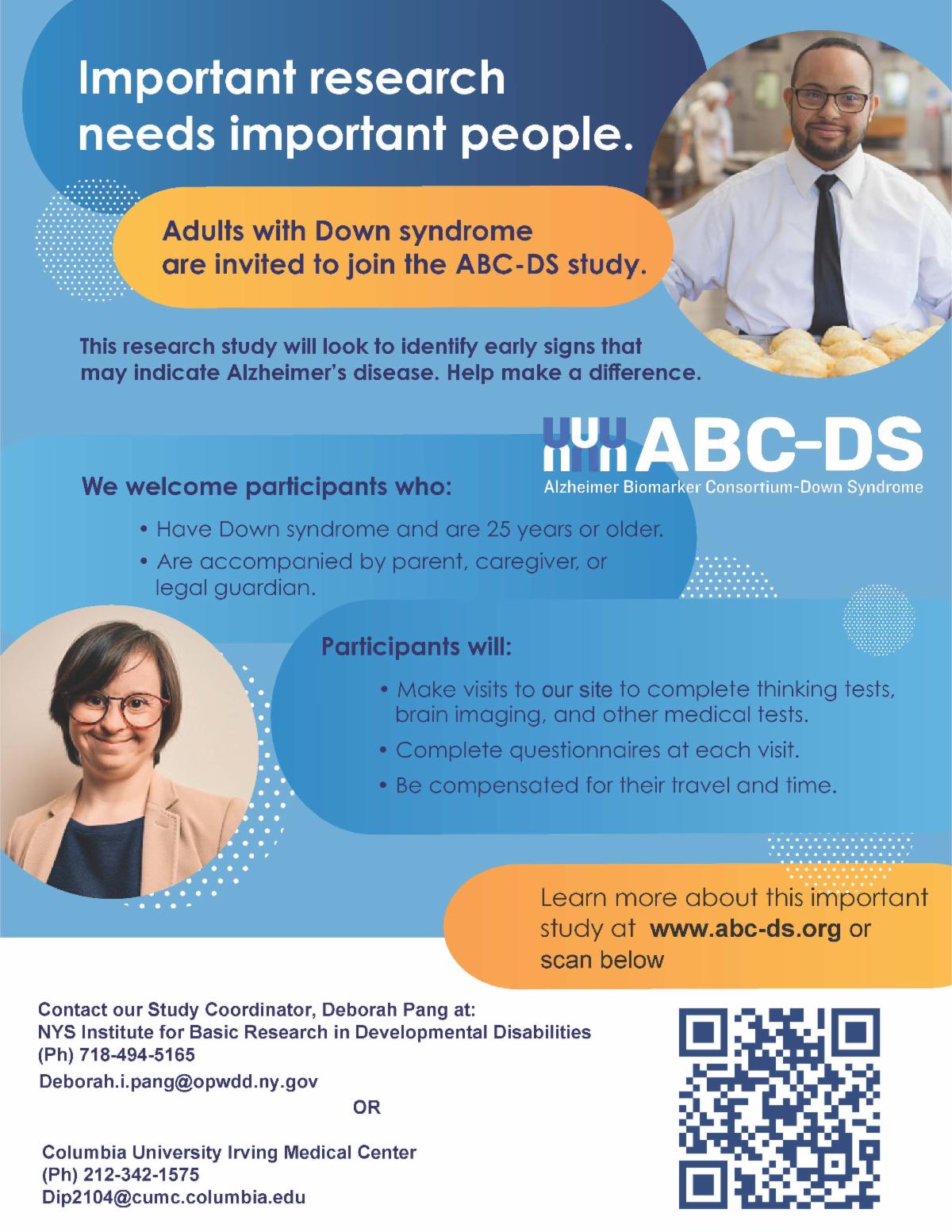
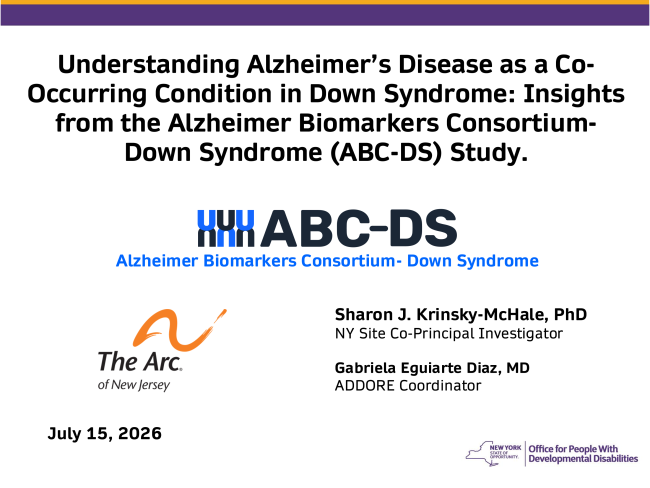
NY ABC-DS Research Study
Adults with Down syndrome are far more likely to develop Alzheimer’s disease in middle age compared with most other people.
This research study aims to understand why some adults with Down syndrome are more likely to develop Alzheimer’s disease than others, and why some adults with Down syndrome age far more successfully.
Adults with Down syndrome who are 25 years or older are highly encouraged to join the Alzheimer Biomarker Consortium
- Down Syndrome (ABC-DS) study.
| |
Did you miss the recent webinar?
| | |
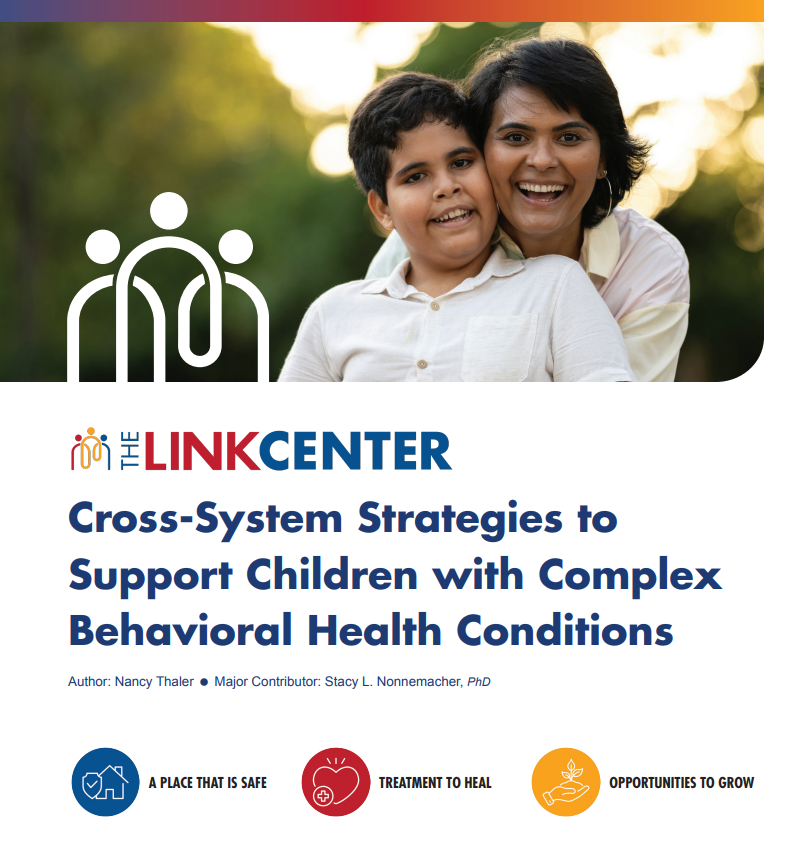
Cross-System Strategies to Support Children with Complex Behavioral Health Conditions
The National Association of State Directors of Developmental Disabilities Services (NASDDDS) announced the release of a new groundbreaking publication, Cross-System Strategies to Support Children with Complex Behavioral Health Conditions.
Read the publication
This important resource responds directly to one of the most urgent challenges facing states and families: how to better support children with complex behavioral health needs who are often served across multiple systems, including behavioral health, child welfare, Medicaid, developmental disabilities, acquired brain injury, education, and juvenile justice.
| | | |
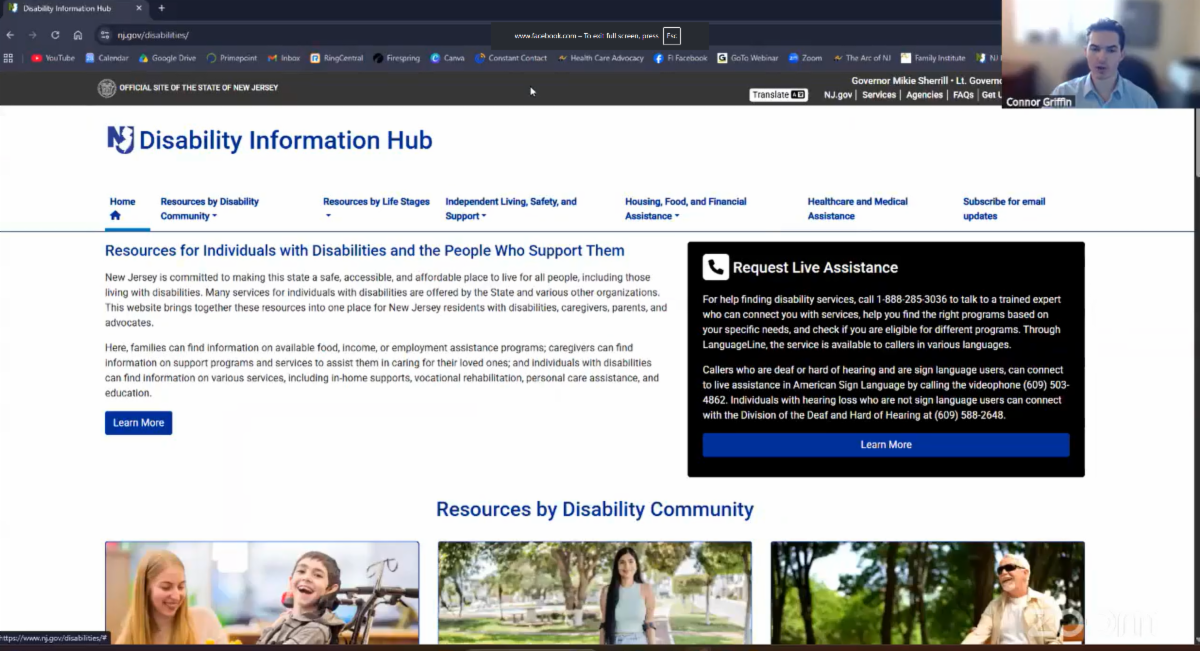
Catching Up with Connor
The Catching Up with Connor Facebook Live series is in full swing for 2026!
Join us every other Thursday at 2:30pm for these livestream videos, featuring 10-15 minute educational talks on health care issues, news, and other key topics for individuals with IDD and their families.
No registration is required, but please leave a like and comment what topics you would like to see in the future!
| | | |
Virtual Office Hours
The Health Care Advocacy Program provides virtual office hours on Mondays from 1:00pm - 3:00pm.
| |
Meet with Connor Griffin, The Director of Health Care Advocacy, to discuss any healthcare questions, for example, regarding Medicaid, Medicare, or Social Security, that affect your family member or person with IDD that you support.
The Director meets with you on a first-come, first-served basis and time is limited to 20 minutes, as needed. You may need to queue in the Zoom waiting room if the Director is already meeting with someone. Your patience is appreciated!
| | You are encouraged to share this information with others who may also be interested. However, if you are forwarding this email, please delete the "unsubscribe" link at the bottom of this page. If you do not remove the "unsubscribe" option and a person who receives your forwarded email clicks "unsubscribe," it would result in your name being removed from our distribution list. | | | | |