|
Written By: God through Inspiration
Penned By: David, Asaph, Solomon, Heman, Ethan, Moses, and the Sons of Korah
Date Penned: (1440-586 BC)
Overview: Poetry for the Expression of Praise and Worship to God (c 1-150)
Theme: The First Book of Psalms (c 1-41)
Message: God Pays Attention to Those Who Call Upon Him (v 1-22)
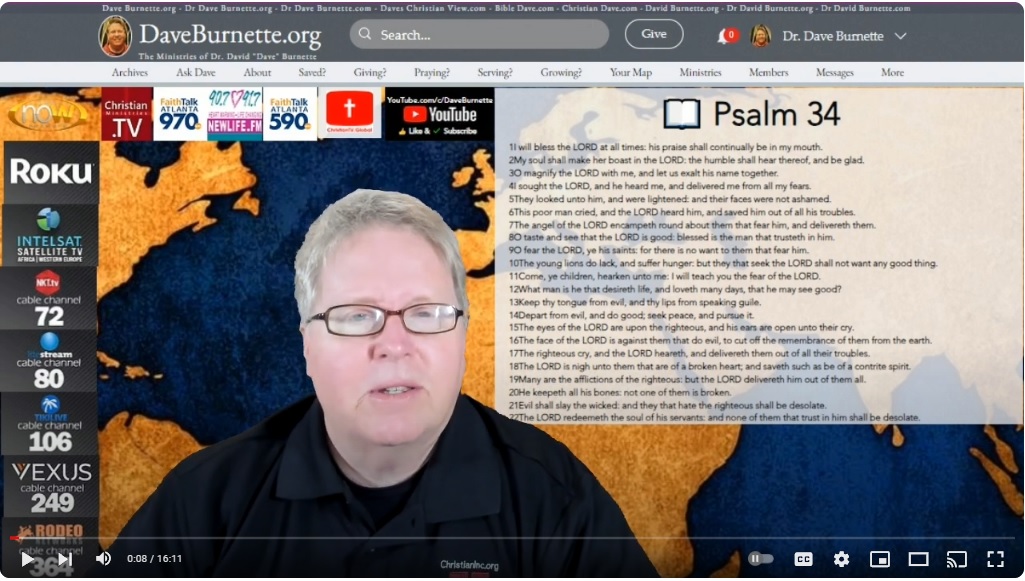
Psalms 34 Commentary
(34:1-22) Blessings of God - God promises great blessings to his people, but many of these blessings require active participation from us. He will set us free from fear (34:4, 6), deliver us from shame (34:5), guard and defend us (34:7), show us his goodness (34:8), supply what we need (34:9), listen when we talk to him (34:15), and redeem us (34:22), but we must do our part. We can appropriate his blessings when we seek him (34:4,10); cry out to him (34:6,17); trust in him (34:8); fear him (34:7, 9); refrain from lying (3413); turn from evil, do good, and seek peace (34:14); are brokenhearted and humble (34:8); and serve him (34:22). 34:8 "Taste and see" does not mean "Check out God's credentials." Instead, it is a warm invitation: "Try this; I know youll like it." When we take that first step toward getting to know God, we discover that he is good and kind. When we begin the Christian life, our knowledge of God is partial and incomplete. This will be the case until we meet God face-to-face, but as we invite the Holy Spirit to help us, study the Bible, and get to know other Christians, we begin to have the joy of tasting and experiencing God's love.
(34:9-10) Praising God - At first, we may question David's statement because we seem to lack many good things. This is not a blanket promise that all Christians will have everything they want. Instead, this is David's praise for God's goodness- -all those who call upon God in their state of need will be answered, sometimes in unexpected ways. Remember, God knows what we need, and our deepest needs are spiritual. Even though many Christians face unbearable poverty and hardship, they still have enough spiritual nourishment to live for God. David was saying that if you have God, you have all you really need. God is enough. If you feel you don't have everything you need, ask yourself these questions: (1) Is what I desire really a need? (2) Is it really good for me? (3) Is this the best time for me to have it? Even if you answer yes to all three questions, God may allow you to go without what you desire in order to help you grow more dependent on him. He may want you to learn that you need him more than having your immediate desires met. 34:9 You say you belong to the Lord, but do you fear him? To fear the Lord means to show him deep respect, reverence, and honor. We demonstrate this attitude by humility and genuine worship. Abraham (Genesis 17:2-4), Moses (Exodus 3:5-6), and the Israelites (Exodus 19:16-24) all showed this kind of fear of the Lord.
(34:11) Fearing God - The Bible often connects the fear of the Lord (love and reverence for him) with obedience. "Fear God, and keep his commandments" (Ecclesiastes 12:13); "If a man love me, he will keep my words" (John 14:23). David said that a person who fears the Lord doesn't lie, turns from evil, does good, and promotes peace. Reverence includes so much more than sitting quietly in church. It means obeying God in the way we speak and how we treat others.
(34:14) Pursuing Peace - Some may think that peace should come with no effort. But David said that we should work hard in our pursuit of peace. Paul echoed this thought in Romans 12:18. A person who wants peace cannot be argumentative or contentious. Because peaceful relationships come from our intentional efforts at peacemaking, work hard at reconciling relationships and living in peace with others each day
(34:18-19) Seeking the Lord - We often wish we could escape troubles- the pain of grief, loss, sorrow, and failure, or even the small daily frustrations that constantly wear us down. God promises to be "nigh unto them that are of a broken heart, to be our source of power, courage, and wisdom, helping us through our problems. Sometimes he chooses to deliver us from those problems. When trouble strikes, don't get frustrated with God. Instead, admit that you need his help and thank him for being by your side. 34:20 This is considered a prophecy about Jesus when he was crucified. Although it was the Roman custom to break the legs of a victim to speed death, not one of Jesus' bones was broken (John 19:32-37). In addition to the prophetic meaning, there was an immediate meaning for David--he was pleading for God's protection in times of crisis.
|