|
Help for Caregivers! If you live in California —
how you might qualify for Medi-Cal assistance:
(The federal program is called Medicaid.)
Eligibility for Medi-Cal:
Financial:
Income level is primary factor considered.
(138% above poverty level in your area or residence)
Owning your own home does not count against your eligibility. A caregiver (spouse or domestic partner) whose income is above the limit can apply for “Spousal Impoverishment”. Such that the non-disabled or caregiving partner can keep their income while getting Medi-Cal help to care for their loved one.
Check out this link by the American Council on Aging:
Excellent information about assets and income.
Functional / Level of Care Need:
A functional need threshold, also referred to as medical need, must also be met for one to be eligible for in-home care. For the State Medicaid Plan (Regular Medicaid), persons often must demonstrate the need for assistance with Activities of Daily Living (ADLs) and/or Instrumental Activities of Daily Living (IADLs). This includes requiring help with mobility, transferring from a bed to a chair, toiletry, eating, bathing, doing laundry, and meal preparation. Exact functional need requirements vary by the state and the program. However, as an example, eligibility requirements may require that an applicant need assistance with one ADL or IADL, assistance with a minimum of two ADLs, or assistance with three IADLs. To verify functional need, an assessment is completed.
For HCBS Medicaid Waivers and the Community First Choice State Plan Option, a level of care consistent to that which is provided in a nursing home is generally required. An inability to complete ADLs / IADLs are often used as an indicator. Commonly, physician verification for the need of assistance is required. Learn more about Nursing Home Level of Care.
Long Term Care:
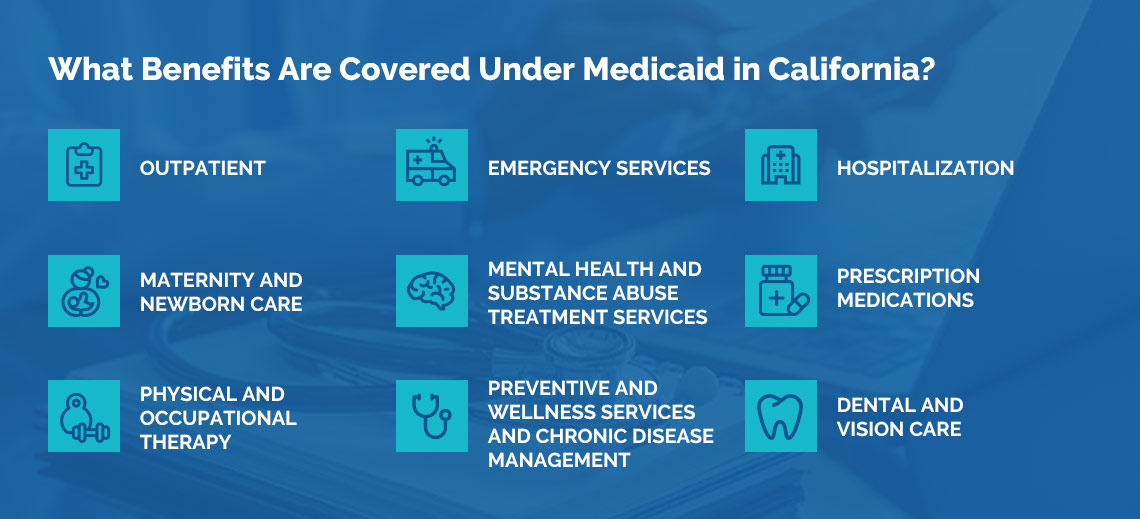
As you may know, Medi-Cal provides support for Long Term Care. For example, Medi-Cal covers skilled nursing and long-term care. (Also called custodial care and when the individual cannot live safely independently...)
*Medicare does not cover nursing home care unless you require a “skilled nursing” level of care. (This level of care requires licensed personnel.) Average stay in an SNF (skilled nursing facility) that is covered by Medicare after hospitalization during the acute recovery period is 20 to 38 days. If the patient is not recovered enough to live independently again in the community, the financial burden for them and/or their families for their care can be very difficult.
Average costs for nursing home care in Alameda County are ~$6000 per month. For many families, this is an unsustainable cost. Medicare covers these costs only so long — *see above. Medi-Cal will cover this once it is considered long-term care (as stated above).
Perhaps you or your family have been in that position. At a certain point the SNF will decide you are recovered enough to go home. Or they may just stop your skilled care (covered by Medicare) because you are not “making any progress”. At that point, if you don’t have Medi-Cal or some kind of long-term care coverage, you face challenging financial decisions.
In addition to the heavy price of an SNF placement, most individuals would prefer to live in the community. Preferably in their own home, with family or friends.
Community and Home Based Long Term Care
Specific California Medicaid Programs:
In addition to paying for nursing home care, Medi-Cal offers the following programs / HCBS Waivers relevant to the elderly that assist them in living in their homes or in assisted living residences:
1) In-Home Supportive Services (IHSS) – Provides personal care and homemaker services to individuals in their homes. Family members, including spouses, can be hired as personal care providers.
2) Medi-Cal Assisted Living Waiver (ALW) – Though not available statewide, this program helps to pay for services and supports in assisted living, including memory care. There is currently a waitlist for participant enrollment.
3) Community Based Adult Services (CBAS) Program – Provides persons with daytime care and supervision in adult day health care centers certified as CBAS centers. There are CBAS centers in approximately 26 CA counties
4) Multipurpose Senior Services Program Waiver (MSSP) – Provides California seniors with assistance for home modifications, personal emergency response services, homemaker services, personal care assistance, and other in-home supports. This program also helps persons transition back into the community from a nursing home. MSSP is not available statewide.
5) Home and Community-Based Alternatives (HCBA) Waiver – Provides similar services to MSSP but is available statewide. In addition to targeting medically fragile individuals, technology-dependent persons are also targeted.
6) Program of All-Inclusive Care for the Elderly (PACE) – Combines the benefits of Medicaid, including long-term care services, and Medicare into one program. Additional benefits, such as dental care and eye care, may be available.
7) CalAIM’s Enhanced Care Management (ECM) & Community Supports Benefits – Through California Advancing and Innovating Medi-Cal (CalAIM), Medi-Cal Managed Care Plans (MCPs) provide ECM for persons in a high-needs group. This includes seniors who are at risk of nursing home admission and eligible for long-term care, as well as current nursing home residents who wish to return home. Via ECM, all of one’s care needs and services are coordinated. MCPs may also offer Community Supports, such as Nursing Home Transition and Diversion to Assisted Living. Unlike with the Assisted Living Waiver, participant enrollment slots are not limited.
8) Money Follows the Person (MFP) — Also called California Community Transitions (CCT) in CA. This federal program helps institutionalized persons who are eligible for Medicaid to transition back home or into the community.
|