|
Temperature is important, but not the only factor in determining when plants leaf out in spring or lose their leaves in autumn. Species traits, like leaf size or thickness, also play an important role. To understand whether some plants may be more sensitive to increasing temperatures, researchers gathered data from warming experiments as well as observational data from Nature’s Notebook and a phenology network in China.
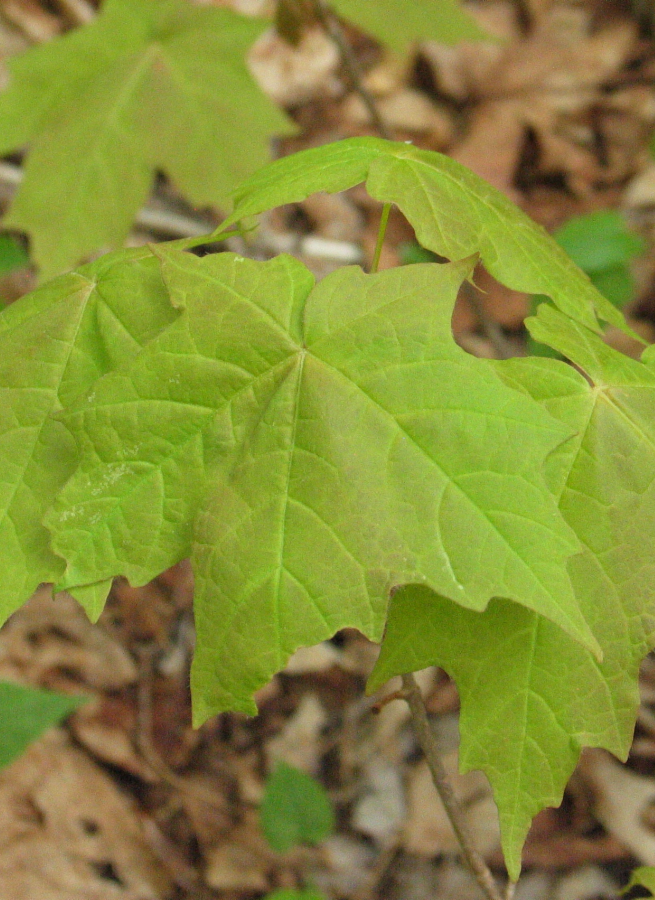
They found that plants with thinner leaves and higher nutrient concentrations are more sensitive to temperature increases. For example, sugar maple trees have relatively thin leaves with high nitrogen and phosphorus concentrations, which makes them more vulnerable to warming temperatures than species with thicker leaves and lower nutrient concentrations. These plants will typically leaf out earlier and lose their leaves later in warm years. Plants with thicker, longer-lived leaves are less likely to shift their growing seasons in response to warming temperatures. These results identified important patterns that can help refine predictions about how plant communities will respond to future climate change.
Read the Publication Summary »
|