|
“Price is what you pay, Value is what you get.”
― Warren Buffett
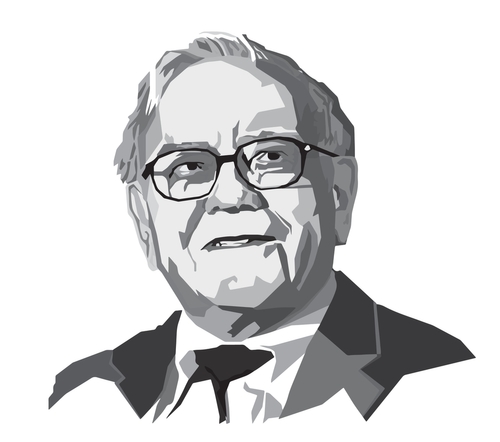
Warren Buffett, the longtime Chairman and CEO of Berkshire Hathaway, retired as CEO as of December 31. He named Greg Abel as his successor and will remain Chairman of the Board for the foreseeable future. Berkshire Hathaway was originally a textile company formed by a merger of several textile mills across Massachusetts, from the New Bedford area out to Western Mass, that’s from where the “Berkshire” part of the name comes. After buying the firm, Buffett retained the name but essentially turned it into a holding company for his various investments in insurance companies, candy manufacturers, furniture sellers and all the other component parts of what Berkshire Hathaway is today. Along the way, he created and amassed an amazing amount of wealth. Fortune Magazine estimates that if Buffett hadn’t given away over 50% of his wealth to various charitable foundations, he would be worth more than $300 Billion, making him first or second on the list of wealthiest Americans depending on how you value Elon Musk’s stake in privately held SpaceX. Even with philanthropy, Buffett is still worth in excess of $100 Billion dollars and is one of the ten or so wealthiest people in the world.
How did he do it? That’s the thing most people want to know, usually so they can copy him more than admire him. But nobody has ever quite matched what Buffett was able to do, meaning it’s probably not replicable. Sure, there have been other investors with impression track records over many years. Peter Lynch notably led the Fidelity Magellan fund to a 29.2% average return from 1977-1990, an average return that even Buffett never matched. But it was just for that time frame, Lynch retired from that management post to dedicate his time to mentoring, philanthropy and other causes – and he didn’t own Fidelity. What was Buffett’s secret that puts him above all others when it comes to an investment career? Time, Buffett’s greatest achievement was time. Yes, he averaged an almost 20% per year return since taking over Berkshire in 1964, but unlike almost every other investment company CEO actively working in the field in the early ‘60’s – he was still around in 2025. Not just alive but actively working and running his business. The power of compounding turned a 19.9% per year return into an over 5.5 Million percent total return over 61 years. Buffett always understood that investment success requires patience and time to pay off, and he was also blessed with the longevity to see that through beyond what most of us are given. If Buffett had retired at 65, back in 1995, he would still be considered among the great investors, but he wouldn’t have the mythic status he enjoys. When it comes to investing in equities, time is what it’s all about.
I wanted to use this first newsletter of the year as a reminder of this fact. Now I doubt, barring some medical breakthrough as yet undiscovered, many of the people reading this have sixty healthy, active years ahead of them – I certainly don’t. While we may not be thinking sixty years into the future, most of us still have long-term goals and in order to achieve those goals, most of us need to have some portion of our assets obtain a positive return after taxes and inflation. Only stocks have reliably done that over time. But the trade off for that long-term return is short-term volatility, our fancy financial world word for down markets. As I was writing this newsletter, the United States executed a military operation in Venezuela, capturing Venezuelan Dictator Maduro and his wife and bringing them to the U.S. This particular thing didn’t, as of now, negatively affect the U.S. markets. In fact, the markets rallied pretty substantially on Monday the fifth. But regardless, it was one more thing that can make you worry about your money, worry about if you should invest, or divest, or go to cash, or hide gold ingots in the China cabinet. (If you see me in person, ask me about my grandparent’s stash of cash, gold, change and jewelry strewn across their house that we found when they died – hopefully we found it all.) There is always something happening that makes it seem like a bad time to invest. I would counter that and tell you there is never a bad time to invest if you don’t need the money for a long enough period in the future. If it’s your vacation money for next summer, or you kid’s tuition money for next Fall, or the money you’ve been setting aside to remodel the kitchen in 2027 – then now is always a bad time to invest that money in the stock markets. But if it’s the money you’re going to need in seven or ten years, or the money you’re going to leave to your heirs in fifteen or twenty – then think long-term and act like Buffett, invest in some good stuff and don’t worry about the short-term news items or market movements.
I have no idea what this year is going to bring in the markets. We made some small rebalances and reallocations in our portfolios to do what we always try to do, limit volatility while still getting you the expected rate of return for your level of risk or your long-term needs. But we only make these changes because we know that your financial life can have the same unexpected surprises that the morning news can present us to. We know that you may plan to not touch your investments in 2026, but then you need a new roof, or one of your kids needs help and suddenly you need to dip into those funds, or dip into them more than planned if you are taking income from them. That’s why we are diversified and make these allocations changes, to try and ensure there’s something in your portfolio you can access at any given time should the unexpected happen. But we also know, that if you were to be put in frozen animation for the next ten years and there was zero chance of you needing any of your funds over that time – you should probably just put all your money in stocks and you’ll likely wake up very happy. It’s a balancing act to accomplish both these things at once, but that’s what we’re here for. So, if the markets keep going up all year, like they mostly did in 2025 – there isn’t a lot to discuss – good for us all. If they don’t, if they have the pullback, they’re overdue for, even if it’s significant, look at the big picture and look at your time frames. If you’re a client of ours I think you’ll find your portfolio is set up to meet these goals and time frames and a temporary selloff is not something to fear, it’s something that’s expected and planned for.
I hope everyone had a wonderful holiday season and a Happy New Year. 2026 is bringing a lot of changes for Keeling Financial – the transition to LPL’s systems we’ve spoken about multiple times will be happening in November. There will be a lot more on that as time goes on. We’re working on cleaning up our systems to try and minimize any disruption or confusion when that move finally takes place. Thanks to those of you who have already helped us update information or sign documents and thanks in advance to those who we’ll need to reach out to as the year progresses. Mostly I’m optimistic about the year ahead, as Churchill said, it doesn’t do you any good to be anything else. If you need us, give us a call as always.
|