Issue 667 - May 15, 2026

IN THIS ISSUE


  • NEWS: Two New Bills Seek to Help Working Delawareans
  • OPINION VIDEO: So Here's the Thing...on Changing Delaware's EV Rebate Program
  • NEWS: Bill Seeking Review of Motor-Voter Data Clears Committee
  • NEWS: State Rep. Kevin Hensley Leaving Public Service
  • NEWS: General Assembly Wrestles with Competing Approaches on Hemp Products

NEWS:

Two New Bills Seek to Help Working Delawareans


Two bills under consideration at Legislative Hall seek to help working Delawareans keep more of the money they earn and increase the affordability of childcare.


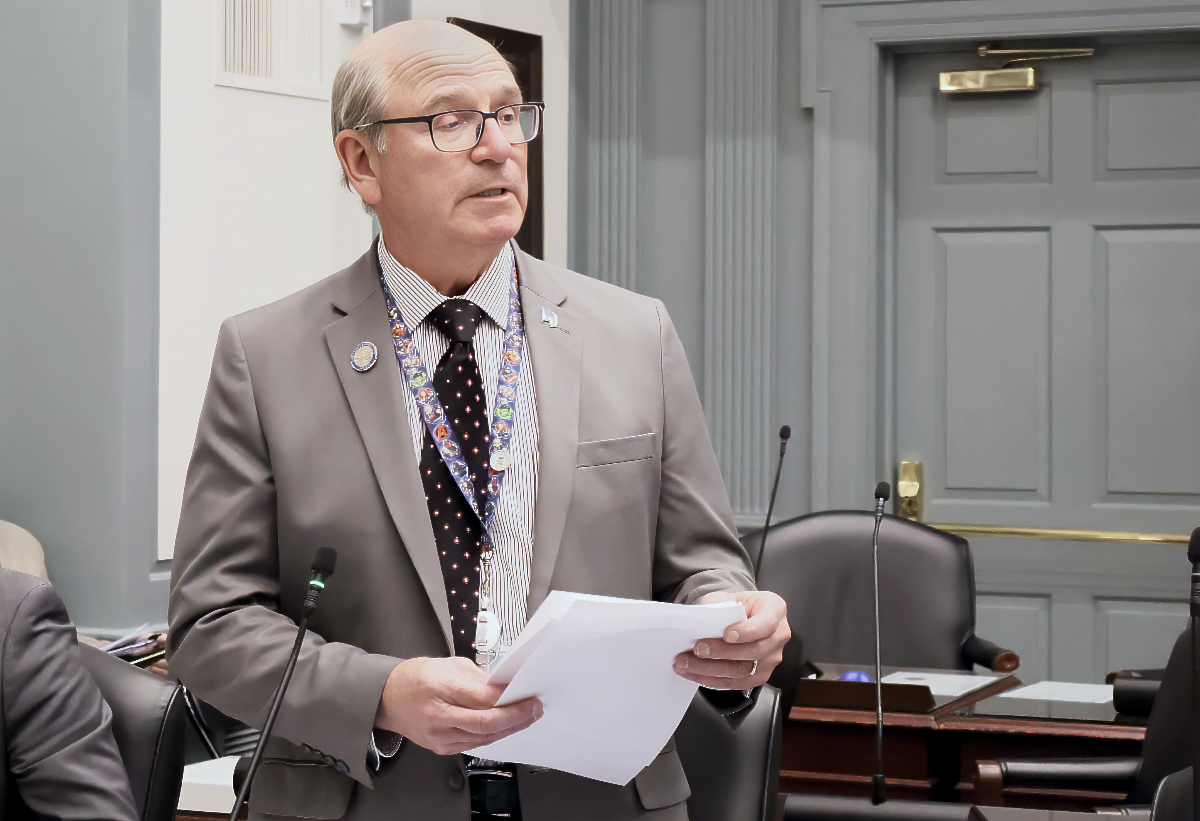
House Bill 387, a bipartisan measure sponsored by State Reps. Jeff Hilovsky, in photo (R-Long Neck, Oak Orchard), and Melanie Ross Levin (D-Tallleyville), would increase state subsidies for childcare — a.k.a. Purchase of Care.


At present, program eligibility is capped at 200% of the federal poverty level. For reference, a family of four would currently need a household income below $66,000 to qualify. The proposal would raise the eligibility cap in phased increments to 275% of the federal poverty level. The law would expire after five years unless the General Assembly acted to extend it.


“In Delaware, infant care costs an average of $15,607 a year,” said Rep. Hilovsky, testifying before the House Health & Human Development Committee on Wednesday. "Regulatory barriers continue to limit the number of [childcare] providers who can even open their doors or expand, and our purchase of care program is frozen at 200% of the federal poverty level. The combined effect of these facts leaves working families ineligible for help, not because they are comfortable, but because they earn one dollar too many.”


Rep. Hilovsky characterized the bill's benefits as multifaceted. "Currently, Delaware's labor force participation rate is 59.4% as of late 2025. That is the lowest in the mid-Atlantic and nearly four full points below the national average. In its 2025 annual economic report, our Department of Labor confirmed that the state's participation rate was the lowest since record-keeping began in 1976. That's not just a statistic; that is the reality of a working parent who left the workforce because they couldn't make the math work for childcare."


Rep. Hilovsky noted that North Carolina, Michigan, and Kentucky boosted childcare subsidies, generating strong economic growth while helping parents to stay employed and advance their careers. "When the parents can count on reliable childcare, they show up, they stay...and businesses grow. This is a family security bill, a jobs bill, and an economic development bill."


The legislation was released from committee and is on the House Ready List, but the fiscal note (its expected cost) has not yet been completed.


A second piece of legislation aimed at helping working Delawareans is pending action in the Senate Elections & Government Affairs Committee.


Sponsored by Sen. Bryant Richardson (R-Seaford) and Rep. Bryan Shupe (R-Milford South, Ellendale), Senate Bill 299 would provide tax relief to those working overtime.


SB 299 would establish a Delaware personal income tax credit of up to $15,000 for overtime income. The credit would phase out for individuals earning more than $125,000 annually and joint filers earning more than $250,000, with the credit fully phased out at higher income thresholds.


The legislation is designed to benefit working Delawareans across a wide range of professions, including healthcare workers, first responders, tradesmen, manufacturing employees, transportation workers, and others who regularly work extra hours to meet the demands of their jobs.


“Too many hardworking Delawareans are struggling with rising costs while sacrificing additional time away from their families through overtime work,” said Sen. Richardson. “This legislation recognizes men and women who are willing to put in those extra hours to keep our economy moving and provide for their households.”


Rep. Shupe said the measure "puts more money in the pockets of the people who work the hourly jobs that keep our society running — nurses pulling double shifts, factory workers staying late, and every hourly wage-earner sacrificing time with family to bring home a few extra dollars. By creating a state tax credit for overtime earnings, we’re recognizing that hard work should be rewarded, not penalized.”


At present, the bill has no Democratic sponsors, and the fiscal note has not yet been completed.

OPINION VIDEO:

So Here's the Thing...on Changing Delaware's EV Rebate Program


On a party-line vote, the House of Representatives on Tuesday passed House Bill 348, a measure that would make changes to a program that uses ratepayer dollars to lower the cost of electric vehicles. House Republicans opposed the proposal. House Republican Caucus Director of Policy & Communications Joe Fulgham explains why. Click here or on the graphic above to learn more.

NEWS:

Bill Seeking Review of

Motor-Voter Data Clears Committee


In June 2023, Delaware's enhanced motor-voter law went into effect.


Under the statute, every voting-age person who completes an application for the issuance or renewal of their Delaware driver's license, learner's permit, or identification card with the Division of Motor Vehicles (DMV), and is not already registered to vote, is automatically registered by the Department of Elections (DOE).


The process is supposed to require that the DMV confirm citizenship status before sending that information to the Department of Elections.


State Rep. Bryan Shupe (Milford South, Ellendale) learned earlier this year that the system may not be working as intended. "A green card holder in my district contacted me after she was automatically registered to vote [after visiting the DMV]," he said.


That constituent communication led Rep. Shupe to sponsor House Bill 317.


The Act would require the Department of Elections, in coordination with the DMV, and any state agency that administers voter registration, to do the following:

  • Conduct a comprehensive audit of all voter registrations retroactive to January 1, 2021.
  • Verify that the audited individuals meet all voter eligibility requirements, comparing that to the accuracy of the information captured by the DMV.
  • Require eligibility verification for future voter registrations generated through automatic voter registration.
  • Require a report on the implementation of this legislation and annual compliance reporting.


"Working with DMV, we identified approximately 50,000 people who need additional review because of document gathering practices before and after Real ID was implemented in Delaware," Rep. Shupe said. "HB 317 is about protecting election integrity, fixing a real problem, and ensuring every voter on Delaware’s rolls is legally eligible."


On Wednesday, the bill won bipartisan support and was released from the House Elections & Government Affairs Committee. Because the measure has an annual estimated cost of about $100,000, the bill has been reassigned to the House Appropriations Committee for further consideration.

NEWS

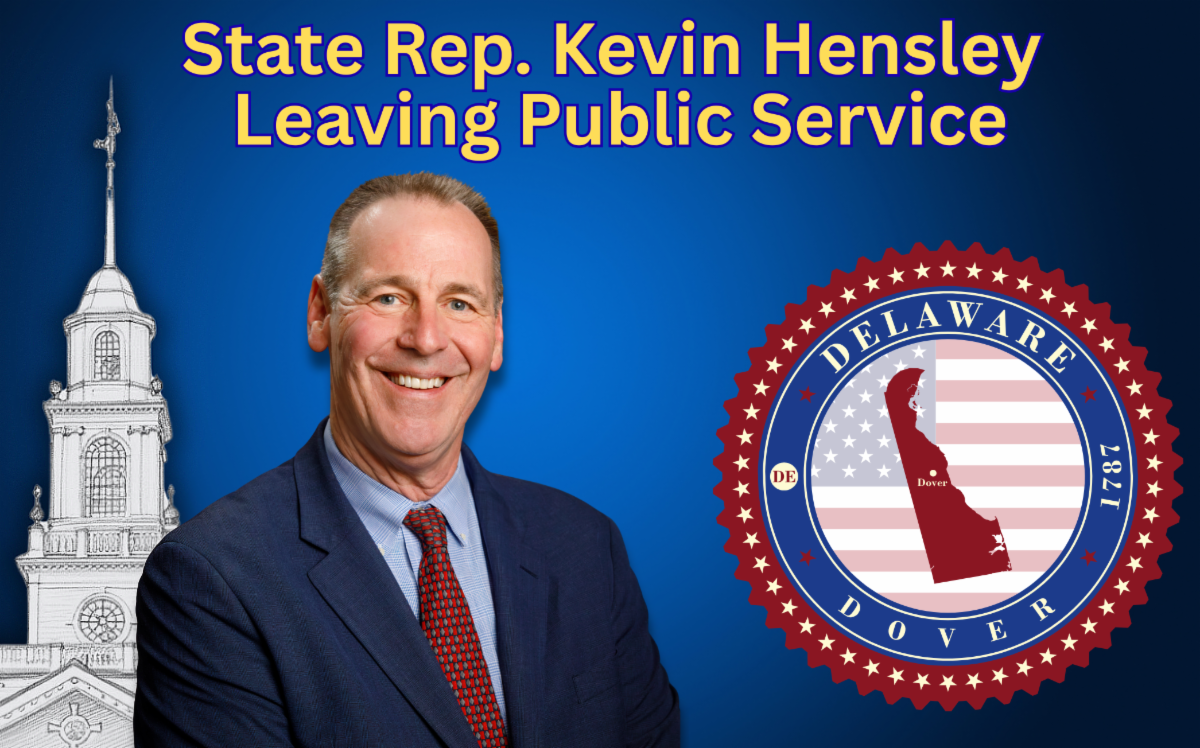
Citing recent health challenges, State Rep. Kevin Hensley (R-Odessa) announced this week that he will not seek to return to the legislature after his current term ends in November.


“It has been the honor of a lifetime to serve the people of the 9th District. I am deeply grateful for the trust they have placed in me over the years,” Rep. Hensley said.


Located in lower New Castle County, the 9th District includes Odessa, Townsend, and Port Penn.


Over his 12-year tenure, Rep. Hensley has been committed to improving public education. One of his most important accomplishments was advocating for legislation that earmarks millions of dollars for school safety and security improvements.


As the father of a child with intellectual/developmental disabilities (IDD), Rep. Hensley has also been a tireless champion for nonprofit causes that support members of the IDD community, including the Michael McNesby Full-Funding for Adults with Intellectual Disabilities Act — groundbreaking disability legislation that raised wages for frontline workers and ensured a more stable, sustainable service system.


Rep. Hensley received the “I/DD Champion Award” from Ability Network of Delaware in 2022 for his efforts in securing increased state funding to go toward the professional care of individuals with disabilities.  


Last month, Rep. Hensley was inducted into the New Castle County Board of Realtors Hall of Fame in recognition of his 30-year real estate career. In 2021, Odessa Fire Company awarded Kevin an honorary membership for his support of the organization. In 2018, Rep. Hensley received the “Defender of Housing” award from the Home Builders Association of Delaware. 


“Serving the people of this district has been the greatest honor of my career," Rep. Hensley said. "I’ve always tried to make myself accessible, to listen carefully, and to respond when people needed help."


This latest announcement guarantees that at least seven members of the House of Representatives will not return to the chamber for the 154th General Assembly. State Reps. Charles Postles (R-Milford North, Frederica), Rich Collins (R-Millsboro), Jeff Hilovsky (R-Long Neck, Oak Orchard), Ron Gray (R-Selbyville), and Debra Hefferrnan (D-Edgemoor, Brandywine Hundred) previously announced their withdrawal from public service. State Rep. Mara Gorman (D-Newark) is running for the Senate seat being vacated by retiring Senate President Pro Tem David Sakola (D-Newark, Pike Creek).

NEWS:

General Assembly Wrestles with Competing Approaches on Hemp Products


In an effort to encourage the development and use of sustainable hemp products, the 2018 federal Farm Bill created a carve-out for a wide range of items that previously would have been banned because of the plant's close relationship with marijuana.


In fact, hemp and marijuana are the same plant species, but classified differently due to their relative levels of THC, the naturally occurring chemical responsible for marijuana's intoxicating effects.


However, the federal legislation inadvertently created a regulatory gap, allowing the unregulated marketing of hemp-derived products containing less than a certain threshold amount of THC. Operating within the law, countless manufacturers and retailers began marketing a wide range of intoxicating hemp-derived products.  


Federal law was tightened last year, and new standards are set to take effect this November. However, that has not stopped Delaware state legislators from wading into the debate.


On Wednesday, the House Health & Human Development Committee considered House Bill 395. The measure would largely shut down the sale of hemp-derived cannabinoids, requiring products containing them to be distributed through state-licensed marijuana businesses and subject to the same regulations applying to that industry.


Supporters of the bill argue that unregulated hemp-derived cannabinoids (e.g., delta-8, delta-9, delta-10) are often as potent as marijuana, yet are sold in gas stations and other retail establishments without age restrictions, safety testing, or proper packaging.


However, at the committee hearing, hemp-product retailers argued that the state is fear-mongering, noting that they have operated throughout the state for years without any major issues. They say state officials are using scare tactics to eliminate established competitors, as state-licensed marijuana businesses struggle to launch and find their footing in the marketplace.


House Bill 395 contains no provisions for current hemp product retailers, so its enactment would immediately force these establishments to close.


The sponsors of Senate Bill 298 and House Bill 401 are taking a different approach.


The former bill would draw a legal, definable distinction between legal hemp-derived cannabinoid products and marijuana and controlled substances. The latter measure, called the Delaware Hemp Regulation Act, seeks to create a comprehensive regulatory framework for the sale, distribution, and consumption of hemp-derived cannabinoid products in the state.


House Bill 395 has been released from committee and is on the House Ready List for possible action by the chamber. Senate Bill 298 and House Bill 401 are pending consideration in separate committees.