|
Henrico Rec & Parks | (804) 501-PARK
| |
| |
Table of Contents:
- A Letter from Our History Team
- Yellow Tavern
- From the Archives: Remembering Patrick Henry
- Revolutionary Reminiscences
- Henrico County & the 250th Commemoration
- Down on the Farm
- Rec & Parks App
| | A Letter from Our History Team | | |
Happy Spring Everyone!
It’s been an amazing time in our History Division and this newsletter is going to highlight a few of those initiatives and provide a little insight into the day-to-day world of our section. You will get the opportunity to meet a figure from Henrico’s Revolutionary History. His name may sound familiar, but we want to highlight his story for you to greater understand the tough decisions residents had to make 250 years ago. You’ll also read about a “Hot Corner” in Henrico which has been changing its identity and providing unique experiences to all visitors. We also found an interesting book in our collection. A Wild West take on one of Virginia’s seminal historical events, Patrick Henry’s “Give Me Liberty, or Give Me Death” speech. One of our staff offers an introduction and shares all the exciting research they have done. We cannot have a history newsletter without hearing from the farm animals at Meadow Farm. We’ve seen and “herd” some of those updates before, but not all this “baa”ckground to go with it!
I would be remised if I did not acknowledge the retirement of our friend and colleague Kim Sicola. Kim retired in December 2024 and we’re sure she’s enjoying her retirement, probably playing pickleball…But I must semi-introduce our audiences to Dr. Joseph Rizzo! Joe joined us in March and brings his own knowledge and insight to our section. We’ll definitely have Joe introduce himself properly in the next edition of the newsletter!
Please sit back and enjoy our Spring 2025 edition of "Henrico History Progress" and be sure to follow our social media, subscribe to our monthly updates, and we’ll be sure to bring something exciting, and historical, to a park near you!
| | |
A Corner of History at Parham and Brook Roads
The Flagstop Car Wash, located at the intersection of Brook Road (U.S. Highway 1) and Parham Road, is the newest business to occupy this corner. It is not historical, but it is located on and near former sites of historical significance. Let’s take a look at the transformations of this corner property and the neighboring intersection over time. But first, we should review the area known as Yellow Tavern, Virginia.
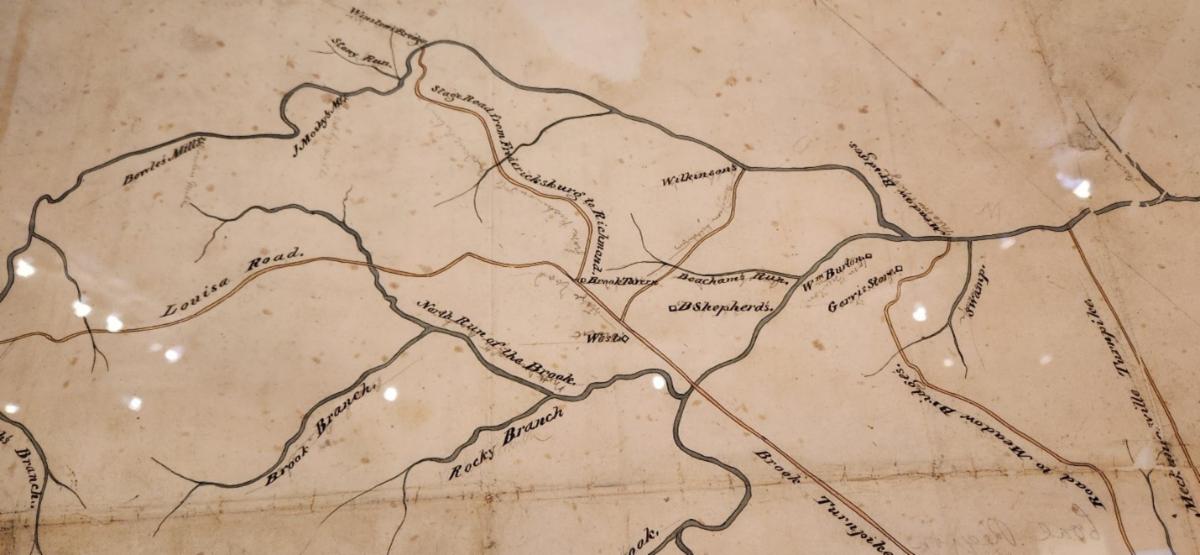
This northern area of the county falls within the larger Glen Allen census-designated place but is more notably known as the community of Yellow Tavern. So, how did this name originate? Just north of this Flagstop Car Wash, there stood a tavern at the junction of the early Louisa Road (Mountain) and the Stage Road to Fredericksburg (Telegraph). To arrive here was by way of a stagecoach, likely from Richmond after a night’s stay at the Eagle or the Bell Tavern. The Mountain or Fredericksburg stages would start out at the first light of dawn, drive the Brook Turnpike to this tavern - a distance of five to six miles - then their passengers would have breakfast, and the horses rested for the next leg of the journey.
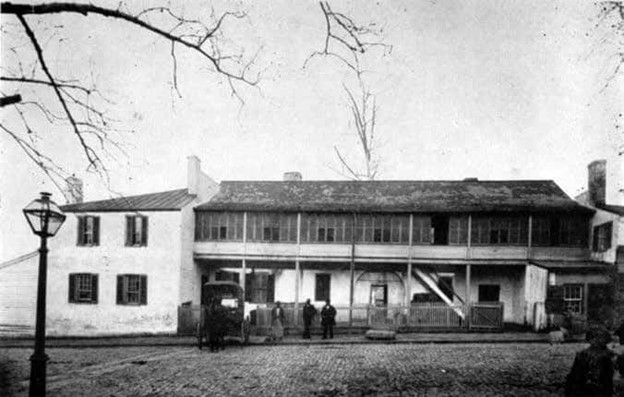
It was a typical tavern of the day. The first story or basement was of brick, and above that were two framed stories about fifty feet long with a porch running the whole length. At one end of the basement was a bar. A wing was built onto the rear. Horse-racks, stables, and stalls accommodated the horses. When the tavern was built and by whom is not established, documents indicate that Dabney Williamson acquired the land in 1796 from his father. A Richmond Whig newspaper advertisement lists the property for sale in 1837 by Hudson B. Powell. The name “Yellow Tavern” came from its being painted yellow, certain to distinguish itself in those early days. Located on one of the most important roads in the state, the fame of the tavern traveled far across the country. Famous Swedish opera singer Jenny Lind, touring the country in the 1850s, is said to have stayed at the tavern after having been caught in a snowstorm. A Richmond Whig article in 1853 notes a meeting held by local citizens at the tavern regarding the condition of the Brook Turnpike Road and the Brook Turnpike Company demanding and receiving tolls from the public for traveling on their road.
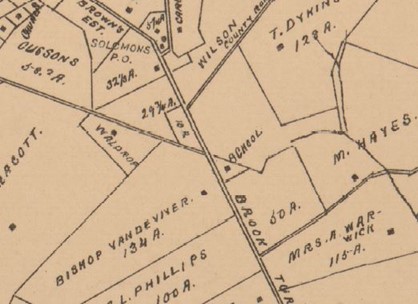
| A section of the 1819 John Wood Map showing Brook or Yellow Tavern | | This 1890 Lancaster photograph of Goddins Tavern on Brook Avenue, circa 1791 and demolished 1912, gives us our best idea of the taverns of early Richmond. | | |
During the Civil War, battle names were usually tied to place names. A more notable association with the name of Yellow Tavern is the Civil War battle, known as Yellow Tavern, fought on May 11, 1864, less than two miles north. A monument to General J.E.B. Stuart and a Civil War Trail tabletop mark the area on the original path of the Telegraph Road. As advertised in the paper in 1861, “Flag Raising - A secession flag is to be raised at 4 o’clock this evening, by the people residing in the vicinity of the Yellow Tavern, on the Brooke Turnpike.” In the recollections of an article in the Richmond Dispatch in 1889 about the old hostelry, by the time of the Civil War the tavern was already in ruins, “the soldiers while in camp nearby pulled off many of the boards and with the doors and window-blinds made fires, and in this condition it was not long before, by some unknown means, the flames got hold of it and it was burned down, and destroyed an old landmark and one of the most famous taverns of its day.”
The following sites are examples of the historical architecture of the area from the past to the present.
Yellow Tavern School
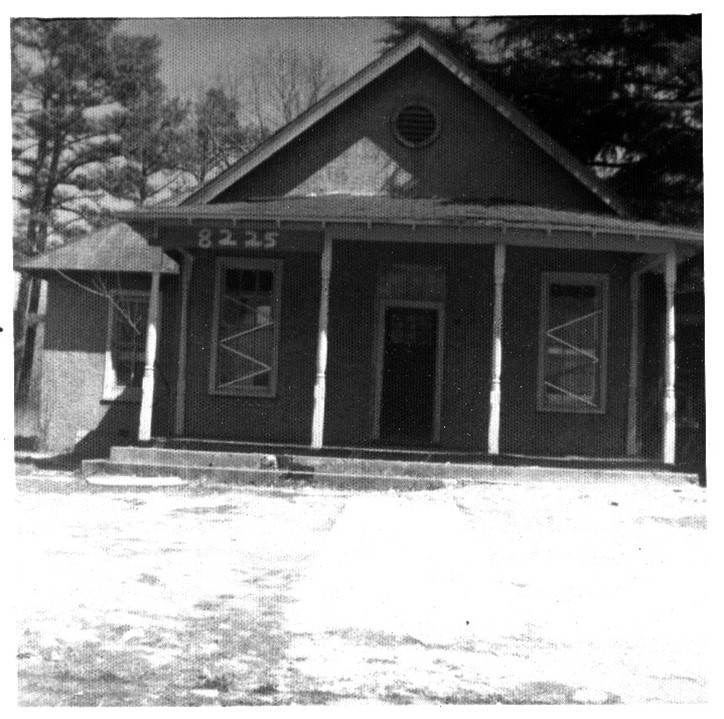
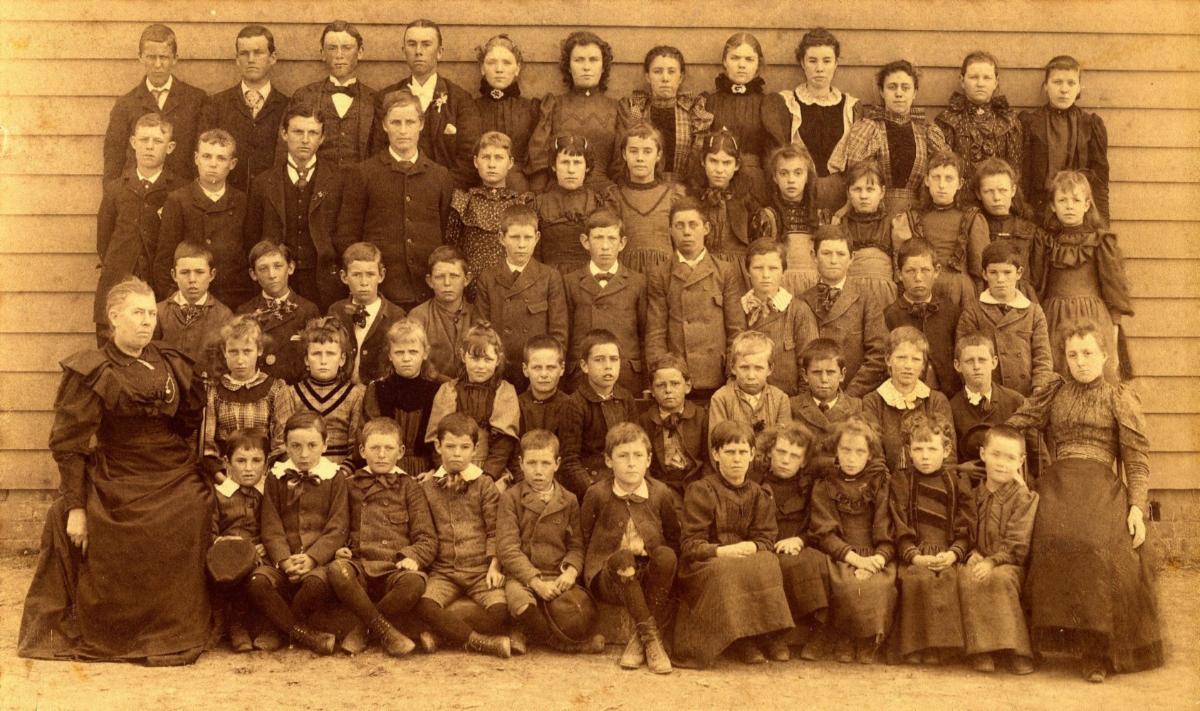
The Yellow Tavern School once occupied the land south of Parham Road across from St. Joseph's Villa, about where the Burger King is located in the Parham One Shopping Center. In or around the year 1891, Isaac Newton Vaughan of the County of Hanover conveyed one and one-half acres to the School Board of Brookland District No. 1 to be used as a school. Maude Trevvett (1871-1970), teaching 46 years in her career in Henrico, taught in only three schools: Yellow Tavern, Laurel, and Glen Allen. All of these were located in the Brookland District. The Trustees of the School Board sold the property ca. 1922.
| | |
Yellow Tavern School
Library of Congress 1901
| | |
Yellow Tavern School
Miss Maude Trevett right side of photo
| | |
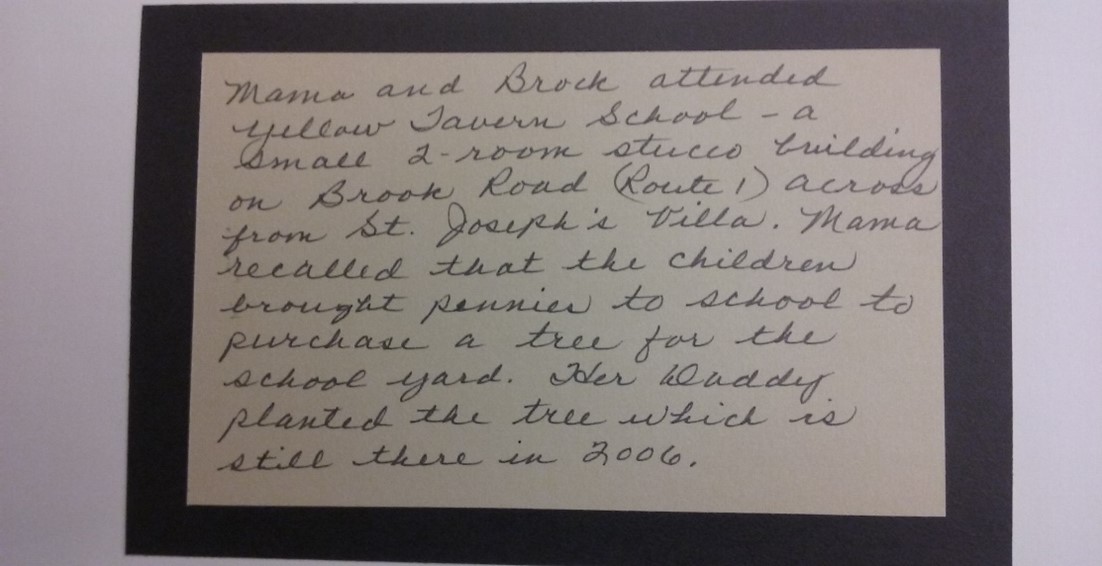
Handwritten note provided by Mrs. Margaret Patterson.
The tree was planted by the children of Yellow Tavern school, formerly in front of school.
| | |
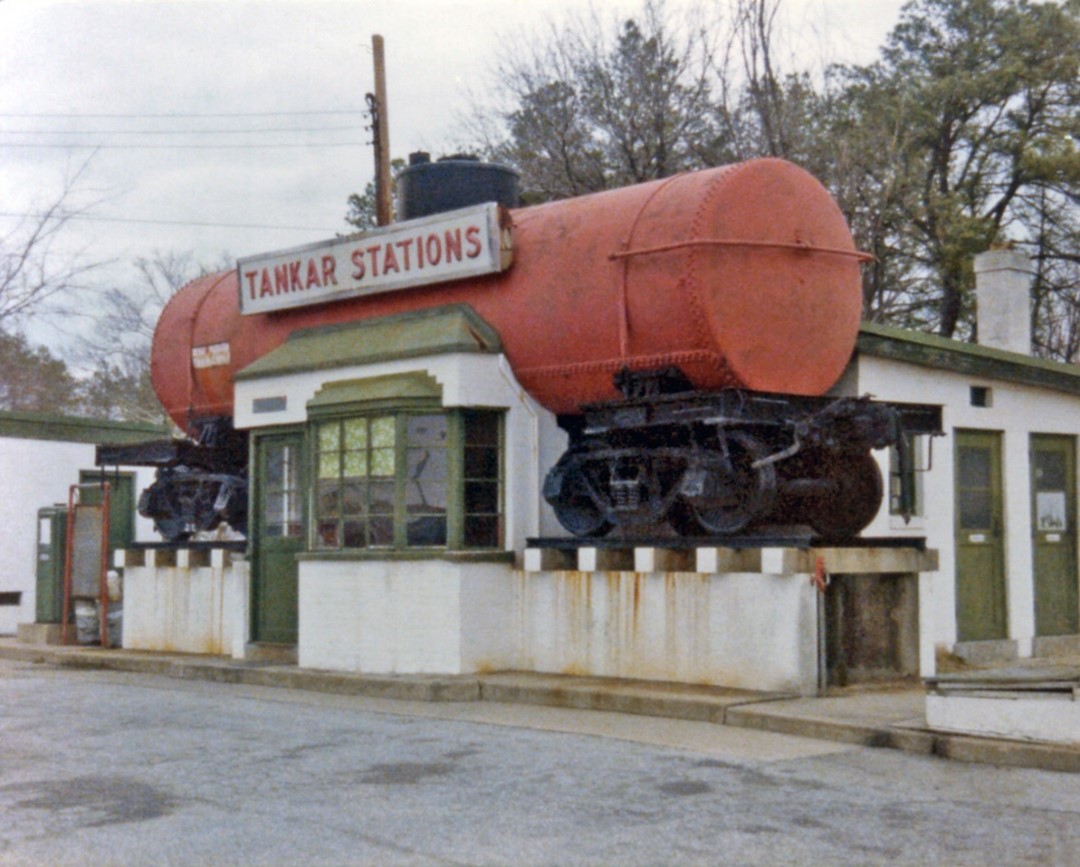
Tankar Gas Station
A railroad tank car was the trademark of Tankar Gas Stations for years. Tankar was a low-priced gas and oil filling station. The car at the location of this former station came out of Louisiana in about 1954. This station provided service from ca. 1954 to 1982 when the property was sold to become the Central Fidelity Bank. Now the Flagstop Car Wash is on this corner.
| | |
St. Joseph's Villa
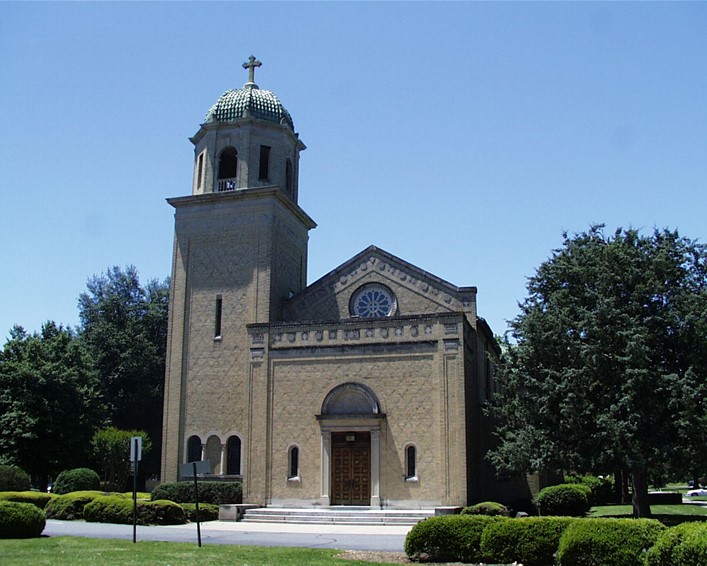
St. Joseph's Villa holds the distinction of being the longest-serving nonprofit for children in the United States. The Charity was founded in 1834 when the Daughters of Charity arrived by steamboat at Rocketts Landing, answering a call to care for Richmond’s orphaned and most vulnerable children. They established St. Joseph’s Academy and Orphan Asylum at Fourth and Marshall Street as a safe haven dedicated to nurturing and uplifting young lives.
A bequest by Dr. Daniel Hopkins Gregg in 1898 supported the purchase of Hollybrook Farm north of the city to provide the orphans with a summer retreat, fresh air, and food. In 1931, Major James H. Dooley’s bequest of $3 million funded the development of a new campus on the Hollybrook property – the largest construction project on the East Coast during the Great Depression. The new home-like setting inspired the name change to St. Joseph’s Villa.
| | The chapel at St. Joseph's Villa | | |
Remembering Patrick Henry
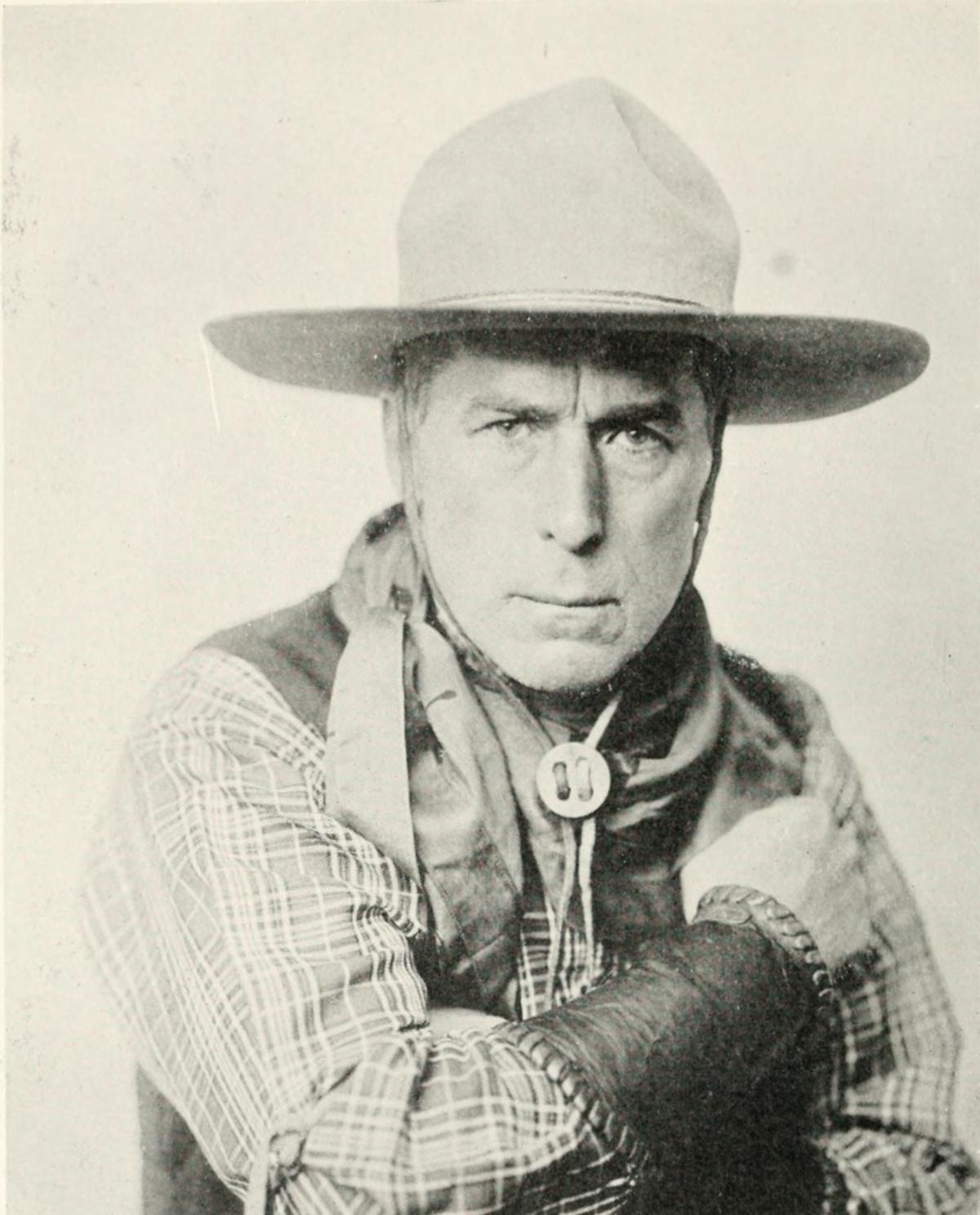
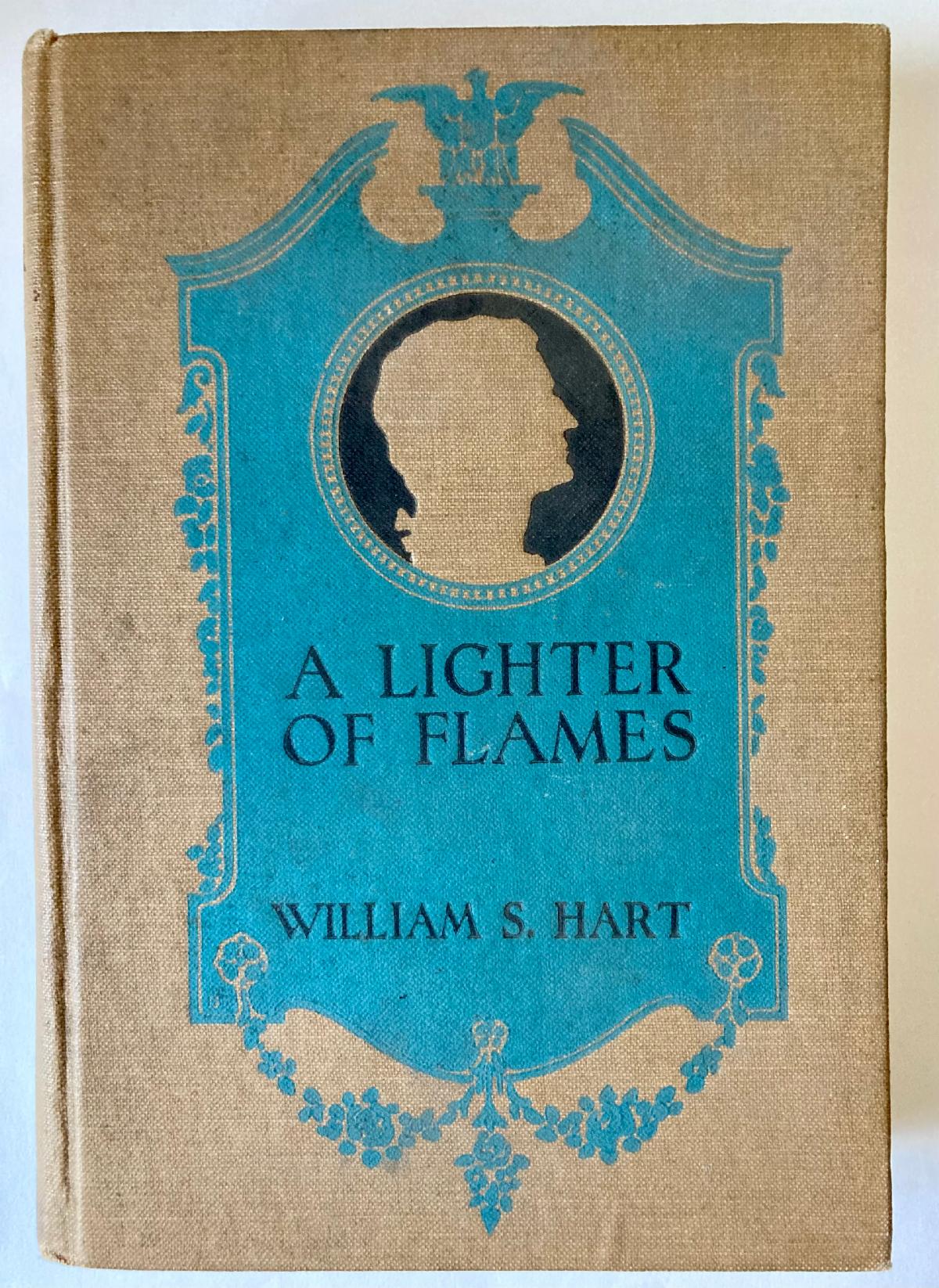
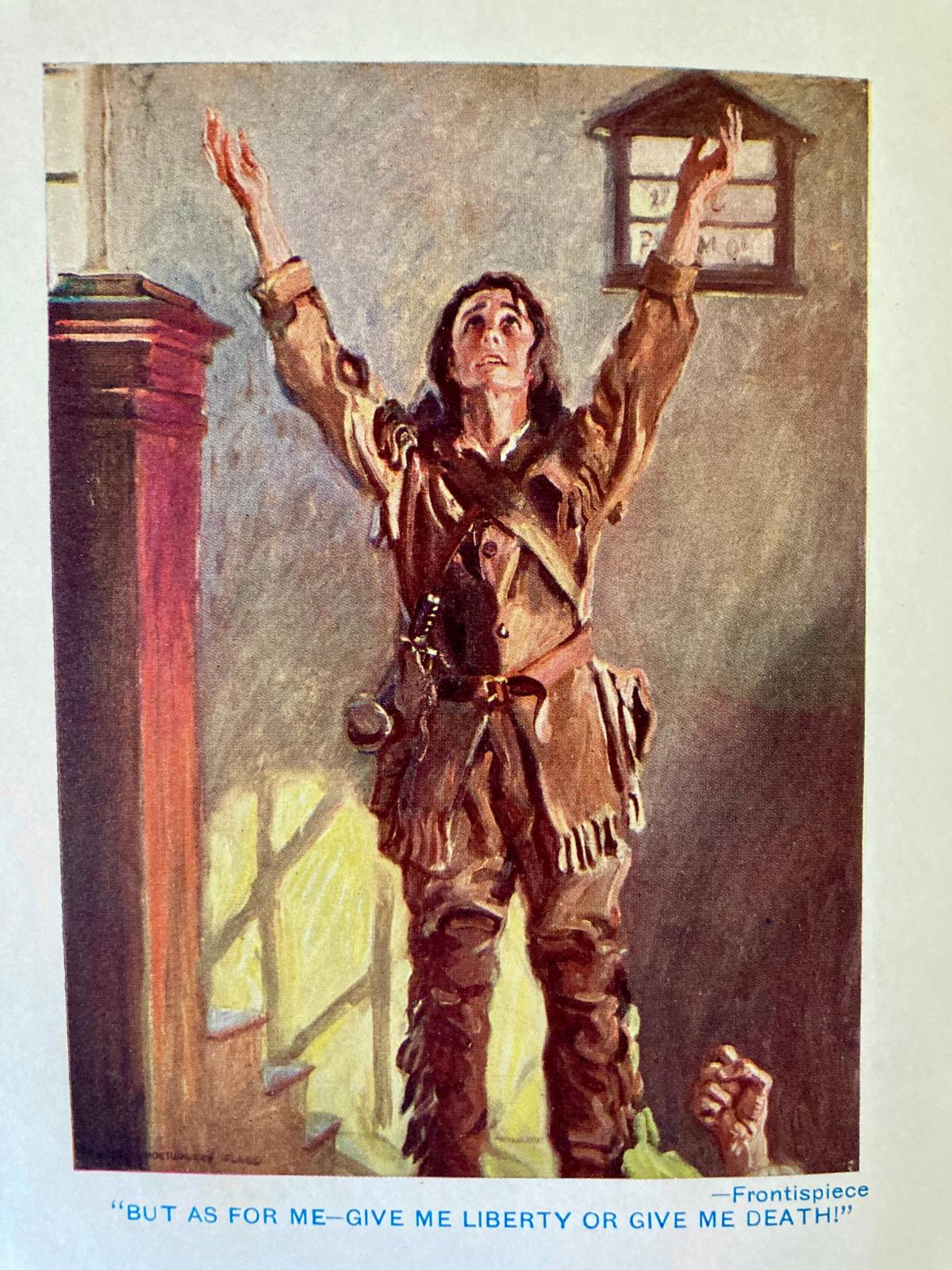
The 250th anniversary of Patrick Henry delivering his famous “Give me liberty or give me death” speech just happened on March 23. Our county archives have an interesting and slightly more modern connection to the famous Founding Father. Sitting on a shelf is a rather humble-looking book entitled A Lighter of Flames by William S. Hart.
| | The book was first published in 1923. Hart was already famous as a silent film actor, then expanded into screenwriting, directing, and producing. He was one of the first great Western film stars. | | This was the sixth book published by Hart, who had started a second career as a writer. A Lighter of Flames is the only historical fiction book written by him with the rest focusing on a western theme. Hart’s affinity with the American Wild West might have influenced the decision of how to illustrate Henry’s famous moment…placing the orator in buckskins appearing like Daniel Boone as if central Virginia was the wilderness. | |
In the forward, Hart explained his motivation for writing a historical fiction biography of Henry due to his desire “to present to the American public a living, vivid picture of that true American of whose life and history so little is known, but whose heart was big with love of country; who did not know the name of fear; and who dared to speak forth his convictions at a time when to do so meant the spark of revolt to the tinder of oppression, the stroke to the rousing-bell of Liberty, - namely, Patrick Henry.” The book only covers a small portion of Henry’s life, with the final chapter culminating in his famous oration. Hart admits it was styled as a romance. It certainly appears he embellished quite a bit on Henry’s life.
Though not inscribed, it most likely belonged to the last owner of Meadow Farm, Sheppard Crump, who would’ve been about 40 years old at the time it arrived on bookstore shelves. From even a glance at the Meadow Farm library, one can tell that Crump enjoyed reading military history and biographies.
Additional Information:
-
If you would like to read the novel, digitized versions are available online at Google Books, Hathitrust.org, and archive.org.
| | Revolutionary Reminiscences | | |
Two hundred fifty years ago, Henrico residents faced probably the most pivotal decisions of their lives: to remain loyal to the king and the Crown, or to join the Patriot cause in defiance of Parliament and the monarchy. Citizens from all walks of life—across social, economic, religious, and racial lines—rallied behind their chosen side, offering money, supplies, and even their own service in pursuit of their ideals. This new column will feature the latest research highlighting brief stories of Henrico’s people during the Revolutionary War era.
Henrico Founding Father: Richard Adams
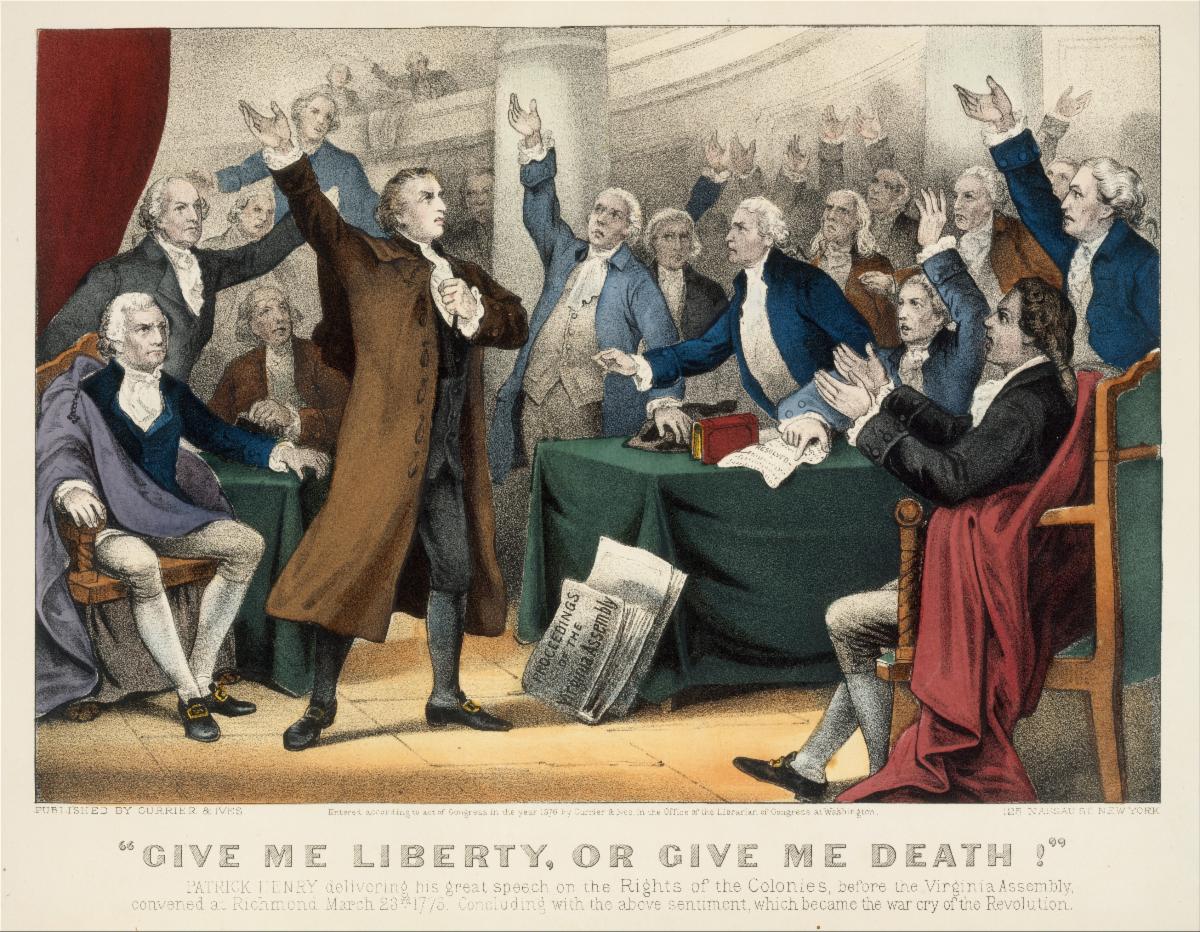
Patrick Henry delivered his famous “Give me Liberty or Give me Death” speech 250 years ago this spring during the Second Virginia Convention held at St. John’s Church, which at the time was part of Henrico County. Two men representing Henrico County, Samuel DuVal and Richard Adams, sat in the audience. While neither are household names today, Richard Adams represented Henricoans in multiple capacities throughout the Revolution.
| | Currier & Ives lithograph print created during the country’s centennial in 1876. Give Me Liberty or Give Me Death! – Patrick Henry delivering his great speech on the Rights of the Colonies, before the Virginia Assembly, print (MET, 63.550.388) | | |
While Richard Adams’s father, Ebenezer, immigrated from England as a young man, his mother, Tabitha Cocke, descended from a family with roots strongly connected to Henrico, including Malvern Hill and Bremo. Ebenezer received nearly 4,000 acres in land grants in New Kent and Henrico counties in 1714. Richard was one of eight children born to Ebenezer and Tabitha. While born on his father’s lands in New Kent, Richard eventually moved to Henrico and “Richmond town.” Based on sources currently available, it’s challenging to pinpoint when Richard moved. However, based on advertisement he placed in the Virginia Gazette, it appears he moved to Henrico/Richmond area between 1755-1766. In 1769, he purchased multiple lots on Richmond Hill, today known as Church Hill. It is believed his first house stood on the south side of Broad and 23rd streets, one block from St. John’s Church.
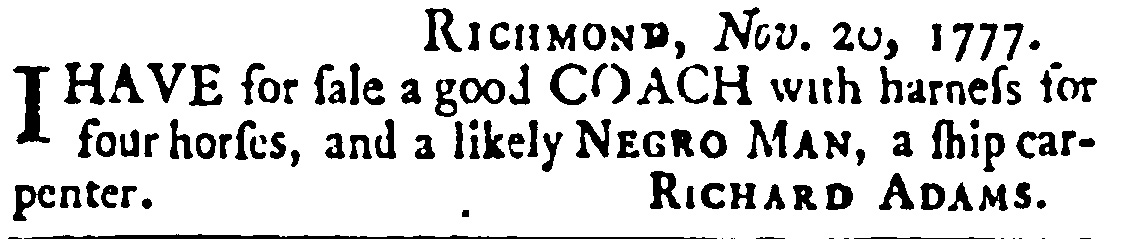
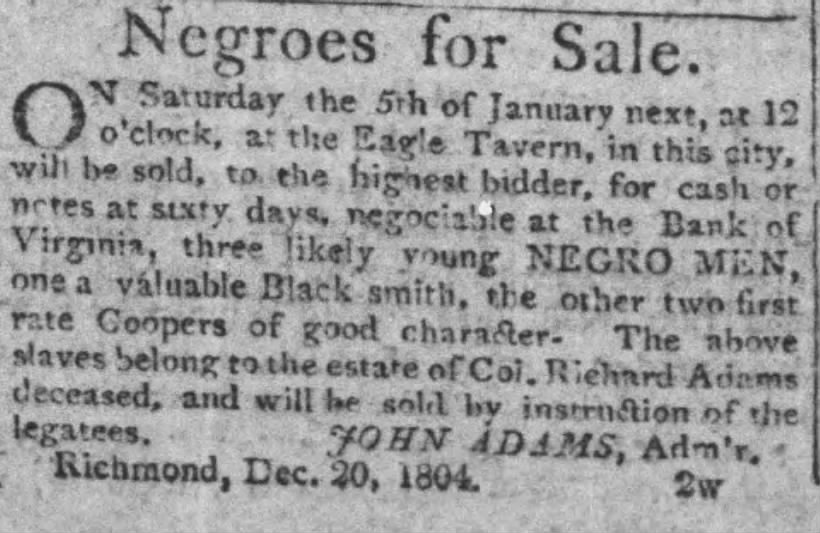
Adams’s wealth, business ventures, and social standing grew, alongside his brood of children. His wife, Elizabeth Griffin, gave birth to six sons and five daughters. He dabbled in a variety of local business ventures such as a grist mill, distillery, coal mines, rope walk and import merchant. Perhaps his biggest business success was as a real estate entrepreneur, eventually becoming the largest property owner of Richmond (mainly what we know today as Church Hill). Adams’s wealth was also reflected in the number of enslaved people listed in his household. By 1782, he ranked in the top four of Richmond slave owners with 18 people. Moreover, Adams was involved in selling enslaved individuals as evidenced in his 1769 letter to his brother, Thomas, writing from Osborne’s Warehouse: “I am here selling 80 Negros belonging to my old friends…of R. Island, this consignment coming unexpected, is most fortunate for me…I have sold 20 at £42 sterling & hope to average the Cargo at about £35 sterlg.” Adams continued his involvement in slavery until his death.
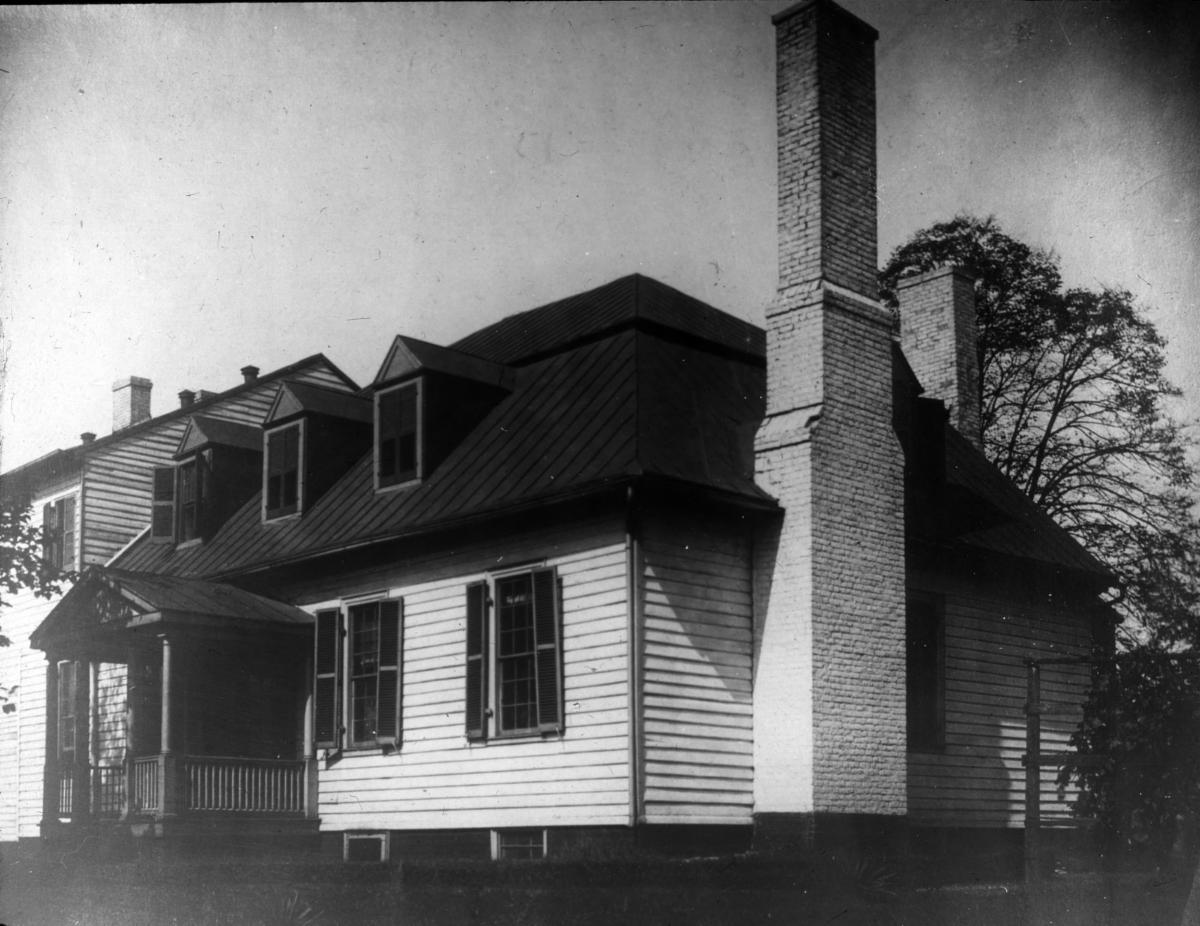
| | Virginia Gazette, 20 November 1777, page 3 | | Virginia Argus, 29 December 1804, page 1 | | A few years after the Revolution, he built a residence near Grace Street between 22nd and 23rd streets. It was probably this home that received mention in a published travel book by Englishman J. F. D. Smyth during his 1784 tour of the United States. Smyth declared, “The most commanding and excellent situations about Richmond are, the seat of a Mr. Adams, on the summit of the hill which over-looks the town; and Belvidera, an elegant villa belonging to the late colonel William Bird.” Despite sounding like a grand structure, the two-story house was built entirely of wood and measured 55 by 34 feet, with a separate kitchen measuring 28 by 18 feet. | | Richmond Adams House, demolished circa 1928. Mary Winfield Scott Photograph Collection. V.41.35.06/PHC0106. The Valentine, Richmond, Virginia. | |
Adams was notable not only for his business success and wealth but also for his decades of public service in various political roles. Before the outbreak of the war, he served in the Virginia House of Burgesses, representing New Kent County for nearly 13 years. In 1769, voters elected him to represent Henrico. As tensions between Britian and the American colonies escalated, Henrico voters elected Richard Adams and another leading citizen, Samuel DuVal, to represent them at the First Virginia Convention held in Williamsburg in August 1774. Adams was reelected to attend the other four conventions, including the last one in the summer of 1776 in which representatives called for independence. In fact, he was the only representative from Henrico to be elected all five times, while the other seat changed between three men. Adams continued to represent Henrico in the Virginia General Assembly as a delegate and senator from 1776-1782.
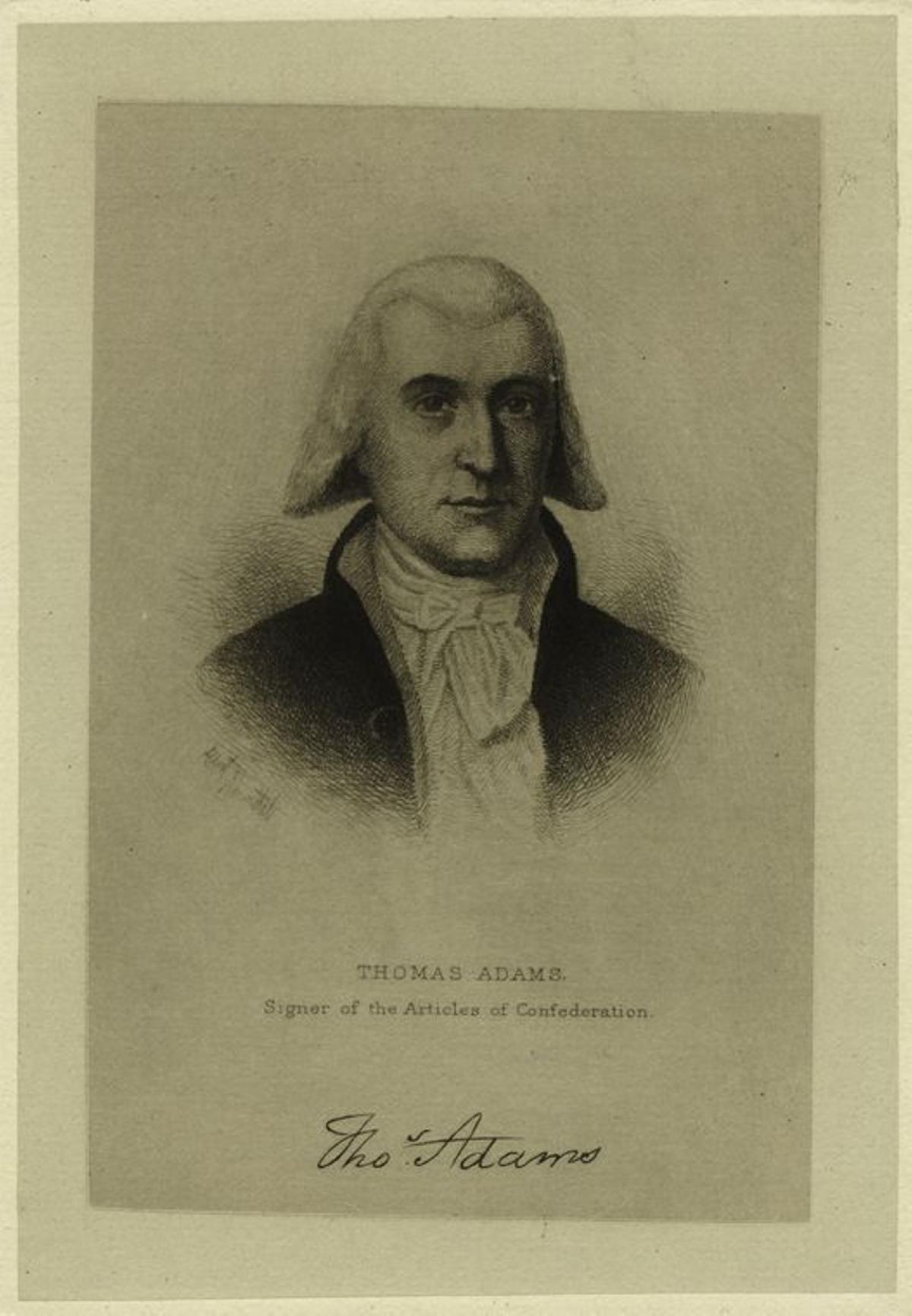
Richard’s younger brother, Thomas, also was involved in colonial politics, serving for four years in the House of Burgesses. Thomas’s extensive business interests in England likely prompted him to relocate there in 1762. During Thomas’s time abroad, Richard often wrote to him about business and family matters. (Some of these letters still survive today.) When Thomas returned to Virginia in 1774, he was appointed chairman of the New Kent Committee of Safety. From 1778 to 1780, he represented Virginia at the Continental Congress and later became a signer of the Articles of Confederation. Following the war, Thomas continued his public service for several years as a member of the state senate.
| | Thomas Adams, c.1885, New York Public Library | | |
In addition, Adams served at a local level being appointed in 1773 by the General Assembly to be one of Richmond’s “trustees.” When discussions began amongst representatives about moving the capital from Williamsburg to Richmond, Adams was eager to push for it. According to his granddaughter, Richard Adams was a close friend of Thomas Jefferson’s and often entertained him. Supposedly Jefferson promised to advocate for locating the government buildings on Richmond Hill. Adams offered to donate twelve lots of land. Yet, when the committee recommended Shockoe Hill instead, she claimed that Adams never forgave Jefferson and continued to push for his land.
During the Revolutionary War, Richard Adams supported the war effort in a variety of ways. He was one of the trustees to supervise the construction of Westham Foundry in 1776. In 1777, he had a joint responsibility with Colonel Turner Southall of receiving arms from a Fredericksburg factory and distributing them to the Richmond and Henrico militias. Adams worked with other merchants and farmers to acquire 2,000 barrels of flour, pork, and other provisions for Virginia’s troops. He had cattle, bacon, fodder, straw, and cord wood taken (impressed) from his property to support Continental troops and militia. Along with reported damages done by a part of Continental troop, Adams public claim for reimbursement totaled more than £210 (One historical currency conversion website from University of Wyoming calculates the value of this money from the year 1780 to be valued in 2025 at $49,026.86.) In October 1781, the Henrico County Court nominated Adams commission as a 1st Lieutenant in the militia, although it doesn’t appear he actively served beyond the Richmond-Henrico area.
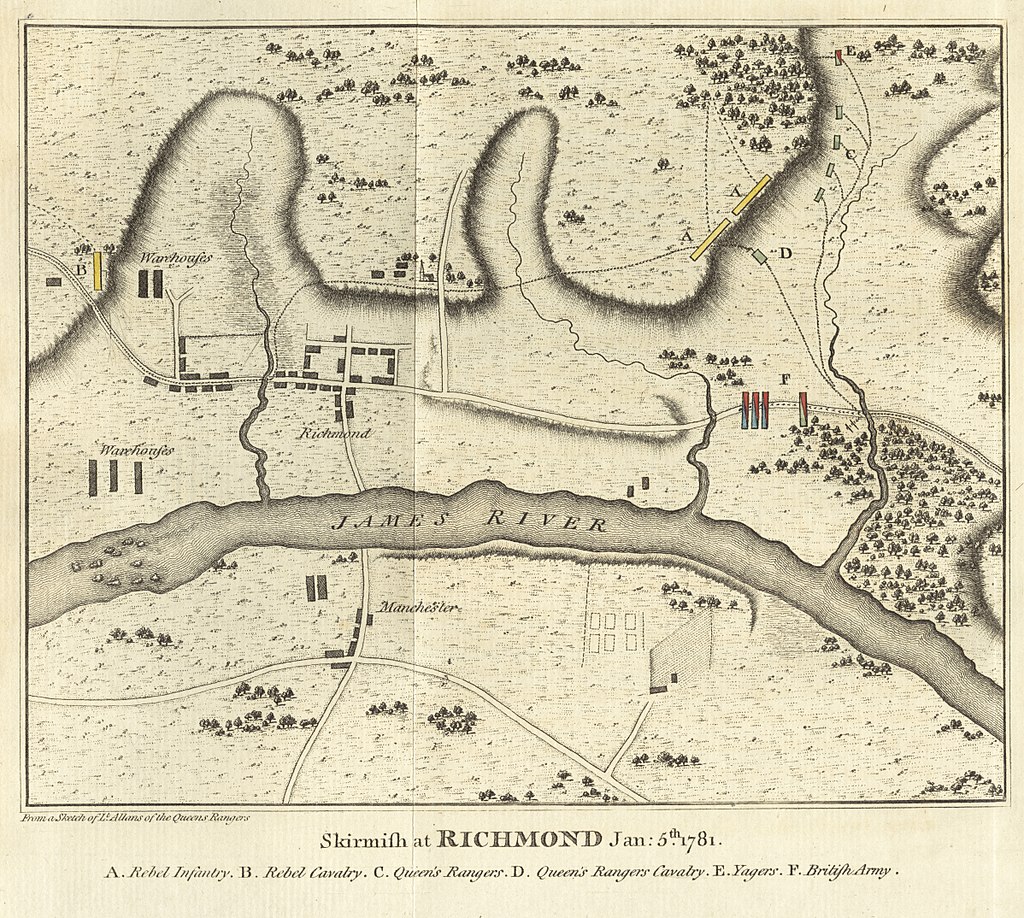
His house served as one of the quartermaster departments offices with his properties serving as public storage of goods. For a brief time, Adams rented houses to serve as additional jail space (it didn’t last because the building was too far away for the jailor to keep order and prevent escapes). According to one of Adams’s great-great grandsons, Benedict Arnold’s British troops used his home as a barracks in January 1781. While there is no contemporary evidence to support this claim, it is possible due to the geographical (and therefore military strategic) location and prominence of its owner that it was possibly a target beyond being just a nice place to lay a weary soldier’s head at night after a long cold day of fighting and pillaging. British forces not only destroyed buildings and supplies, but official court documents like wills and deeds. Evidently, Richard Adams served as a justice during this time, and he was a member of a special commission to take written testimonies about these documents to reconstitute these valuable lost records.
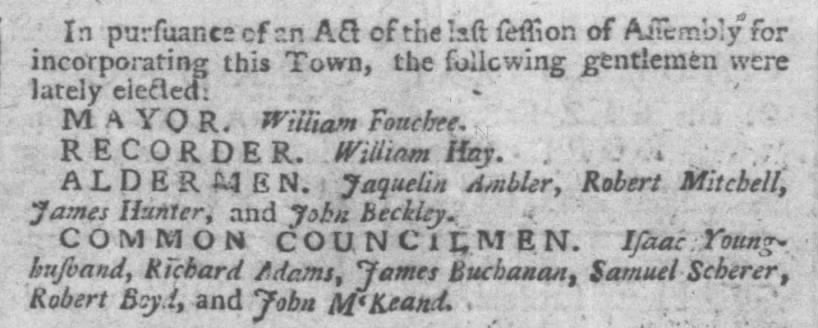
| | Skirmish at Richmond Jan 5th 1781. From a Sketch of Lt. Allans of the Queen’s Rangers” showing the attack on Richmond, Virginia under forces of Benedict Arnold | | In 1782, an act to incorporate Richmond prompted voters to gather at Henrico’s Courthouse to elect 12 officials to its Common Hall, the forerunner to the modern-day city council. Richard Adams came in 5th place, earning him a seat. For unknown reasons after missing the first two meetings, Adams resigned. It appears that this election and subsequent resignation would be the final time Richard Adams served in a public role. | | Virginia Gazette, or American Advertiser, 6 July, 1782, page 3 | |
His postwar activities appear focused on business interests and his growing family. Adams sold off several of his lots on Richmond Hill, rented out a distillery, and collected subscriptions to build a turnpike between Richmond and coal pits at Deep Run. He also seemed to have an on-going issue with his horses being lost or stolen. His work kept him busy enough to place an advertisement for an account clerk about a year before his death. Three of his five daughters married, two of which had noteworthy connections. Sarah married future governor of Virginia, George William Smith, who died in the tragic Richmond Theatre fire of 1811. Adams’s youngest daughter, Alice, married William Marshall, brother of future Chief Justice John Marshall. However, Alice along with two of her brothers predeceased their father. His son, John, not only became a doctor but followed in his father’s political footsteps, serving in the House of Delegates as well as mayor. He had the honor of welcoming Lafayette upon the French general’s grand tour of the U.S. in 1824-1825. John built a house close to his father’s residence. After John’s death in 1825, the Van Lew family bought the grand home, at which Unionist spy Elizabeth Van Lew lived during the Civil War. Richard Adams died after an (unknown) illness on August 2, 1800, at the age of 74, and was buried in the family cemetery at 23rd and Marshall streets. The family’s remains were reinterred to Hollywood Cemetery in 1892. Oddly for a man of his wealth and social standing, no known image exists and no will had been found at this time…rather anticlimactic for such a person.
Richard Adams played a significant role in shaping the political, social, and economic foundations of Henrico, the City of Richmond, and Virginia as a whole. His contributions deserve recognition alongside those of Virginia’s more renowned Revolutionary War leaders.
| | On behalf of Henrico County's American Revolution 250th Commission, we invite you to take this journey with us. Discover new stories, get inspired by the county’s history, and help us preserve these important places! | | |
VA250 Mobile Museum
Fri, Jun 20, 9am-5pm. Dorey Park.
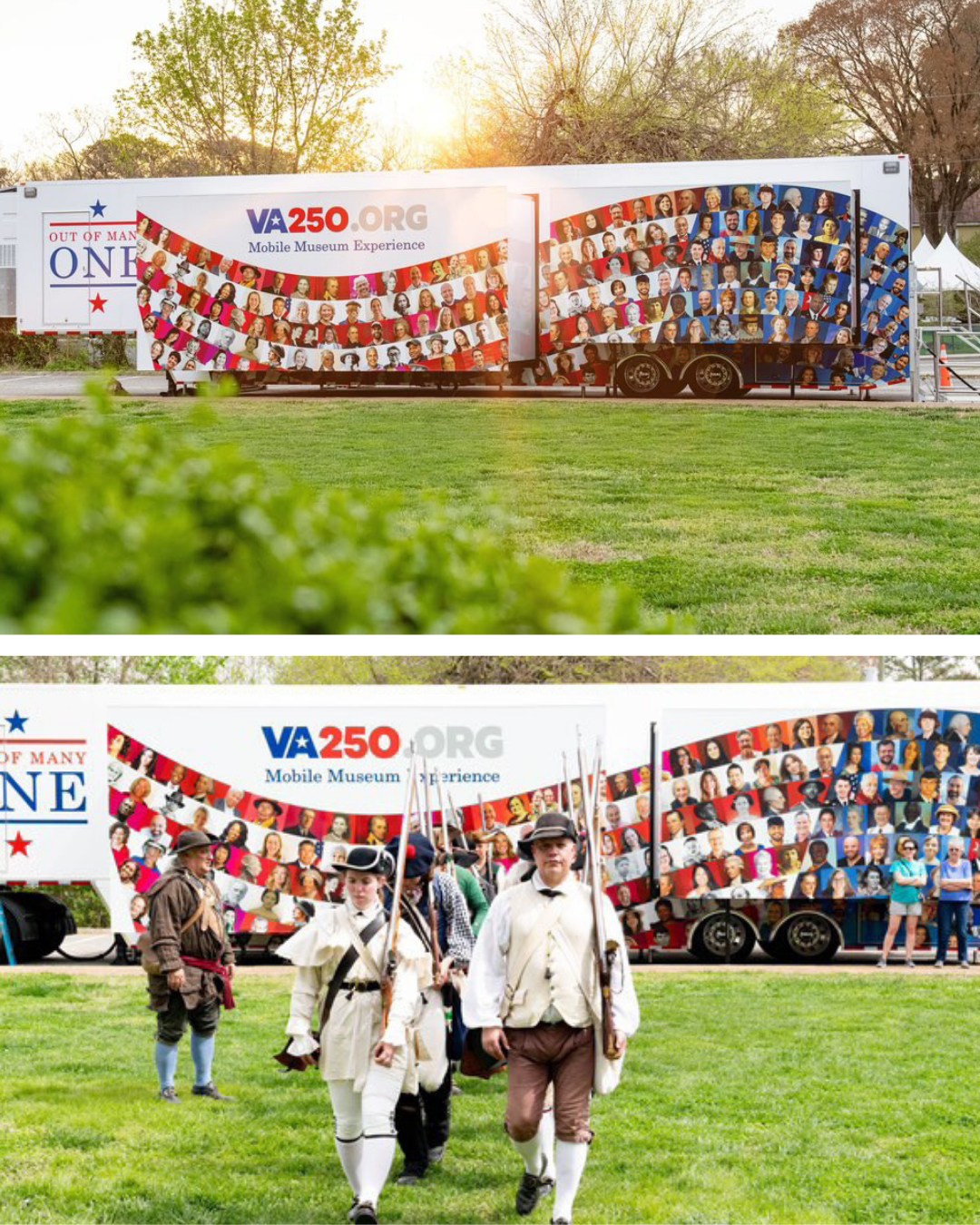
A hands-on, interactive, and immersive museum on wheels, the VA250 Mobile Museum Experience is housed in a quad-expandable tractor trailer that is traveling throughout Virginia and beyond. The mobile museum brings key stories of Virginia’s rich history to schools, museums, local events, fairs, and more, highlighting every region of the state. Information: cha129@henrico.gov
Traveling Exhibits
On display at various recreation sites. View schedule.
-
Give Me Liberty (May 19-June 30) Explores the unique and essential Virginia people, events, and sites that helped bring liberty and democracy to a nation.
-
Un/Bound: Free Black Virginians, 1619-1865 (June 16-July 28) This exhibit will explore the lives of free Black Virginians from the arrival of the first captive Africans in 1619 to the abolition of slavery in 1865.
-
Founding Frenemies (July 21-Sept 1) Lin-Manuel Miranda’s award-winning Broadway production HAMILTON propelled our nation’s first Secretary of the Treasury into a legendary status not held since his untimely death in 1804. Miranda’s narrative tells the story of a man who overcame all odds to shape, inspire, and scandalize the newborn America.
Upcoming Programs
Gingerbread for Liberty
Thur, Jun 5, 10-11:30am. Belmont Rec Center.
All ages. Celebrate National Gingerbread Day on June 5 by going back in time 250 years! Munch on some gingerbread cookies while listening to Gingerbread for Liberty. Create gingerbread themed crafts and activities that will spice up your day with combining fun and history! Information: den63@henrico.gov
Washington Takes Command
Thur, Jun 26, 7-8:30pm. Belmont Rec Center.
Ages 10+. Two hundred and fifty years ago, in June 1775, George Washington took command of the newly formed Continental Army. What made him qualified? His experiences during the French and Indian War prepared him for leadership in the Revolution. Historian Bert Dunkerly will explore Washington’s challenges and lessons learned and how he applied them as the nation’s first military commander. Information: den63@henrico.gov
View more programs
| | Staff Profile: Mark Shubert | | |
Greetings!
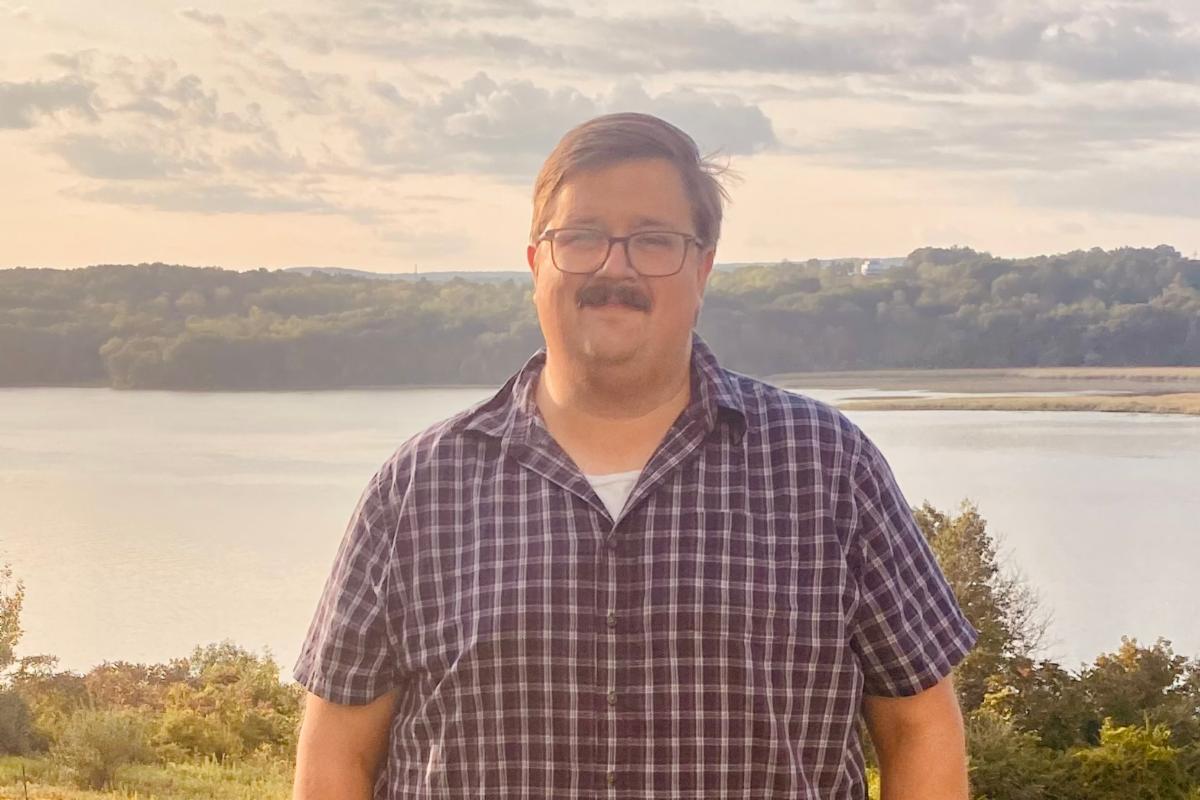
My name is Mark Shubert and I've been with the history sector of Henrico County Recreation and Parks for a bit over eight years now. I spent my first half of that time at the Dabbs House Museum and have been at Meadow Farm for the other half, during which I've had the pleasure of researching and creating various programs on regional figures like Mother Maybelle and the Carter Sisters, John Mitchell, Jr. aka the Fighting Editor, Jim Crow era artists Leslie Garland Bolling and George H. Ben Johnson, London Pleasants an enslaved boy from Henrico who joined the British during the American Revolution, and many more to come! I also had the distinct honor of designing the Woodland Cemetery Walking Tour a few years back - a tour that you can catch me leading at that beautiful post emancipation uplift cemetery once a month!
I reside in Richmond with my wife, our two daughters, a Pitbull who hates thunderstorms, a cat who loves sleeping on my feet and a couple chickens. When I'm not clocked in at the county, I am more than likely on an adventure of some type with the girls that is centered around finding fossils or other cool stuff in that vein.
| | |
Hola!
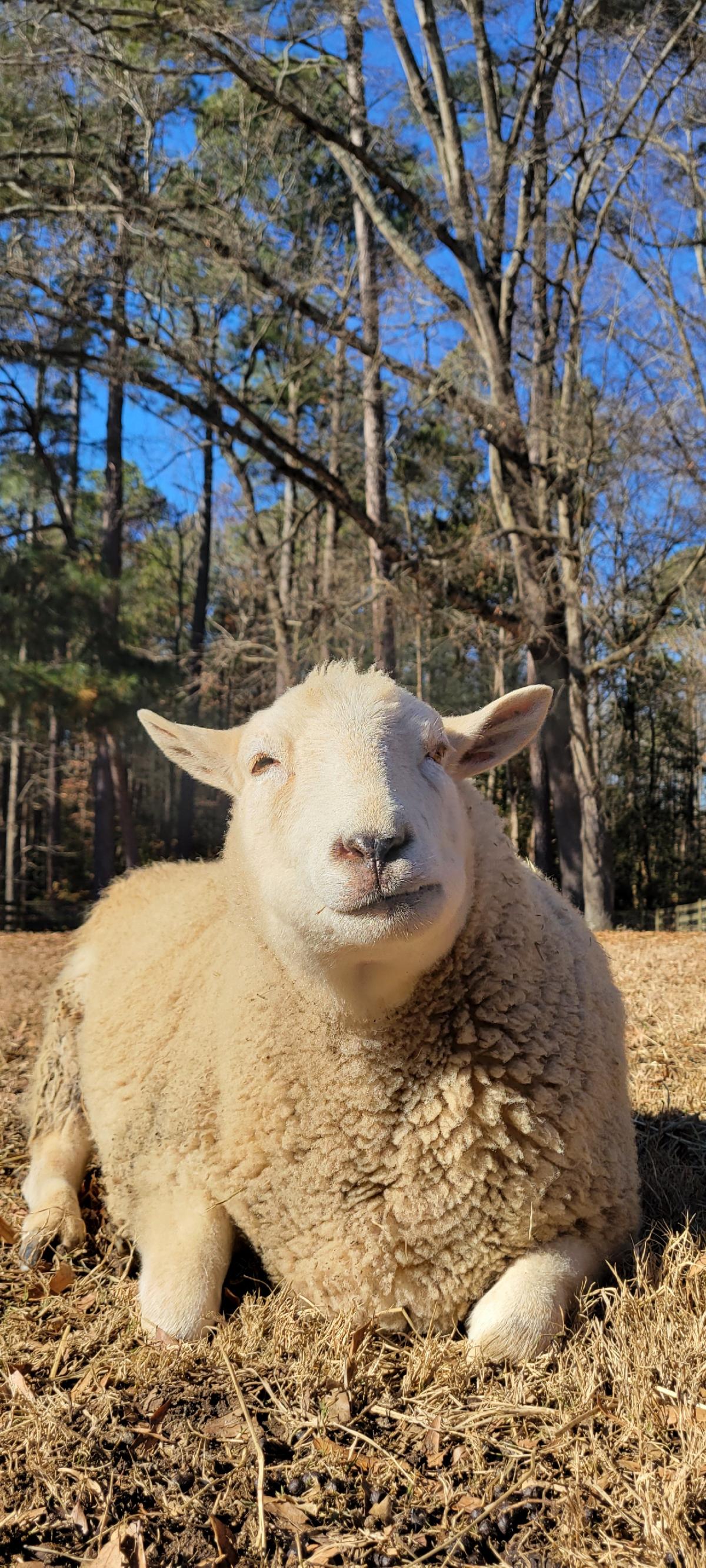
My name is Jasper and I’m one of the Gulf Coast Native Sheep here at Meadow Farm. I am discovering my roots and decided to learn a little Spanish since our breed was brought to America by Spanish colonists. Kim Schmidtmann, the history facility coordinator, had a handout with information about all the heritage breeds here at Meadow Farm. From Todd, our standard bronze turkey, to our Jersey cows, dominque and campine chickens, and of course the infamous Ossabaw pigs, we’re all pretty special. They were giving out this information at Farm Field Day. We had been freshly fleeced and the spinners combed and then made yarn out of our hair! Apparently you can use the yarn to make clothes, which is weird in my opinion, but to each their own I suppose.
Now that spring has sprung, the farms seems to be going loco with programs. Field trips keep both the animal care and history staff busy. Most groups come to see us sheep. Who can blame them? We’re simply the best.
Alex Quash, one of the recreation coordinators, had a program on March 1 for World Pig Day, but no such love for us sheep. National Sheep Day is March 13. Maybe I need to get Emilee, our senior animal care specialist, to pencil that in for next year. The history staff is all in with Homeschool Days and Farm and Forest Friend Fridays once a month this spring.
I’m really excited about all the civic season programming coming this summer. We have some Henrico County board of supervisors members coming to do story times and puppet shows. I have a hoof to pick with them. I think it’s high time to get my face immortalized somehow. Perhaps on a commemorative coin? What’s that? Jim Weinpress, the manager of zoology, says that board members don’t have the authority to mint coins. Maybe I’ll ask one of the history staff when he’s not around.
We’re having a Faces of Freedom: A 160th Juneteenth Celebration here at the farm. This history event is in addition to the big bash they have at Dorey. There will be historic interpreters portraying some African Americans throughout Henrico’s history and what freedom meant to them. Julian Charity, division director of animals and old stuff as he says, has lined up some amazing travelling exhibits throughout the summer that will be making their rounds to all the major recreation centers and even here to Meadow Farm. Give Me Liberty will be travelling through the county from May 19 through June 30. Un/Bound: Free Black Virginians, 1619-1865 will be on display in various places from June 16 through July 28. Founding Frenemies: Hamilton and the Virginians will be in Henrico from July 21 to August 31. I hear the history staff is doing programs with the exhibits as well. Sandy Satterwhite is doing “Women in the Jeffersonian Era” when Give Me Liberty is at Meadow Farm. Mark Shubert is doing a special walking tour called “The Emancipated of Woodland” while Un/Bound is at Dorey. Kara DiComo has a fun program called “Hamiltruth or Hamilfiction” to go with Founding Frenemies. She’ll do this three times in different locations. I know one Hamiltruth: his name was Alexander Hamilton.
Of course, the event on everyone’s mind is Independence Day. I hear there is going to bigger and better than ever! I saw some staff testing out a giant screen recently. This screen will be used at Juneteenth and July 4. It can even be used for movies I hear.
With so many wonderful offerings, we hope to see you all at Meadow Farm or at one of the other recreation centers soon!
Adios for now!
Jasper the Sheep
(Translation courtesy of Kim Schmidtmann)
| |
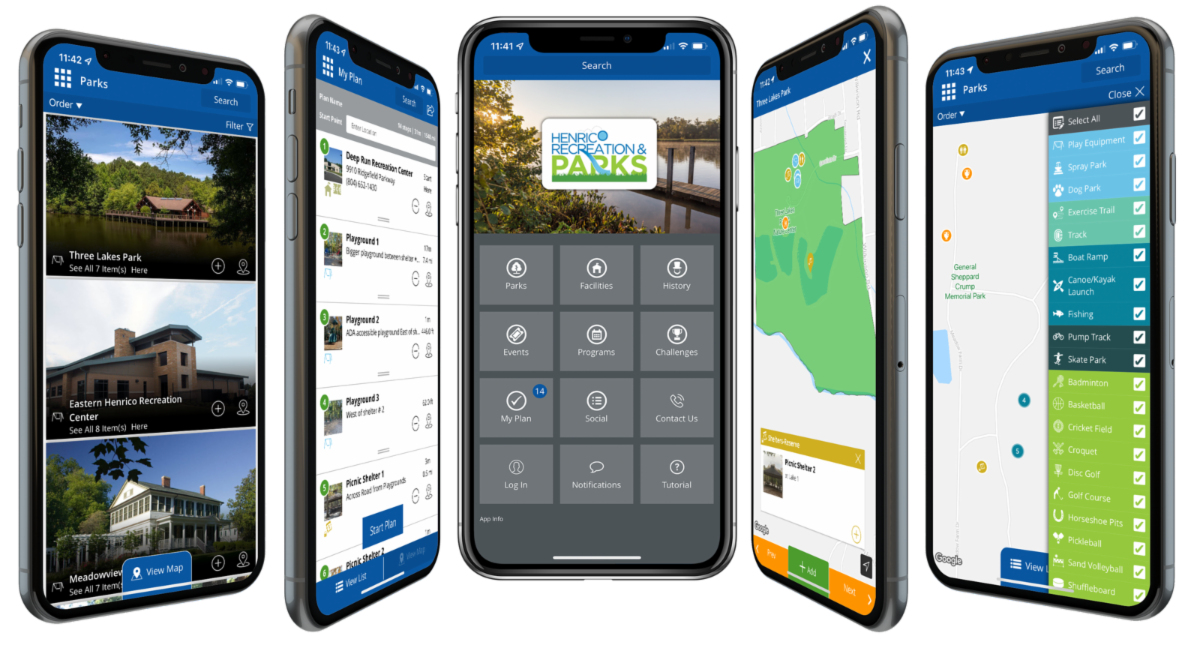
From parks and facilities to events and programs, this is your on-the-go guide to fun. The app also includes our historic sites, markers, and programs!
Features:
- Discover parks and facilities across Henrico County
- View amenities by map overlay or list
- Find playgrounds, shelters, trails, and more
- Filter and search by what’s important to you
- Learn about (and even register for) programs and events
- Earn badges as you take on exciting challenges
| | |
Henrico Rec & Parks | (804) 501-PARK
| |
| | | |