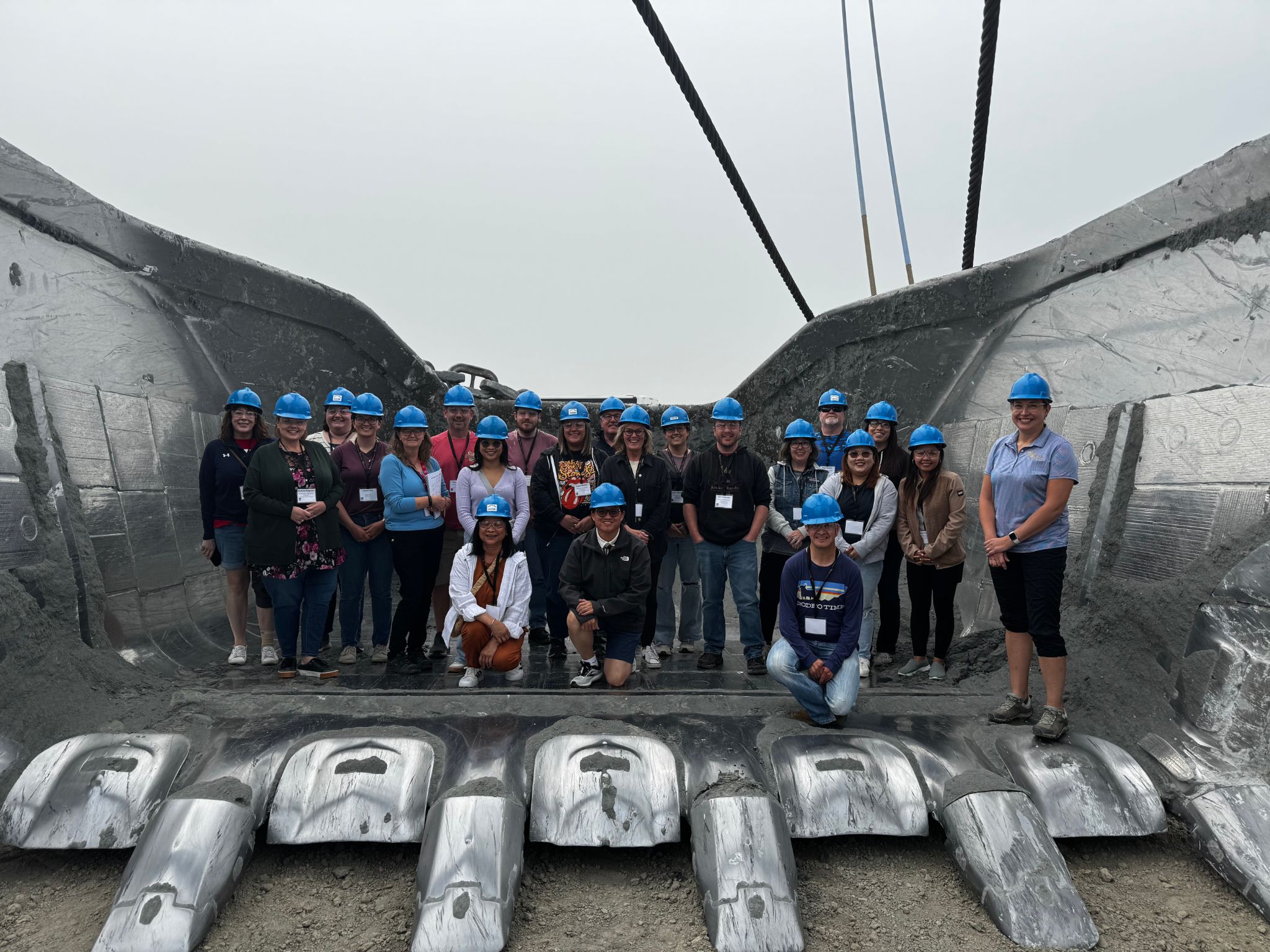
Teachers from North Dakota, South Dakota, Montana and Minnesota took part in the Lignite Energy Council's teacher education seminar in Bismarck last week. Teachers not only learned how lignite coal powers the region, but got to see firsthand how it's mined and processed. |
|
McLean County Okays Rainbow Energy Park
800-Acre Site to Host Data Centers, Other Ventures
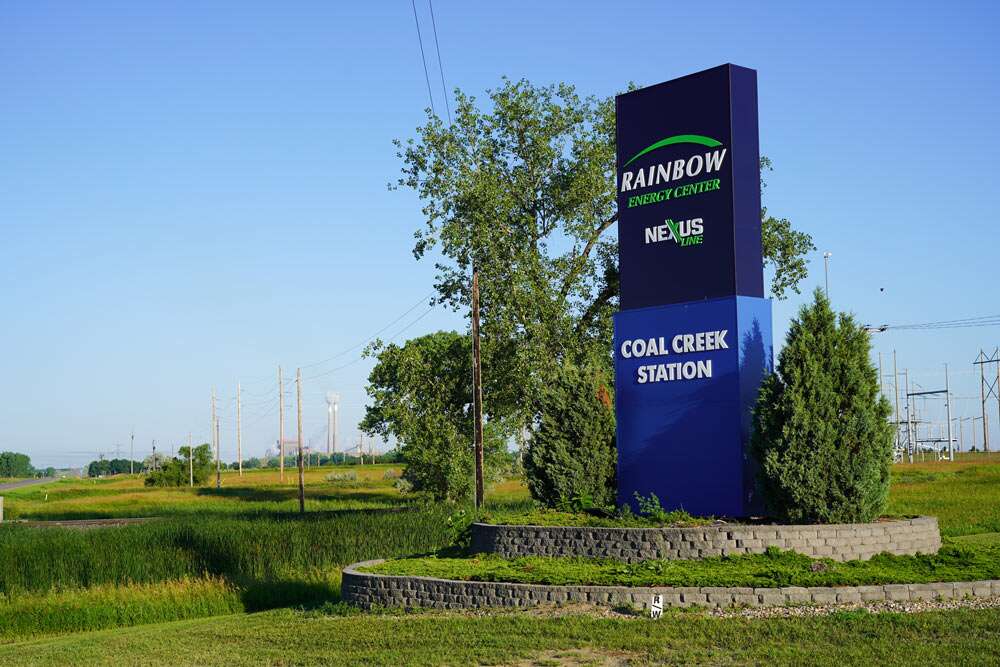
The McLean County Commission has approved a request from Rainbow Energy Center to rezone 800 acres of land near Coal Creek Station from agricultural to commercial, paving the way for an energy park to support data centers and other businesses. The decision, made during this week's commission meeting, fulfills commitments made by the county to facilitate the plant’s sale to Rainbow Energy in 2022. Ladd Erickson, McLean County State’s Attorney, outlined the county’s prior pledges to support an energy park and allow a power line from wind energy sources west of the Missouri River to connect to Coal Creek’s DC line. The commitments were crucial to securing a buyer for the plant, ensuring the continued operation of Coal Creek Station and the nearby Falkirk Mine. “About a year and a half before the ownership change, the commission agreed to support an energy park conceptually,” Erickson said. “This rezoning is part of honoring that commitment.” The 800 acres, located west of the plant’s coal pile, will be developed into outlots for businesses, primarily data centers and potentially cryptocurrency operations, drawing 200 to 300 megawatts of power directly from Coal Creek Station. John Price, Rainbow Energy’s director of projects, confirmed the land, currently owned by Falkirk Mine, will be transferred to Rainbow Energy within days. “This is untouched land, not previously mined, which is ideal for data center foundations,” Price said, noting the site’s proximity to existing commercial roads and a substation reduces infrastructure concerns. Prior to commission action, the county's planning and zoning board raised questions about water supply, traffic, and environmental impacts. Price explained that a McLean-Sheridan water line could support administrative buildings, with further evaluations ongoing for additional needs. A wetland delineation survey ensured no environmental permits are required, and the nearest residences, over two miles away, will be unaffected by noise or traffic. Todd Schreiner, McLean County zoning administrator, detailed the rezoning request, which covers sections in Townships 145 North, Ranges 82 and 83 West. The county reserved the right to deny activities lacking adequate fire suppression or involving hazardous waste storage requiring Department of Environmental Quality permits. Erickson emphasized the rezoning aligns with future regulatory goals, particularly for managing lithium battery risks in data centers. “We’re working on county-wide zoning rules for battery farms and data centers, but this site’s private sector solutions address our concerns,” he said, citing Rainbow’s intention to avoid fire risks that could disrupt plant operations. Commissioners noted the rezoning will shift the land’s taxable status to commercial in 2026, increasing revenue potential as structures are built. Building permits will be required for outlots, but further rezoning approvals are not needed. The energy park is separate from a previously discussed wind energy project and aims to improve Coal Creek’s financial viability by selling power on-site, offsetting inefficiencies from competing against subsidized energy sources. Rainbow Energy is negotiating with multiple businesses to fill the 800 acres, with development expected to bring heavy truck traffic to the site via existing roads. The commission’s approval marks a step toward economic diversification in McLean County while supporting the region’s energy infrastructure. |
|
Steady Production for ND Oil Industry
Plenty of Investment Interest in North Dakota
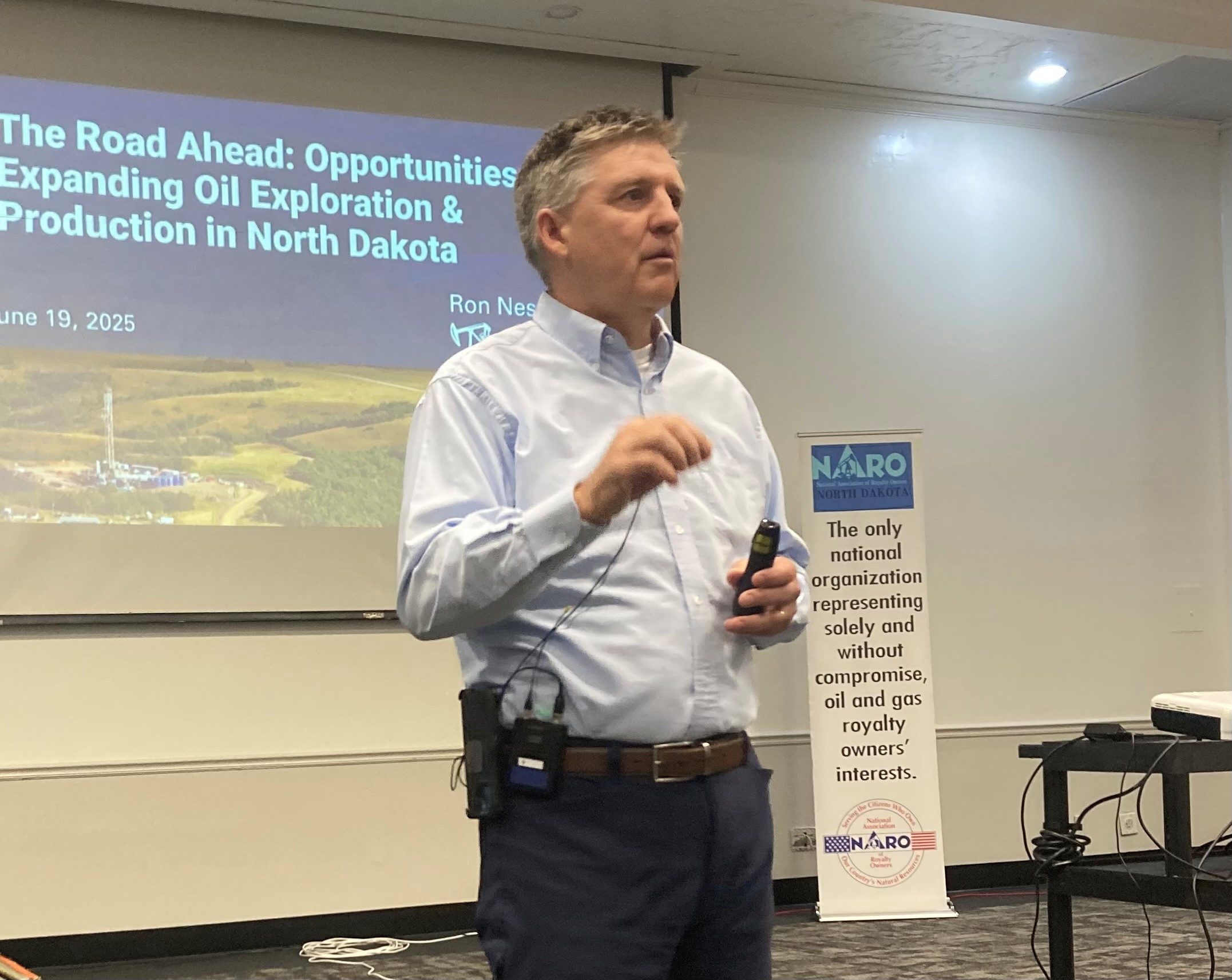
The North Dakota oil and gas industry is set to maintain steady production despite global geopolitical upheavals, with new technologies and favorable market conditions fostering cautious optimism, according to Ron Ness, president of the ND Petroleum Council. Speaking June 19 at the annual conference of the North Dakota chapter of the National Association of Royalty Owners in Bismarck, Ness highlighted the resilience of oil markets and the state’s strategic role in navigating challenges. Ness pointed to recent escalations in the Middle East, particularly Iran’s retaliatory actions against Israel, as a catalyst for renewed focus on domestic production. “When you hit Iran directly, it moves oil markets,” he said, noting that global instability has finally disrupted the relative price stability of the past four years. Despite fluctuations driven by conflicts in Ukraine, Gaza, and elsewhere, Ness emphasized that American oil production, led by regions like North Dakota’s Bakken Formation, remains a critical buffer for global markets. The Bakken produced its five billionth barrel last year and supports more than 63,000 jobs in North Dakota, Ness said. The industry contributed $4.5 billion in state taxes in 2023, with total tax collections exceeding $6.2 billion in the last biennium, funding infrastructure, water projects, and property tax relief across the state. “Oil and gas taxes don’t just stay in western North Dakota,” Ness noted. “They benefit every county.” Ness predicted flat production in the Bakken as major operators prioritize stability to avoid reporting declines to Wall Street. However, he highlighted a shift in market sentiment, with the “drill, baby, drill” mantra gaining traction over the past nine months. This has spurred renewed interest from investors, particularly in Divide County, where previously unleased minerals are now attracting capital. “There’s money that wants to pour into oil and gas,” Ness said, citing discussions with investment bankers in Dallas. Technological advancements are also unlocking new potential. Ness described innovative drilling techniques, such as “U-turn” and “box” wells, which allow operators like Chord Energy to access stranded minerals in one-mile spacing units. These methods, combined with longer three- and four-mile laterals, maximize resource recovery. “The technology I saw yesterday (near Mandaree) blew me away,” Ness said, adding that such innovations could extend the life of the Bakken, where 13,000 of 20,000 wells are now low-producing “stripper wells.” Ness also outlined legislative successes from the recent session, including a $25 million investment in the Oil and Gas Research Council to support enhanced oil recovery (EOR) projects. A new bill, backed by U.S. Senators John Barrasso, Kevin Cramer, and Cynthia Lummis, aims to level the playing field for CO2 used in EOR by eliminating a $25-per-ton gap favoring CO2 sequestration. “If we crack the code on CO2, we can mobilize more oil,” Ness said, projecting long-term benefits for mineral owners. Despite past concerns about access to capital, Ness said the industry is now attracting investment, particularly for smaller operators exploring non-Bakken formations. HB 1483, which reduces oil extraction taxes for non-Bakken wells, is expected to spur activity in zones like the Madison and Red River formations. The 2025 Legislature also enacted SB 2397, which provides a tax incentive for innovative technology in existing Bakken spacing units. Addressing audience questions, Ness acknowledged that capital constraints two years ago drove mergers and acquisitions, but he expressed confidence in the current market. On CO2 sequestration, he stressed the need for education to counter misconceptions, noting that EOR aligns with practical energy goals rather than “Green New Deal” rhetoric. Ness concluded by emphasizing community integration, citing a Killdeer panel where locals declared, “There’s no ‘industry’ and ‘locals’ anymore. They is us.” The industry’s 82% approval rating in North Dakota, bolstered by initiatives like planting 106,000 trees this year, underscores its deep ties to the state. As North Dakota celebrates 75 years of oil production next year, Ness said the focus remains on sustaining output and leveraging policy and technology to secure the next 5 billion barrels. “The clock is ticking,” he said, “but we’ve got the wind at our back.” |
|
ND Oil Industry Has Additional Potential
Production Boost from Emerging Technology
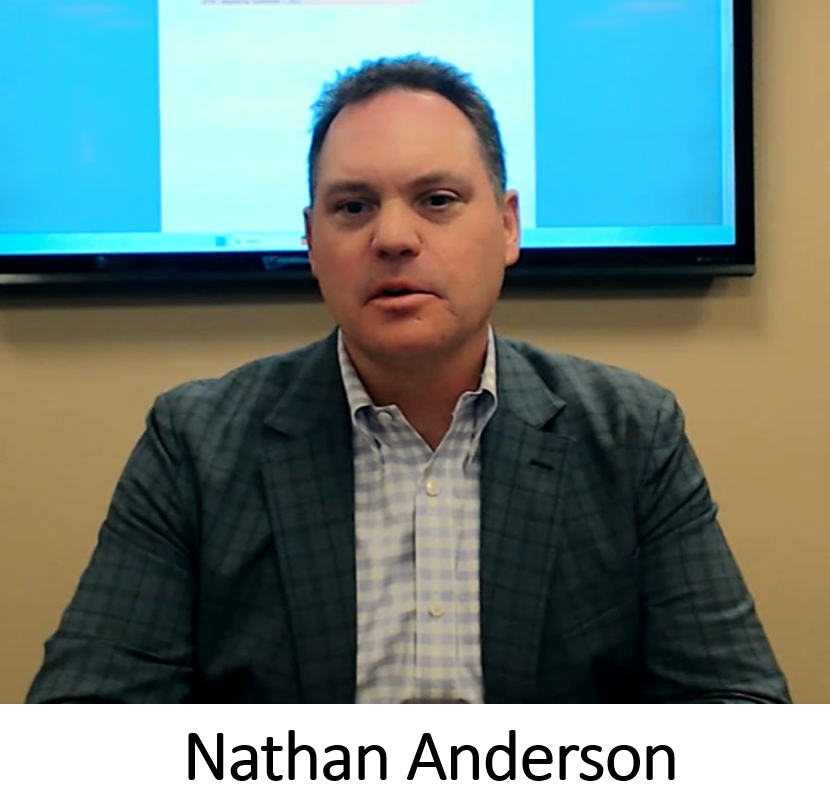
North Dakota’s oil industry has significant untapped potential driven by emerging technologies and a substantial resource inventory, according to Nathan Anderson, director of the North Dakota Department of Mineral Resources. Speaking at this week's meeting of the North Dakota chapter of the National Association of Royalty Owners, Anderson highlighted an estimated 13 years of drilling inventory remaining in the Bakken Formation, even at current rig counts hovering around 30. He emphasized that higher oil prices and advanced drilling techniques, such as three- and four-mile laterals, could unlock additional resources in less-developed “tier two” and “tier three” areas of the basin. “There’s a tremendous amount of resource still out there,” Anderson said, noting that over 10,000 potential well locations exist in tier-three acreage alone. He added that operators tend to focus on core areas during low oil price environments, but expand to outer regions when prices rise, as seen with the current $74 per barrel. Anderson showcased the growing trend of extended lateral wells, citing examples northwest of Tioga and north of Halladay. He also discussed the potential for development in the upper and middle Three Forks formations and the Madison formation in southwest North Dakota, where operators are showing optimism. A notable innovation Anderson highlighted is U-shaped laterals, an emerging technology that reduces surface disturbance and improves economics. He referenced a project from his prior role in the Permian Basin, where a multi-well U-shaped pad increased efficiency by combining four single-mile wells into two vertical sections with extended laterals. “This is a way to take a single-mile lateral that might not make sense economically and turn it into a two-mile lateral,” he said, noting increased permit applications for such designs in North Dakota. Addressing unit development, Anderson explained how DMR evaluates spacing unit applications to protect royalty owners’ rights. He presented an example where creating a four-mile unit across partially developed sections could unfairly distribute oil shares, underscoring the department’s diligence in ensuring equitable orders. Oil price volatility remains a challenge, Anderson said, with prices fluctuating between $60 and $77 per barrel in the past month due to geopolitical tensions, including the ongoing Israel-Iran conflict. This volatility has led operators to scale back capital development, with indications of lower rig counts and frac crews over the summer. However, he said the current $74 price may prompt operators to maintain activity levels. Anderson also provided context on global oil dynamics, noting that U.S. production surpassed Saudi Arabia and Russia in 2018, reaching 13.5 million barrels per day. Global demand, at 103 million barrels daily, remains balanced with supply, driven by population growth and sustained need for oil and gas. “The idea that oil and gas is going away makes no sense to me,” he said. In North Dakota, production stands at 1.19 million barrels of oil and 3.43 billion cubic feet of gas per day, with McKenzie County accounting for 30% of the state’s output. Anderson expects development to expand in counties like Burke and Divide, diversifying production beyond the top four counties, which currently contribute 97% of output. Looking ahead, Anderson said the state’s budget forecasting group, of which he is a part, has adjusted oil price projections to $62 for the first year and $59 for the second, down from earlier estimates, to account for market dips. However, with prices now at $74, he anticipates higher-than-expected revenues by the end of the biennium in June. |
|
EOR Could Unlock Billions More Barrels
Neset: 86-to-88% of ND Oil Still in the Ground
Kathleen Neset, owner of Neset Consulting in Tioga, told members of the ND chapter of the National Association of Royalty Owners this week that enhanced oil recovery techniques could significantly boost oil production in the state’s Bakken Formation, potentially adding another billion or more barrels to output. Speaking at the group’s conference in Bismarck, Neset highlighted the potential of improved oil recovery methods, such as carbon dioxide (CO2) injection, to extract more crude from the Williston Basin’s tight rock formations. She noted that current recovery rates in the Bakken range from 12% to 16%, leaving as much as 88% of the oil trapped underground. “We’ve found the oil. The hardest part is done,” Neset said, holding up a sample of Bakken rock. “Now, how do we get more than 14% out? The size of the prize is huge.” Neset explained that CO2 injection, already used in Texas since 1974 and in Saskatchewan's Weyburn oil field since 2000, alters the oil’s properties, making it flow more easily through tight rock. The process also allows for CO2 utilization, with some of the gas remaining underground and some recycled for further use. She cited partnerships between oil companies, the Energy & Environmental Research Center, and other labs as key to advancing EOR techniques. “If we could increase recovery by just 20%, we’re talking about another billion barrels from the Bakken alone,” Neset said, referencing the formation’s five billion barrels produced through June 2024. Neset also addressed broader energy issues, emphasizing the role of fossil fuels in powering the nation and supporting North Dakota’s economy, including its multibillion-dollar Legacy Fund. She described a recent visit to a gas-to-grid site near New Town, where raw gas from oil wells is converted into electricity for the grid, reducing carbon intensity and adding value locally. “We’re taking that asset and using it right here in North Dakota,” she said. “It’s like turning our wheat into flour instead of shipping it out.” Addressing concerns about energy infrastructure, Neset acknowledged “not in my backyard” sentiments but urged landowners to consider the greater good, drawing parallels to rural electrification in the early 20th century. She noted fair compensation for landowners and programs like ombudsman services to negotiate with energy companies. Neset closed by emphasizing the balance between energy production and environmental responsibility, noting petroleum’s role in everyday products like medical supplies and plastics. “Life without oil? Think about the medications for your grandson in the hospital,” she said. “We can produce crude oil, manage carbon intensity, and move forward.” |
|
CO2 Sequestration Advancing in ND
State Has Nine Approved Storage Facilities
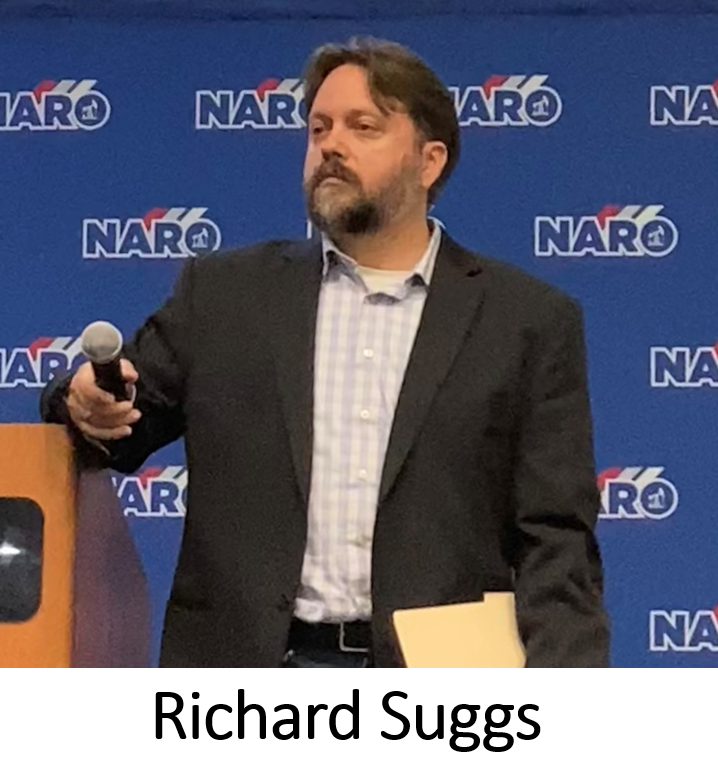
North Dakota is making significant strides in carbon dioxide (CO2) sequestration, with nine approved storage facilities and three actively injecting CO2 underground, according to Richard Suggs, Petroleum Resource Geologic Analyst with the North Dakota Department of Mineral Resources. Speaking at the annual conference of the North Dakota chapter of the National Association of Royalty Owners this week, Suggs outlined the state’s Underground Injection Control (UIC) Class VI program, which regulates the long-term storage of CO2 to mitigate environmental impact. The UIC Class VI program, mandated by the federal Safe Drinking Water Act, allows states to seek primacy over CO2 sequestration. North Dakota gained Class VI authority in 2018, becoming a leader in the field. “We established CO2 sequestration rules before the federal government finalized its rules in 2010,” Suggs said. The state’s two-stage permitting process requires approval for a storage facility before injection wells can be authorized. Currently, North Dakota has nine approved storage facilities with a total capacity of nearly 625 million tons of CO2 over their operational lives, or 32.3 million tons annually if all are active. Three facilities - Red Trail Energy, Blue Flint, and Dakota Gasification Company - are operational. Red Trail, an ethanol plant near Richardton, began injecting CO2 in June 2022 and has stored about 500,000 tons. Blue Flint, another ethanol facility, started in October 2023 with 250,000 tons injected. DGC, the synfuels plant near Beulah, has injected over two million tons since February 2024 using six rotating injection wells. Six additional facilities, including three owned by Minnkota Power Cooperative and three by Summit Carbon Solutions, are approved but not yet active. Suggs noted that 10 to 15 more facilities, potentially requiring 15 to 20 wells, are under consideration. Exploration is ongoing for projects like ONEOK’s Roughrider project and Cerilon’s Gas to Liquids plant near Trenton, as well as discussions about a direct air capture facility near Glen Ullin. The state’s sequestration efforts focus on the Broom Creek formation, though one facility targets the Black Island Deadwood formation. Suggs emphasized rigorous geologic evaluations to ensure CO2 remains permanently underground, well below freshwater zones like Fox Hills. “We validate operator data to confirm with reasonable expectation that the CO2 stays underground,” he said. Addressing landowner concerns, Suggs acknowledged vocal opposition, primarily from landowner groups, at public hearings. Key issues include fears of pipeline or well failures, a lack of public access to dispersion models due to national security concerns, and questions about fair compensation and CO2 containment. Despite opposition, Suggs noted that approved facilities have secured at least 79.5% landowner consent, with many exceeding 90%. North Dakota law allows the state to include non-consenting pore space owners in a facility if at least 60% of owners agree, as pore space is owned by surface owners and cannot be severed. Suggs highlighted the economic potential of CO2 sequestration, particularly in coal country, but stressed the state’s commitment to safety and transparency in managing the growing industry. |
|
North Dakota Has Rare Earth Potential
Serious Opportunity Amid Supply Concerns
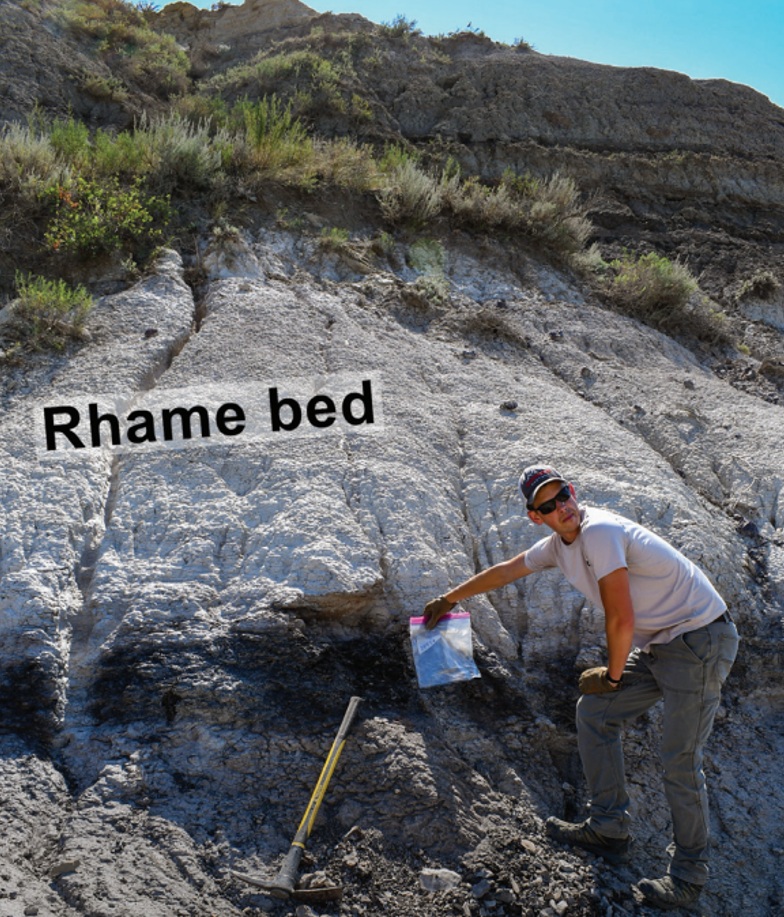
The state could play a critical role in reducing U.S. dependence on China for rare earth elements and other critical minerals essential for modern technology. Speaking at the annual conference of the North Dakota chapter of the National Association of Mineral Owners, Levi Moxness, a geologist with the ND Department of Mineral Resources, emphasized significant progress in identifying economically viable rare earth deposits in North Dakota’s lignite coal basins since his last address to the group in June 2023. “A lot has happened in this field over the last two years,” he said, citing recent headlines about China’s export restrictions on gallium, germanium, and rare earths, which have heightened global supply chain concerns. Rare earth elements, including scandium, neodymium, and dysprosium, are vital for manufacturing smartphones, wind turbines, F-35 fighter jets, and nuclear submarines, Moxness said. He noted that China has dominated the global market since the U.S. ceased most domestic production in the 1980s. “They’ve flexed their muscle,” he said, referencing China’s April 2025 export ban on rare earths, which has left the U.S. scrambling to secure alternative sources. Moxness highlighted North Dakota’s potential to fill the gap, pointing to research by the North Dakota Geological Survey that began in 2014. Unlike traditional hard rock deposits, the state’s lignite coal has shown promise for accumulating rare earths at potentially economic levels. Two 2023 reports identified specific stratigraphic horizons in North Dakota with concentrations rivaling the world’s best coal-based deposits. Despite a setback when a proposed $250 million federal extraction facility grant went unfunded, Moxness remains optimistic. “We’re hoping they’ll repackage that grant in the next few months to a year,” he said. In the meantime, the Geological Survey’s drilling program last fall confirmed high concentrations of rare earths in formations like the Bear Den member of the Golden Valley formation in Dunn County and the Rhame bed in Stark County. Some samples showed concentrations up to 10 times the Department of Energy’s threshold for promising deposits. “We drilled 53 holes last fall to show industry you can reliably predict and find these deposits,” Moxness said, adding that the survey plans to drill another 50 holes over the next two years to refine its exploration model. Results from the latest drilling are set to be published soon, with a comprehensive report expected within a month, accessible via the Department of Mineral Resources website. Moxness urged industry partners to explore North Dakota’s coal basins, suggesting that extraction facilities could be built near existing lignite mines to combine feedstocks efficiently. “This is an exciting time,” he said. “North Dakota could really play a role in reducing the nation’s strategic dependence on China for these critical minerals.” Click here to learn more about the ND Geological Survey's quest for rare earth minerals. |
|
Understanding ND's New Property Tax Caps
Local Leaders Face Steep Learning Curve
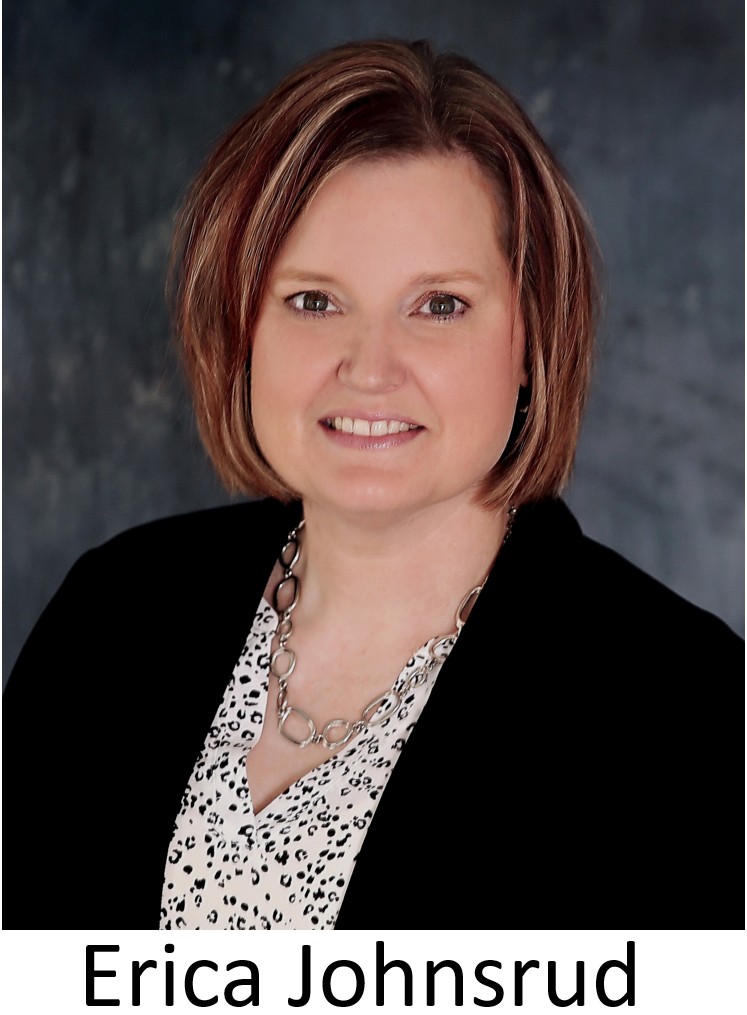
Special to WDEA: McKenzie County Auditor/Treasurer Erica Johnsrud shares her insight on what’s ahead. As new property tax caps go into effect across North Dakota, local governments are bracing for a year of learning, adjustment, and increased collaboration. McKenzie County Auditor/Treasurer Erica Johnsrud, who has served in her role since 2017, is among hundreds of local leaders preparing for significant changes. Johnsrud, elected in 2018 and 2022 after serving 3.5 years in the office prior to her appointment, said the 3% cap on property tax increases was no surprise following the failed Measure 4 ballot initiative last fall. “During that debate, citizens statewide voiced frustration over rising property taxes,” she said. “After the measure failed, I think caps were almost inevitable. Legislators were hearing about property taxes more than any other issue on the campaign trail.” While property tax decisions remain local, driven by counties, cities, schools, and other districts, the legislature’s move adds a new layer of complexity to budgeting. According to Johnsrud, the toughest hurdle may be in the math. “The calculations are the most challenging part,” she said. “Some levies, like those for school tuition or debt payments, are exempt from the cap. That means we have to know exactly where to find financial details and interpret them correctly. There’s going to be a lot of information-sharing between auditors, tax directors, and other subdivisions.” This week, more than 700 local officials from across North Dakota participated in a tax cap seminar, hosted by the North Dakota Association of Counties, the North Dakota League of Cities and others, to prepare for the rollout. Johnsrud said three main takeaways stood out: communication, timing, and procedural changes. With some financial data not available until mid-to-late July and a preliminary budget deadline of August 10, officials will be operating under pressure. Residents can also expect changes. Taxpayers will receive budget hearing notices in August rather than estimated tax statements. In the spring, all property owners, not just those with significant valuation changes, will receive notices. And while political subs may opt out of the cap, that can only happen via a general election, the first of which won’t occur until November 2026. Johnsrud emphasized that while some residents may see a tax reduction, they may also notice fewer services. “It is a bit of a catch 22 – citizens are demanding more services but those services require funding to become a reality and sometimes increased property taxes was the only way to provide those services,” she said. “Costs are rising for wages, equipment, and supplies. Local leaders will have to make hard decisions about priorities.” Despite the challenges, Johnsrud is optimistic. “Every legislative session brings change. What matters is how we respond. We’re working hard now to understand this law and get it right the first time.” |
|
Basin Gearing Up to Build Bison Station
$4 Billion Gas Generation Planned Near Epping
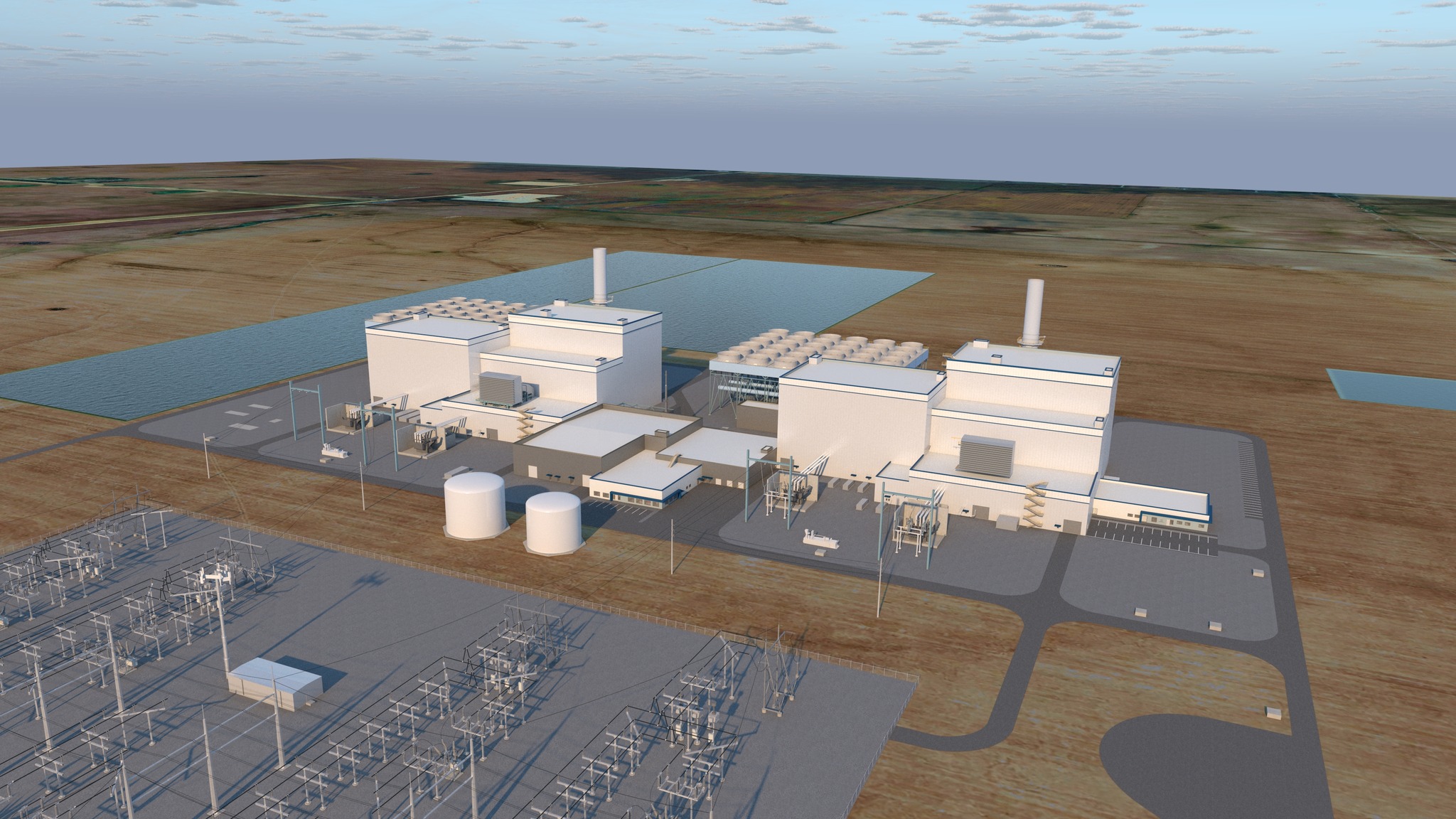
Basin Electric Power Cooperative is moving forward with plans to construct the Bison Generation Station, a $4 billion project featuring two 735-megawatt combined cycle gas turbines. Structural Engineering Supervisor Chris Bauer provided an update on Basin's plans at a meeting of the North Dakota chapter of the National Association of Royalty Owners. The facility, to be located between Ray and Epping in Williams County, aims to address the region’s growing energy demands driven by industrial activity, particularly in oil and gas development. Bauer outlined Basin Electric’s strategy to meet a projected 1,000-megawatt load growth by 2030, as indicated in the cooperative’s 2025 load forecast. The Bison facility, expected to be fully operational by 2030, will contribute nearly 1,500 megawatts to the grid, making it one of the largest projects Basin has undertaken since the Laramie River Station was built in Wyoming in 1982. The Bison facility will utilize Mitsubishi 501 JAC combustion turbines and Toshiba steam turbines, producing approximately 435 and 300 megawatts per unit, respectively. The combined cycle design enhances efficiency by capturing waste heat from gas combustion to generate steam, which powers additional electricity production. The plant is expected to consume an average of 190 million cubic feet of natural gas daily, supplied through a 24-inch pipeline via an agreement with WBI Energy. Bauer emphasized the project’s proximity to fuel sources in western North Dakota as a key factor in site selection. To accommodate the region’s harsh winters, most equipment will be housed indoors to ensure reliability and worker safety. The 240-acre site will include a large substation connecting to both 230 kV and 345 kV transmission systems, evaporation ponds for wastewater management, and air-cooled condensers to minimize water use. Bauer noted the facility will be a zero-discharge site for wastewater, with water sourced from Northwest Rural Water and treated to meet stringent requirements. Construction is set to begin in late August 2025, pending regulatory approvals, with foundation work starting in 2026 and major equipment deliveries scheduled for the same year. The first unit is expected to be operational in 2029, with the second following in 2030. The project involves extensive collaboration across Basin Electric’s departments, including engineering, legal, finance, and environmental teams, as well as external consultants. Addressing audience questions, Bauer clarified that the facility is not currently designed for CO2 capture but has space allocated for potential future retrofitting, depending on land availability and geological suitability. Noise mitigation measures, including sound attenuation devices, will ensure compliance with manufacturer guarantees of 85 decibels or less to protect workers and nearby landowners. Bauer also highlighted Basin Electric’s broader energy strategy, which includes repowering wind farms near Minot, ND, and White Lake, South Dakota, in 2026 and 2027, respectively, and expanding transmission infrastructure to access additional market resources. The cooperative operates over 2,600 miles of transmission lines across a service territory spanning from Canada to New Mexico. |
|
Public Forum Highlights Energy Reliability
Touts Stronger Energy Policy and Budget Cuts
U.S. Rep. Julie Fedorchak put energy reliability front and center during her third statewide Fedorchak Forum last week, warning North Dakotans about capacity shortages tied to premature retirements of baseload power plants. “If we do not have reliable, affordable power, our economy will shut down and our communities will be very unsafe,” Fedorchak said, citing concerns with Midcontinent Independent System Operator (MISO) capacity. She called for slowing plant retirements until new resources are available, streamlining grid interconnection delays, and encouraging innovation in technologies like geothermal energy. Fedorchak also reaffirmed her free-market approach to energy policy, voicing support for phasing out long-standing federal tax credits for wind and solar. “They’ve worked. They've brought down costs,” she said. “But it's time to eliminate them and let the market take over.” The forum also offered constituents a detailed look at Fedorchak’s support for the “One Big Beautiful Bill,” a sweeping budget reconciliation package. She said the bill combines $3.7 trillion in tax relief with $350 billion in border and military investments. With $1.7 trillion in spending cuts and $2.6 trillion in projected growth-driven revenue, the legislation would reduce the federal deficit by $200 billion, according to Fedorchak. “This is step one,” she said. “One piece of getting our budget under control is growth.” Key provisions include tax deductions for seniors earning under $75,000 (or $150,000 for couples), expanded border security funding, including for North Dakota’s northern border, and Medicaid reforms focused on work requirements for able-bodied adults. Fedorchak clarified that Social Security and Medicare benefits remain untouched. Fedorchak touched on workforce and immigration concerns, backing legal immigration reforms to meet labor needs in agriculture and manufacturing, and discussed Job Corps performance metrics and reform efforts. Additional updates included her Landowner Easements Rights Act, a push for regular appropriations over omnibus bills, and continued engagement with North Dakotans through future Fedorchak Forums. “We’re going to do our very best to be part of the solutions,” she said. |
|
NERC Warns of Growing Reliability Threat
Large Loads Like Data Centers Create Challenge
The North American bulk power system (BPS) remained reliable in 2024 despite extreme weather and emerging risks, according to the North American Electric Reliability Corporation’s (NERC) 2025 State of Reliability report. The report highlights a more resilient transmission system, with shorter outages and faster restoration times, but warns of new threats from extreme weather, large load growth, and inverter-based resources (IBRs) such as wind and solar generation. A 2024 incident saw 1,500 MW of data centers disconnect unexpectedly due to a transmission line fault, stressing grid stability. NERC’s Large Loads Task Force is studying these impacts, while the Load Modeling Working Group aims to improve dynamic load modeling. Extreme weather, the leading cause of major outages, drove 27 events in the U.S. and three in Canada, each causing more than $1 billion in losses. Two winter storms and five hurricanes struck in 2024, yet no operator-initiated load shedding occurred, which was a significant improvement over past years. "Industry efforts to combat weather challenges reduced generator outages and natural gas production losses,” said John Moura, NERC’s director of Reliability Assessment and Performance Analysis. IBRs added more than 45 GW of capacity in 2024 but faced issues during grid disturbances, with 10 major events since 2016 causing nearly 15 GW in unexpected output reductions, mostly since 2020. Poor modeling and ride-through issues in solar, wind, and battery storage plants contributed. NERC issued a Level 3 Alert in May 2025 to address IBR performance and modeling. Positive trends emerged in Texas and the Western Interconnection, where battery energy storage systems (BESS) bolstered reliability. Texas added 10 GW of BESS in 2024, with 19 GW planned by year’s end. Mandated frequency support in Texas enabled batteries to provide up to 100% of frequency regulation in some cases. “BESS’s quick response and flexibility are proving beneficial,” said Jack Norris, NERC’s manager of Performance Analysis. The report emphasizes the need for agility as grid transformation continues. While conventional risks decline, emerging challenges require better risk assessment and mitigation. NERC’s findings, detailed in the 2025 State of Reliability Overview and Technical Assessment, offer policymakers and industry leaders data-driven insights to ensure grid reliability. Click here to read or download the report. |
|
ND Energy's Classroom Connection
Bridging Industry and Education
Educators from across North Dakota and neighboring states gathered in Bismarck this week for the 2025 North Dakota Petroleum Council's (NDPC) Teacher Education Seminar, offering an in-depth look at the state's vital oil and gas industry. The four-day seminar, hosted by the North Dakota Petroleum Council, kicked off Monday and ran through Thursday at Bismarck State College's Energy Center of Excellence. The seminar aimed to equip K-12 educators with comprehensive knowledge about industry, enabling them to better inform students about career opportunities and the broader impact of oil and gas. Listen to Petroleum Council President Ron Ness here. Participants dove into various aspects of the industry, from the geological formation of petroleum in the Williston Basin to modern drilling, production, and refining techniques. The curriculum is designed to connect core academic subjects like geology, math, chemistry, and science to real-world applications within the energy sector. A highlight of the seminar included field tours to active drilling rigs and production sites, providing a rare, hands-on understanding of oilfield operations. Experts from industry and state agencies lead presentations and discussions, covering topics such as environmental stewardship, technological advancements, and the economic contributions of the oil and gas sector to North Dakota. Listen to Ness here. This initiative underscores the NDPC's commitment to fostering a well-informed future workforce and public understanding of the energy industry. The program has been a long-standing effort by the NDPC to bridge the gap between industry and education. Over the years, however, Ness has found that gap has started to close naturally, thanks to the oil industry becoming such an engrained part of the state. Listen to Ness here. |
|
Legacy Fund Transparency Website Coming
Public Can Influence How the Earnings are Spent
North Dakota’s Legacy Fund, a cornerstone of the state’s long-term financial strategy, is set to become more accessible to the public with the introduction of a new transparency website, as announced by Jodi Smith, the newly appointed Executive Director of the ND Retirement and Investment Office (RIO), during the ND Petroleum Council’s Teacher Education Seminar this week. The initiative, spurred by HB 1319 passed in the 2025 legislative session, aims to demystify the fund’s operations and expenditures, addressing public demand for clarity on how oil and gas tax revenues are managed. The Legacy Fund was established in 2010 as a constitutional measure to ensure the long-term well-being of North Dakota. Funded by 30% of the state’s oil and gas gross production and extraction taxes, the fund has grown to more than $12 billion, with monthly deposits averaging $55-to-$60 million. Smith, who previously served as the state’s Land Commissioner, emphasized the fund’s role in securing financial stability for future generations. “We’re not using it as a rainy-day fund or to balance the budget,” Smith told seminar attendees. “It’s about ensuring that when oil and gas revenues decline, we have another way to support our government.” The new transparency website, a direct outcome of HB 1319, addresses longstanding public frustration with accessing clear information about the Legacy Fund. Currently, details on investments and spending are buried in dense, 300-page PDF reports on the RIO website, requiring significant effort to navigate. “It’s not reasonable to expect the public to dig through that,” Smith admitted, noting that even she finds the process cumbersome. The website will provide user-friendly data on monthly deposits, investment strategies, and legislative spending decisions, aiming to reduce the complexity to just a few clicks. The Legacy Fund’s earnings, capped at 8% for the 2025-2027 biennium following a legislative adjustment from 7% in 2023, are allocated for specific purposes. For the upcoming biennium, $687 million will be disbursed, with $175 million directed to transportation infrastructure, $102 million to a legacy sinking fund for debt repayment and future capital expenses, and over $400 million for property tax relief under House Bill 1176. This relief includes an income tax credit of up to $1,600, a response to public calls for addressing high property taxes after a failed ballot measure to eliminate them. Smith highlighted the fund’s broader impact, noting that since 2008, North Dakota has collected more than $32 billion in oil and gas taxes, significantly boosting state coffers. The state’s budget has grown from $13.5 billion in 2017 to $19.8 billion this year, despite a population increase of only 100,000. This growth underscores the importance of strategic fund management, especially as oil production faces potential declines. The transparency website also aims to clarify how the Legacy Fund differs from other state funds, such as the Common Schools Trust Fund, which supports education through royalties and taxes from state-owned mineral leases. Unlike the Legacy Fund, which focuses on long-term investments, the Common Schools Trust Fund directly supports schools, distributing significant per-pupil funding due to North Dakota’s low population and high resource wealth. Public engagement was a key theme of Smith’s discussion, facilitated by Alison Ritter, incoming Executive Director of the Western Dakota Energy Association. Using interactive polls, Ritter and Smith gauged attendees’ understanding of the Legacy Fund, revealing a mix of awareness and confusion. Many correctly identified the fund’s purpose as long-term well-being, but questions about spending priorities, ranging from roads to schools to tax relief, highlighted diverse perspectives. Smith encouraged seminar participants to engage with legislators to influence how Legacy Fund earnings are spent. “If you’re frustrated about where the money’s going, talk to your legislators,” she urged, noting that decisions on disbursements, such as some of those favoring eastern counties over western oil-producing areas, are legislative, not RIO’s. The transparency website is expected to launch soon, offering North Dakotans a clearer view of their “People’s Fund” and fostering greater accountability in its management. |
|
Chateau Road Reconstruction Underway
Medora Work to Improve Safety and Traffic Flow
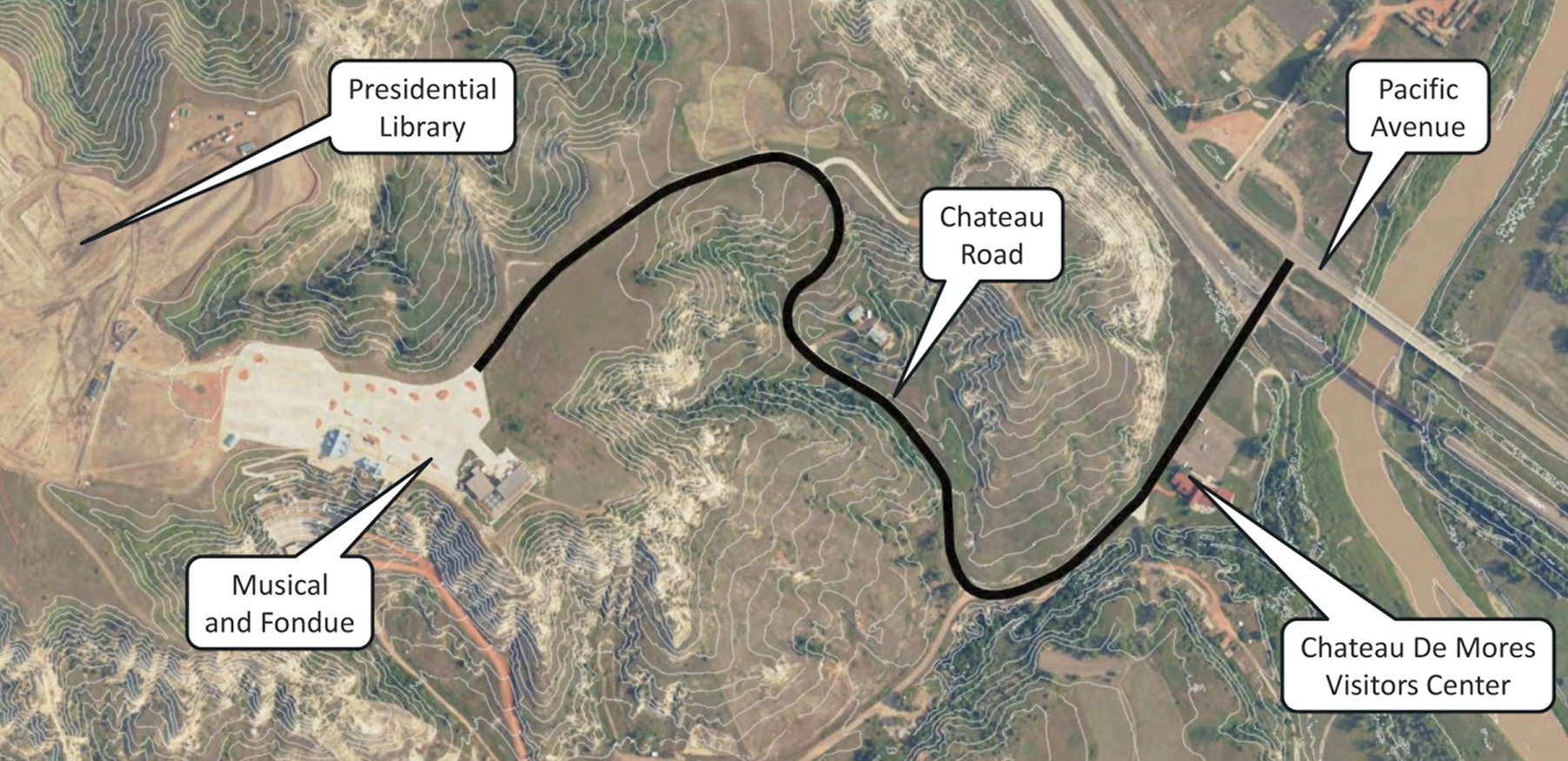
The North Dakota Department of Transportation (NDDOT) launched the Chateau Road Reconstruction project in Medora this month, a significant infrastructure upgrade aimed at enhancing traffic flow and safety along the corridor that leads to the Medora Musical. The project, which builds on improvements to the Medora Business Loop and City Section, is slated for completion by June 2026, weather permitting, according to an NDDOT news release. The initiative, spanning Chateau Road from Pacific Avenue (I-94 Business Loop) to the Theodore Roosevelt Medora Foundation Burning Hills Amphitheater, includes a suite of enhancements designed to accommodate growing traffic demands, particularly with the anticipated opening of the Theodore Roosevelt Presidential Library next year. The library is expected to draw increased visitors to the community, which is adjacent to the South Unit of Theodore Roosevelt National Park. Key improvements include fresh paving, upgraded drainage systems, and enhancements to railroad crossings to ensure smoother and safer travel. A new shared-use path will provide dedicated space for pedestrians and cyclists, addressing safety concerns for non-motorized users. The project also features new signage, a center turn lane to streamline traffic movement, and a roundabout at the intersection of Pacific Avenue and Chateau Road to improve flow, NDDOT officials said. The Little Missouri River bridge will also be widened to include a left-turn lane and a shared-use path, with decorative lighting and landscaped medians planned in select areas to enhance the corridor’s aesthetics. Preparatory work is already underway, with crews focusing on fencing, erosion control, stump removal, and topsoil stripping, according to the NDDOT. These activities are occurring off the main roadway, resulting in minimal traffic disruptions at this stage. However, NDDOT has advised that future phases will involve detours affecting access to popular destinations such as the Medora Musical, Medora Cemetery, and Chateau de Mores. To mitigate impacts during Medora’s peak tourist season, no construction will take place east of East River Road North (park entrance) or west of 6th Street prior to September 3. Traffic management plans include rerouting Pacific Avenue traffic through the north-side lanes of the new roundabout, with Chateau Road traffic connecting to Pacific Avenue on the east side. Pedestrians will be directed along a newly constructed north sidewalk, and 6th Street will be limited to one-way outbound traffic with no entry from Pacific Avenue during certain phases. A “Welcome to Medora” sign, designed in consultation with city council members, will also be installed to enhance the town’s gateway appeal. The project’s timeline and completion remain contingent on weather conditions, with NDDOT coordinating with the Billings County Sheriff’s Department to ensure safe traffic control, particularly during the Medora Musical season. Residents and visitors are encouraged to follow posted detour signs and check the NDDOT website for updates on construction schedules and traffic impacts. Click here to watch a Youtube video about the project. |
|
DOE Reestablishes National Coal Council
Aimed at Maximizing Coal Contribution to Grid
The U.S. Department of Energy announced this week the reestablishment of the National Coal Council (NCC) to provide guidance on coal policy, technology, and markets, according to a notice issued pursuant to the Federal Advisory Committee Act. The council, originally formed in 1984, will resume its role in advising the Secretary of Energy on matters critical to the coal industry and the nation’s energy grid. The NCC’s charter lapsed in November 2021 under the Biden administration, and a proposed replacement, the National Advisory Committee on Coal, was chartered in February 2022 but never appointed members or convened. The reestablished NCC will include representatives from diverse sectors, including coal producers, consumers, transportation providers, technology suppliers, environmental remediation organizations and regional development experts. The move comes amid growing concerns about the reliability of the U.S. electricity grid, with the Department of Energy emphasizing the council’s role in supporting an “all-of-the-above” energy strategy. The reestablishment aligns with President Donald Trump’s Executive Order 14156, which declared a national energy emergency and emphasized coal’s role in meeting rising electricity demand. Michelle Bloodworth, president and CEO of America’s Power, praised the decision. “The reestablishment of the National Coal Council is a welcome and very important step towards maximizing coal’s critical role in our electricity mix and addressing our country’s increasingly unreliable electricity grid," she said. Bloodworth highlighted the council’s historical significance, noting that for 37 years, it “played a critical role in enhancing public-private cooperation around coal electricity and the broader needs of our national power grid.” She criticized the Biden administration’s decision to let the NCC’s charter expire, saying it “deprived the Department of Energy of a critical forum for discussion and collaboration to disastrous effect, as demonstrated by the current rush to delay and reverse planned coal plant retirements.” She expressed support for the DOE announcement. “By reestablishing the National Coal Council, the Trump administration is restoring a common sense, ‘all-of-the-above’ approach to electricity generation that seeks to leverage all of our natural energy resources without picking winners and losers,” Bloodworth said. The reestablishment follows other recent actions, including the Environmental Protection Agency’s repeal of its Carbon Rule, which Bloodworth said reflects “coal’s unique dependability and its importance to meeting soaring electricity demand.” The NCC is expected to convene in the coming months to address pressing energy challenges, including grid reliability and the role of coal in America’s energy portfolio. |
|
WDEA Scholarship Winners Named
Financial Aid Fuels Next Steps
The Western Dakota Energy Association (WDEA) is proud to announce the recipients of its 2025 scholarship awards, recognizing nine outstanding students for their academic excellence, leadership, and commitment to North Dakota’s energy future. This year’s scholarship recipients are: - Md Jakaria, University of North Dakota
- Martin Heberlie, Berthold High School
- Susannah Schug, Williston High School
- Deacon Gackle, Fairview High School
- Samuel Benson, Underwood High School
- Bryce Kadrmas, Dickinson High School
- McKenzie Suko, Alexander High School
- Julia Bonesteel, Alexander High School
- Carson Wyant, South Heart High School
“These students represent the next generation of leaders in North Dakota’s energy sector,” said Leslie Bieber, president of WDEA. “Their dedication to education, innovation, and community service reflects the values that drive the industry forward.” The WDEA scholarships are awarded annually to students pursuing careers in energy-related fields or demonstrating a strong connection to the energy industry. Recipients were selected based on academic performance, career goals, community involvement, and financial need. Md Jakaria, a Ph.D. candidate at the University of North Dakota, is conducting groundbreaking research on lithium recovery from produced water in the Bakken Formation. Martin Heberlie, who overcame a life-changing injury, plans to study mechatronic engineering to improve accessibility technologies. High school seniors like Susannah Schug and Deacon Gackle have demonstrated exceptional leadership in STEM and business. Samuel Benson is pursuing a double major in chemistry and geology, and Bryce Kadrmas plans on becoming a petroleum engineer. Other recipients, including McKenzie Suko, Julia Bonesteel and Carson Wyant, are preparing for careers in healthcare, teaching and electrical line work that support the energy workforce. Each recipient will receive a $1,000 scholarship to support their continued education. Applications for the 2026 scholarship will open in the spring, with winners announced in June of 2026. |
|
Wise Roads Shots of the Week
Powerful Storms Hit the Region
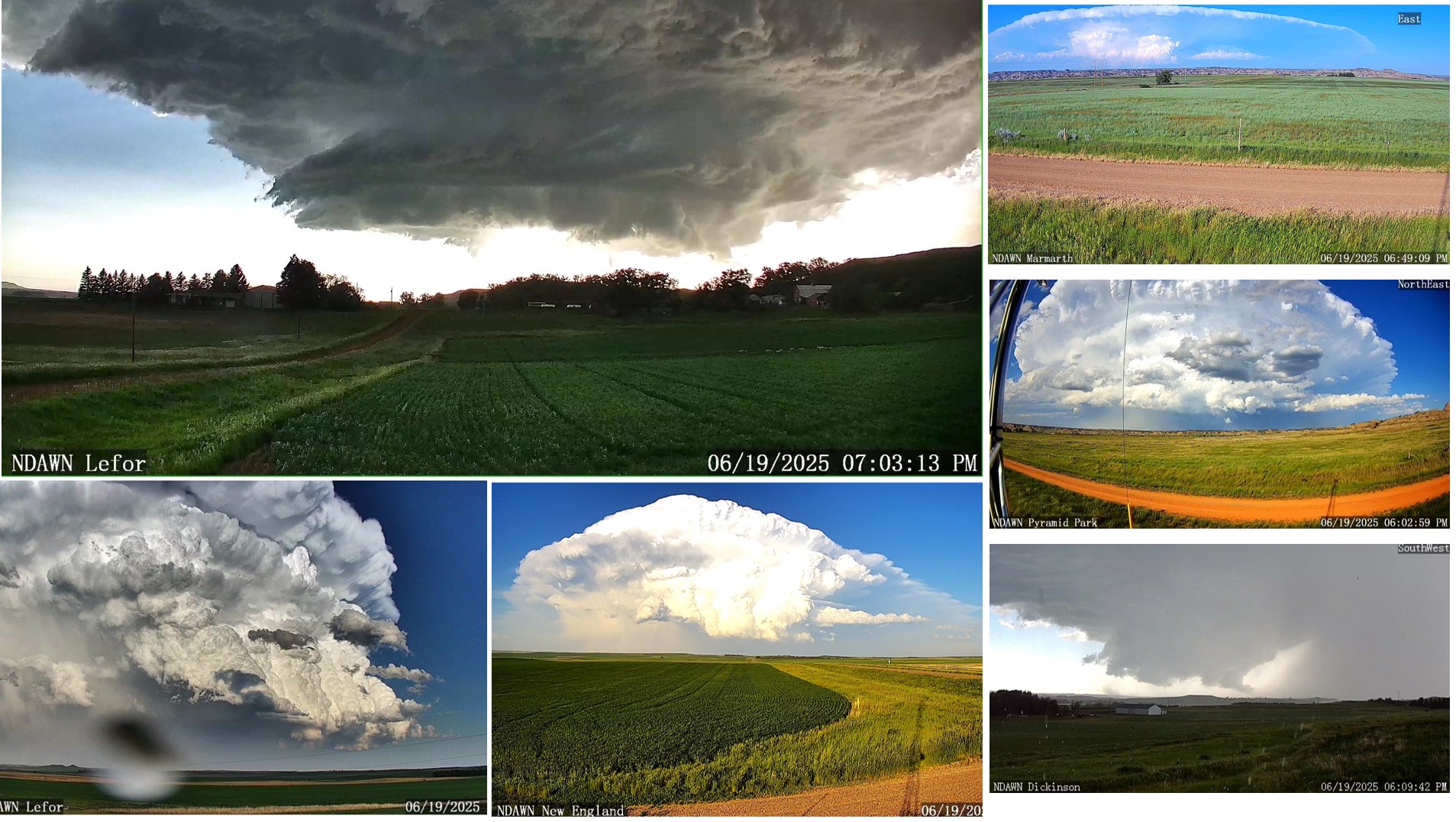
Both power and beauty were on full display this week as damaging storms moved through southwest North Dakota, bringing a confirmed tornado just south of South Heart. Roof and tree damage from the tornado was reported in Stark County, plus the system provided extraordinary images that were captured by our Wise Road cameras. Photos from Wise Roads cameras are updated continuously throughout the daylight hours on the Wise Roads web page. The Wise Roads project (Weather Information System to Effectively Reduce Oilfield Delays and Disruptions) was developed by WDEA to increase the efficiency of the movement of oilfield truck traffic. Most weather stations were placed in the core area of Bakken production, focusing on Dunn, McKenzie, Mountrail and Williams Counties. The project provides more accurate weather information to county road managers, especially about rain events, to minimize the need to impose weight restrictions when gravel roads get wet. It was developed in partnership with NDAWN, which maintains the stations for WDEA. The project was also assisted with a $250,000 grant from the Oil & Gas Research Council.
Fifty new stations have been installed, 39 of which are located in the four core oil-producing counties. Prior to the start of the project, Dunn and McKenzie Counties had just one station each, Mountrail County had three and Williams County had four. Weather station data and high-resolution photos can be found at wiseroadsnd.com. There is also an interactive Google Map that users can access to pinpoint the location of Wise Roads and NDAWN weather stations. Additional information is also available from NDAWN. Featured shots this week are clockwise from upper left: The formation of a mesocyclone is captured by the Lefor camera. This same cell is what dropped the tornado south of Dickinson. By the time the picture was taken, it was no longer a tornado but the lowering is what is referred to as a “wall cloud.” The image captured at Marmarth looks as if an atomic bomb detonated on the horizon. Pyramid Park not only captures the powerful cumulonimbus clouds but also rain. The image from Dickinson shows the moments as the tornado begins to dissipate, while New England offers a thundercloud of its own. Lastly, enough time has passed from the first image from Lefor to show the supercell from a distance. |
|
Quick Connect
• North Dakota challenge to energy resource plan put on pause -- Bloomberg Law
• Denbury reports 228 barrels of produced water spilled in Bowman County -- KX News
• PSC to hold public hearing on Bison Generation Station June 30 -- Williston Herald
• Data center developer considers plans within Bismarck city limits -- Bismarck Tribune
• Data center official says other states offer better incentives than SD -- South Dakota Searchlight
• PSC rejects challenge to power line decision but route still needs approval -- North Dakota Monitor
• Southwest ND biofuels plant, regional growth prompt study on water pipe capacity -- Bismarck Tribune
• New federal estimate of reserves could open more of southwest Wyoming to oil and gas -- WyoFile
• Group of state officials calls on Congress to end CO2 sequestration tax credits -- North Dakota Monitor
• ND Republican Party division apparent as new chair elected in split vote -- North Dakota Monitor
• Trump administration cancels $49 million CO2 capture project at Basin's Dry Fork plant -- WyoFile
• North Dakota's Garrison Dam awarded $24 million for infrastructure upgrade work -- Bismarck Tribune
• $1.8 billion Garrison Dam spillway project to be largest in US Army Corps' history -- Dickinson Press
• State removes lawmaker addresses from website in response to shooting -- North Dakota Monitor
• Twenty-third annual 100-mile rummage sale set in southwestern North Dakota -- Bismarck Tribune
• Minot city manager recommends Michael Frye as next police chief, City Council approves -- KFYR - TV
• Storm damage reports: Shops destroyed at Reeder, grain bins flattened at Hettinger -- Bismarck Tribune
• Tornado causes minor damage southwest of Dickinson, peak wind speed of 97 mph -- Bismarck Tribune
• North Dakota Ag Commissioner lauds resilience of Bakken area farmers -- McKenzie County Farmer
• An emblem of North Dakota pride, Medora Musical turns 60 with surprise visitors -- InForum
• Lawmakers eye improvements for crumbling roads in North Dakota's farm towns -- Minot Daily News
• Settlement reached over lawsuit impacting residents living near Atlas Power Data Center -- KFYR - TV
• Minot Public School District sees 137 student drop in 2024-2025 enrollment numbers -- KX News
• Wahpeton steps up for teachers: Raises despite North Dakota's 'F' for pay -- Wahpeton Daily News
• Current Hazen School Board members Nolan and Wallender reelected to their seats -- Hazen Star
• Beulah teachers to receive 2% salary increase, $500 experience pay in new contract -- The Beacon
• Job Corps partnership with Minot Public Schools on hold; program's future uncertain -- KX News
• Big beautiful coal will be here for many more years despite "green" demonization -- Daily Caller
• Trump administration proposes to open 82% of Alaskan reserve for oil and gas leasing -- Reuters
• US Senate bill would raise value of tax credit to use captured CO2 to produce more oil -- Reuters
• The US Senate can do this one thing to ensure domestic energy dominance -- RealClearEnergy
• Senate Republicans propose $1B tax break for oil and gas producers in fiscal package -- World Oil
• US lacks a coherent and continuing energy plan in race against China for AI supremacy -- Forbes
• Water and power utilities across the US prepare for Iran cyberattacks as conflict widens -- E&E News
• US oil production is shielding global markets from Middle East chaos says API CEO -- Fox Business
• Trump administration plans to finance $120M rare earth mining in Greenland -- Legal Insurrection
• Biden's "gold bars" went to politically-connected orgs over red flags, watchdog finds -- Daily Caller
• EPA gets moving on its push for energy deregulation, plan is coming together -- Manhattan Contrarian
• Physics demonstrates increasing greenhouse gases can't cause dangerous warming -- CO2 Coalition
• What if the basis of the catastrophic global warming scare was a calculated lie? -- Issues and Insights
|
|
Factoid of the Week
On June 21, 2025, the Northern Hemisphere celebrates the first day of summer. At midday, the sun will be directly overhead over the Tropic of Cancer. North American cities along and near the line include Havana, Cancun, Mazatlan and Cabo San Lucas.
|
|
June 23 Bismarck and via Teams
June 25 Medora
June 25 Bismarck
June 26 Bismarck and via Teams
June 26 Bismarck
June 30 Williston
July 9 - 11 Eagle Ridge Golf Course
July 14 Bismarck
July 17 Bismarck and via Teams
July 17 Alexander
July 24 Hawktree, Painted Woods and Prairie West
|
|
Oil prices and rig count June 20, 2025
WTI Crude: $74.93 Brent Crude: $77.25 Natural Gas: $3.89
North Dakota Active Oil Rigs: 30 (Down 1) June 20, 2024 -- 37 rigs |
|
Geoff Simon Editor/Executive Director
|
|
|
|
|
|
|












.jpg)