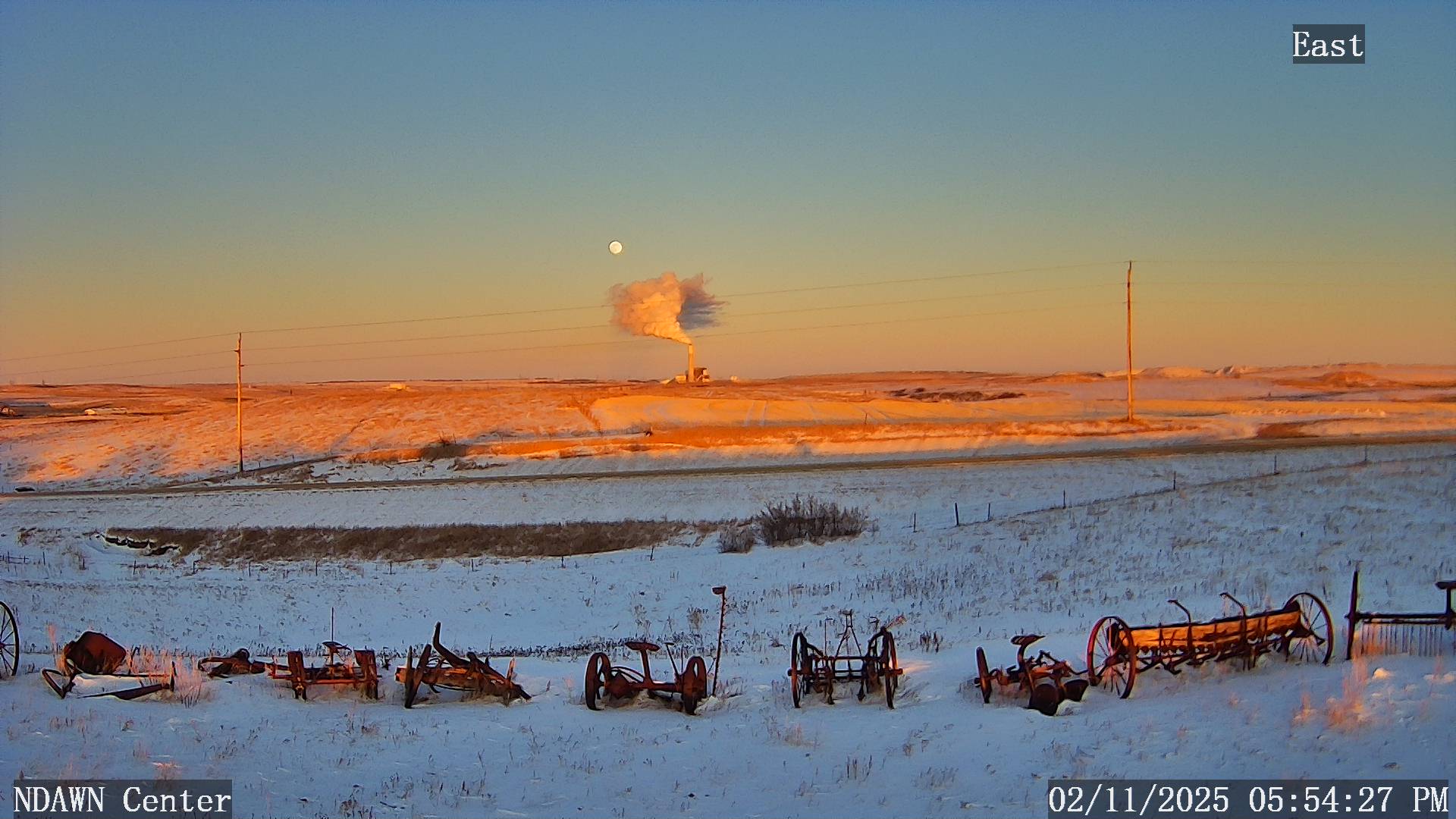
In a stunning photo captured just before sunset last week by the Wise Roads weather station south of Center, the full moon is seen rising over the plume from Milton R. Young Station.
|
|
NDDOT Budget Has Funds for Hwy 85
Senate Allocates $100M for Four-Lane
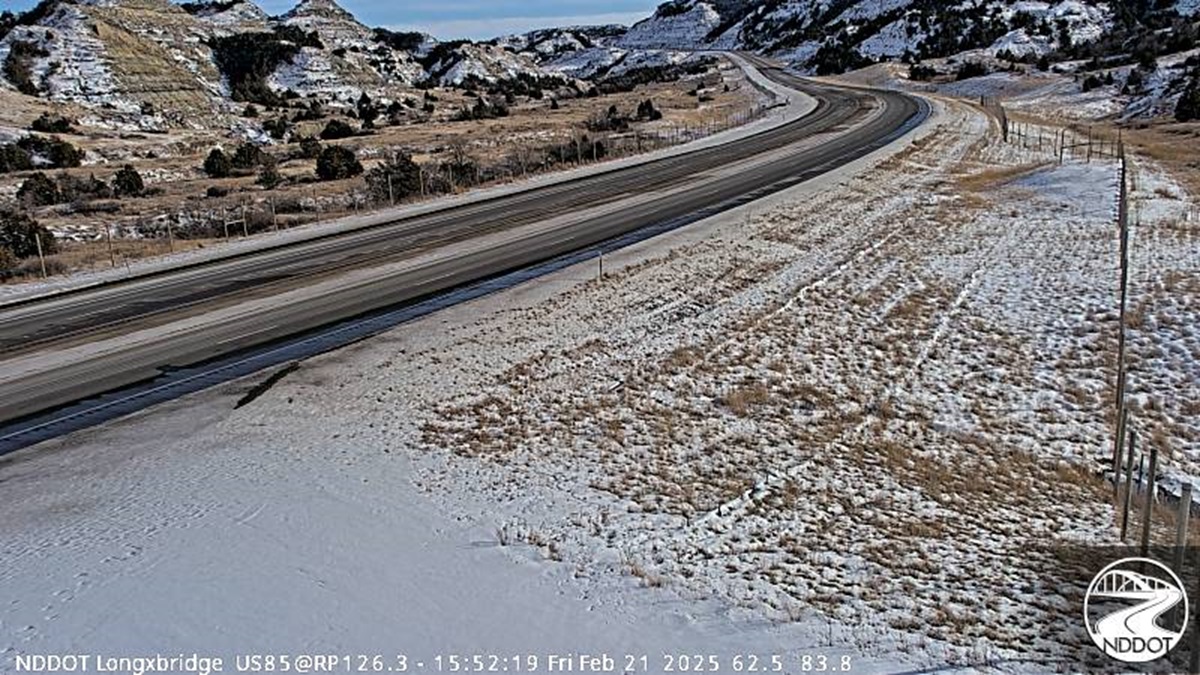
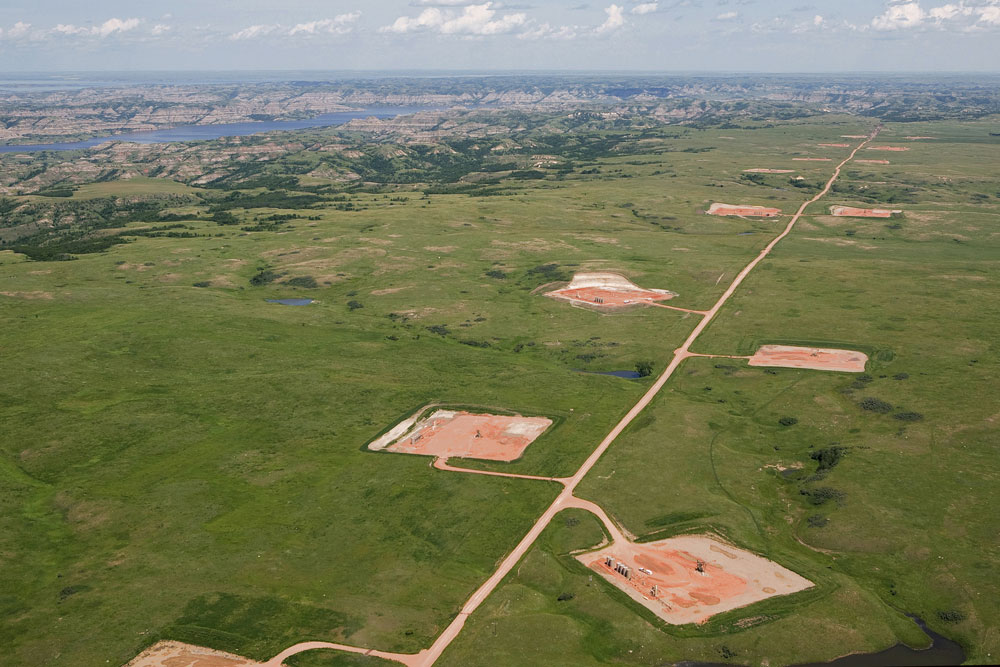
Members of the ND Senate Appropriations Committee voted unanimously this week to approve SB 2012, the biennial budget of the ND Department of Transportation, which includes a $100 million line item to pay for four-laning a six-mile section of Highway 85 south of the LongX Bridge. The state previously received a $55 million federal grant to four-lane about 13 miles of the highway from a point six miles south of the LongX Bridge to the junction with Highway 200. However, the stretch immediately south of the bridge does not qualify for federal funding. Construction in the rough terrain of the Little Missouri breaks is expensive, so does not meet the cost-benefit criteria in the federal grant process. Williston Senator Brad Bekkedahl, who chairs the Senate Appropriations Committee, said the state needs to fund construction of the road through the breaks. If not, he said the highway would be left with a six-mile section of two-lane road, between sections of four-lane highway. Click here to listen to Bekkedahl's comments. The budget bill also includes additional funding for the NDDOT's Flexible Transportation Fund, first authorized by the 2023 Legislature. Jamestown Senator Terry Wanzek said the fund would receive $447 million under the bill's provisions. He said half of that amount would be allocated among four "buckets" earmarked for cities, counties, townships and bridges. Funding includes $360 million raised each biennium by the state's motor vehicle excise tax, as well as $87 million that will be generated by increasing the state's take of Legacy Fund earnings from seven percent to eight percent of the five-year rolling average value of the fund. Some of the funding would be reserved for non-oil counties, but Wanzek said the amended bill includes a new definition for "non-oil-producing county" previously approved by the Senate in SB 2397. WDEA advocated for the bill's passage so that the lesser producing counties of Billings, Bowman, Burke and Divide could qualify for additional transportation and infrastructure funding. Rather than defining non-oil as those counties receiving less than $5 million annually in gross production tax revenue, the new definition covers counties that produce less than 10 million barrels of oil per year. It would leave just the core counties of Dunn, McKenzie, Mountrail and Williams Counties in the oil-producing category. See a chart of recent production numbers here. The bill also directs NDDOT to prepare an environmental impact statement for the portion of Highway 85 from I-94 to the South Dakota border, and a section of Highway 2 between Williston and the Montana state line. It also directs the department to review options to enter a cooperative agreement to administer a rest area at the Painted Canyon visitor center near Medora. Click here to see the amended version of the bill.
|
|
Senate Rejects Prairie Dog Holdback
Would Have Penalized Energy Obstruction
The ND Senate has defeated a bill that would withhold Operation Prairie Dog infrastructure payouts from local governments that enact regulations that interfere or conflict with state-approved energy infrastructure or value-added agricultural projects. The Senate rejected SB 2208 on a vote of 19-27. The legislation was introduced by Watford City Senator Dale Patten, which he said draws a correlation between Prairie Dog funding and the energy projects from which the revenue is generated. Patten pointed out that landowners in the Big Four oil-producing counties of Dunn, McKenzie, Mountrail and Williams have had to tolerate a lot of intrusion on their property to allow the industry to operate. Click here to listen to Patten's comments. Patten said cities and counties that enact local zoning regulations that attempt to interfere with development of an ag or energy project should not be allowed to receive financial benefits that those projects generate. Click here to listen to Patten's comments. Jamestown Senator Terry Wanzek supported the bill. Wanzek said he understands that landowners want respect for their property rights, but he said it bothers him that a vocal minority can band together to pressure local officials into enacting regulations aimed at blocking a project. Click here to listen to Wanzek's comments. Powers Lake Senator Mark Enget voted against the bill. Enget, who is also a member of the Burke County Planning and Zoning Board, said he believes local officials are better able to identify concerns that should be addressed before a project is developed, and the state should not interfere with their ability to do so. Click here to listen to Enget's comments. Operation Prairie Dog, enacted by the 2019 Legislature, provides a total of $230 million per biennium to cities, counties and townships in "non-oil-producing counties." All the revenue in the Prairie Dog buckets is derived from oil tax revenue. Click here to see how senators voted on the bill. Click here to see how oil taxes are distributed throughout the state in a report developed by WDEA and the ND Petroleum Foundation.
|
|
House Explores Data Center Impact
Bill Seeks Study of Large Energy Users
A bill that would explore the impact of large energy consumers on the state's electrical grid is being considered by the North Dakota House.
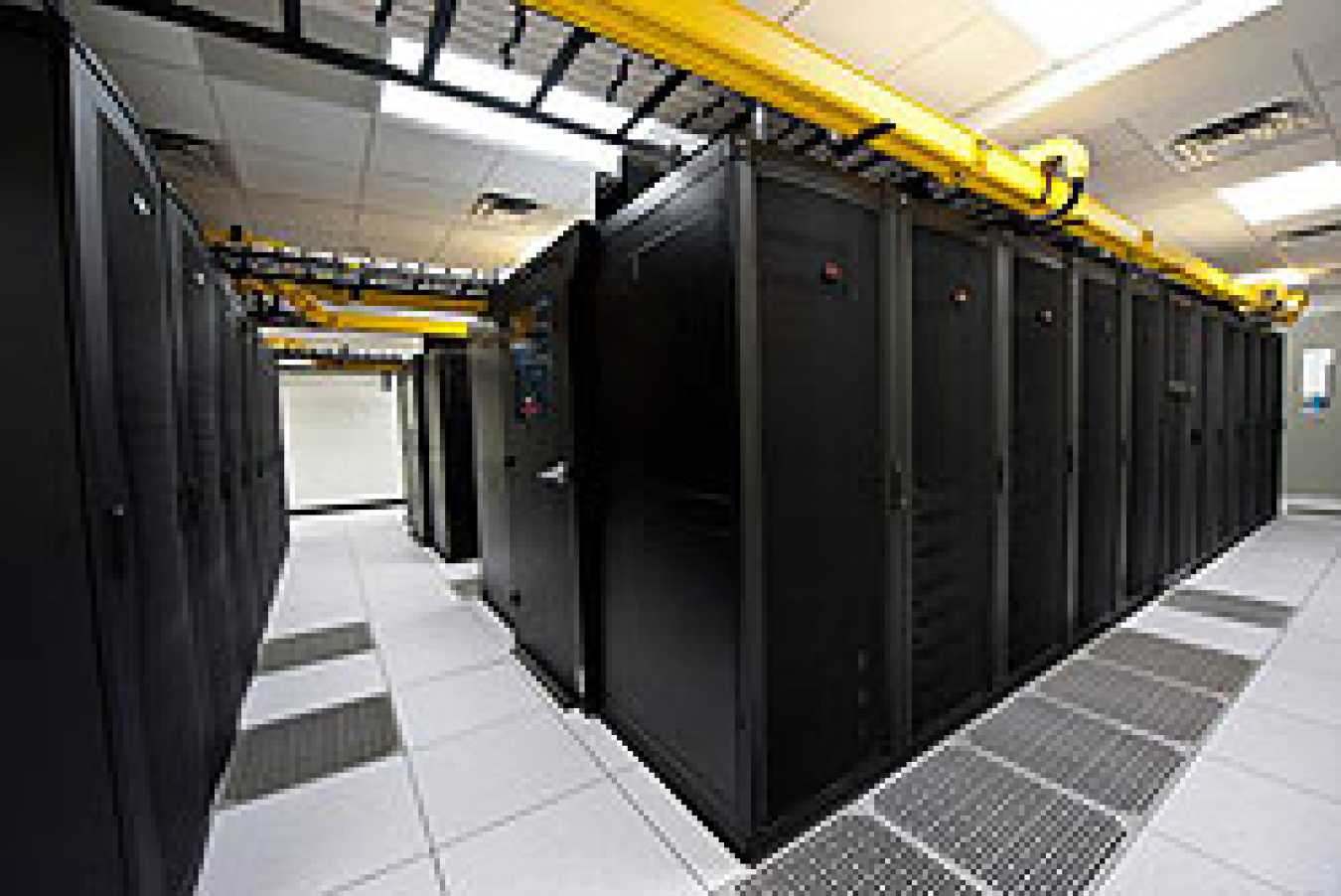
The original version of HB 1579 would have required data centers to obtain a certificate of public convenience and necessity from the North Dakota Public Service Commission. But after committee discussion, the legislation was amended into a legislative management study of the impact of large energy consumers. The proposed study would include data center impact on the electrical grid, as well as a potential regulatory structure and benefits of economic development to the state.
Public Service Commission Chairman Randy Christmann spoke on his own behalf in support of the bill before the House Energy and Natural Resources Committee. Christmann said the legislation is about transparency, safety, and cost containment. He explained that data centers are not under the jurisdiction of the PSC, but detailed a recent rate spike experienced by MDU customers due to significant grid congestion that was exacerbated by the addition of a 200-megawatt data center. Christmann said rate increases resulting from congestion fees imposed on MDU could possibly have been avoided with better planning. He also explained that due to operational changes made by the regional transmission organization, the McKenzie County area is facing significantly elevated risks of curtailment of electric service due to the increased congestion. Listen to Christmann's comments here. "The dilemma we face is that we will be entertaining new large loads popping up very suddenly, requiring far more electricity than Bismarck, Mandan, and the refinery combined, and there may be no public planning of grid impacts and no notification of other utilities or consumers who could get hit by increased costs," Christmann added.
Opponents of the bill argued that it could create regulatory uncertainty and inconsistencies across the state, as well as discourage data centers and other large energy consumers from considering North Dakota as a preferred location.
PSC Commissioner Sheri Haugen-Hoffart testified in opposition to the bill. Haugen-Hoffart said the bill is a regulatory expansion that provides no customer benefit, does nothing to ensure customers won't be affected by congestion, and sends an undesired message to businesses looking to invest in North Dakota. Listen to Haugen-Hoffart's comments here and here. The amended bill passed the House Energy and Natural Resources Committee on a unanimous 10-0 vote and is headed for the House floor.
|
|
Armstrong Signs First Bill of 2025
Expands Eligibility for Residential Credit
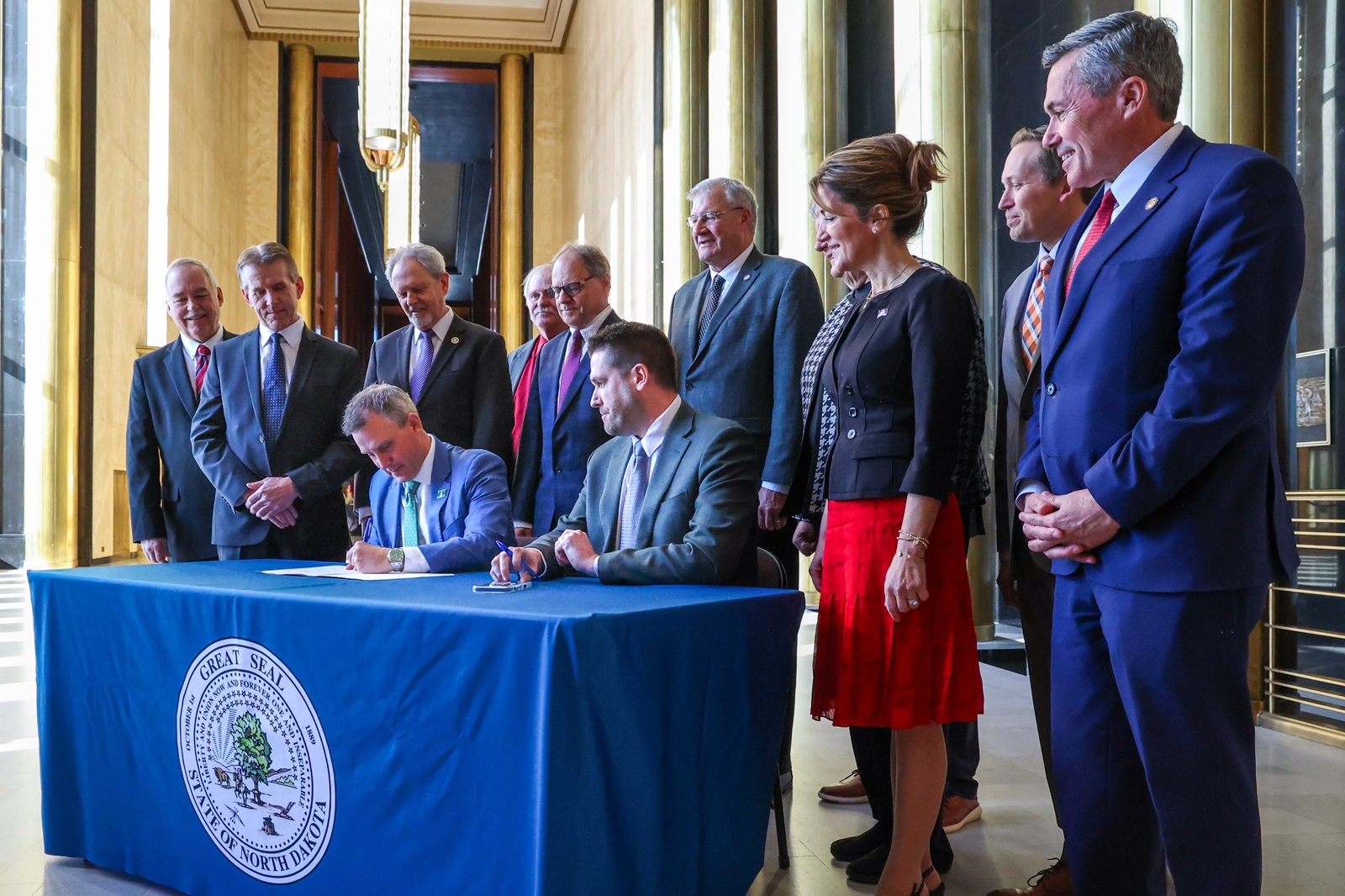
Governor Kelly Armstrong has signed his first bill of the 2025 legislative session, expanding eligibility for the state’s $500 property tax credit on primary residences to allow an estimated 3,900 additional residences to qualify for the credit. SB 2201 expands the primary residence tax credit, first approved in 2023, to allow for the inclusion of primary residences held by trust, life estates and property being purchased under a contract for deed. “As we continue to work on a broader property tax relief and reform package, signing this bill into law ensures the property tax relief approved last session is available to all primary residence owners as intended,” Armstrong said. “We appreciate the bill sponsors and state Tax Commissioner’s Office for their efforts to fix this issue and expand tax relief for North Dakota homeowners, making our state a more affordable place to live, work and raise a family.” The bill was introduced by Sen. Mark Weber of Casselton, who chairs the Senate Finance and Taxation Committee, and co-sponsored by Senate Majority Leader David Hogue, House Majority Leader Mike Lefor, House Finance and Taxation Committee Chairman Craig Headland, and the chairs of the Senate and House Appropriations Committees, Sen. Brad Bekkedahl and Rep. Don Vigesaa. The House and Senate both unanimously approved SB 2201. The bill makes the expanded eligibility retroactive to taxable years 2024 and 2025. “This bill corrects an oversight from last session and rightfully allows primary residences held in trust to be eligible for the primary residence credit on their 2024 and 2025 property taxes,” Weber said. “The goal of the primary residence credit was to allow all homeowners – assuming they live in those homes – to receive that relief, and this bill ensures that can happen.” The expanded eligibility will save taxpayers up to $1.9 million in both the 2023-25 and 2025-27 biennia. An emergency clause in the bill allows those newly eligible to apply immediately.
|
|
Natural Gas Infrastructure Grant Stalls
Legislators Question the Impact of $5M Ask
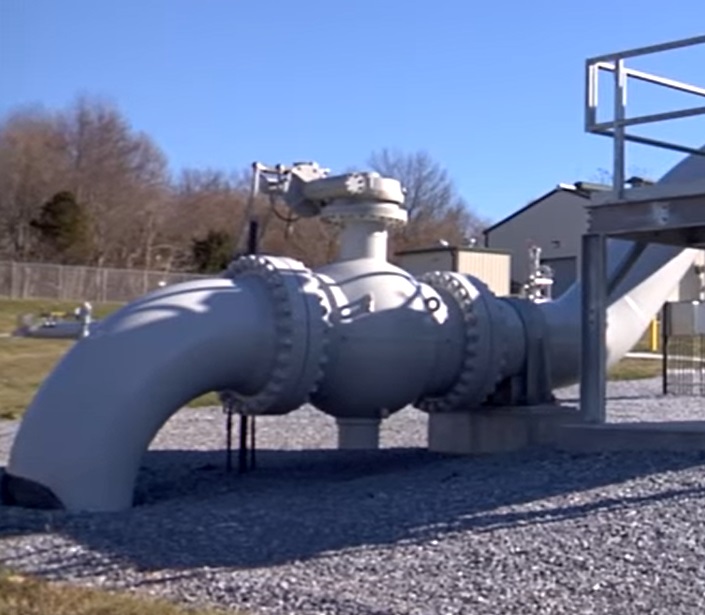
Legislation to create a natural gas infrastructure grant program has been rejected by the House Appropriations Committee. HB 1275 proposes a $5 million appropriation from the Strategic Investment and Improvements Fund to create a grant program supporting natural gas distribution infrastructure. Grants would be available to political subdivisions, distribution companies, and individuals located in cities with a population of 10,000 or less for costs of distribution infrastructure. The intent of the bill is to connect smaller communities without access to natural gas to existing infrastructure within the state. Grant program guidelines would be developed by the North Dakota Industrial Commission.
The bill was amended by the House Energy and Natural Resources Committee to include a matching requirement by the grant applicant, with priority given to a project having a greater level of matching funds. The amended bill passed the committee on a 11-0 vote and was rereferred to the House Appropriations Committee. Concerns were raised in Appropriations of the timeline and funding amount requested. Rugby Rep. Jon Nelson said just connecting to an interstate natural gas transmission line can cost more than $5 million, and questioned what could be accomplished by a bill with such a small appropriation. Because the bill was intended to serve cities with a population of 10,000 or less, the Appropriations Committee felt the timeline, funding, and eligibility criteria were insufficient. HB 1275 received a 20-3 do not pass recommendation from the Appropriations Committee.
|
|
Annual Sessions Passed by House
Bill Would Maintain Current 80-Day Limit
North Dakota House lawmakers have passed a proposal to transition the legislature to annual sessions beginning in 2027.
HB 1408 suggests five key benefits in making the shift to annual sessions. More frequent legislative sessions would allow lawmakers to better manage the budget and respond to economic shifts, resulting in greater fiscal and economic responsiveness. Additionally, HB 1408 maintains the 80-day legislative limit by distributing the days over two years, and responds to upcoming term limits by creating avenues for new lawmakers to gain experience more quickly. Annual sessions would also allow interim committees to develop better legislation. The shift to annual sessions would also provide greater flexibility and accessibility for individuals who wish to serve while actively employed, increasing the number of quality legislative candidates.
The bill was introduced by Grand Forks Rep. Landon Bahl, who described it as a means of modernizing the state's current legislative process while preserving the integrity of its existing framework. Bahl said that annual sessions would pave the way for a more citizen-focused, dynamic, and resilient legislative future for North Dakota.
West Fargo Rep. Austen Schauer pitched the bill to the House Appropriations Committee, calling it a shared commitment to progress, crafted with input from many legislators.
Listen to Schauer's comments here. The bill provides that Legislative Management would determine the structure and logistics of the legislative session. Concern was raised during committee discussion that the bill defines neither structure nor logistics, and that it would result in a significant power shift toward Legislative Management. During floor discussion, Fargo Rep. Jim Kasper described the bill as micromanagement, saying "if you want annual sessions, make it simple." It was also argued that annual sessions would result in a greater number of bills than are currently seen and would threaten the tradition of a citizen legislature. House Majority Leader Mike Lefor supported the bill, arguing that annual sessions were an inevitable change coming in North Dakota. Casselton Rep. Brandy Pyle argued that the bill would help facilitate the ongoing relationship building needed during the appropriations process. Pyle said it's important to understand the relationships between and among the agency budgets acted upon by the appropriations committees. HB 1408 passed the House on a 64-26 vote and will advance to the Senate.
|
|
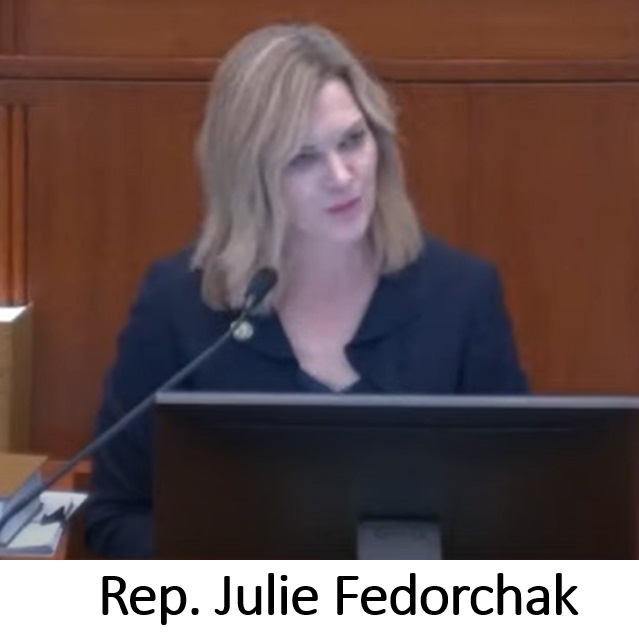
Fedorchak Addresses ND Legislature
Calls on State to Lead Efforts to Power AI
Congresswoman Julie Fedorchak addressed the North Dakota House and Senate this week, emphasizing the need for fiscal responsibility, energy security, and regulatory reform to drive economic growth. Fedorchak highlighted the state’s role as a leader in energy innovation and production, and called on North Dakota to seize the opportunity to provide the much-needed power to fuel the AI revolution. Listen to Fedorchak's comments here and here. “AI requires vast computing power, which means it requires abundant, reliable, and affordable energy. North Dakota should lead these efforts. We have more gas in the Bakken than we can use. Let’s turn it into electricity, power AI computing at sites near the gas source, and make more room in our pipelines for additional gas production. This will grow our production, solve our gas challenge, create a new industry, and help America lead in AI" Fedorchak said. Listen to Fedorchak expand on energy security here. Fedorchak also pointed to North Dakota as setting the example needed in Washington and throughout America. "North Dakota is proof that fiscal responsibility, pro-business policies, and common-sense leadership work," she said. "Our state runs efficiently. Our state budget is balanced. We invest in our future without mortgaging it." Listen to Fedorchak's comments here. She also pointed out how “Dakota common sense” is in high demand in Washington by praising the rise of Doug Burgum, Kristi Noem, Kirsten Baesler and Andrea Travnicek to top leadership posts in the Trump administration. Fedorchak concluded by saying "the road ahead is challenging, but I believe in North Dakota. I believe in our people. And I believe the North Dakota way will help Washington also be stronger."
Watch video of Fedorchak's full address to the House here.
|
|
Senate Snuffs "Excessive" Reclamation Bill
Measure Duplicates Requirements in Admin Rules
The North Dakota Senate overwhelmingly defeated a bill that would have required oil well drillers to preserve plant growth material to be used for reclamation of the site when the well's production ends. By a vote of 7-40, the Senate defeated SB 2313, introduced by Hazelton Senator Jeff Magrum, who characterized it as a "landowner protection bill." However, Belfield Senator Greg Kessel said there are already strict reclamation requirements in the administrative rules of the Department of Mineral Resources (DMR). Kessel said the provisions of the bill were overly restrictive, and would potentially prevent the use of the most effective method of reclamation. Click here to listen to Kessel's comments. Watford City Senator Dale Patten said testimony in committee indicated that about 200 well pads are reclaimed each year, and DMR receives only a handful of complaints. He said preserving native vegetation would also be impractical, considering that most oil wells produce for decades. Click here to listen to Patten's comments. The defeated bill had been amended in committee to remove a requirement that the preserved native plant growth be used "exclusively" for final reclamation," but still contained a provision that native material be "preserved." Current law specifies that reclamation must restore the land "as close as practicable to its original condition."
|
|
Redefining Renewable Energy in ND
HB 1211 Seeks to Include All Hydropower
A bill that seeks to expand the definition of hydroelectric renewable energy under North Dakota law has reached the Senate.
HB 1211 seeks to redefine all hydroelectric power produced in the state of North Dakota as renewable, regardless of its in-service date. Current state law limits eligible hydroelectricity to those resources that have an in-service date of January 1, 2007 or later.
The bill was introduced at the request of Missouri River Energy Services, a not-for-profit municipal electric power agency providing energy-related services across a four-state footprint. Included in its membership are Cavalier, Hillsboro, Lakota, Northwood, Riverdale, and Valley City. According to Deborah Birgen of Missouri River Energy Services (MRES), the agency is seeking the change to ensure that Renewable Energy Certificates (RECs) received by its members for hydroelectricity are fully tradeable, fungible, and meet the same definition of renewable across the four states within MRES's footprint.
When North Dakota’s renewable energy objective was passed in 2009, hydroelectric power from facilities constructed before 2007 was not considered renewable, while power from facilities built after 2007 was. Hydroelectricity from the dams on the Missouri River is sold and administered by the Western Area Power Administration (WAPA). At the time, WAPA and its customers did not receive RECs for hydroelectricity from the dams. However, WAPA has recently decided to register hydroelectric power generated on the Missouri as RECs, which will now be issued to the municipals and cooperatives that receive the hydropower.
Birgen said in her legislative research, she could not find a definitive reason for rejecting hydroelectric power from facilities constructed before 2007 as renewable. If HB 1211 passes, MRES's six North Dakota members, along with other North Dakota utilities who purchase power from WAPA, would be able to retire their RECs to meet local energy goals, "green up" portfolios of business, and meet other customer demands. The bill passed the House on a 92-1 vote after receiving a 12-0 do pass recommendation from the House Finance and Taxation Committee. The legislation has been heard by the Senate Finance and Taxation Committee, where it awaits further action.
|
|
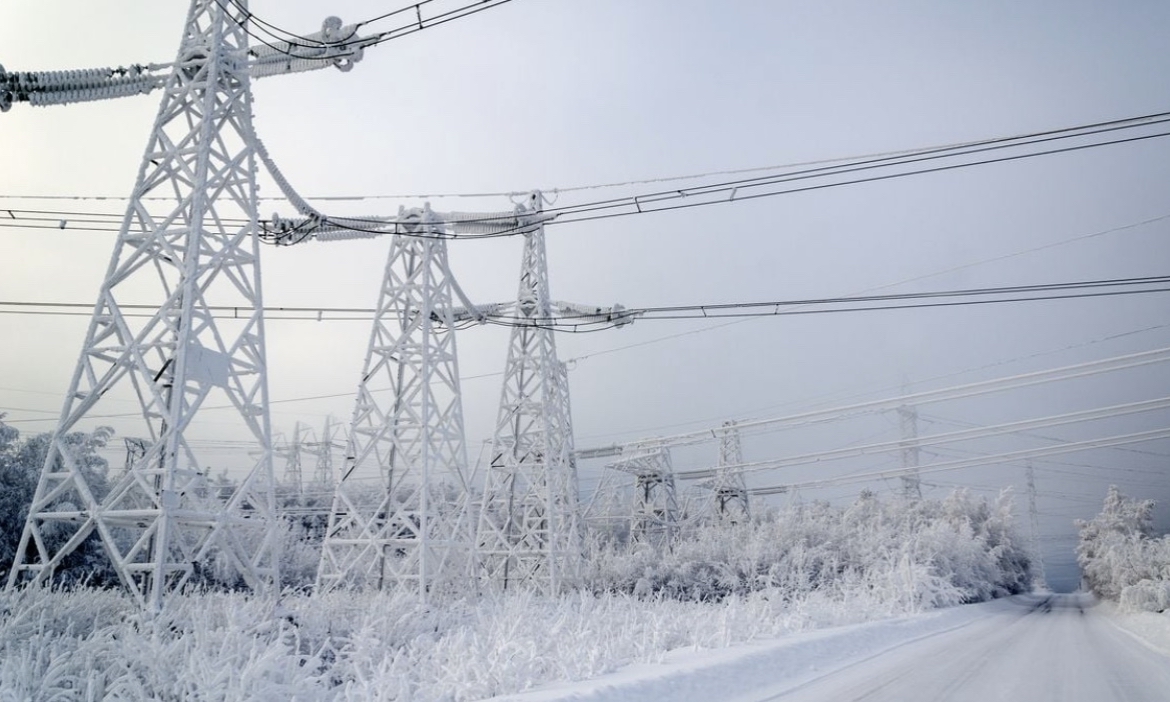
Coal Kept Lights on During Polar Vortex
Dispatchable Plants Provided 85% of the Power
Analysis by Energy Ventures Analysis found that coal played a critical role in ensuring that electricity demand could be met during the January 2025 Polar Vortex. The analysis showed that dispatchable electricity resources (coal, natural gas, nuclear, and oil) generated 85% of the electricity needed across six of the most heavily impacted regions of the country. “During extreme weather events like winter storms, coal-fired power plants continue to play a critical role in keeping the lights on and holding down electricity prices,” said Michelle Bloodworth, President and CEO of America’s Power. “This new analysis underscores the importance of having coal in our nation’s energy mix because coal offers reliability, affordability, and fuel security benefits that many other electricity sources cannot match.” During the peak day of the cold weather event, electricity demand increased by an additional 149,000 megawatts across two-thirds of the U.S. compared to the month before. According to the EVA analysis, fossil fuels, including coal, provided more than 90% of the additional 149,000 MW. In comparison, wind was able to satisfy only 3% of the increased demand and solar less than 1%. “These weather events are yet another reminder that America needs coal. As electricity demand continues to increase, coal plants will be critical to maintaining a dependable and affordable electricity supply," Bloodworth said. "For example, the new analysis shows that coal saved PJM consumers as much as $500 million to $1.4 billion during the Polar Vortex. Despite the need for coal plants, almost one-third of the coal fleet has announced plans to retire over the next five years. The Polar Vortex is another example of why we need to stop retiring coal plants." Click here to read more from America's Power.
|
|
Williston State Sets Enrollment Record
Spring Numbers Also Up at Dickinson State
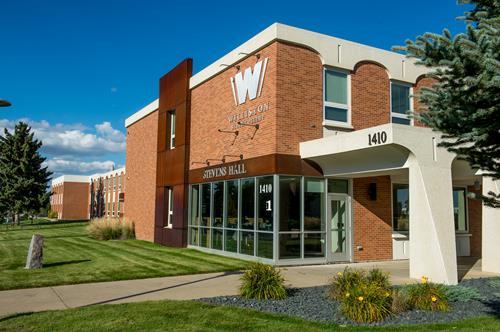
Williston State College (WSC) has once again set a new enrollment record, marking the highest student headcount in the institution’s 63-year history. The Spring 2025 census reports a total enrollment of 1,236 students, representing a 20.6% increase from Spring 2024. The growth follows a record-breaking Fall 2024 enrollment. The number of full-time equivalent students has also seen a 25.2% increase, reaching 810.99 FTE, demonstrating stronger student engagement and credit-hour completion. International student enrollment also surged by 32.8%, and transfer student enrollment rose by 38.1%, reinforcing WSC’s expanding reach and appeal. Dr. Bernell Hirning, President of Williston State College, attributes the growth to increased outreach to current and prospective students, new and expanded marketing efforts, and ensuring that “the right people are in the right seats, doing things the right way.” The spring enrollment number for Dickinson State University is also up 2.7% from spring 2024. DSU reported an overall enrollment of 1,410 students, up from 1,373 one year ago. "We are excited to witness this growth in both our full-time enrollment and overall enrollment numbers," said Ty Orton, Acting DSU President. "This achievement reflects our commitment to supporting DSU's mission of offering diverse academic opportunities and helping students achieve their higher education goal." Overall enrollment across the North Dakota University System’s 11 campuses reached its highest spring count since 2016. The headcount for the spring 2025 census was 44,880, while the 2016 spring headcount was 44,910.
|
|
Home Education Tax Credit Advances
Senate Committee Doubts Potential Impact
North Dakota House lawmakers have advanced a proposal for a new tax credit for the state's home educators to the Senate.
HB 1244 proposes a tax credit equal to the amount of qualified educational expenses paid by the taxpayer during the taxable year. The credit would be limited to $1,000 per child per year for those filing jointly, or $500 per child for those filing individually. Qualified expenses include books, tuition, supplementary materials, computers and similar devices, software, applications and subscriptions. Those who favor the bill weigh the $1,000 maximum credit against the state's public school per pupil payment of more than $10,000, arguing that it's a savings for the state. Bill opponents questioned the efficacy of HB 1244 due to the state's already low income tax rates. During discussion on the House floor, Bismarck Rep. Jason Dockter reported that a household can currently make up to $80,975 without paying state income tax and that the average household income in North Dakota is $76,000. The bill passed the House on a 65-27 vote.
The Senate Finance and Taxation Committee again questioned the minimal impact of the credit as proposed during its hearing of the bill. Dickinson Senator Dean Rummel said that 65% of returns filed within the state no longer have any North Dakota income tax liability due to passage last session of HB 1158, which eliminated income tax liability for more lower income residents. A proposal to create a refundable tax credit was floated during committee discussion. The committee elected to have the option further researched before taking additional action on the bill. Read more about the HB 1244 House committee hearing here. Revisit the 2023 WDEA newsletter story on HB 1158 here.
|
|
Minnkota Sets New Reliability Records
Investments Strengthened Delivery System
By Ben Fladhammer | Minnkota Power In the final days of 2023, Minnkota’s power delivery crews faced their toughest test in nearly two decades. A brutal late-December storm snapped poles, downed lines and encased critical infrastructure in a thick layer of ice, leaving widespread damage behind. What a difference a year makes. As 2024 drew to a close, those same crews celebrated one of the most reliable years of power delivery in Minnkota history – a testament to years of strategic investments, operational discipline and a commitment to keeping the lights on. “It’s pretty evident that people in the field and in the office are committed to what they do,” said Harold Narlock, Minnkota power delivery operations manager. “Our members are requesting uninterrupted power, and our employees understand that, and they can relate to it in their own lives. They understand the importance of trying to deliver that level of service and they do a really good job at it.” Reliability isn’t built overnight. It’s the result of a decades-long effort to reinforce the grid, modernize systems and ensure that every connection holds firm. Since 2015, Minnkota has invested approximately $294 million into strengthening its power delivery system and addressing aging infrastructure. The numbers in 2024 speak for themselves: • Total sustained outages per delivery point: 0.53 (Best in Minnkota history)
• Blink (momentary) outages per delivery point: 3.14 (Best in Minnkota history)
• Outage time per delivery point: 26 minutes (Third-best in Minnkota history) But perhaps the most impressive statistic from the past year is the zero lost-time incidents among power delivery crew members while completing more than $50 million in projects throughout the service area. Minnkota’s OSHA incident rate – a key safety benchmark – remained significantly better than industry peers. “Reliability is critical, but nothing is more important than the safety of our crews,” Narlock said. “Every person who steps into the field knows that getting the job done right means getting it done safely. The fact that we had zero lost-time injuries in 2024 speaks volumes about our team’s dedication to each other and to a culture of safety.” Click here to read more from Minnkota.
|
|
Rep. Josh Christy of Fargo Dies at 43
Exemplified True Meaning of Servant Leader
Michael Achterling | North Dakota Monitor North Dakota state Rep. Josh Christy, R-Fargo, died Tuesday, his colleague announced during Wednesday’s House floor session.
Christy, 43, elected to represent District 27 in 2022, was serving in his second legislative session.
“Throughout his time here he exemplified what it meant to be a true servant leader,” said Rep. Jeremy Olson, R-Arnegard, during a commemoration on the House floor.
Olson referred to Christy as a “gentle giant” because his presence could bring calm with an approach that was humble and service-oriented.
Click here to listen to Olson's comments.
Gov. Kelly Armstrong directed flags to be flown at half staff until after Christy’s funeral, which had yet to be scheduled.
“Josh Christy was a passionate advocate for the residents of District 27 and all North Dakotans, a loving husband and doting father to three beautiful daughters, and someone I was honored to call a friend,” Armstrong said in a statement.
Christy is survived by his wife, Mary, and three daughters, 12-year-old twins and a 9-year-old.
“These girls were the center of his life,” said Olson, reading a statement. “His love for them was evident in everything he did, and his commitment to them shaped his character as a husband and a father.”
Sen. Kristin Roers, R-Fargo, also from District 27, said Olson had found his niche in artificial intelligence over the interim and was excited to bring bills to protect citizens from deep fakes and computer-generated images. Four of his bills are still making their way through the committee process.
“It was so fun to watch someone start out and not really sure where they were going and then find their thing,” she said.
Christy is the first lawmaker to die during a legislative session since Rep. Clarence Martin, R-Lefor, died on Feb. 9, 1997, according to Legislative Council. Click here to read more from North Dakota Monitor. Click here to listen to Olson's tribute on the House floor.
|
|
PSC Sets Hearings on Transmission Line
162-Mile Basin Line to Enhance Grid Reliability
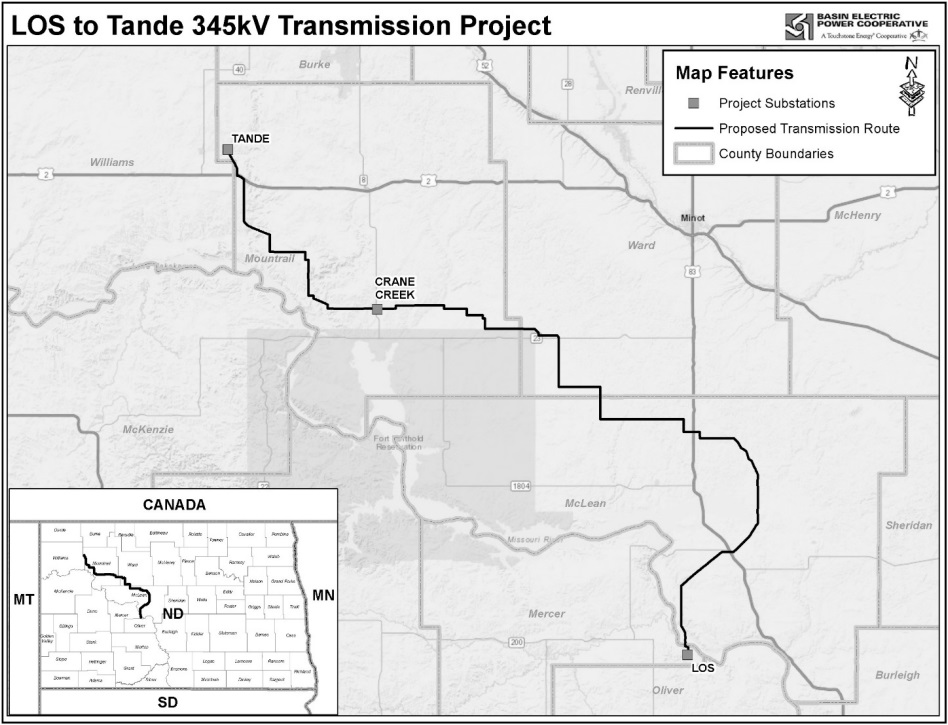
The North Dakota Public Service Commission has scheduled public hearings in Underwood and Stanley on a proposal by Basin Electric Power Cooperative to construct a 162-mile transmission line through Mercer, McLean, Ward, Mountrail and Williams Counties. Basin is requesting a siting permit for the 345-kilovolt kV transmission line that would originate at the Leland Olds substation southeast of Stanton and would end at the Tande substation east of Tioga. The estimated cost of the project is $317 million. The Leland Olds-to-Tande transmission project was deemed necessary for the reliability of the transmission system by the Southwest Power Pool, a regional transmission organization that delivers electricity to parts of North Dakota. The project will provide more reliable service to electric cooperative customers as well as diversify power resources on the larger transmission system. Basin received a Notification to Construct Approved Reliability Network upgrades notice in May 2022 from SPP. One of the hearings will be held Wednesday, February 26 at 10:00 a.m. at Underwood City Hall. The other is scheduled for Thursday, March 6, at 9:00 a.m. in the Mountrail County South Complex in Stanley. People with concerns, questions or support/opposition for the project are encouraged to attend a hearing and present their information which will become part of the official record. Basin officials have said construction will take about 18 months once all easements and permits have been obtained. The project is planned to be energized in late 2026.
|
|
Wise Roads Shots of the Week
Frosty Mornings More Than 40 Below
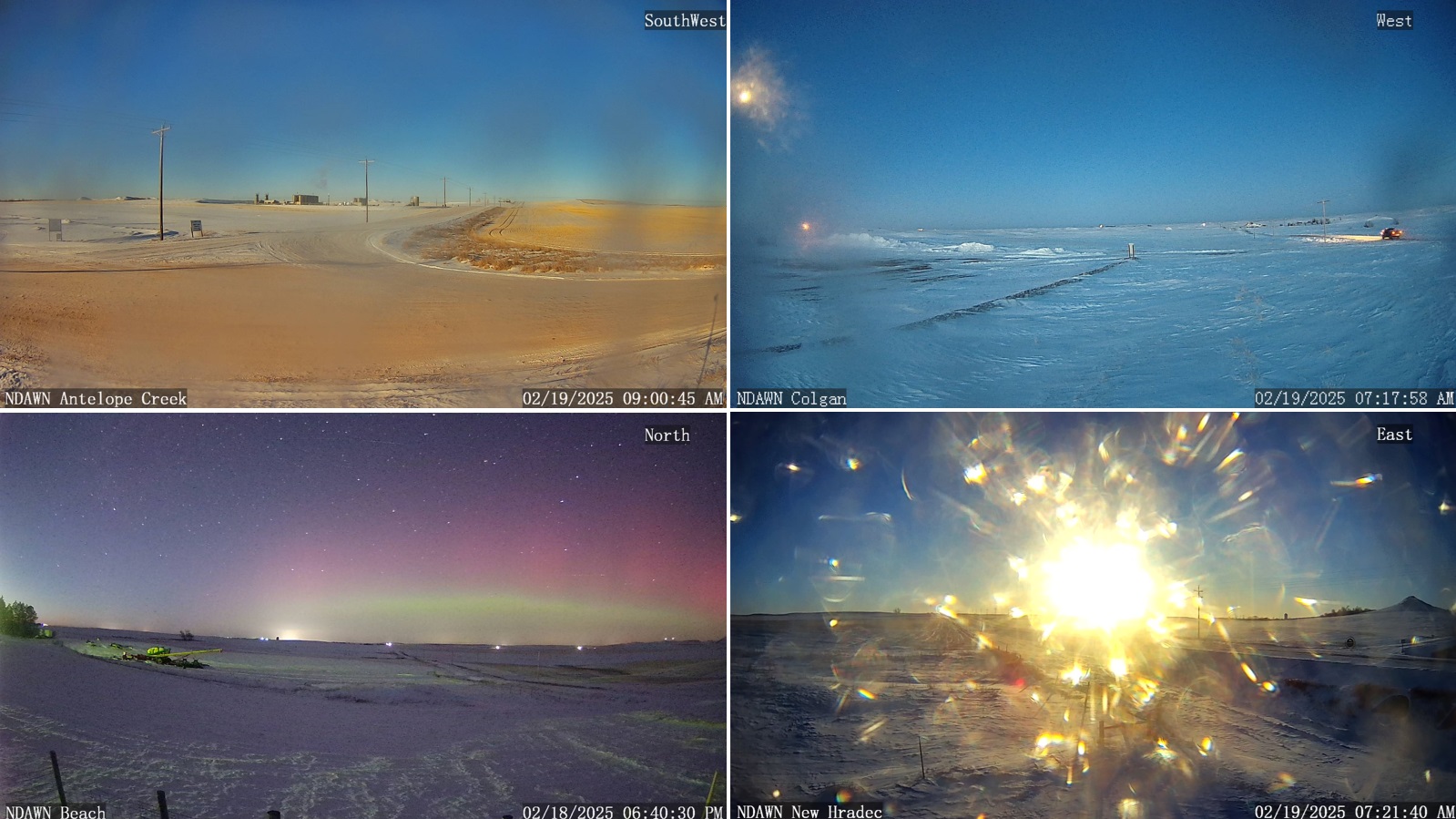
It was a long way from record-setting, but numerous locations in western North Dakota recorded their 20th consecutive day with a low temperature below zero this morning. The cold stretch included a reading of -47°F at New Hradec Wednesday morning, which tied the coldest temperature ever recorded on the ND Ag Weather Network since 1989. Many of the frosty scenes were captured by the high-resolution cameras on the Wise Roads network. Photos from Wise Roads cameras are updated continuously throughout the daylight hours on the Wise Roads web page.
The Wise Roads project (Weather Information System to Effectively Reduce Oilfield Delays and Disruptions) was developed by WDEA to increase the efficiency of the movement of oilfield truck traffic. Most weather stations were placed in the core area of Bakken production, focusing on Dunn, McKenzie, Mountrail and Williams Counties. The project provides more accurate weather information to county road managers, especially about rain events, to minimize the need to impose weight restrictions when gravel roads get wet. It was developed in partnership with NDAWN, which maintains the stations for WDEA. The project was also assisted with a $250,000 grant from the Oil & Gas Research Council.
Fifty new stations have been installed, 39 of which are located in the four core oil-producing counties. Prior to the start of the project, Dunn and McKenzie Counties had just one station each, Mountrail County had three and Williams County had four. Weather station data and high-resolution photos can be found at wiseroadsnd.com. There is also an interactive Google Map that users can access to pinpoint the location of Wise Roads and NDAWN weather stations. Additional information is also available from NDAWN. Featured shots this week are clockwise from upper left: Antelope Creek, on the morning it hit a low of -45°F; Colgan, in a photo that almost feels cold; New Hradec, with a frosty camera lens on the morning it hit -47°F; and Beach, with a glimpse of the Northern Lights. Click on the link for a high-resolution image.
|
|
|
Quick Connect
• North Dakota gas prices 15 cents below national average -- McKenzie County Farmer
• Fedorchak urges state to lead energy efforts to empower AI -- North Dakota Monitor
• North Dakota lawmakers vote to raise gas tax to fund roads -- Bismarck Tribune
• Lignite Energy Council President - coal industry is built for extreme cold -- WDAY
• Harsh and temperamental North Dakota winters are an attractive asset for data centers -- KFYR - TV
• Kinder Morgan finalizes $640 million purchase of ND gas gathering system -- Pipeline & Gas Journal
• North Dakota regulators fine wind company NextEra for disturbing tribal artifacts -- Bismarck Tribune
• Save the Dakota Access Pipeline that transports 5% of US oil, was left in limbo -- Wall Street Journal
• Understanding how oil and gas industry safety standards evolved over past decade -- Williston Herald
• Wyoming's nuclear microreactor industry runs into legislative snag, unanswered questions -- WyoFile
• Mac Schneider resigns as North Dakota US attorney; served in role since late 2022 -- Dickinson Press
• Brutal cold blankets North Dakota; driving restrictions eased for propane haulers -- Bismarck Tribune
• Resolution would remove North Dakota governor's ability to appoint judges, justices -- Bismarck Tribune
• House lawmakers overwhelmingly pass bill looking to create a task force similar to DOGE -- KFYR-TV
• HB 1455 seeks to strengthen tribal consultation on North Dakota legislation -- North Dakota Monitor
• Legislation approved in House would endorse forming a trade commission with Ireland -- The Journal
• House passes bills to protect state tribes through task forces, cultural preservation -- Bismarck Tribune
• Bill promoted by Ethics Commission gets '11th hour' opposition from Armstrong -- North Dakota Monitor
• Rural Caucus in ND Legislature aims to strengthen increasingly overlooked voices -- Fargo Forum
• Williams County gives go-ahead for another data center to apply for conditional use permit -- KFYR - TV
• Williston Care Flight returns air ambulance services to region in the coming months -- Williston Herald
• McKenzie County newspaper asking for help, support from local community -- McKenzie County Farmer
• Hoeven, Cramer introduce bill to help Roosevelt Presidential Library acquire artifacts -- News Release
• 'Old Ford building' gets a new lease on life with groundbreaking for event space -- Williston Herald
• ND House passes school choice bill by slim margin, similar bills fail in Legislature -- Dickinson Press
• Education Savings Accounts for all North Dakota students passes Senate -- North Dakota Monitor
• North Dakota bill proposes state-funded tuition aid for private school students -- Dickinson Press
• Public charter schools bill gets strong support from North Dakota Senate -- North Dakota Monitor
• Support for free school meals legislation dims at North Dakota Legislature -- Bismarck Tribune
• Amended tenure policy bill advances to North Dakota Senate on 85-4 vote -- North Dakota Monitor
• Minot Public School District weighing options with land near Ramstad Middle School -- KFYR - TV
• More bills proposed in legislature would affect K-12 students, schools throughout state -- The Journal
• Lawmakers reject bill seeking to change rules for how high school athletes switch teams -- KX News
• West Fargo Public School District voters give approval to $100 million school bond -- Valley News Live
• Beulah Public Schools' Board of Education tackles maintenance issues at meeting -- Hazen Star
• White House launches National Energy Dominance Council to promote fossil fuels -- E&E News
• Zeldin to try taking back $20B in IRA grants; accused Biden admin of trying to hide money -- E&E News
• Trump is calling for energy dominance, but aging shale plays aren't positioned to deliver -- E&E News
• Utilities nationwide are falling back on fossil fuels to meet huge energy demand of data centers -- Grist
• Trump admin identifies hundreds of 'emergency' energy projects that could be fast-tracked -- The Hill
• DOE Chief Chris Wright slams "sinister" net zero goals as "lunacy," praises fossil fuels -- Yahoo News
• DOE Secretary Wright: Coal is critical to meeting energy demand -- Institute for Energy Research
• The end of coal is nowhere in sight; global consumption could hit a new all-time high -- Oilprice.com
• Trump's dismantling of "environmental justice" offices is ticking off climate activists -- Daily Caller
• Trump's funding freeze leaves renewables floundering, media and green groups panic -- Just The News
• Donald Trump is dismantling Biden's Green New Deal scam and restoring energy freedom -- Townhall
• Climatologist: No rise in weather disasters despite record atmospheric CO levels -- Irrational Fear
• New report: Rising CO2 levels increasing crop yields, defying biased climate models -- NoTricksZone
|
|
Factoid of the Week
In 2023, coal provided at least half the electricity in five states and at least 20% of the electricity in 17 states. Since 2022, the retirement of more than 14,000 MW of coal capacity has been delayed or canceled. Most of these delays or cancellations were due to reliability concerns.
|
|
February 25 - 27
Bismarck
February 26
Online
February 26
Underwood City Hall
February 27
Bismarck and via Teams
February 28
ND Capitol
March 4 - 5
Bismarck Event Center
March 4 - 5
Watford City
March 6
Mountrail County South Complex
March 6
Bismarck State College
March 11
Bismarck State College
April 28 - 30
Regina, Saskatchewan
May 20
Watford City
|
|
Oil prices and rig count
February 21, 2025
WTI Crude: $70.40
Brent Crude: $74.43
Natural Gas: $4.23
North Dakota Active Oil Rigs: 29 (Down 3) February 21, 2024 -- 39 rigs
|
|
Geoff Simon
Editor/Executive Director
|
|
|
|
|
|
|





.jpg)




.jpg)