|
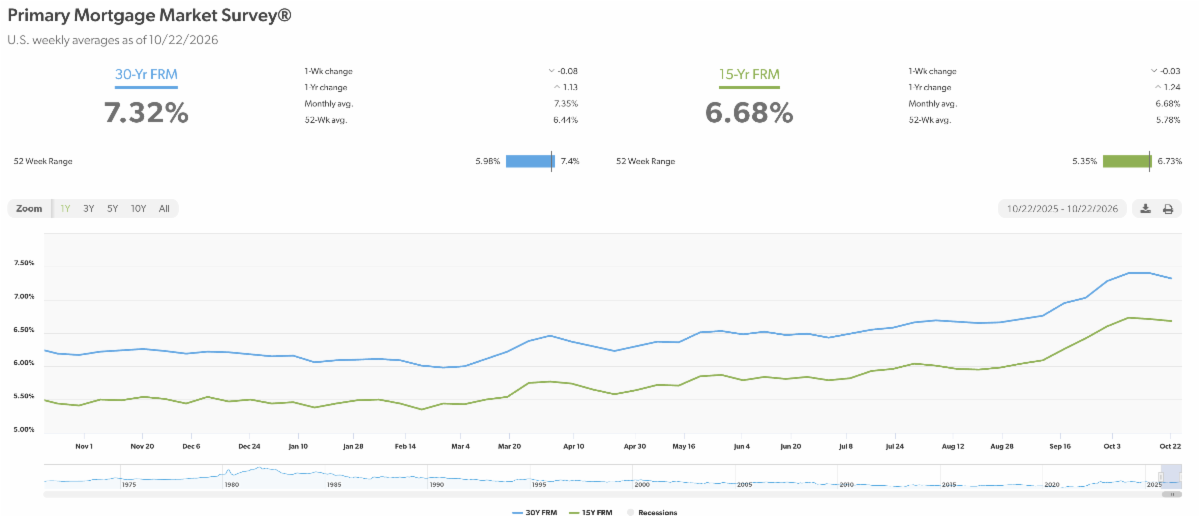
The US economy continued to show resilience this week despite persistent inflation, elevated interest rates, and uncertainty surrounding the Federal Reserve's next move. Business activity remained strong in October, with manufacturing and services continuing to expand, while unemployment claims remained low, indicating that employers are generally retaining workers. Consumer spending continued to support economic growth, although consumer confidence remained weak as households struggled with higher prices. Inflation continued to be a concern, particularly as rising energy and production costs put additional pressure on businesses and consumers. Treasury bond yields remained volatile but declined from their recent highs, providing some relief to mortgage rates. The Federal Reserve will meet next week, and investors will be watching closely for indications of its future interest rate policy. While the economy has performed better than many economists expected, persistent inflation and high borrowing costs continue to weigh on the housing market and could slow economic growth in the months ahead. While the economy has performed better than many economists expected, persistent inflation and high borrowing costs continue to weigh on the housing market. However, buyer demand remains, and even a modest decline in mortgage rates could bring more buyers into the market and help stimulate sales activity in the months ahead.
California Existing-Home Sales: September 2026
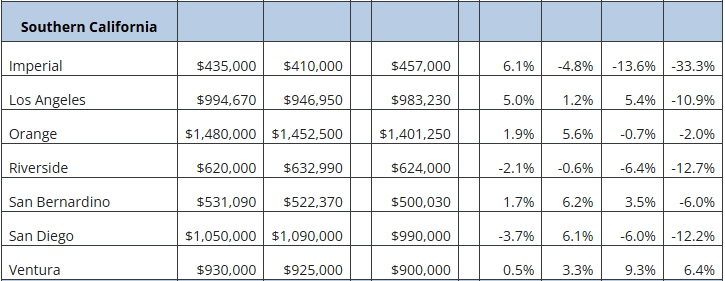
The California Association of Realtors reported that existing single-family home sales totaled 260,410 in September on a seasonally adjusted annualized basis, down 3.4% from 269,620 in August and down 6.5% from 278,540 in September 2025. The statewide median home price was $899,720, down 0.2% from $901,420 in August but up 1.7% from $884,390 one year ago. The Unsold Inventory Index stood at 3.7 months, unchanged from August but up slightly from 3.6 months in September 2025.
|