|
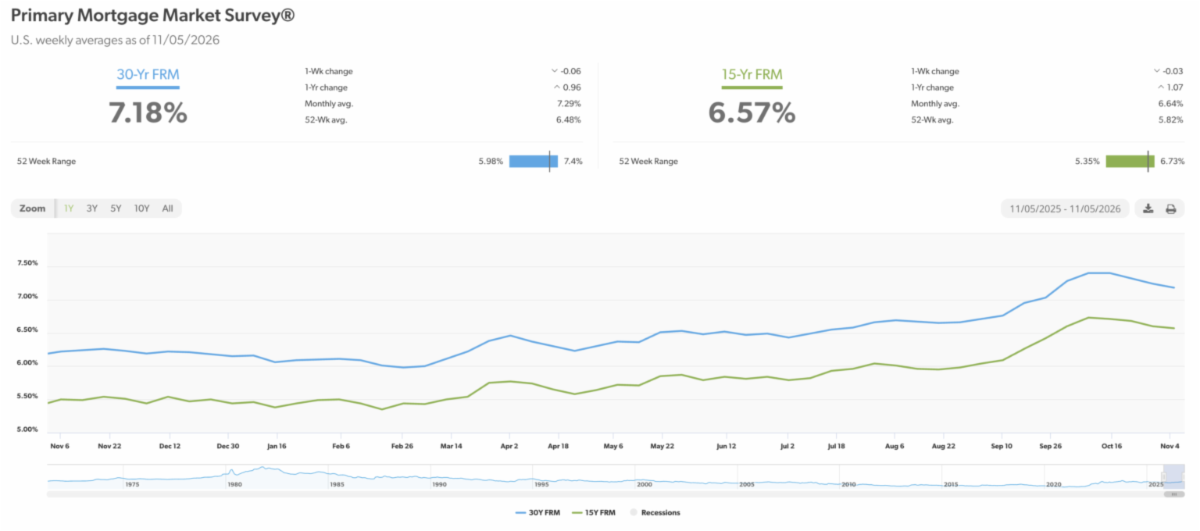
The stock market experienced a difficult week, led by a sharp sell-off in technology and artificial intelligence stocks as investors grew concerned about high valuations and the enormous spending on AI infrastructure. Despite a rebound on Friday, the Nasdaq fell 3.4% for the week, the S&P 500 declined 2.7%, and the Dow lost 0.9%. On a more positive note, Friday's jobs report showed that the U.S. economy added 165,000 jobs in October, significantly exceeding economists' expectations of 65,000, while unemployment declined from 4.2% to 4.1%. Although the strong employment numbers demonstrate continued economic resilience, they also raise concerns that the Federal Reserve may keep interest rates elevated or increase them to control inflation. In real estate, mortgage rates declined for the third consecutive week, with the 30-year fixed rate averaging 7.18%, down from 7.24% the previous week. However, higher borrowing costs continue to weigh on housing activity. Zillow reported that existing-home sales fell approximately 9% nationally from a year earlier in October, while newly pending sales declined nearly 17%. The housing market remains challenging, with affordability and mortgage rates continuing to influence buyer demand.
The Dow Jones Industrial Average closed the week at 51,285.73, down 1% from 51,770.31 last week. It is up 6.7% year-to-date from 48,063.29 on December 31, 2025.
The S&P 500 closed the week at 7,376.86, down 2.7% from 7,580.07 last week. The S&P is up 7.8% year-to-date from 6,845.50 on December 31, 2025.
The Nasdaq closed the week at 24,579.42, down 3.4% from 25,437.00 last week. It is up 5.8% year-to-date from 23,241.99 on December 31, 2025.
US Treasury Bonds - The 10-year treasury bond closed the week yielding 4.86% down from 4.94% last week. The 30-year treasury bond yield ended the week at 5.26%, down from 5.33% last week. We watch bond yields because mortgage rates follow bond yields.
|