|
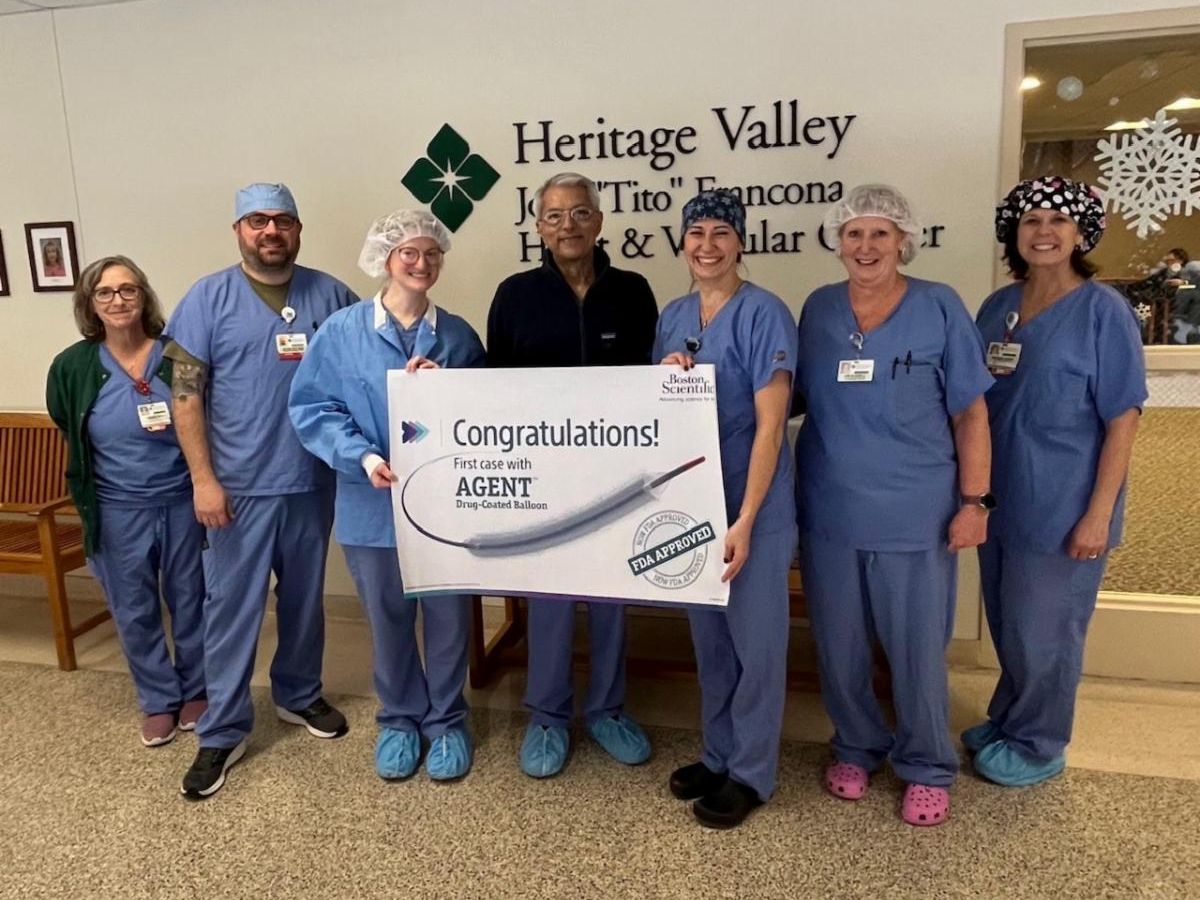
We’re proud to share that physicians at the Heritage Valley Heart & Vascular Center are now using the new Boston Scientific AGENT™ Drug-Coated Balloon as an option to treat Coronary In-Stent Restenosis in patients with Coronary Artery Disease. With more than 100,000 patients treated globally to date, this technology is now the first approved drug-coated coronary balloon in the U.S.
What is In-Stent Restenosis?
Stenosis is the medical term for the narrowing of a blood vessel. A procedure call Angioplasty is performed to treat Coronary Artery Disease (CAD). During an Angioplasty, stents may be placed to open blocked arteries due to CAD. These stents allow blood to flow more freely through the artery. Restenosis occurs when the treated, opened artery closes up again. In-Stent Restenosis (ISR) is a blockage or narrowing that comes back in the portion of the coronary artery that was previously treated with a stent, and is typically caused by plaque or scar tissue. Some factors may include inflammation, poorly-controlled diabetes, or not taking medications, such as blood thinners or anti-inflammatory drugs.
In the past, traditional therapies used to treat ISR have included performing another uncoated balloon Angioplasty; heart bypass surgery; placing additional layers of metal stents; or radiation to correct the problem. The new technology of the AGENT™ Drug-Coated Balloon (DCB) is a game-changer in treating Coronary In-Stent Restenosis in patients with Coronary Artery Disease, as it provides an alternative treatment option and is the first drug-coated coronary balloon approved in the U.S. The device is inserted percutaneously (through a small opening in the skin) and transfers a therapeutic dose of medication to the artery wall to help prevent ISR reoccurrence.
For information about the services offered by the Heritage Valley Heart & Vascular Center, please click here.
|