|
2. Is any one type of topwater best?
> "No."
3. I saw a clip of you on some podcast where you were saying that before FFS it was easier to call herring fish up – or something like that? [Sorry don't remember which podcast.]
> "Yeah so before FFS, if you knew where the fish were set up – on a point or hump – they were super unpressured. The bait [you fished] wasn't as important, it was just knowing where the fish were.
> "You could throw a pencil popper 30' to the left or the right of 'em, they'd come over and fight over it. Now everyone can see 'em so they're getting thrown at a hundred times more. Now you can pull up and make the perfect cast over a school of literally 200 fish, they'll come up and you might get one swirl out of them.
> "Before it was all about finding them, now it's more about knowing how to catch them and making small adjustments throughout the day – color, size, the speed of your bait. So they're a lot easier to target, but they're way harder to catch."
Follow-up: Is that because they're caught and released so much that they're wiser?
> "I think they're just harder to catch because they're thrown at all the time. It's just how pressured they're getting. There must be more fish caught now than there was before LiveScope...but it's just how pressured they are.
> "Some of these points with 100 fish, guys will sit there for an hour and a half and that spot's toast for the rest of the day. [That school has] been seeing the gamut of baits, you've got clear water...they're way smarter now. They're a lot harder to get to react."
4. Casey Ashley once told me that when it comes to herring lakes, forget everything you know about bass fishing – up is down, right is left. Do you know what he meant by that statement?
> "Yeah. That's pretty true a lot of the times of the year, especially in the summer and fall. ...traditional bass fishing rules just don't apply.
> "I'll give you an example – you go to a regular, traditional largemouth lake with shad. Typically your best topwater bite is in the morning or late in the evening. On herring lakes the best towpater bite is smack in the middle of the day. I think that's just because they set up in that brush.
> "...on a traditional lake, if you see a school of fish you might sit there for a long time.... Unless it's wintertime on a herring lake, a couple casts, maybe 10-20 casts – if those fish don't bite they're not gonna bite ever....
Emil also said:
> "The only way to get good at it is to go out there and see the situations over and over. It's different than than anything else in bass fishing. It's not like a ledge lake where you've got these schools and I'm just gonna pull up here and catch 'em – maybe I have to hit my timing.
> "Everything changes [on herring lakes all the time].... If the clouds come over the sun for even 20 minutes, the colors they like are different. If the wind is 10 mph, 5 mph or dead slick, time of day, the phases they go through in the summer: they might want one topwater and then 2 weeks later they're more aggressive and want a different one."
5. What is one real important thing most guys might not know about herring-fish baits or fishing for herring-oriented bass that we haven't talked about already?
> "...most lakes you don't want to leave fish to find fish. A herring lake, you always leave fish to find fish.
> "If you pull up somewhere and fish for 10, 20, 30 minutes and you don't catch one, you're not gonna catch one."
Bonus Q 1: What electronics are most important – FFS?
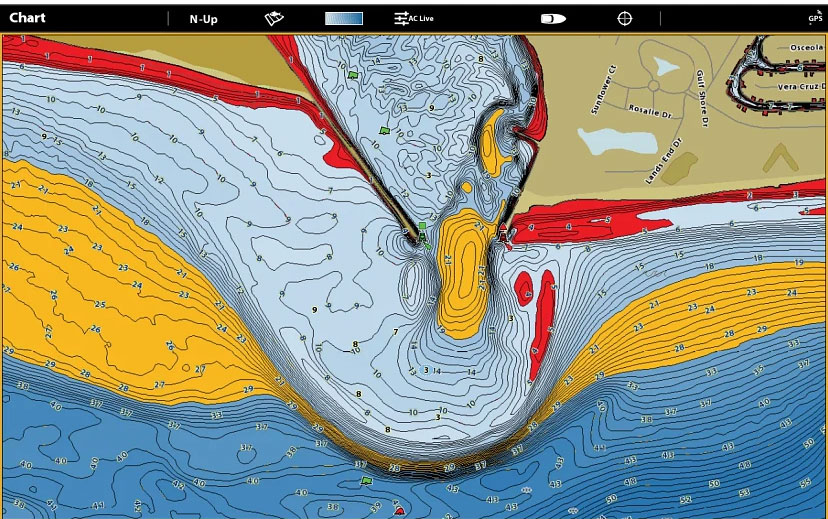
> "Lakemaster mapping. Every boat I've ever run – even when I had other brands of electronics – I've always had Lakemaster in my boat. People always talk about FFS, but a boat without Lakemaster for me is not good.
> "When you find a good spot you look [on the map and] they should be here, here and here. Having a good map is super important – I'd put that in front of FFS anywhere, but especially herring lakes."
|