REMOTE WORK
Barriers to success
Remote workers are spending more than an hour a day on digital presenteeism ― and bosses are to blame
| |
|
A NEW STUDY by two software companies suggests that efforts to manage remote productivity using tools like online status trackers and the like might be having the opposite effect, as the average remote worker is spending more than an hour performing “productivity theatre” ― unproductive acts designed only to convince your boss you are working, whether or not you actually need to be.
“Digital presenteeism is pervasive, with employees working an extra hour each day to show that they are still online and contributing, due to a fear that colleagues and bosses will think they aren’t working hard enough,” said Tariq Rauf, CEO of Qatalog, which produced the Killing Time at Work ‘22 study along with GitHub.
Why does this matter? The authors of the study argue that most of what we now understand as remote work can ― and indeed, should ― be done asynchronously, which is to say on a worker’s own schedule.
“Knowledge work is inherently async,” the authors write. “Some sort of communication happens; people go away, they do the work, then come back; communication happens; people go away. Effort, interval, effort, interval…the concept of ‘time’ at work is dead. We just don’t know it yet.”
By attempting to meld the flexibility of remote work with the management styles of in-person work, the report suggests you start to get the worst of both worlds, not the best.
“The takeaway isn’t terribly complex,” writes Inc.com contributor Jessica Stillman. “If you’re going to go remote, then you should probably be as asynchronous as possible too. If you say your employees are free to work whenever they want, mean it ― and provide the technology to make it possible. Because your team is smart. If you not-so-secretly prefer your people to be online at certain times, what you’re likely to get is a whole lot of pointless productivity theater.” Kieran Delamont
| |
WORKFORCE
More for four
An early verdict is in on the world’s largest pilot program of a four-day workweek: It’s damn good!
| |
|
THE WORLD’S LARGEST four-day workweek pilot ― being conducted by more than 70 companies and more than 3,300 workers in the United Kingdom, is at its halfway point ― and its organizers say it is already proving to be a success.
Charlotte Lockhart, managing director of 4 Day Week Global, told BNN Bloomberg that “anecdotally, companies are suggesting there’s been an overwhelmingly positive experience with revenue and productivity levels that have either maintained or, in some cases, improved.”
While these only constitute preliminary findings, the organizers say that well-being indicators like stress, sleep quality, burnout and life satisfaction are all seeing improvements, and that productivity metrics have been steady if not improving.
It hasn’t been without its hiccups, and some businesses reported needing a minute to adjust. “To be totally honest with you, those first two weeks ― really a mess,” one managing director of a PR firm told CNN Business. But by the fourth week, she said that her team had hit their stride, made the necessary adjustments, and were maintaining previous productivity levels ― in part because everyone is working hard at making it work. “The team, so far, are fighting incredibly hard for it,” she added.
It’s improving people’s health, too, according to one British healthcare company. “People are doing eye tests and going to the dentist and doing endless amounts of life admin that would otherwise not get done,” said Dr. Rupert Dunbar-Rees. “I don’t want to prejudge the outcome of the pilot, but I’d be surprised if we got to the end of this and said, ‘Right, let’s go back to our old way of working.’” Kieran Delamont
| |
|
|
Terry Talks: Conversations about ‘quiet quitting’ are everywhere these days. But it’s anything but new | Loafing. Slacking. Goofing off. Mailing it in. Quit and stay. These phrases go back decades, and so does workplace indifference. And now, as it was then, it’s up to leadership to improve their employee engagement. When employees are engaged, they feel a strong connection to their organization and believe in the work they are doing. | | | |
HYBRID
Lost in the shuffle
Lower density and less foot traffic. What will hybrid work mean for downtown restaurants?
| |
|
REASONABLE MINDS STILL disagree on whether or not hybrid work is good or bad for business, and it will probably take years of study and adaptation to get a firm answer.
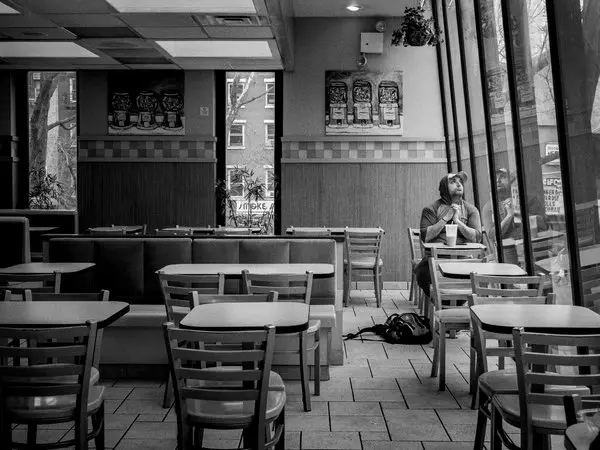
But one sector which has undeniably lost out as offices went hybrid? The downtown lunch spots, who used to make their bones on hungry office workers and lunch meetings, but now see nothing but sparsely staffed offices and placid downtowns.
“Of all the headaches the pandemic has caused the restaurant industry, among the most persistent is the disruption of the business of doing business over lunch,” writes NYT’s Brett Anderson. “Many of the diners who used to nurture relationships and close deals over midday hamachi crudo and steak frites are now making those connections in front of a computer screen at home while eating salads from takeout boxes.”
But they aren’t taking it laying down. Several restaurant organizations are trying to adapt by crafting their own delivery businesses in an attempt to serve remote workers as well as boost their business among in-person workers. In Newark, NJ, restaurants worked with Audible to create Newark Working Kitchens Delivers, an app that redirected the tech company’s cafeteria budget to credits for employees to spend at a rotating selection of local restaurants, who deliver large bulk orders by midday.
Elsewhere there’s Fooda, a company that works with offices to run small food pop-ups that serve a number of workplaces with affordable lunches at a lower upfront cost. Both different ways of trying to recover some of the business lost when much of the downtown office workforce shifted to remote work. Kieran Delamont
| |
SOCIAL MEDIA
Down the rabbit hole again
Having trouble kicking the TikTok habit? A Wall Street research firm says there’s a reason for
that: It’s as addictive as crack cocaine
| | |
|
MARKET ANALYSTS ARE making a comparison that might seem obvious to any TikTok user: that the popular short-form video platform is as addicting as crack cocaine.
A bold, provocative claim, for sure. “The algorithm pushed the most viral content directly to the user delivering endorphin hit after hit with each swipe,” the analysts said. “Cocaine’s effects take time to set in, while Crack’s effect is instantaneous but wears off quickly driving the user to seek another ‘hit’. Crack is incredibly addictive.”
The claim comes from a report titled Has TikTok Ruined the Internet?, and it has more to it than you might think. The basic charge they are making is that TikTok, by creating an experience so addictive, has forced everyone else to compete: Instagram is constantly taking flak for its pursuit of nearly identical platform features via its Reels; Youtube as YouTube Shorts; Netflix has Fast Laughs; Amazon, apparently, is working on something called Inspire.
It isn’t just analysts saying it ― doctors agree. Dr. Julie Albright has led this charge and was the first to make the comparison in 2020. She believes the model is more like gambling, though. “In psychological terms [it’s] called random reinforcement,” Albright told Forbes. “It means sometimes you win, sometimes you lose. And that’s how these platforms are designed…they’re exactly like a slot machine."
Likely many of us will know that feeling of having overdone it on the internet ― so is there anything the average user can do to help their habit? Yes, actually.
“Rather than mindlessly scrolling from video to video, set an intention for what you’d like to see on TikTok, and then use the app’s search function to look for videos on that topic,” writes neuroscientist Thomas Smith. “Remember, the app’s algorithm will probably start directing you away from your original topic and to more extreme, engaging content. Don’t let it. Every time you notice yourself going down a rabbit hole of dancing influencers and crashing cars, return to the search function and go back to choosing videos for yourself, based on the topic you actually wanted to see.” Kieran Delamont
|
| | | | |