Issue 671 - June 13, 2026 | | |
IN THIS ISSUE
-
NEWS: Collective Bargaining Mandate Could Hike the Cost of School Construction by 30%
-
NEWS: Bill that Would have Prevented Police from Sharing Suspects' Photos Revised
-
OPINION VIDEO: Here's the Thing...About Ensuring Every Voice is Heard
-
NEWS: Bill to Cut Taxes on Targeted Home Sales Clears Committee
-
NEWS: Bill to Explore the Use of New Technologies in Schools Advances
-
NEWS: Pace of Action Speeds Up as Days Grow Short
| | |
Collective Bargaining Mandate Could Hike the Cost of School Construction by 30%
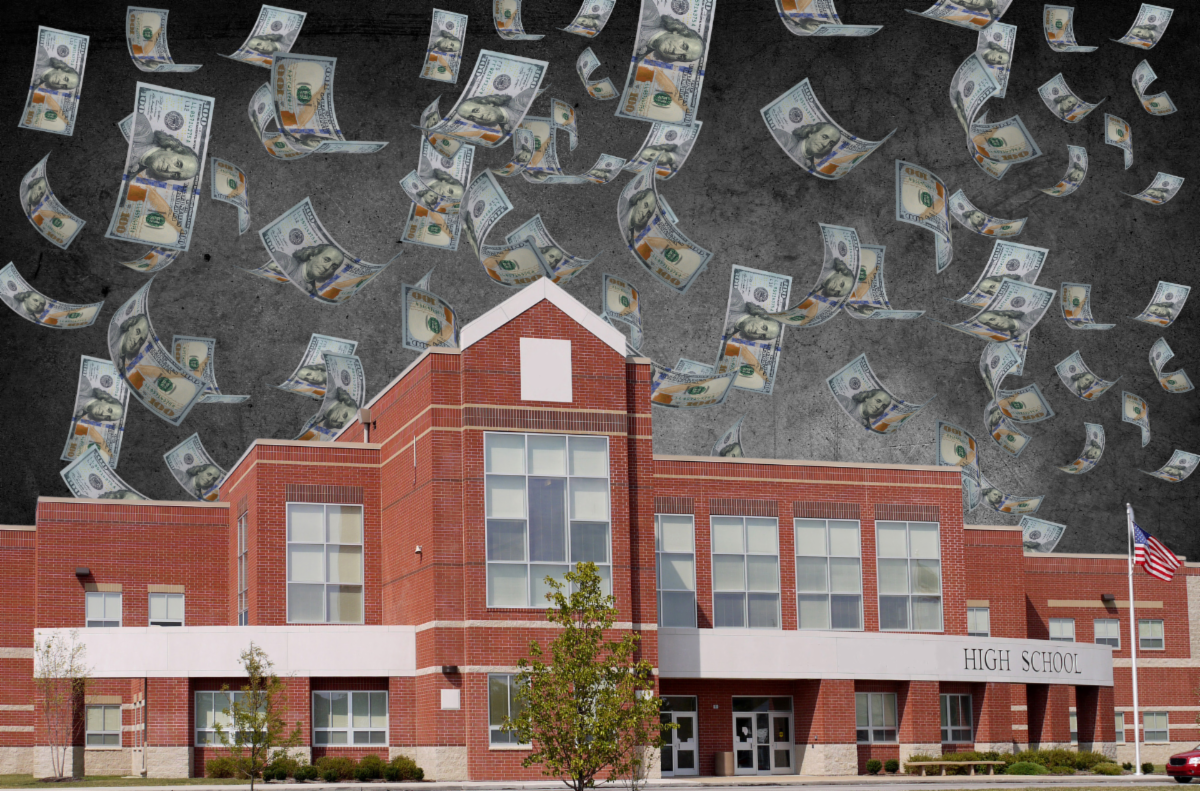
The House of Representatives Labor Committee this week released a hotly contested bill that would require project labor agreements (PLAs), a type of collective bargaining agreement, for any school construction or renovation project exceeding $5 million.
Supporters say PLAs protect workers, ensure equal opportunities, set expectations, and increase efficiency by establishing clear work rules before construction begins.
“Senate Bill 272 is a worker-centric initiative,” said State Rep. Edward S. Osienski (D-Newark), the chair of the House Labor Committee and the prime House sponsor of the bill, who testified on its behalf at Wednesday’s hearing. “PLA projects give a level of stability and structure that is difficult to replicate in an all non-union workplace.”
He added that “the PLA requirement in Senate Bill 272 will not prevent merit shops (non-union companies) from bidding or winning these contracts,” adding that the mandate “would not raise construction costs.”
However, other testimony offered at the hearing took issue with the proposal.
Brian Maxwell, the Director of the Delaware Office of Management and Budget, said the state has not approved any new state-funded school construction projects in nearly three years because of a lack of available resources, a situation that SB 272 would exacerbate. “Mandating a PLA introduces additional preconditions that may discourage otherwise qualified contractors and subcontractors from participating,” he said.
Mr. Maxwell also indicated that adding requirements to the state procurement process would pose a significant risk for increasing project costs. “Based on the research that I’ve seen, economic analyses have found the cost per square foot for school construction projects is approximately 30% higher for PLA projects.”
A 2020 study by the Beacon Hill Institute, a free-market economic think tank based in Massachusetts, examined public school construction projects in Connecticut and found that mandating PLAs increased costs by nearly 20%.
The bill’s sponsors maintain that since Delaware requires “prevailing wage,” a minimum wage scale based on occupation that is applied to all state-funded projects, there should not be any meaningful difference in labor costs between unionized and non-union contractors.
However, multiple witnesses before the committee noted that unionized contractors in Delaware account for only about 10% of all construction companies.
Sussex Technical School District Superintendent Dr. Kevin Carson, who is currently involved in the state’s most expensive school construction project, told the committee that the PLA bill would significantly reduce the pool of available contractors, not only limiting competition but potentially forcing school districts to seek out-of-state companies—all factors that could drive labor costs higher than Delaware’s prevailing wage rates.
Carmen Robledo, a Latina contractor based in Sussex County, said PLAs will exclude many non-union Delaware workers and create more barriers for small businesses. “We all want workers to be safe, treated fairly, and paid well," she testified. "I don’t think anyone in this room disagrees with that goal, but this is already happening…The people I know aren’t asking for special treatment. They are simply asking for a fair shot to compete and to grow.”
A fiscal note on the bill prepared by the Office of the Controller General concluded the cost of implementing the legislation was “indeterminable,” citing numerous unknown factors that could not be established well enough to provide a projection.
The bill was released from committee solely on the votes of House Democrats, who hold a majority of the committee’s seats. Without a cost estimate, the measure can bypass the House Appropriations Committee. It has been placed on the House Ready List and is eligible for consideration by the chamber.
| | |
Bill that Would have Prevented Police from Sharing Suspects' Photos Revised by Sponsor
This week, the sponsor of a bill to limit information police could publicly release about arrestees recalled the proposal and amended it to remove its most contentious provision.
Sponsored by State Rep. Sean Lynn (D-Dover), House Bill 59 (as amended) seeks to prevent law-enforcement agencies from releasing or publishing the names and photos of arrestees unless the person is charged with a violent felony and sharing the information is necessary to protect the public’s safety.
Rep. Lynn maintained that people who have been arrested are presumed innocent until convicted, and that publishing their names and images creates a public perception of guilt, unfairly causing reputational damage that cannot be undone.
When the bill was initially debated on the House floor last month, there was broad agreement on this point. But lawmakers were sharply divided over a secondary provision that would have banned police from sharing images of suspects, except in limited circumstances.
House Republicans, including State Reps. Shannon Morris (R-Harrington, Felton) and Valerie Jones Giltner (R-Georgetown), argued this was a step too far, saying it would severely handicap police by removing a powerful tool for advancing criminal investigations.
While several states have laws that limit public access to booking information or restrict its use on social media platforms, there do not appear to be any that currently bar police from issuing photos or videos when seeking a suspect.
The bill passed on May 19th without Republican support in a tight party-line vote of 23-11.
This week, Rep. Lynn recalled the bill, rescinded the previous House vote, and amended it to remove the section barring the release of suspect photos. As a result, the modified version of the bill received bipartisan support, passing 31-8.
“I appreciate Rep. Lynn taking this action,” said State House Republican Leader Tim Dukes (R-Laurel). "With the amendment, I was comfortable voting in favor of the bill.”
State House Republican Whip Jeff Spiegelman (R-Townsend, Smyrna, Clayton) also lauded the move. “Rep. Lynn has given me some hope that there are still some instances where we can overcome party tribalism and reach consensus on good policy."
The bill is now pending action in the Senate Judiciary Committee.
| | |
Here's the Thing...About Ensuring
Every Voice is Heard
Joseph Fulgham, Director of Policy and Communications,
Delaware House of Representatives Republican Caucus
The Delaware John Lewis Voting Rights Act was released by the House Elections & Government Affairs Committee on Wednesday. House Bill 444 is a state-level framework to prevent voter suppression, vote dilution, and other discriminatory election practices.
While apparently well-intentioned, the flawed bill is being fast-tracked through the legislative process, having just been introduced late last week.
Among the concerns is that the measure defines voter suppression so broadly that almost any election rule—such as voter ID, signature checks, or standard polling hours—could be challenged if statistical voting differences occur between designated minority groups and the general population.
Additionally, the bill eliminates intent as a factor in determining whether voter suppression has occurred. Bias claims would not require any proof of an intentional act of discrimination.
As detailed in this video, the initiative also illustrates an ironic level of duplicity. House and Senate Democrats sponsoring the bill continue to embrace some of the same methods they seek to ban under HB 444, using them to suppress and dilute the voting power of one of the state’s largest minority voting groups: Delaware’s 195,000 registered Republicans.
More than that, they have repeatedly killed legislation aimed at making the redistricting process more equitable. The latest examples of this in the current General Assembly are House Bill 184 and Senate Bill 14. Both redistricting reform measures have failed to advance.
To paraphrase a line from George Orwell’s Animal Farm, Delaware Democrats believe all voices should be heard, except some voices should be heard more than others.
NOTE: Because HB 444 carries an estimated cost of at least $300,000 annually, the measure has been assigned to the House Appropriations Committee for further consideration.
| | |
Bill to Cut Taxes on Targeted Home Sales Clears Committee
A bill sponsored by State Rep. Lyndon Yearick to make homes more affordable has cleared a House committee.
House Bill 286, released Wednesday by the House Revenue & Finance Committee, seeks to reduce a state tax on home sales.
At present, the real estate transfer tax is 4% of a home’s purchase price, which is among the highest in the nation. The levy is an amalgam of two separate components. The state imposes a 2.5% tax, with applicable county or municipal governments usually imposing the remaining 1.5%.
Applied to the approximate median value of a single-family home in Delaware, $400,000, the combined tax results in a total obligation of $16,000, typically split between the buyer and seller.
This proposal would reduce that burden for qualifying affordable housing transactions.
Under the bill, homes sold for less than $350,000 would not be subject to the state’s 2.5% portion of the transfer tax.
Homes sold for between $350,000 and $500,000 would have their total transfer tax reduced from 4% to 3% through equal one-quarter-percentage-point reductions over four years, starting January 1, 2027. Any homes in this price range sold after January 1, 2030, would pay a 3% realty transfer tax. Local governments’ transfer tax revenue would not be impacted.
Rep. Yearick acknowledged that his proposal would reduce the amount of money flowing into the state’s coffers by more than $40 million when the bill is fully implemented.
“Our state should focus on helping those who need it most, when they need it most,” Yearick said. “While some may worry about reduced state revenue, they should also consider the long-term cost of increased public aid. Reducing financial pressure on vulnerable citizens up front is more efficient and more effective than forcing families into government assistance programs later.”
Due to the loss of state revenue, this bill has been assigned to the House Appropriations Committee for further review.
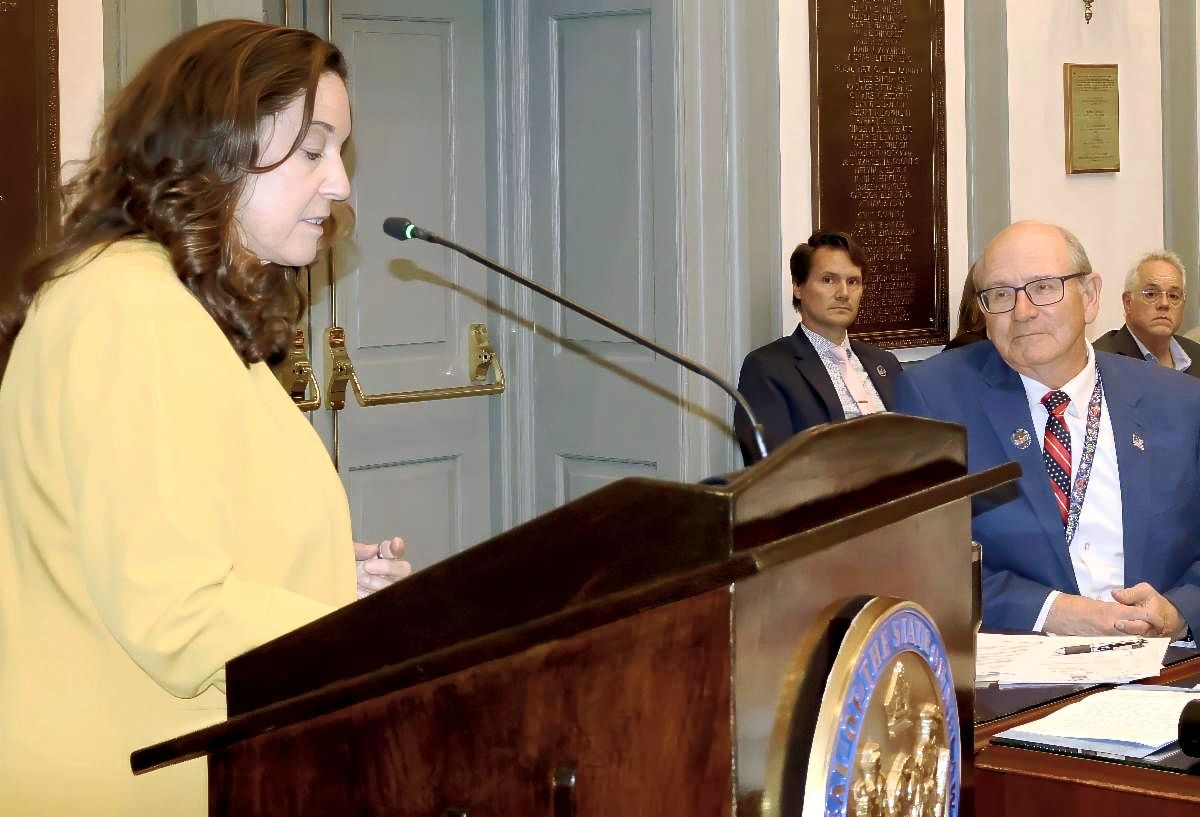
IN PHOTO: Rep. Lyndon Yearick testifies before the House Revenue & Finance Committee.
| | |
Bill to Explore the Use of New Technologies in Schools Advances
A bill sponsored by State Rep. Jeff Hilovsky (R-Long Neck, Oak Orchard) to study new technologies to improve academic performance was released by the House Education Committee late Wednesday.
House Substitute 1 for House Bill 404 seeks to create a pilot program in 12 public schools to explore how artificial intelligence (AI) and extended reality (XR) technologies can be used to effectively teach children and train employees. The legislation requires that the participating schools be evenly distributed among all three counties and the City of Wilmington.
Rep. Hilovsky maintains these new technologies hold the promise of providing immersive, personalized learning experiences that could enhance student engagement, proficiency, and mastery in core subjects.
While these technologies are not without their pitfalls, the bill's supporters say the pilot program is intended to establish and test protocols to obtain the benefits while avoiding the drawbacks. They also note these technologies are not replacements for teachers or human interaction. In fact, one of the goals of this effort will be to increase teacher efficiency so educators can spend more time giving students the personal attention often needed to help them reach their full potential.
The proposed pilot program would run for three years and be administered by the Delaware Department of Education (DOE). The agency would be charged with compiling a final report analyzing the program's effectiveness and determining whether the effort should be maintained, expanded, or adjusted.
The initiative would cost approximately $1 million annually over its three-year lifespan.
Due to the expense, the bill has been assigned to the House Appropriations Committee for further review.
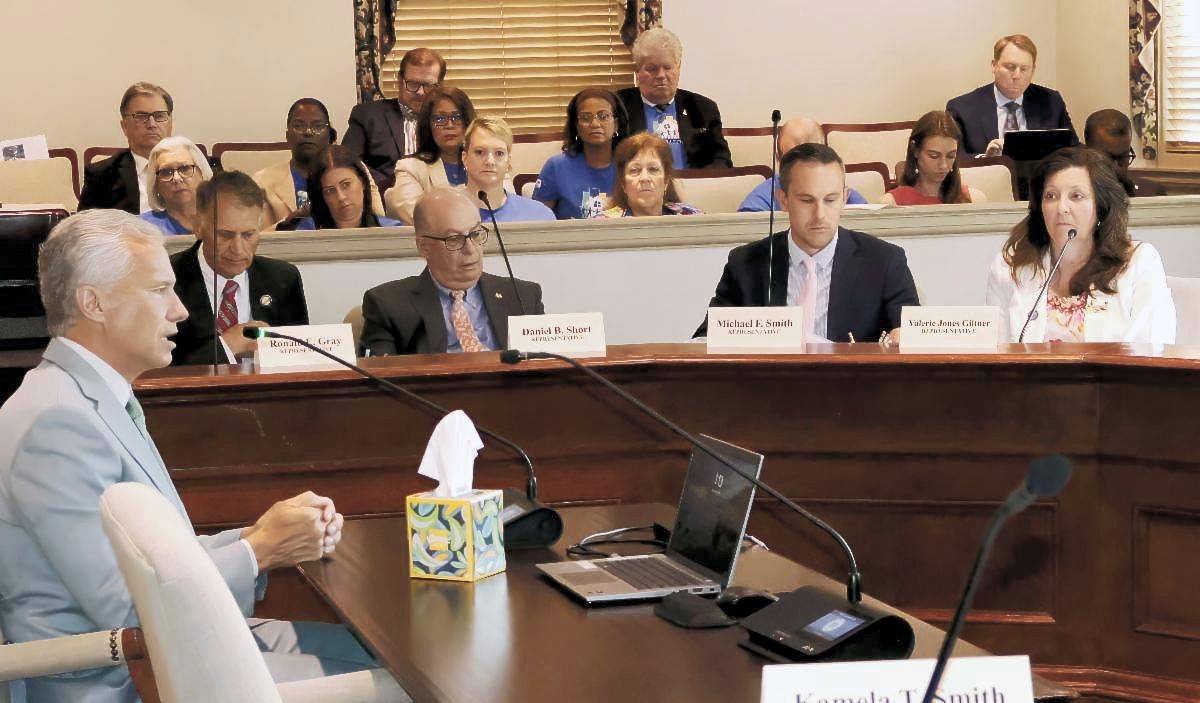
IN PHOTO, FROM LEFT: Delaware Secretary of Education Cynthia Marten and State Rep. Jeff Hilovsky at Wednesday's House Education Committee meeting discussing HB 404.
| | |
Pace of Action Speeds Up as Days Grow Short
With only seven scheduled legislative days left before the 153rd General Assembly adjourns at the end of the month, the sense of urgency is quickening the pace at which bills are moving through the legislature.
With this being the second year of the two-year General Assembly, any bill not winning approval by the time the gavel drops on June 30 will be effectively dead.
The following are some of this week's bill actions.
House Passes Bipartisan Bill to Create Delaware Film Tax Credit
The House on Thursday passed legislation to establish a new tax credit for film projects created within the state.
Sponsored by Rep. Kerri Evelyn Harris (D-Dover East), Rep. Mike Smith (R-Pike Creek Valley) and Sen. Elizabeth “Tizzy” Lockman ( D-Wilmington), House Bill 364 (as amended) would create the Delaware Entertainment Production Tax Credit. The benefit is intended to encourage media production activity in the First State.
"Creative industries, digital entertainment, streaming content, esports, and videogame development are all rapidly expanding sectors that other states are aggressively competing to attract," Rep. Harris said.
To qualify for the Delaware Entertainment Production Tax Credit, companies would need to demonstrate that they invested more than $100,000 in eligible activities over a 12-month period. Qualified companies could then receive a tax credit equal to 30% of those investments, which could be applied toward certain Delaware state taxes.
Independent verification of spending would also be required, as well as public reporting requirements and interagency oversight.
The bill also prioritizes productions that hire Delaware residents, use Delaware businesses, and make long-term commitments to the state.
“After trailblazing this effort with HB 237 last year, I was proud to work with Rep. Harris on HB 364 to give Delaware a competitive tool to attract the film production industry,” Rep. Smith said. “This measure is intended to bring new revenue to local businesses and create real jobs for Delaware workers. With most states already offering similar incentives, this bill ensures we stay competitive and strengthens our economy through smart, accountable economic development.”
The bill is now pending consideration in a Senate committee.
Bill to Require Narcan in Bars Tabled in Bipartisan Vote
A proposal seeking to require that taprooms and taverns keep drugs used to treat opioid overdoses on hand was tabled yesterday by a coalition of House Republicans and Democrats.
House Bill 403 seeks to require at least two "opioid antagonists" -- sold under various brand names, including Narcan -- to be kept on-site and that instruction on how to administer these drugs be included as part of the state's mandatory alcoholic beverage server training.
State representatives from both sides of the aisle questioned why these businesses were singled out for the mandate when there is no data indicating their establishments were any more likely to be the site of an opioid overdose. "Why are we requiring bartenders to be medical professionals?" asked State Rep. Madinah Wilson-Anton (D-Newark).
State Rep. Valerie Jones Giltner (R-Georgetown), a former nurse who regularly carries Narcan to aid others, raised concerns that the bill could create liability issues if an overdose occurred in a taproom or tavern and the required medications could not be located quickly, were missing, or had inadvertently been kept after their effective dates.
Twenty-five House members (12 Republicans and 13 Democrats) voted together to table the bill.
| | | | |