|
Hispanic Heritage in Democracy: The 1965 Voting Rights Act and 1975 Amendments
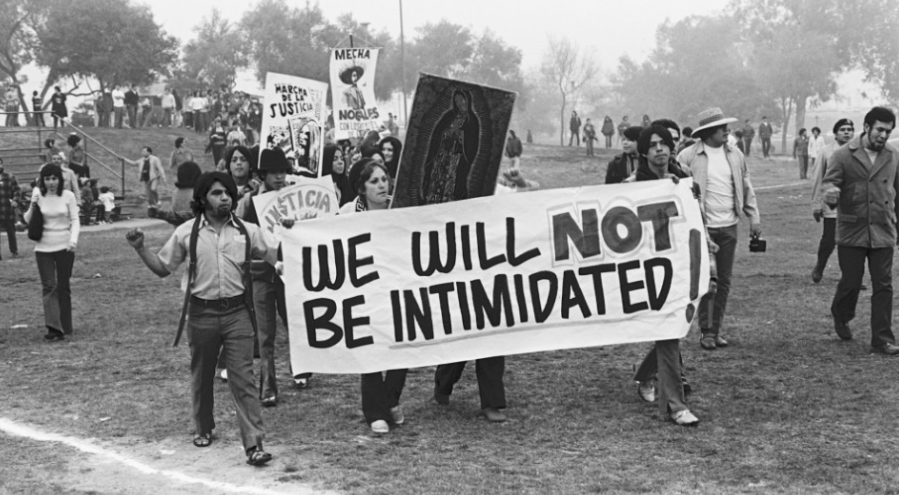
For generations, Hispanic Americans faced enormous barriers to voting, from poll taxes and intimidation to outright exclusion from voter rolls. Even when formally eligible, many Spanish-speaking citizens encountered language barriers that effectively silenced their voices. The passage of the Voting Rights Act of 1965 began to dismantle these obstacles, and the 1975 amendments ensured that Hispanic communities would finally gain a more equal voice in American democracy.
The original Voting Rights Act of 1965 targeted discriminatory practices that had long disenfranchised minority voters, particularly in the South. It outlawed literacy tests, provided for federal oversight in jurisdictions with histories of voter suppression, and required states to seek approval before changing voting laws. These protections immediately expanded participation for many marginalized groups, including Hispanic voters in Texas, Arizona, New Mexico, and California.
Yet, the 1965 law did not fully address the needs of language minority groups. For many Hispanic citizens, ballots and registration materials were printed only in English, and election workers offered little to no assistance. In 1975, after years of advocacy by Latino leaders and organizations, Congress amended the Voting Rights Act to explicitly include protections for “language minority groups”—Spanish, Native American, Asian American, and Alaska Native communities.
The amendments required bilingual election materials in jurisdictions where a significant portion of the voting-age population spoke limited English. In practice, this meant that cities and counties with large Hispanic populations had to provide Spanish-language ballots, voter guides, and interpreters at polling places. The law also expanded federal oversight to these regions, ensuring that Hispanic voters could no longer be systematically excluded from the electoral process.
The impact was profound. With access to bilingual voting, Hispanic voter registration and turnout began to rise steadily. More Latino candidates successfully ran for office, from school boards to Congress, reshaping political representation in the United States. Over time, this expanded participation empowered Hispanic communities to influence policy on education, labor, healthcare, and immigration.
The Voting Rights Act and its 1975 amendments remind us that democracy cannot thrive if language or heritage is used as a barrier. For Hispanic Americans, these laws were not simply about ballots—they were about belonging. They affirmed the right to be heard, the right to be counted, and the right to shape the future of the nation.
|