Hillary Goldberg, Publisher and Editor-in-Chief
Editorial Board
Natalee Addison
Denise Belcher
Juanita Brown
Laraine Chaberski
Toniette H. Duncan
Margot Embree Fisher
Gail Gordon
Guy Thomas Lauture
Laverne Lightburn
Charles W. Powers
Bernard Rous
Micki Shilan
Barbara Ley Toffler
Gloria Wilson
Contributors
Bettina Hempel
Henry Pruitt
Howard Rose
Editorial Board Advisors
Theodora Smiley Lacey
Loretta Weinberg
|
|
KNOW YOUR TOWN:
Occasional Newsletter Issues on Institutions, Businesses, Retail Establishments, and Recreational Opportunities in Teaneck
This Week: HOLY NAME MEDICAL CENTER
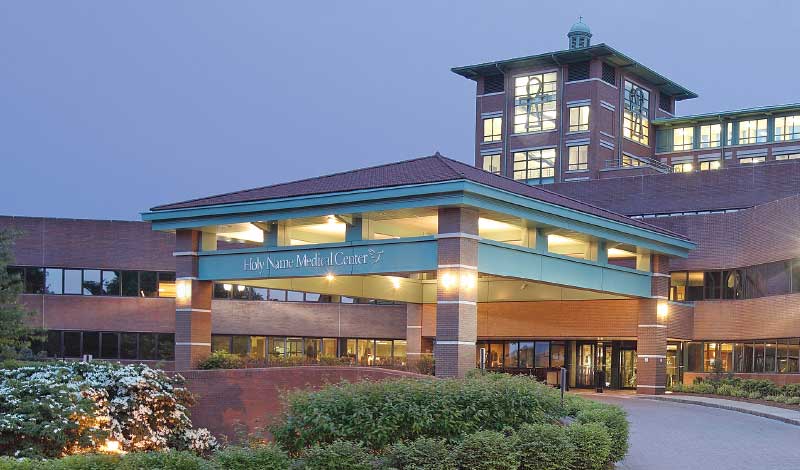
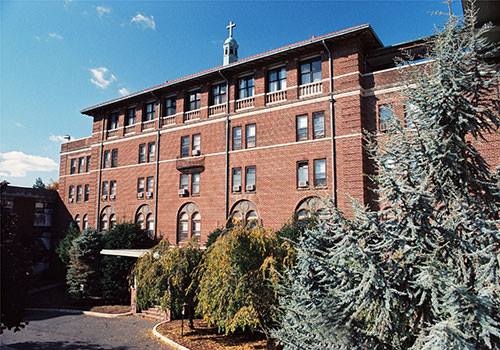
Holy Name has been an institution in Teaneck since 1925. Once most well-known as the birthplace of rock-and-roller Ricky Nelson, younger son of Ozzie and Harriet, it has become a nationally and internationally known institution with a world class Emergency Room Center.
But in many less-known ways, Holy Name is an institution that that reflects the diversity for which Teaneck is known. Teaneck Voices hopes you enjoy this new feature.
|
|
Holy Name Medical Center, Teaneck, and Taxes |
|
Until very recently, everyone assumed that hospitals like Holy Name Medical Center were exempt from payment of property taxes. Holy Name’s stated mission is to provide health care to the community through prevention, education, and treatment while following a ministry of healing, which embraces the tradition of Catholic principles, the pursuit of professional excellence and conscientious stewardship. On this basis, HNMC was granted tax-exempt status and in its mission statement it certainly seems to meet the IRS criteria. New Jersey law states that the property of a charitable organization that is used exclusively for charitable purposes is entitled to tax exemption, but also states that taxes may be due on a pro-rated basis if some part of the property is used for a nonexempt purpose.
NJ courts set three criteria to qualify for property tax exemption. The organization must show that it is organized exclusively for a charitable purpose; that its property is indeed used for that purpose; and that the use and operation is not for profit.
Landmark Case in Morristown Changes the Playing Field
Six years ago, Morristown sued the Morristown Medical Center over property taxes. Tax Court Judge Vito Bianco issued a landmark decision in June 2015 in favor of the town that fundamentally changed the assumptions on property tax payments by hospitals.
Judge Bianco held that the overwhelming majority of Morristown Medical Center’s property was taxable because non-profit and for-profit activities were so commingled that the non-profit use and operation could not be clearly distinguished. The judge stated that any hospital whose operation and use were structured like Morristown Medical Center could not qualify for a full property tax exemption.
After the ruling, Atlantic Health System (the parent of Morristown Medical Center) reached a settlement with the town, under which the hospital agreed to pay $15.5 million in back taxes and penalties, plus annual property taxes on 24 percent of the hospital's property from 2016 to 2025.
Municipalities statewide sought to make similar deals with their hospitals. In June 2018, neighboring Hackensack University Medical Center reached an agreement to pay the city $4 million a year for six years to cover its property tax obligations.
Teaneck’s Turn Reaching an Agreement with Holy Name
Following from Judge Bianco’s landmark ruling, Teaneck sought to reach an agreement with Holy Name Medical Center.
The hospital does pay the township several hundred thousand dollars a year for sewer taxes to cover its water usage, and pays property taxes on office buildings it owns and for the homes it has purchased adjoining the hospital.
But it pays no property taxes for its main campus. With a listed assessed value of $67 million for its campus on Teaneck Road -- $61M for the buildings and $6.5M for the 20 acres of land it occupies -- Holy Name would be responsible for additional property tax payments in excess of $2 million per year if it were fully taxed, just as homes and businesses are.
Following on the Morristown decision, there needs to be clarity on the value of the property and the details of how for-profit and non-profit uses are intermingled at Holy Name. The $67 million assessment has not been revised in many years; how that number was derived in the first place is somewhat murky. How Holy Name operates with for-profit businesses inside the hospital may differ from the situation at Morristown Medical Center.
Current Property Tax Status of Holy Name in Teaneck
In 2015, Teaneck filed suit to claim property taxes from HNMC. The case has never been heard in court, because HNMC and the township were, at least theoretically, trying to negotiate a settlement over the preceding five years.
Then in July of 2020, Deputy Mayor Mark Schwartz announced that Teaneck had reached an agreement with HNMC to pay $1 million a year. But there is as yet no publically available copy of the agreement. Nor is it clear if the headline figure of a million dollars a year includes payments already being paid for sewer taxes and for buildings and homes owned by Holy Name.
The intent behind the original law for non-profits receiving tax exemptions is clear: to foster charitable organizations that serve the public good. These questions concerning Holy Name Medical Center’s tax status vis-à-vis the Township of Teaneck illuminate our understanding of the larger issue of tax-exempt non-profit organizations.
Next Steps to a Deal Between Holy Name and Teaneck
Other municipalities have reached agreements to strike a balance between the missions of the hospitals to serve the community and the need of the towns to cover the rising cost of services provided to the hospitals. Morristown is collecting $15 million over a decade from Morristown Medical Center. Next door, Hackensack is almost half way through a six-year, $24 million agreement.
After years of fruitless negotiations, when will Holy Name Medical Center and the Township of Teaneck reach a mutually satisfactory deal?
|
|
Asian Health Services at Holy Name Medical Center |
|
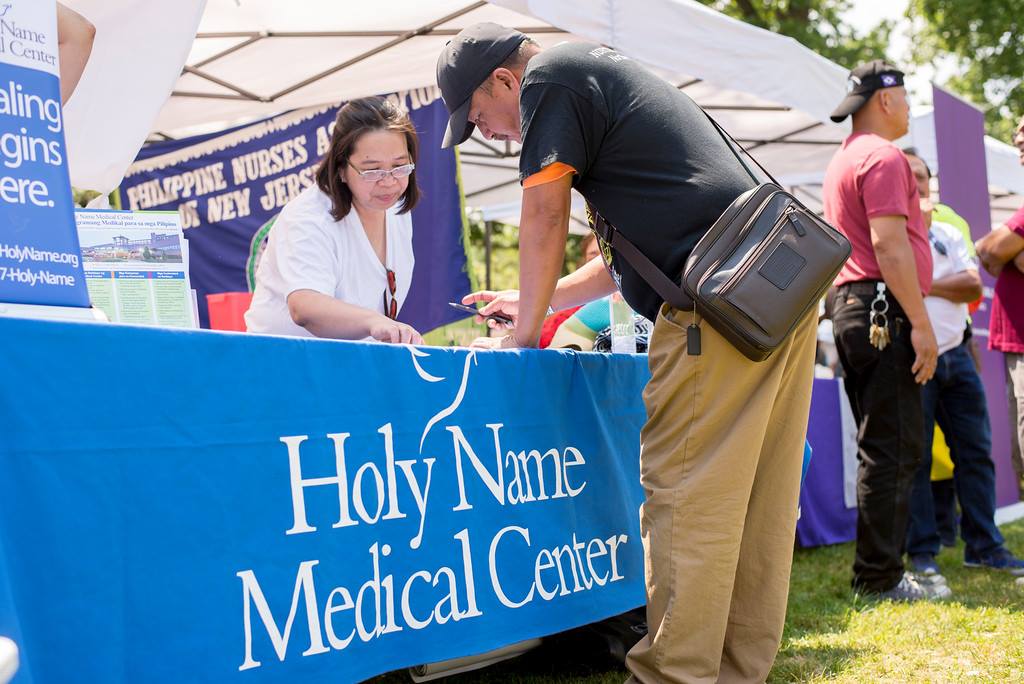
Teaneck is known for its diversity, with people of many different races, religions, and national origins. As the Asian population in Teaneck and the surrounding towns has grown, Holy Name has taken the initiative in creation of their program called “Asian Health Services.” The goal of this program, according to Holy Name Medical Center is to “provide Asian patients with high quality health care in their native language and in an environment sensitive to their culture.”
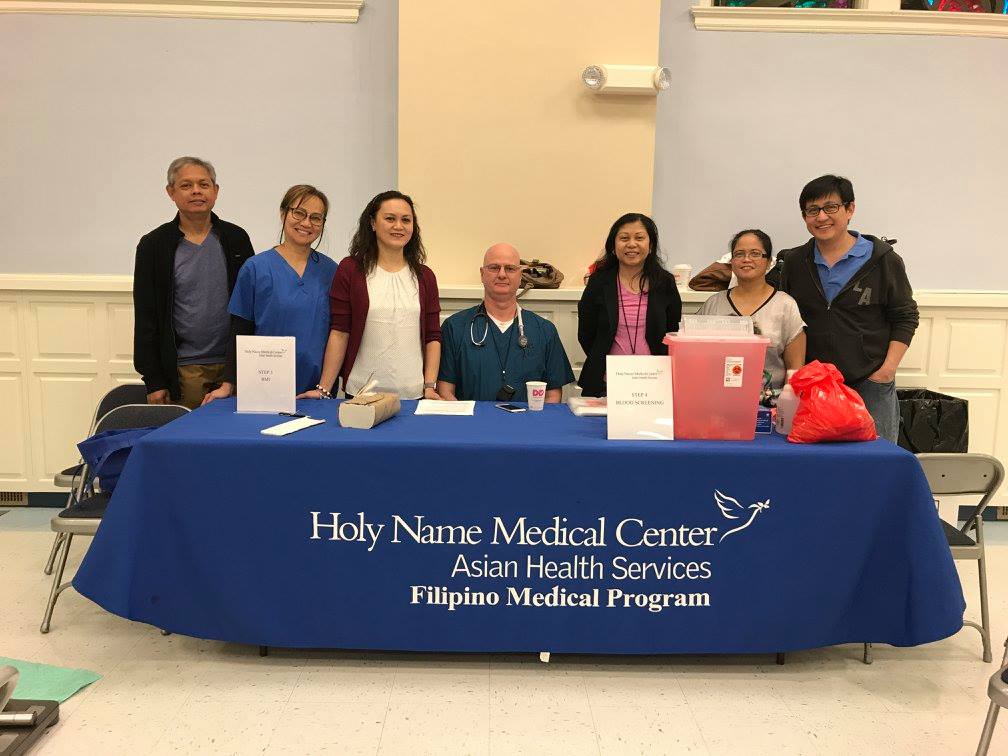
The program began in 2008 with their Korean Medical Program to address the gap in language and culturally appropriate health care for the Korean-American population in Teaneck and the greater New York area. Since starting, the program provides services to roughly 45,000 patients each year. Through this program, physicians have been able to provide diabetes, cholesterol, blood pressure, BMI, and breast cancer screenings, which they have discovered to be more prevalent in the Asian-American community. The Asian Health Services program also assists individuals with the Affordable Care Act sign up process. Being able to provide these vital health screenings in a positive patient focused environment, in a patient’s native language along with cultural comforts helps to ensure these patients will return, and partake in a proactive approach to maintain their health.
Since it’s immense success with the Korean Medical Program, the Launch of the Asian Health Services program has grown to include a Chinese Medical Program (launched in 2015), Filipino Medical Program (launched in 2015), Indian Medical Program (launched in 2016), and the Japanese Medical Program (launched in 2017). Many of the patients visiting the Asian Medical Services program at Holy Name are first generation immigrants to the United States.
|
|
If the patient in one of the umbrella programs under the Asian Health Services programs needs to be admitted, rooms with TV channels in their respective languages are available, as are newspapers and magazines. Additionally, if the patient is being seen in an out-patient setting transport back-and-forth from home to the hospital bilingual drivers are available.
As part of this wonderful and important program, members of the community are encouraged to volunteer. Volunteers are needed both with direct patient contact as well as administrative areas. Per the Asian Health Services Website at Holy Name Hospital, volunteers are invited to assist with:
- Escort patients and their families to different destinations within the hospital
- Provide reception support and give general information to visitors
- Perform office duties such as organizing and filing paperwork, assist with mailings, input data from the various programs and help with translating brochures
- Interpret for patients having any difficulties understanding instructions, questions or comments
- Assist during various health screenings held throughout the year, working registration or other duties needed at off-site events
- Running errands within the hospital, delivering forms and other paperwork
- Doing rounds of patient rooms, providing comfort and making sure patients have all they need to feel safe and calm
Holy Name Hospital has been a vital partner in the community in the past year. If you are interested in volunteering in the Asian Health Services Program please reach out directly to Holy Name HERE. Teaneck should be proud that our community hospital is providing this vital community health program.
|
|
|
 |
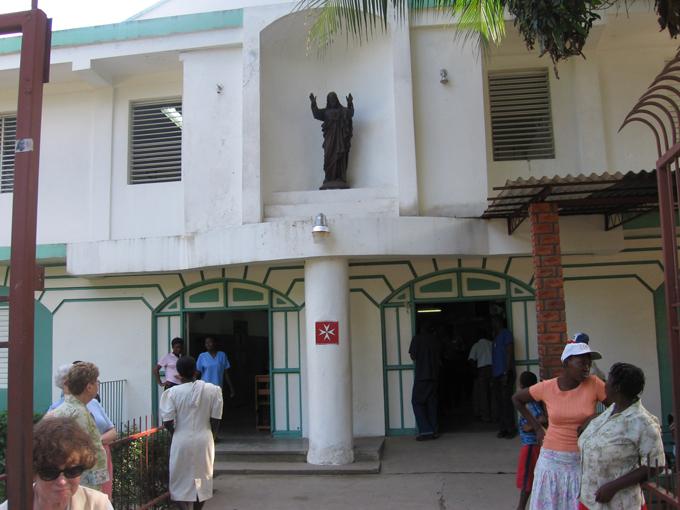
In 1992, Dr. David Butler, obstetrician and gynecologist at (then named) Holy Name Hospital, traveled to Haiti on a medical mission at Hôpital Sacre Coeur, a private hospital in Milot, a small town in Northern Haiti near the ancient city of Cap Haitian. Dr. Butler not only attended to pregnant women, and delivered their babies, but also provided training for the local staff. Like so many who visit Haiti, Dr. Butler fell in love with the energy, tenacity and spirit of the Haitian people. His work in Haiti, along with many of his colleagues he recruited from Holy Name, is now approaching his thirtieth year.
Milot has a population of 31, 992, but the town’s hospital, Sacre Coeur, serves 250,000 people in the Nord (North) region. Most live in deep poverty in the mountains surrounding the town. Sacre Coeur Hospital was founded in 1968 by the Montreal Province of the Brothers of the Sacred Heart on land owned by the Catholic Archdiocese of Cap Haitien, the far northern city that is home to the Citadelle Laferrière, a nineteenth century fortress which is a UNESCO World Heritage Site.
When Dr. Butler first visited in 1992, Sacre Coeur Hospital was administered by the The Crudem Foundation, Inc. (The Center for the Rural Development of Milot). In 1986, the Archbishop of Cap Haitien had invited Crudem to assume supervision of and financial responsibility for Sacre Coeur. The hospital was spare, like most private and public hospitals in Haiti. (Public hospital are administered and overseen by the Ministry of Public Health and Population (MSPP) a branch of the Haitian government. Again, like most healthcare facilities, there was limited water available to maintain good hygiene, few licensed nurses, and only the most basic equipment and technology.
In January, 2010, following the massive earthquake that hit Haiti, Sacre Coeur Hospital became to Northern Haiti what Holy Name Medical Center became to our Teaneck area in the Covid-19 Spring of 2020. It became the primary source of medical care for thousands injured in the earthquake. Medical personnel from Holy Name and other hospitals flew into Haiti to staff the hospital and provide necessary surgical and medical interventions. Although pre-earthquake, Sacre Coeur had only 72 beds, immediately post-earthquake it established 420 beds in and around the hospital. Currently, there are 200 in-patient beds at the hospital.
|
|
|
|
Through Dr, Butler and his colleagues, Holy Name Medical Center came to know the Crudem Foundation and the Sacre Coeur hospital. Although they had been working with Crudem for several years, in 2012, The Holy Name Medical Center Foundation became the sole corporate member of The Crudem Foundation. Since then, Holy Name has provided substantial financial support as well as technical, operational, training and administrative assistance to Sacre Coeur. As is essential for sustainable change in any developing country, the management of Sacre Coeur is the responsibility of a Haitian leadership team, trained by advisors from the U.S. supported by CRUDEM.
In 2020, under Holy Name’s leadership, this mission was renamed: Haiti Health Promise of Holy Name. In the last year over 350 professional healthcare volunteers have traveled to Sacre Coeur to see patients and to teach Haitian professionals. Hôpital Sacre Cœur is also a training center for the USAID supported Maternal and Child Survival Program. In 2020, the number of outpatient patient visits was 62,355; the number of Emergency Room visits was 7,158; Surgeries were 2,597 and newborn deliveries were 2,195.
The population Haiti as of mid-2020 was 11,402,528. There are about 950 healthcare facilities –- 800 are primary care health centers, 45 are community reference hospitals, of which Sacre Coeur is now one, 10 departmental hospitals one in each department (departments are like states) providing secondary care, and 5 university hospitals and 3 specialized centers providing tertiary care. The number of healthcare facilities for the large and dense population is extremely small and inadequate. But the Holy Name Medical Center and the Crudem Foundation are making continuing progress in providing healthcare to the residents of Northern Haiti.
|
|
|
|
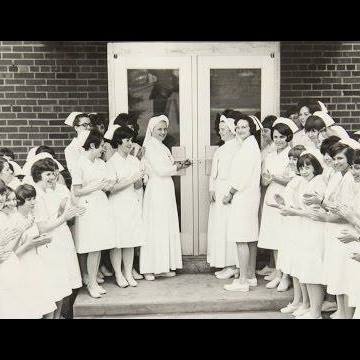
The Holy Name School of Nursing was founded in 1925 with the founding of the hospital. In 2018, it changed its name to the Sister Claire Tynan School of Nursing and, in 2019, moved to a new campus in Englewood Cliffs which provides state of the art classrooms and laboratories, while continuing to provide clinical work at the hospital. Sister Clare Tynan School of Nursing is accredited by the New Jersey Board of Nursing and Accreditation Commission for Education in Nursing, and is approved by the New Jersey Department of Education. The school offers three diploma nursing programs:
- Registered Nurse (RN) (Also referred to as a diploma or hospital-based program) A 2-year program.
- Licensed Practical Nurse (LPN). A 12- month program.
Upon graduation, the school has partnered with local colleges and universities where students are able to seamlessly transfer to earn their Bachelor’s of Science of Nursing (BSN), if they choose.
The Sister Claire Tynan School is in the traditional model of nursing schools where nursing training took place at hospital-based nursing schools. Traditionally, nursing students were on site for instruction, supervision, and engaged in a daily patient care so they built skills while they studied. When they graduated, they had nearly immediate employment.
Interestingly, this hospital-based nursing school program is an endangered species in the nursing school pantheon However, Holy Name Medical Center is one of the few remaining in the country that continues to offer the traditional diploma RN course – but – with established university relationships for those who wish to pursue an academic degree.
While Holy Name has not stated why it maintains the diploma RN program, the Medical Center’s outreach to diverse underserved groups suggests that that is the philosophy behind the retention of this program. Many high school graduates interested in nursing are eager to dive into clinical work, many have limited funds for education. Holy Name’s program also offers a great transition for career changers who may already have a Bachelor’s degree. A recent Holy Name graduate attended Holy Name Nursing School after completion of her Bachelors in Nutrition Science.
Hospital-based programs include access to doctors, current research and generally the opportunity to be constantly in the hub of best practice and patient care. For example, as a nursing student in a hospital-based RN program, clinical rotations such as medical, surgical, obstetrics, etc. are available on site, creating a culture of clinical care from the earliest days of nursing training.
One of the important advantages of a diploma program is that most hospitals willingly employ new RNs from their home base program. It is an effective way to utilize already trained nursing staff; new grads already are familiar with the patient care system, have been for all intents and purposes working in a nursing capacity, are knowledgeable with the preferred patient charting method, with the doctors and other nurses and are comfortable with the “lay of the land.”
More information on the Holy Name Nursing Program can be found HERE.
|
|
|
|
|
|
|
|