|
Raising A United Flag & A Powerful Pen
We are now in the historic year of 2026, the 250th anniversary of the Declaration of Independence. As we look ahead to a year of celebration, we first look back exactly 250 years to January 1776, a month that transformed a fragmented rebellion into a unified movement for a new nation with two pivotal events.
| | |
Symbolizing Unity: The Raising of The Flag
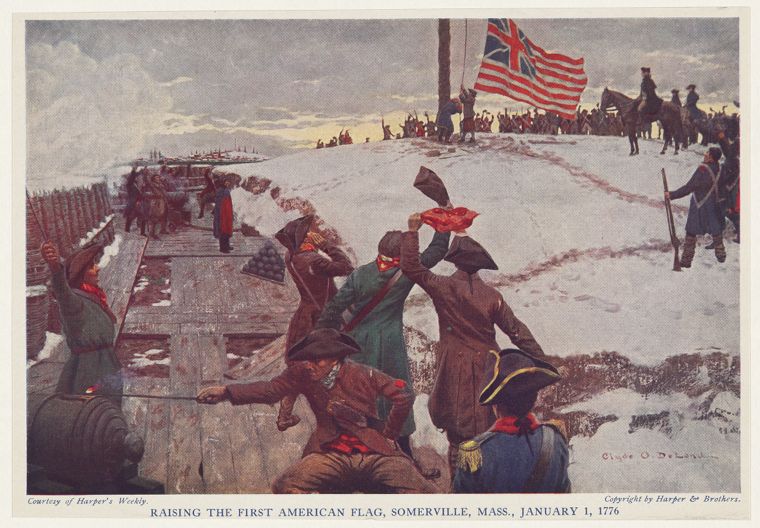
On January 1, 1776, to boost the morale of the Continental Army during the Siege of Boston, George Washington ordered the raising of a flag at Prospect Hill that would become a vital signal of unity to the army and burgeoning nation.
Raising the flag was a visual declaration to the British, and to the world, that the thirteen colonies were standing together as a united front.
Just months before the formal signing of the Declaration of Independence, this act served as a defining moment: a New Year’s resolution that would change the course of history.
| | The Power of the Pen: Common Sense | | |
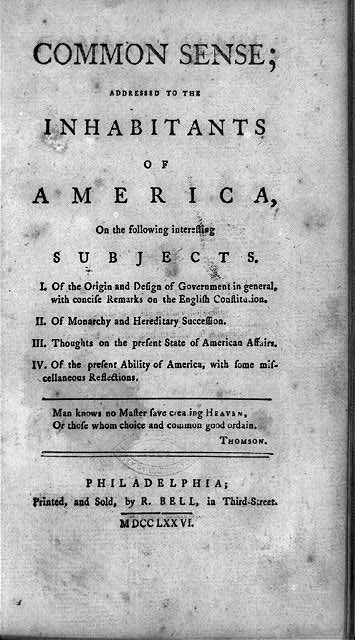
On January 10, 1776, Thomas Paine published Common Sense, a pamphlet that would become the "viral sensation" of the 18th century.
While the intellectual debate over independence had been brewing for years, Paine did something new: he used plain language to explain why independence made sense for both the economy and people, arguing in clear and direct terms.
In doing so, Paine made a compelling business case for a new government.
This direct, "common sense" approach is widely credited with shifting the public consciousness, effectively "selling" the idea of a free America to the very people who would have to build it.
| | Lasting Legacy in Unity & Advocacy | | |
Success in West Virginia’s economy requires a unified vision.
When we advocate as one voice, much like that first flag raised at Prospect Hill, we send an unmistakable signal that our state is stronger when we stand together.
The West Virginia Chamber of Commerce remains dedicated to ensuring that the voice of our business community is clear, data-driven and heard within the halls of government.
We look forward to celebrating this historic 250th anniversary year with you as we continue our work to move West Virginia forward!
| | WEST VIRGINIA HISTORY THIS MONTH | | |
January 1 On January 1, 1800, the Virginia General Assembly passed an act adding part of Monongalia County to Harrison County.
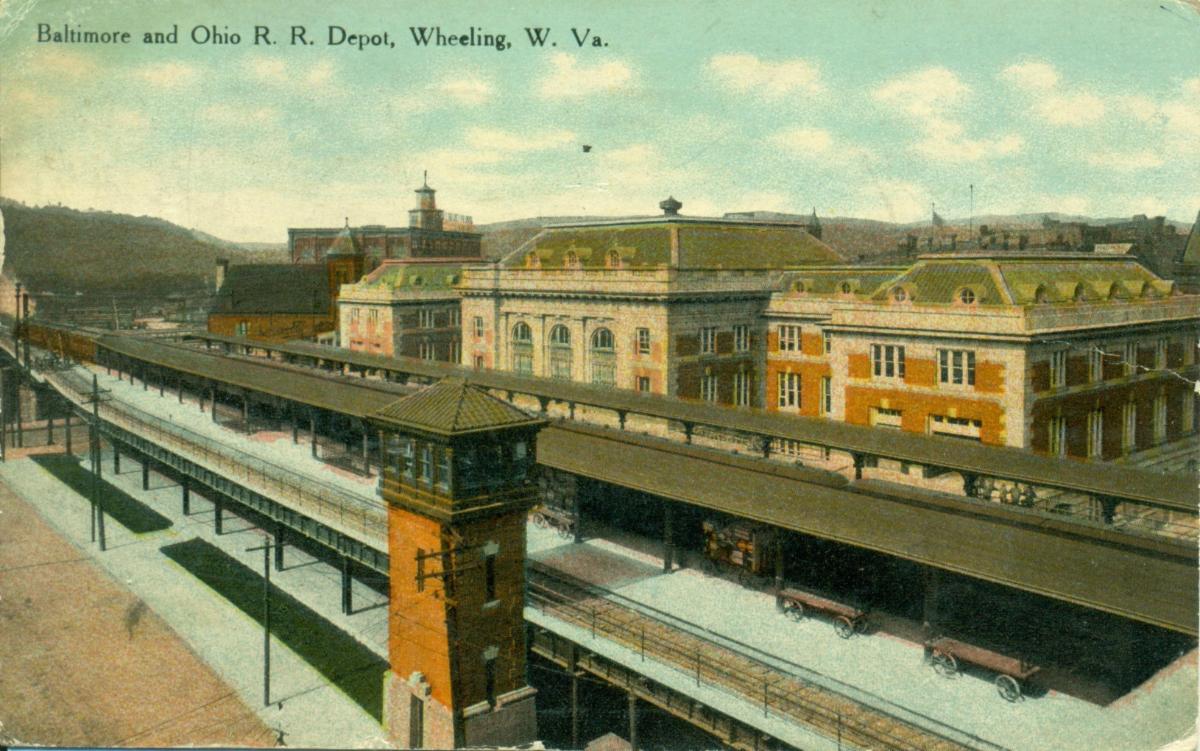
January 1 On January 1, 1853, the first Baltimore & Ohio (B&O) train arrived in Wheeling from Baltimore, connecting the Atlantic with the Ohio River.
January 2 On January 2, 1804, the Virginia General Assembly passed an act creating Mason County from part of Kanawha County, with the county seat at Point Pleasant.
January 3 On January 3, 1806, the Virginia General Assembly passed an act appropriating money to fund the improvement and repair of certain parts of the state road in Randolph County.
January 4 On January 4, 1787, the president of the Virginia Senate signed the bill establishing the town of Charles Town, Jefferson County.
| | |
January 5 On January 5, 1798, the Virginia General Assembly passed an act authorizing the proprietors of iron works to construct dams on the west fork of
the Monongahela River.
January 6 On January 6, 1800, the Virginia General Assembly passed an act establishing the town of Union on the property of James Alexander at the Monroe County Courthouse, governed by the following trustees: William Haynes, John Gray, John Byrnside, James Hanley, Michael Earskin, John Hutcheson, and Isaac Estill. The same act established the town of Newport, present-day Parkersburg, Wood County, on the property of John Stokeley at the mouth of the Little Kanawha River, governed by the following trustees: William Lowther, Jacob Bennett, Isaac Williams, James Neal, and John G. Henderson. The same act established the town of Monroe on the property of Hugh Phelps at a place known as Neal’s Station on the Little Kanawha River (county unidentified), governed by the following trustees: William Lowther, Jacob Bennett, Isaac Williams, James Neal, and John G. Henderson.
| | |
January 7 On January 7, 1807, the speaker of the House of Delegates of Virginia signed the bill establishing the town of Charles Town, Jefferson County. This is the commonly accepted date for its establishment.
January 8 On January 8, 1801, the Virginia General Assembly passed an act creating Jefferson County from part of Berkeley County, with the county seat at the house of Bazil Williamson in Charles Town.
January 9 On January 9, 1799, the Virginia General Assembly passed an act adding 100 acres of property belonging to Samuel Washington to the town of Charles Town, Berkeley County, present-day Jefferson County.
January 10 On January 10, 1800, the Virginia General Assembly passed an act authorizing the Wood County justices of the peace to meet at the house of Hugh Phelps.
| | |
January 11 On January 11, 1752, Thomas Lord Fairfax conveyed 500 acres in present-day Martinsburg, Berkeley County, to John Evans, who later erected Fort Evans on the property.
January 12 On January 12, 1803, the Virginia General Assembly passed an act authorizing the construction of mills and mill dams on the Little Kanawha River in Wood County.
January 13 On January 13, 1800, the Virginia General Assembly passed an act affirming and establishing the boundary line between Virginia and Kentucky.
January 14 On January 14, 1799, the Virginia General Assembly passed an act creating Monroe County from part of Greenbrier County, with the county seat at the house of George King.
January 15 On January 15, 1798, The Virginia General Assembly passed an act establishing the town of Smithfield, Berkeley County, present-day Middleway, Jefferson County, on the property of John Smith, the younger, and William Smith, governed by the following trustees: John Packett, Moses Smith, John Smith, Jacob Reese, Joseph Grentham, and John Grentham, Jr.
| | |
January 16 On January 16, 1806, the Virginia General Assembly passed an act incorporating the town of Wheeling, Ohio County.
January 17 On January 17, 1786, Henry Banks was granted 2000 acres of land in Harrison County.
January 18 On January 18, 1803, the Virginia General Assembly passed an act establishing the town of Elizabethtown on the property of Joseph Tomlinson on the flats of Grave Creek in Ohio County, part of present-day Moundsville in Marshall County, governed by the following trustees: Joseph Biggs, Lazarus Harris, Jonathan Purdy, Jeremiah Woods, and Jacob Whitsel.
January 19 On January 19, 1799, the Virginia General Assembly passed an act establishing a ferry across the Ohio River on the property of Ebenezer Zane in Ohio County to Wheeling Island. The same act established a ferry across the Ohio River on the property of Josiah Gamble in Brooke County. The same act established a ferry across the Tygart Valley River on the property of Edward Hart in Randolph County. The same act established a ferry across the Tygart Valley River on the property of Peter Johnston in Harrison County to the property of Charles Gallahur. The same act established a ferry across the Ohio River on the property of Richard Wells in Brooke County. The same act established a ferry across the Ohio River on the property of George Edgenton in Brooke County.
January 20 On January 20, 1800, The Virginia General Assembly passed an act declaring the Monongalia River to be a public highway from the Pennsylvania state line to the confluence of the Tyger Valley River and the West Branch River, to John Nusum’s mill, to Edward Jackson’s mill, up Simpson’s Creek, to Benjamin Wilson’s mill, up Elk Creek, to George Jackson’s mill.
| | |
January 21 On January 21, 1807, the Virginia General Assembly passed an act authorizing Robert Colwell and John Coulter to construct a mill dam at the lower end of Willos Island on the northwestern side of the Ohio River in Brooke County.
January 22 On January 22, 1798, Andrew Paul was granted 10 acres of land in Berkeley County.
January 23 On January 23, 1798, the Virginia General Assembly passed an act that incorporated the Shenandoah Company for the purpose of improving navigation on the Shenandoah River. Subscription books were opened under the direction of the following commissioners: in Charles Town, present-day Jefferson County, under George Hite, Thomas Hammond, and Van Rutherford; in Martinsburg, Berkeley County, under Philip Pendleton, David Hunter, and Elisha Boyd; and under the listed commissioners in Winchester, Woodstock, Harrisonburg, and Staunton.
January 24 On January 24, 1792, Mary Watkins was granted 400 acres of land in Greenbrier County.
| | |
January 25 On January 25, 1799, the Virginia General Assembly passed an act further appropriating money to fund the completion of a wagon road from Morgantown in Monongalia County to the mouth of Grave Creek on the Ohio River in Ohio County, present-day Marshall County.
January 26 On January 26, 1802, John Turner was granted 597.25 acres of land in Berkeley County.
January 27 On January 27, 1812, in 1812 the General Assembly passed an act for the opening of a road from the Monongalia Glades (now Preston Co) to the mouth of Buffalo and thence to the site of New Martinsville on the Ohio River to meet a road from Zanesville.
January 28 On January 28, 1793, William Royal was granted 1556 acres of land in Kanawha County.
January 29 On January 29, 1808, the Virginia General Assembly passed an act prohibiting slaves from hiring themselves out at large.
January 30 On January 30, 1788, Virginia Governor Edmund Randolph authorized George Clendenin to organize a company of rangers to defend Greenbrier County settlements and to establish an outpost. Clendenin ordered the outpost, Clendenin’s Fort (later re-named Fort Lee), to be erected at the confluence of the Elk River and Kanawha River on lands he purchased one month before in present-day Charleston. The following is a list of the company’s members, many of which would become the first permanent residents of Charleston: George Shaw, Francis Watkins, Shadrach Harriman, Reuben Slaughter, John Tollypurt, Samuel Dunbar, John Burns, Isaac Snedicer, William Miller, John Buckle, James Edgar, Robert Aaron, Michael Newhouse, William Carroll, Thomas Shirkey, Nicholas Null, William Boggs, Archer Price, Benjamin Morris, Levi Morris, Joseph Burrell, William Morris, William Turrell, Alexander Clendenin, William Clendenin, and John Moore.
January 31 On January 31, 1792, George See, Jr., was granted 62 acres of land in Hardy County.
| |
All images & data in this newsletter are linked and credited to their source. | | | | |