We Are the Medicine We Seek:

A Gathering of Service Providers to Collectively Grieve and Strategize the Protection of our Neurodivergent Community

Tuesday, March 26, 2024

5:30 p.m. - 7:00 p.m. ET / 4:30 p.m. - 6:00 p.m. CT / 3:30 - 5:00 p.m. MT / 2:30 - 4:00 p.m. PT / 1:30 p.m. - 3:00 p.m. AKT / 11:30 a.m. - 1:00 p.m. HT (view your time zone)

The Pacific Southwest MHTTC Team recognizes that the young people we serve experience injustice regularly and that it is far too often at the hands of institutions they turn to for support.


This knowledge is amplified for us by the recent police shooting of Ryan Gainer in Applegate, CA. We collectively experience both new grief and persistent fears regarding the safety of our BIPOC and neurodivergent youth and families.


Join us for an opportunity to process our pain, witness our grief, and radically imagine new ways of intervening. 


Ryan Gainer was a 15-year-old Black boy who loved long-distance running, music, and video games. He hoped to be an engineer. Ryan was on the autism spectrum and was fatally shot while experiencing emotional dysregulation.


We will uplift our brother, son, student, client, Ryan Gainer and those with similar identities because when we gather in purpose, we heal. The world heals.


This is not a grief support circle or a training. It is a gathering to witness one another and validate the real and necessary feelings experienced when state violence, racial violence, and disability injustice cause irreversible harm in our communities. 

REGISTER NOW >

Meet the Facilitators

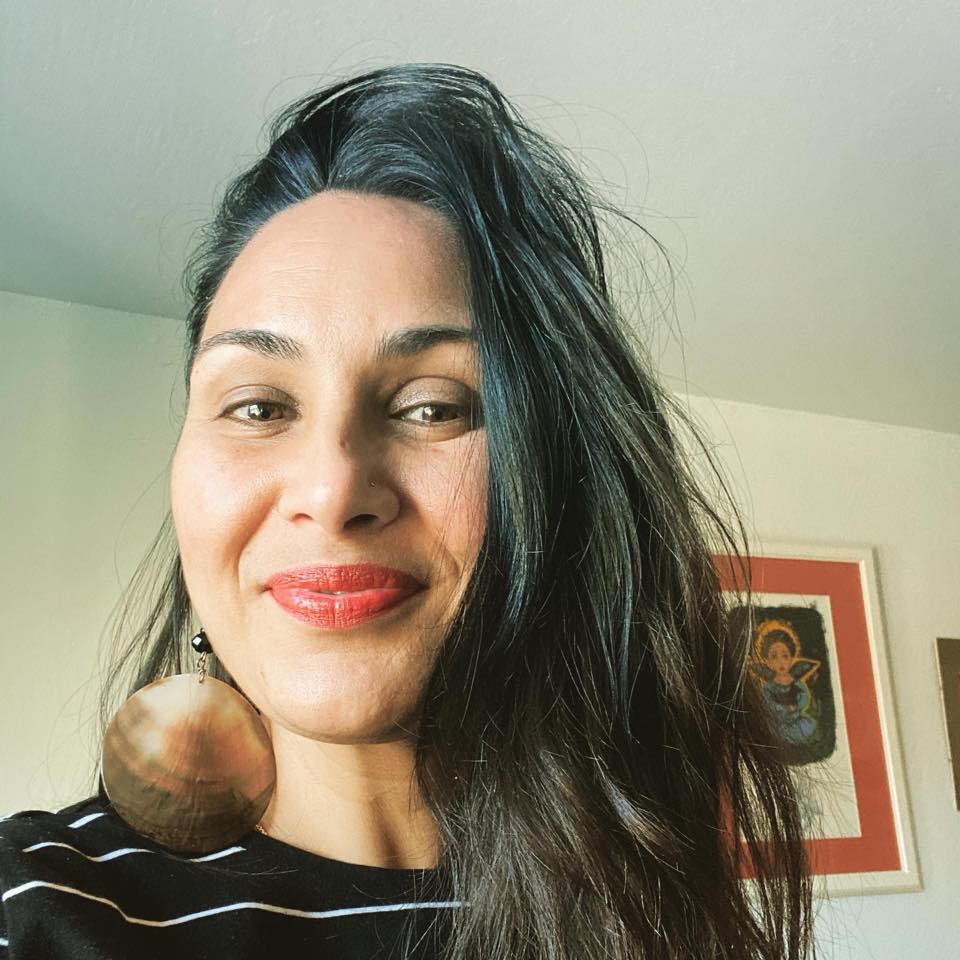
Oriana Ides, MA, APCC, PPS (she/her) is a School Mental Health Training Specialist at CARS (the Center for Applied Research Solutions) and approaches healing the wounds of trauma and oppression as core elements of social justice. She has worked with young people across the life course from elementary school to college, and has served as teacher-leader, school counselor, classroom educator and program director. She is committed to generating equity within school structures and policies by focusing on evidence-based mental health techniques and institutional design.

Falilah “Aisha” Bilal (she/her) has worked joyously for over 30 years creating innovative, relevant evidence-based strategies to transform, empower and develop individuals, systems, organizations and contemporary thought.

Ms. Bilal’s work is centered in healing practices, empowering youth and families, and self-discovery. Ms. Bilal specializes in the field of youth development, healing informed organizational development, and strategic fundraising consultation.


Currently Ms. Bilal serves as the Chief of Staff for the Black Organizing Project as well as directs her own consulting company where she provides trainings, curriculum development, healing experiences, coaching, and executive leadership to local and national agencies, companies and programs. Previously, Ms. Bilal served as a Senior Trainer with the National Black Women’s Justice Institute and a Radical Healer with Flourish Agenda. She served as the Executive Director for M.I.S.S.S.E.Y. raising over 2 million dollars in funds to support sexually exploited children and young adults.  She has worked for numerous Bay Area agencies including World Trust, Alameda County Sheriff’s Department, Oakland Bay Area CARES Mentoring Movement, GirlSource, Office of Family, Children and Youth, City of Oakland, and the Young Women’s Freedom Center.


Ms. Bilal holds a M.A. in Counseling Psychology from the California Institute of Integral Studies and a B.A. in Theater Arts and Child Psychology from San Francisco State University.


Questions? Contact us at pacificsouthwest@mhttcnetwork.org


Contact the Pacific Southwest MHTTC


Toll-Free: 1-844-856-1749  Email: pacificsouthwest@mhttcnetwork.org  

Website: https://mhttcnetwork.org/pacificsouthwest

Facebook  Instagram  LinkedIn  Twitter  YouTube

This announcement is supported by SAMHSA of the U.S. Department of Health and Human Services (HHS) as part of a financial assistance award over four years (2019-2023) with 100 percent funded by SAMHSA/HHS. The contents are those of the author(s) and do not necessarily represent the official views of, nor an endorsement, by SAMHSA/HHS, or the U.S. Government.