Hot Fun in the Summertime! | |
|
In this issue:
- Finding Your Nature Community
- Pollinator Photo Contest
- Upcoming Summer Programs
- Story Time for Young Children
- Donna Posont Receives National Award!
- "Tails" From the Trails: The Long and the Short of It.
- Greenways: In the Field-In the Rain Forest!
- In case you missed this news...
| |
|
Finding Your Nature Community
Forest communities are categorized by the types of plants that grow in them. Wetlands, deserts, and other ecosystems are similarly defined. As humans, we can be part of many communities; our friends and families, neighborhoods, and cultural groups. But have you ever considered your “nature community?” I ask because I recently realized the significance of relationships I’ve built while out exploring the natural world.
| |
|
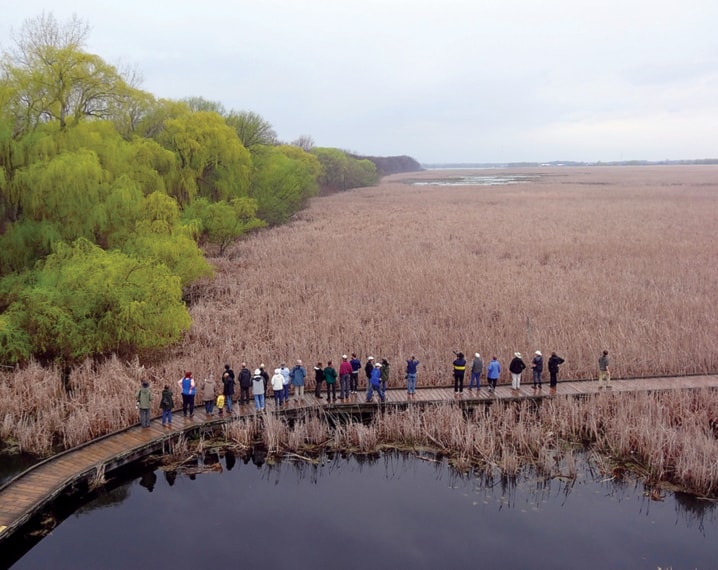
In May, I took a weekend trip to Point Pelee, Ontario, for the annual Festival of Birds, an event that attracts thousands of people from all over the world. Everyone who was there pursuing their personal goals (like photography, or a “big year”) came together to celebrate a common interest. It’s not just the birds I look forward to seeing, but the people too! Whatever your niche, joining like-minded folks can greatly enhance your enjoyment. Here are some benefits to finding your community.
| |
1.Sharing knowledge. “Is that a northern or a Louisiana waterthrush?” “Where is the best place to find black terns?” I didn’t get the answers to these questions in any book (although they might be found there). I just asked the person next to me! People who are passionate about a subject can be just as enthusiastic with sharing what they know, so take advantage of this resource. Pretty soon you’ll find yourself saying, “Have you seen the northern mockingbird yet? It’s just 50 yards down the trail.” | |
|
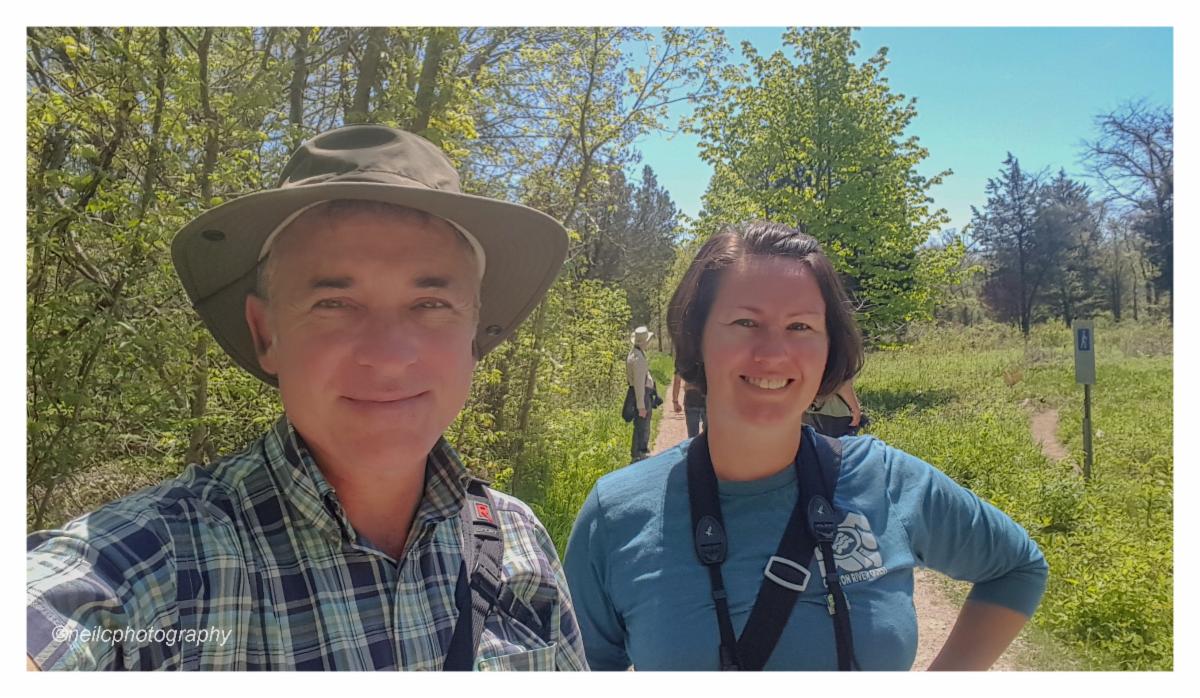
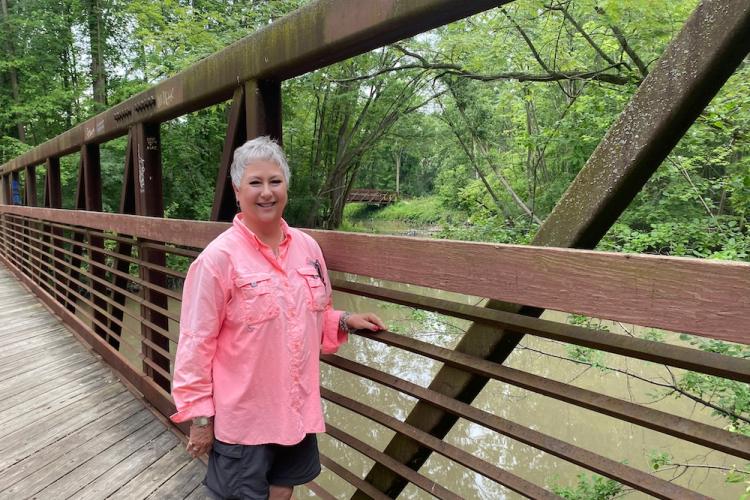
2.Meet new people. It’s been said there really are no strangers, only friends you haven’t yet met. Making new friends can be challenging especially as we get older or if, like me, you experience social anxiety. What better way to strike up a conversation than with a common interest? In Pelee, I loved trading stories with people like Michael who runs private birding tours for celebrities (I can’t name names),and Ethel who has birded on several continents over several decades. Neil, a photographer from Ottawa, has met up with me for the past three years to catch up over lunch or between birds. Activities can be more fun with a friend to share them. (Photo of the author taken by her photographer friend, Neil Colman)
| |
|
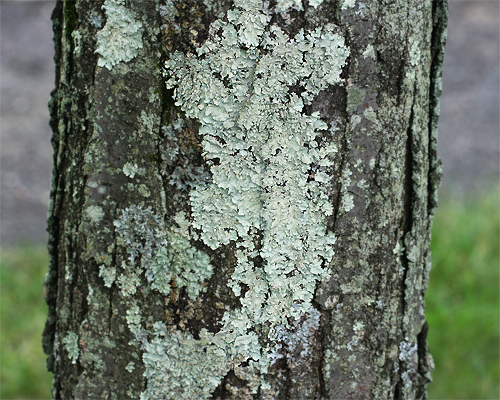
3.Expand your horizons. At a botanical conference, a speaker on lichens blew my mind (they’re a fungus and an algae?!); at a raptor festival, an organization shared a pamphlet on Michigan mollusks. Being part of a nature community can provide endless opportunities to learn about and develop new interests. Don’t think you have room for more field guides? You’re wrong: there’s always more room! (Photo of foliose lichen by Nick Polanin)
| |
So how do you find your nature community? There is no single answer: just as a forest community is built on connections and interactions between species and their environment, so are human communities built on people and places. Visit parks and natural areas, like our campus Environmental Study Area or the Detroit International Wildlife Refuge; join an organization like the Michigan Botanical Society or Detroit Bird Alliance; attend an event like Hawk Fest at Lake Erie Metropark. And don’t forget to give back by volunteering your time and expertise. There could be a nature community right now, looking for someone like you!
-Dale Browne, Assistant Program Coordinator
| |
The Pollinator Photo Contest is Back! | |
|
The EIC and UM-Dearborn’s Bee Campus USA Committee are pleased to announce that they are now accepting entries for the 5th annual Pollinator Photo Contest. Since 2020, hundreds of photos have been entered into the contest from 24 states in the US, as well as other countries, including Canada, Lebanon, Finland, Germany, and Chile. (2023 winner "Insatiable" by Curtis Coates)
| |
Photos may be submitted in either of two categories: pollinators up-close of pollinator-flower interactions. Entries will be accepted from June 1 to September 30, 2024, with winners announced by the end of October. Full contest details are available by visiting the Pollinator Photo Contest Website. | |
|
Nature Walks for Mental Health, Summer 2024
Schedule: 1:30-2:15 p.m. on Wednesdays, July 17, August 7
Relax, unwind, and get outside; with brief guided meditations, and 45-minute nature walks. You will be entered into a raffle for each event you attend, where winners will be announced at the final walk and celebration. Please dress appropriately for walking outdoors. This event is free and open to the public. Please register for this program.
Photography Walks, Summer 2024
Schedule: 2:30-3:30 p.m. on Thursdays, July 25, Aug. 22
Take a hike with an EIC Naturalist and Nature Photographer! Bring your own cameras and accessories, we supply the scenery. There will also be opportunities to submit your photos to be displayed in a Photography Showcase in April. Please dress appropriately for walking outdoors. This event is free and open to the public. Please register for this program.
| |
Story Time for Young Children | |
|
Join us for an hour of fun!
Free & open to the public. Best for children 7 and under.
Music & Bubbles, Observe Wildlife, Nature Themed Books, Crafts or Activities
Wednesday, July 17th
4:00-5:00 p.m., optional walk afterward
(We'll be taking the month of August off.)
For adults bringing children of various ages, there is an option for older kids (7+) to enjoy a nature walk with an EIC naturalist while younger kids. Please register for this program. Meet in the EIC Exhibit Area.
| |
Donna Posont Receives National Award! | |
|
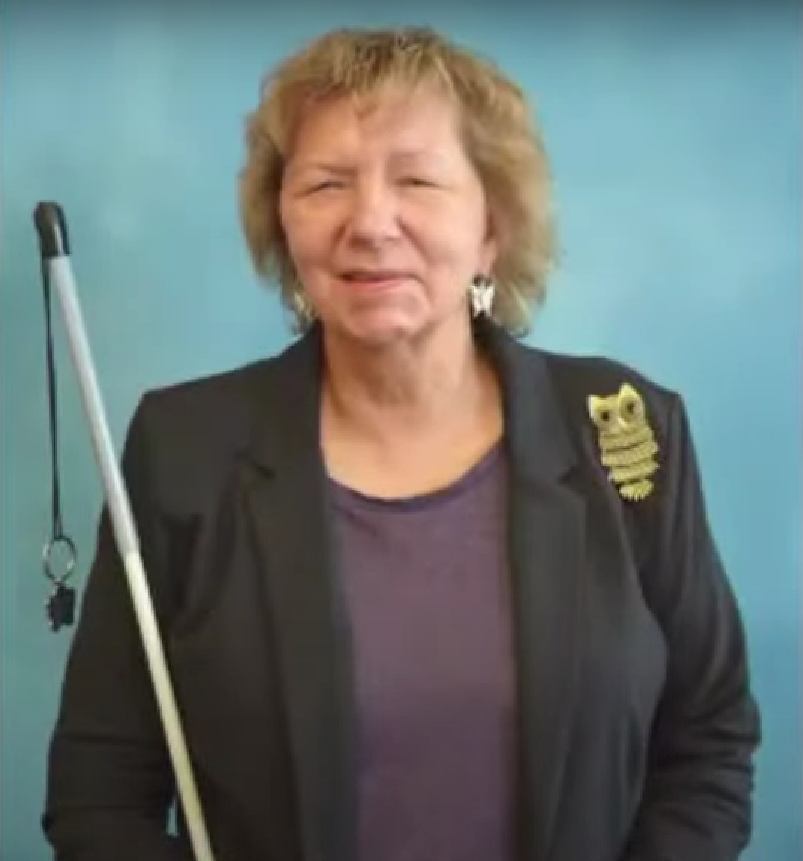
Donna Posont, creator and leader of the Birding by Ear and Beyond program housed a the EIC, received the Dr. Jacob Bolotin Award at the recent national conference of the Federation of the Blind in Florida. The Bolotin Awards honor individuals and organizations that are a positive force in the lives of blind people. Criteria include:
- Breaking down barriers facing blind people in an innovative way
- Changing negative perceptions of blindness and blind people
- Pushing past existing boundaries to inspire blind people to achieve new heights
| |
|
Donna has consistently fulfilled this role from the moment she hit our campus as a returning student, and continues to charge forward on her mission to encourage blind and visually impaired people of all ages to try new things in life; to push the boundaries of what they themselves think they are capable, as well as those around them. Please enjoy these excerpts of the awards ceremony. Congratulations to the "unstoppable" Donna Posont! | |
The Long and the Short of It.
The Environmental Study Area (ESA) harbors many secret lives. Sometimes hidden for decades, there comes a time, often through a fortunate stroke of serendipity, that they finally reveal themselves to us.
| |
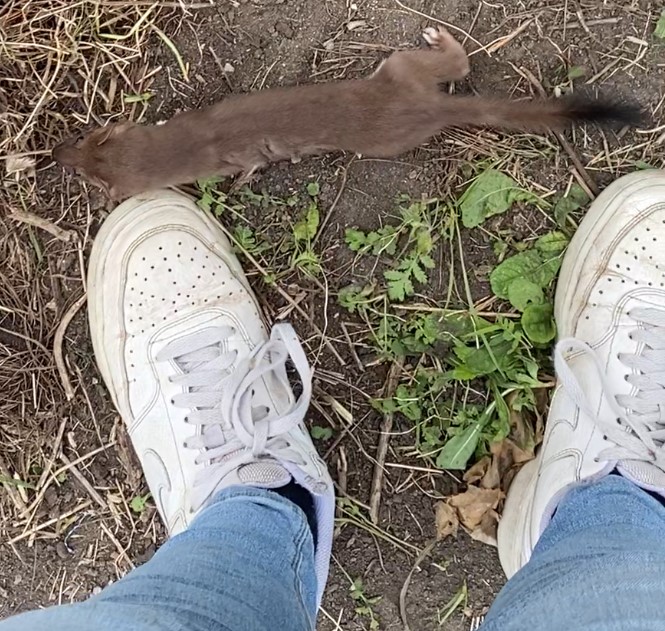
A recent instance of that took place at the UM-D Community Organic Garden, which abuts the ESA. While doing some cleanup work at the garden, EIC staff members Dale Browne, Valerie Osowski, and Mike Solomon were jolted to attention by a slender, furry form that darted wildly about, sometimes right at their feet (see Valerie's photo) as they moved a tarp that had been lying on the ground! | |
|
|
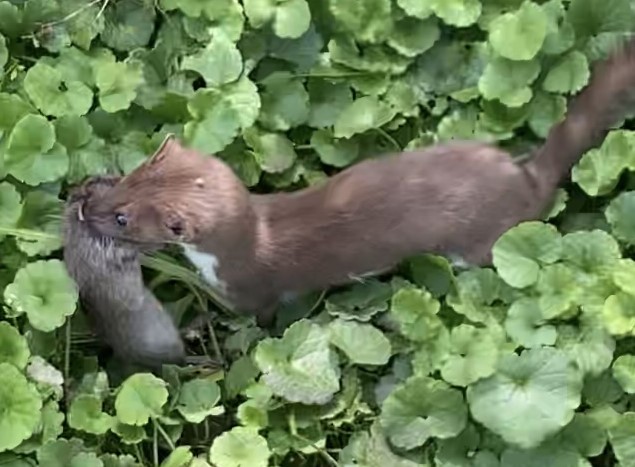
Rather squirrel-like, but with a pointier nose and much more slender and streamlined, it showed no fear and continued its business of being…a weasel! It even killed and carried off a vole to eat. Photos and video footage ensued, making possible a follow up attempt at identifying the little lightning bolt on four legs.
Consulting Rollin H. Baker’s classic “Mammals of Michigan,” we narrowed it down to either the Short-tailed Weasel (Mustela erminea) or the Long-tailed Weasel (Mustela frenata). Both can be so similar that a formal identification can sometimes be out of the question. However, with the very helpful photo Valerie took of the weasel literally at her feet, we were able to look closely at the proportion of tail length to the rest of its body.
According to Baker, the short-tailed weasel's tail is not more than one-third as long as the length of the head and body, while the tail of the long-tailed weasel is at least one-half as long. In addition, the black tip on the short-tailed weasel’s tail amounts to almost one-half of the entire length of the tail, whereas for the long-tailed it is not more than forty percent black.
| |
|
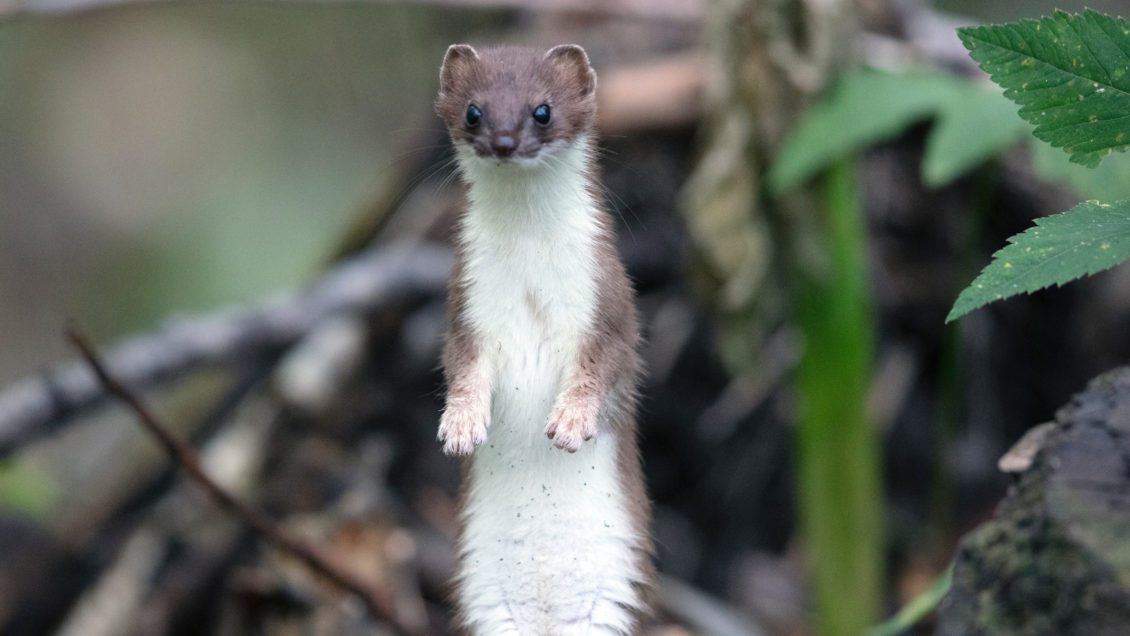
Other sources we checked mentioned an assortment of purported ways to differentiate the two species, such as foot color, but were not consistent. At present, based upon Baker’s measurements, we are leaning toward Long-tailed Weasel.
(Photo by Brent Jones)
| |
|
A study by Clemson University has shown "a significant decline in the weasel population over the past century — with weasel reporting statistics[representing] for all intents and purposes, every type of monitoring data available indicating the animals are increasingly rare in North America."
Be it either of these weasel species, this was no ordinary sighting for the ESA. It is the very first to be documented as part of our cataloging of the species diversity there, which began in the early 1970s. Its addition brings the mammal species known to occur in the ESA to twenty-five. Chalk that up as another testament to the important function the ESA has as a storehouse for local biological diversity.
-Rick Simek, Natural Areas Manager
| |
This month, Cooper Family Intern Valerie Osowski shares her experiences in Puerto Rico. Her observations about experiential learning in a brand new place reveal differences as well as similarities... Editor's note. | |
|
In the Field--In the Rain Forest!
Being a naturalist and environmental interpreter is much more than simply knowing the names of different flora and fauna. It is understanding the history and culture surrounding people’s view of nature. It is being able to tell an engaging story to audiences of all ages and backgrounds. It is being able to answer a question with “I don’t know” despite being the supposed expert in a group–which, as a college student, has been one of the hardest parts of the job. It is also a career that extends beyond the borders of Michigan, which is a fact that I experienced firsthand very recently.
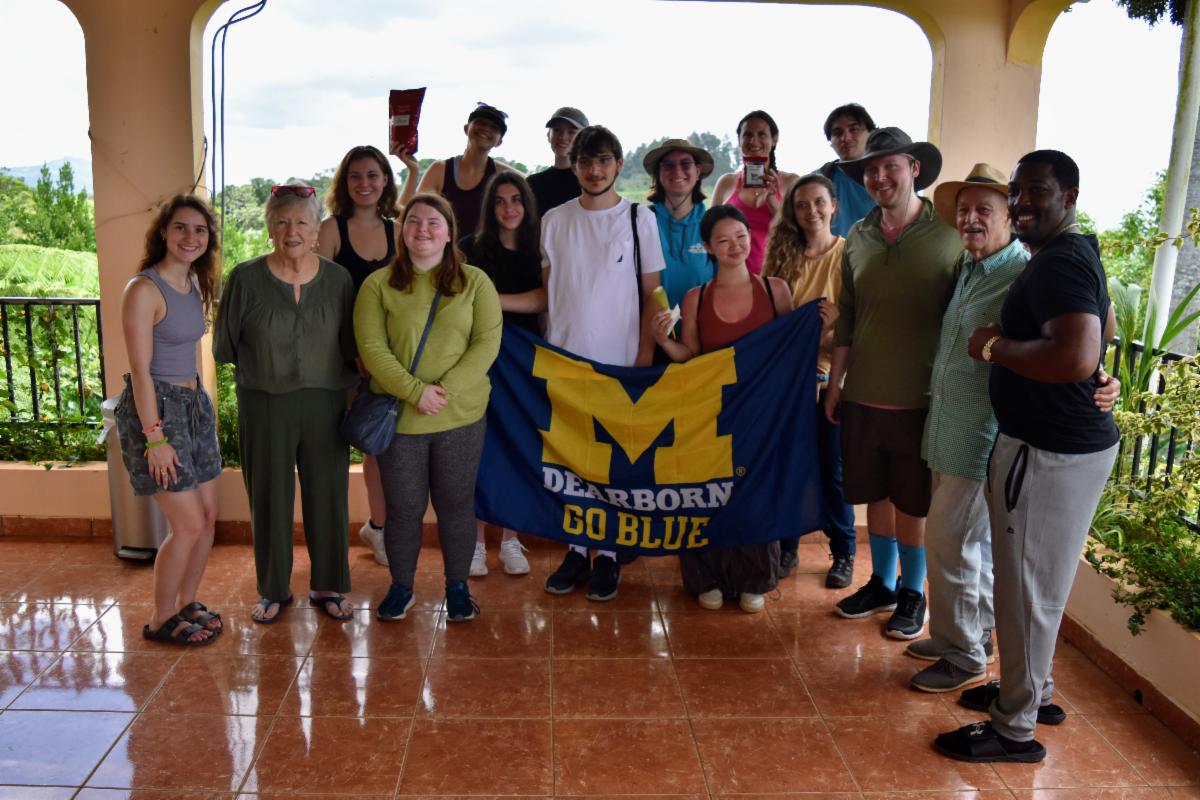
This past May, I joined University of Michigan-Dearborn professor and Environmental Interpretive Center director Jacob Napieralski for a Field Methods course in Puerto Rico. In just ten days, I saw rainforests, beaches, tropical birds, coral reefs, and unique geological formations. However, one of the highlights of my trip was meeting Environmental Interpreters at the El Yunque National Forest.
| |
|
On our first night in Puerto Rico, the group was taken on a night hike through the rainforest–similar to the EIC’s “Owl Prowls’ and “Crepuscular Capers”--led by interpreters Jose and Christian from para la Naturaleza. Jose, a student naturalist in Puerto Rico, used storytelling strategies I recognized from my own work, as well as my fellow EIC interpreters. He brought a number of props to aid in his storytelling, including images of ancient carvings that were found in the area.
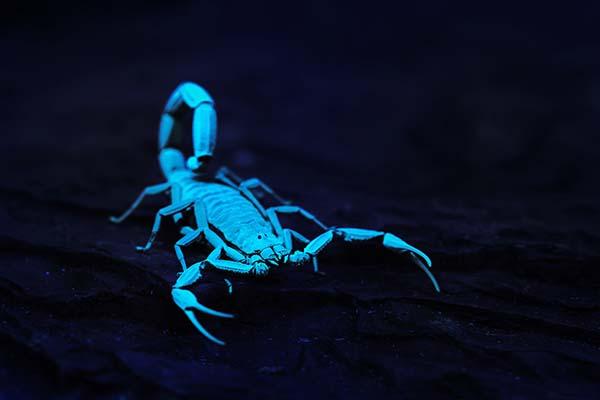
(Scorpion under blacklight by author)
| |
|
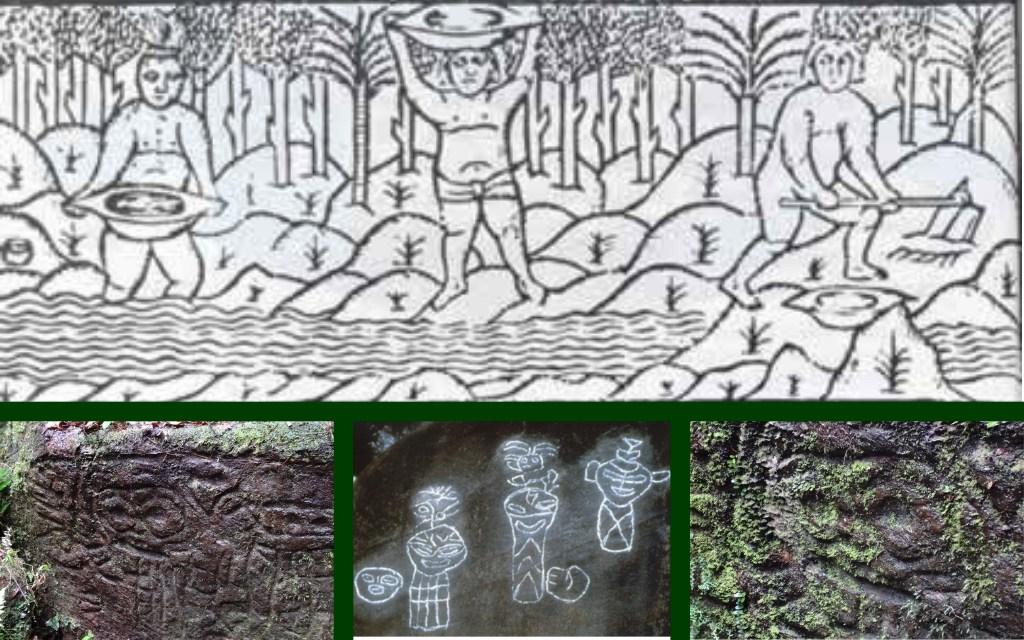
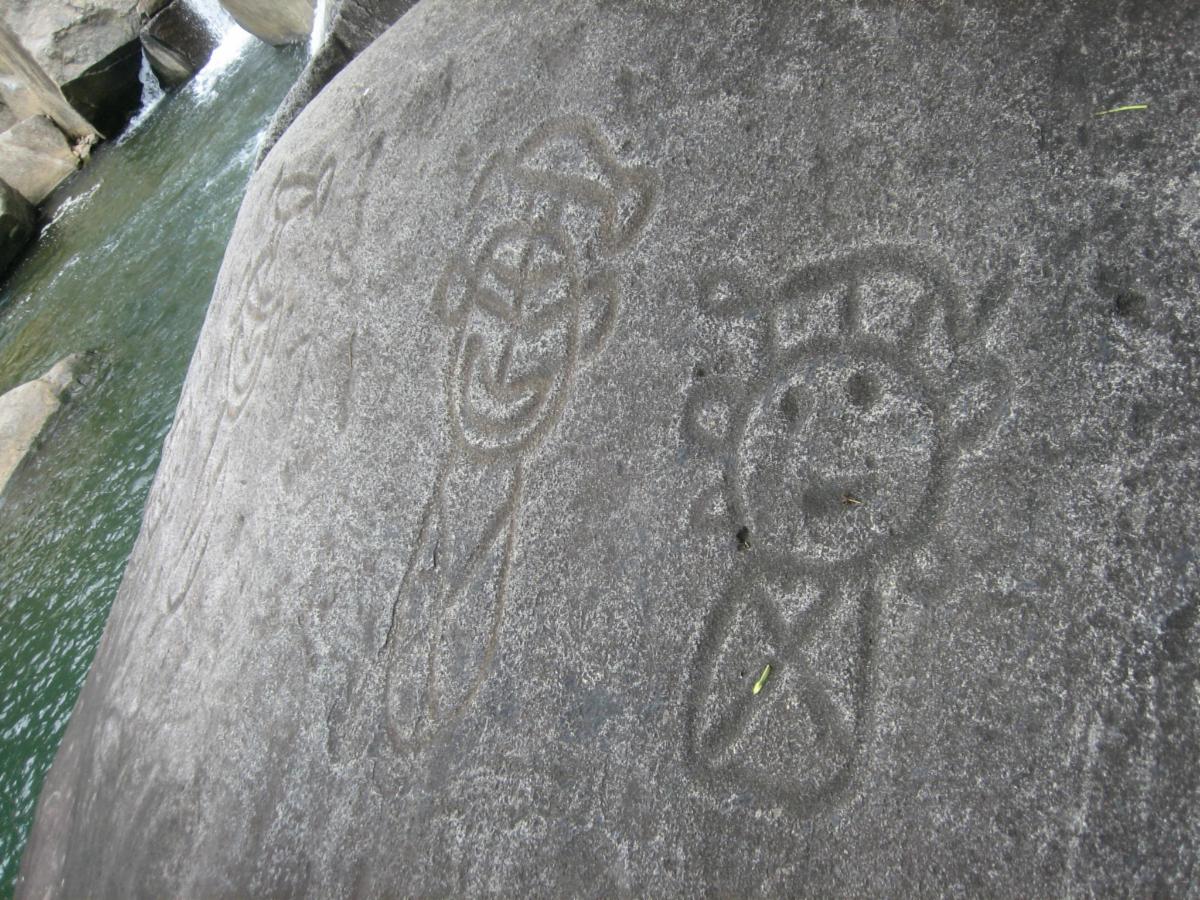
The carvings, called petroglyphs, were made by the indigenous Taino people and depicted spirits, spirit guides, and the goddess Atabey. Atabey, along with her son Yokahú, were worshiped as protectors of the Taino people and the island. The gods and the spirit guides were rumored to live in the mountains of El Yunque, where the clouds formed and the view was obstructed. Jose explained that these carvings were actually based on a very natural occurrence. (Photo courtesy of the US Forest Service)
As the story goes, a spiritual leader of the Taino, while on a hike at night, consumed the sap of a tree which is now known as hallucinogenic. The leader then saw a fisherman bat (Noctilio leporinus) swoop down and catch a fish. In his delirium, the man believed that he saw a spirit guide come down from the mountains to retrieve a wandering spirit. The legend quickly spread, and similar carvings have been found throughout the entire island. Centuries later, the images are still well known and seen as an important part of Puerto Rico’s history and heritage.
| |
Over the course of time, these beliefs changed. In more modern years, people have become afraid of the rainforest. It has been seen as a place of secrecy and danger, especially because it once held military bases. In addition, as a result of inefficient mapping, many people would get lost in the forest. It has been, and is still a common belief that the rainforest is home to aliens, based in part by the blinking lights of former military stations and the disappearances of a few lost travelers. | |
|
|
However, interpreters like Jose and Christian are working to demystify the rainforest. The interpreters lead groups on walks through the rainforest, teaching about the history of these legends and showing the public that the rainforest is a beautiful and essential part of the environment. Jose and Christian continue to educate about the rainforest, revealing its ecological value and further connecting people to their environment, supporting the preservation of the ecosystem.
This story is just one example of how interpreters connect nature with culture and history. Being able to meet with other student naturalists and interpreters from a different culture and working in a completely different ecosystem was a truly rewarding experience. I learned that this passion for the environment, the way of interpreting nature for people of all ages and backgrounds, and storytelling as interpreters is something that transcends borders.
Finally, I hope that no matter where you travel–whether that be to Dearborn, Puerto Rico, or anywhere else in the world–that you stop and talk with the friendly neighborhood interpreters!
-Valerie Osowski, Cooper Family Intern and Children's Garden Co-Coordinator
| |
In Case You Missed This News...
Intriguing Sites Along a Campus Trail
Take a stroll back in time--and see a new environmentally friendly addition to the land--whenon a campus walk toward the south side of the Rouge Gateway Trail.
(Photo by Sarah Tuxbury)
| |
|
|
On WDET Radio, UM-Dearborn Professor Jacob Napieralski discusses a recent study he authored about ghost streams and how low-income and minority groups are typically at the greatest risk of severe flooding.
Enjoy a scenic walk that highlights actions taken to improve the health of the Rouge River and wildlife populations.
Get Outdoors and Explore
From historic structures to native plants, EIC experts point out a few interesting finds you can see on the campus trails.
| |
|
We hope to see you at our EIC programs. Our trails are accessible each day of the year from sunrise to sunset, so please visit the Environmental Study Area.
Stay engaged in learning activities and check out our Remote Learning Activities & Resources page for ideas to create a “Neighborhood Nature Journal” and “Family Nature Walk” activities!
| | |
Please remember...
The EIC Environmental Study Area is open daily from sunrise to sunset. We would like to remind nature-goers that fishing on site is prohibited and to leave bikes and dogs at home because they cause disruption and stress to the EIC wildlife.
| |
| | | |