A scientific review explores how vitamin D may influence cancer risk, treatment response, and survival across multiple types of cancer. | | How Vitamin D Supports Cancer Prevention and Improves Survival Outcomes | | |
|
Greetings!
It was our founder Carole Baggerly’s breast cancer diagnosis, treatment, and recovery story that fueled the founding of GrassrootsHealth and our mission to empower individuals through education, research, and vitamin D testing. Due to her motivation to share the importance of vitamin D in cancer prevention using innovative community research models and advocacy, GrassrootsHealth has significantly advanced public understanding of vitamin D’s role in cancer prevention and survival worldwide.
Learn more about the story of our founding here.
While vitamin D’s role in bone health is well-established, emerging science reveals its far-reaching influence in oncology. A 2025 comprehensive review in Nutrients by Dr. Sunil Wimalawansa, a member of the GrassrootsHealth scientist panel, synthesizes findings from extensive epidemiological studies, randomized controlled trials, and mechanistic research. A summary of his findings are presented below.
| | Vitamin D and Cancer Prevention: Substantial Evidence Across Key Cancers | | |
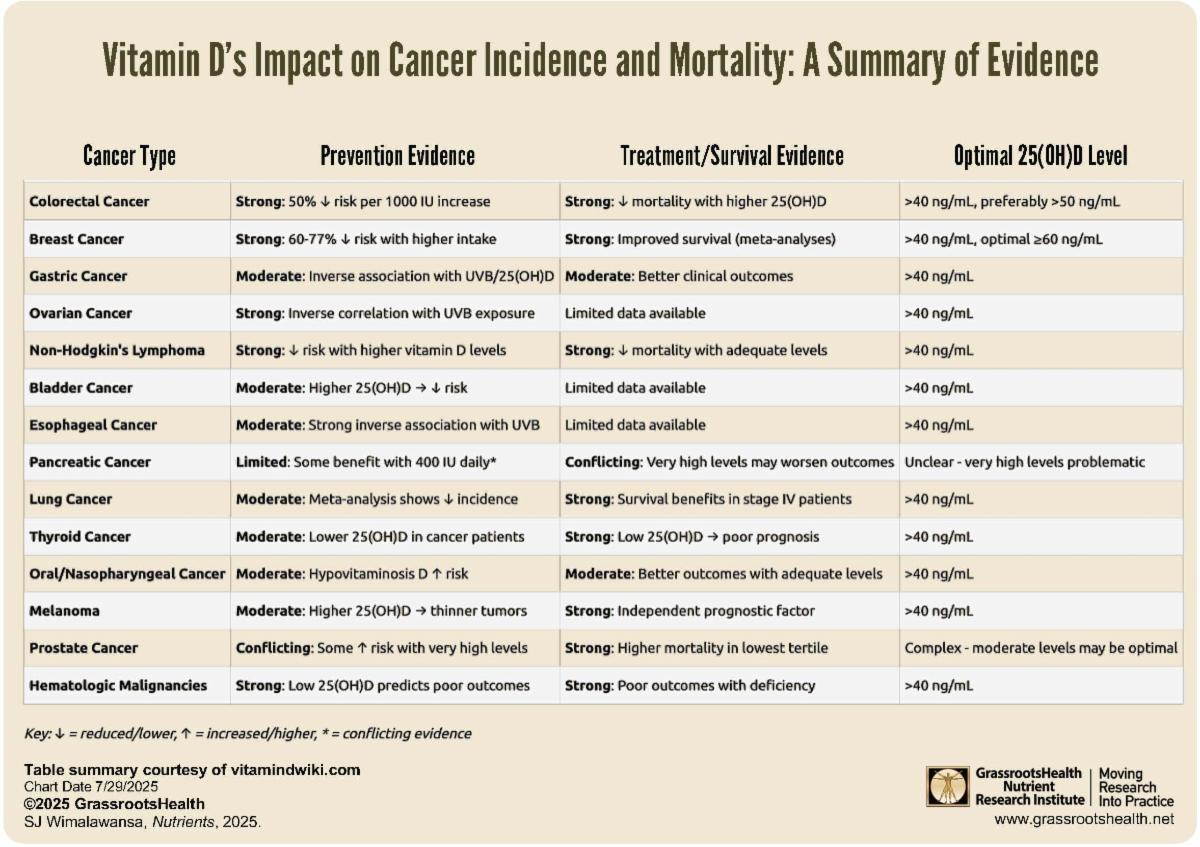
The review affirms consistent, statistically significant associations between higher circulating 25(OH)D concentrations and reduced cancer incidence, including:
- Breast cancer: Vitamin D promotes cellular differentiation, inhibits tumor growth pathways, and modulates hormone-related cancer mechanisms.
- Colorectal cancer: By supporting gut mucosal immunity and attenuating chronic inflammation, vitamin D helps prevent tumorigenesis.
- Prostate cancer: Elevated vitamin D levels correlate with slower disease progression and improved patient prognoses.
- Lung and melanoma cancers: Immune-enhancing and anti-proliferative properties of vitamin D contribute to lower incidence and improved outcomes.
The findings are summarized in the table below, courtesy of vitamindwiki.com.
| | Vitamin D Enhances Cancer Prognosis and Treatment Efficacy | |
Beyond prevention, optimal vitamin D status supports better clinical outcomes:
- Patients with sufficient vitamin D generally show greater responsiveness to conventional treatments, including chemotherapy and immunotherapy.
- Vitamin D facilitates anti-tumor immune responses, bolstering the body’s natural defenses against malignant cells.
- It may inhibit metastatic processes by altering cancer cell adhesion, migration, and the tumor microenvironment.
| | Mechanistic Insights: How Vitamin D Works Against Cancer | |
Vitamin D’s anticancer actions operate via multiple molecular pathways:
- Regulating gene expression to induce cancer cell cycle arrest and apoptosis, limiting tumor growth.
- Suppressing pro-inflammatory signaling cascades, thereby reducing a key driver of carcinogenesis.
- Enhancing DNA repair capacity and reducing oxidative DNA damage, protecting genomic integrity.
- Modulating innate and adaptive immune responses to promote tumor surveillance and clearance.
| | | | |
October 21: Learn Directly from Dr. Joan Lappe
One of the scientists who has spent decades investigating vitamin D and cancer is Joan M. Lappe, PhD, RN, FAAN. Join Dr. Lappe for a special Vitamin D Study Hour: Vitamin D in Cancer Prevention. Dr. Lappe will review her landmark 2007 and 2017 randomized controlled trials in postmenopausal women and discuss what these studies taught us about vitamin D status and cancer risk.
| | | Join Us in San Diego or Virtually This World Vitamin D Day | | |
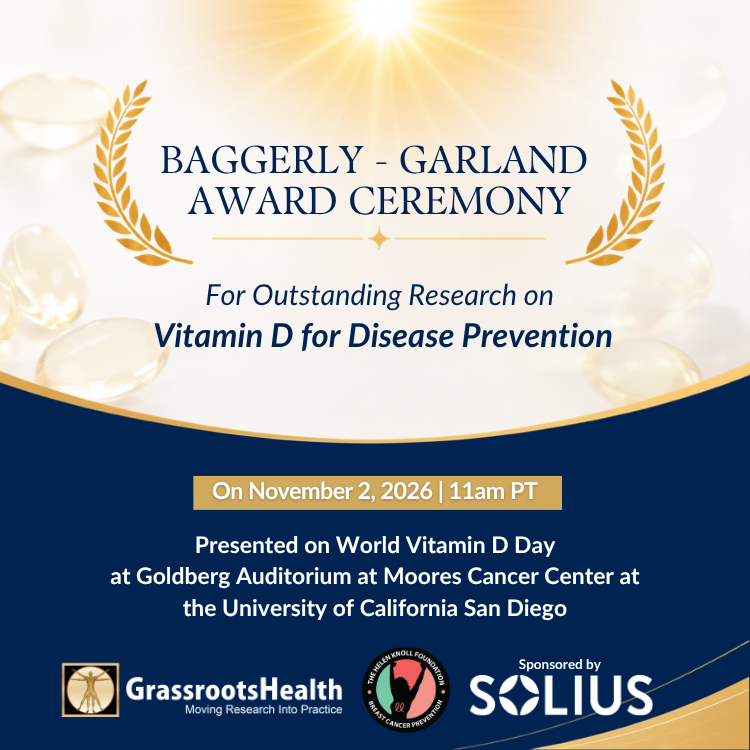
On November 2, 2026, GrassrootsHealth will celebrate three scientists whose work has helped advance research on vitamin D, sunlight, and cancer prevention:
- Edward D. Gorham, MPH, PhD, whose epidemiological research has examined sunlight, vitamin D blood levels, and cancer risk.
- William B. Grant, PhD, whose research has explored connections between sunlight, vitamin D, nutrition, and cancer mortality.
- Joan M. Lappe, PhD, RN, whose clinical trials helped bring vitamin D and calcium into the scientific conversation about cancer prevention.
The inaugural Baggerly-Garland Vitamin D Scientist Awards honor the legacies of Carole Baggerly, founder of GrassrootsHealth, and Drs. Frank and Cedric Garland, pioneers in sunlight, vitamin D, and cancer research. Their vision and persistence helped connect scientific discovery with public education and action. As Breast Cancer Awareness Month brings prevention into focus, we invite you to learn more about this research and help us recognize the scientists behind it.
Join the awards ceremony and press conference:
Monday, November 2, 2026
11:00 AM Pacific / 2:00 PM Eastern
Goldberg Auditorium, Moores Cancer Center at UC San Diego Health
Attend in person or virtually via Zoom
| | |
Thank you to Solius Labs, our generous sponsor, and the Helen Knoll Foundation, our partner in expanding awareness of vitamin D research and breast health.
Interested in Being a Media Partner for this Event? Contact jen@grassrootshealth.org and view our media kit here.
| | Are You Getting Enough Vitamin D? | | The only way to know is to test your levels! Testing versus blind supplementation is essential to know for sure if what you are taking is the right amount for you. Once you test your vitamin D (and other levels) to know where you are NOW, you can account for any upcoming changes in lifestyle over the coming months and adjust your intake to reach (or maintain) your targets. | | |
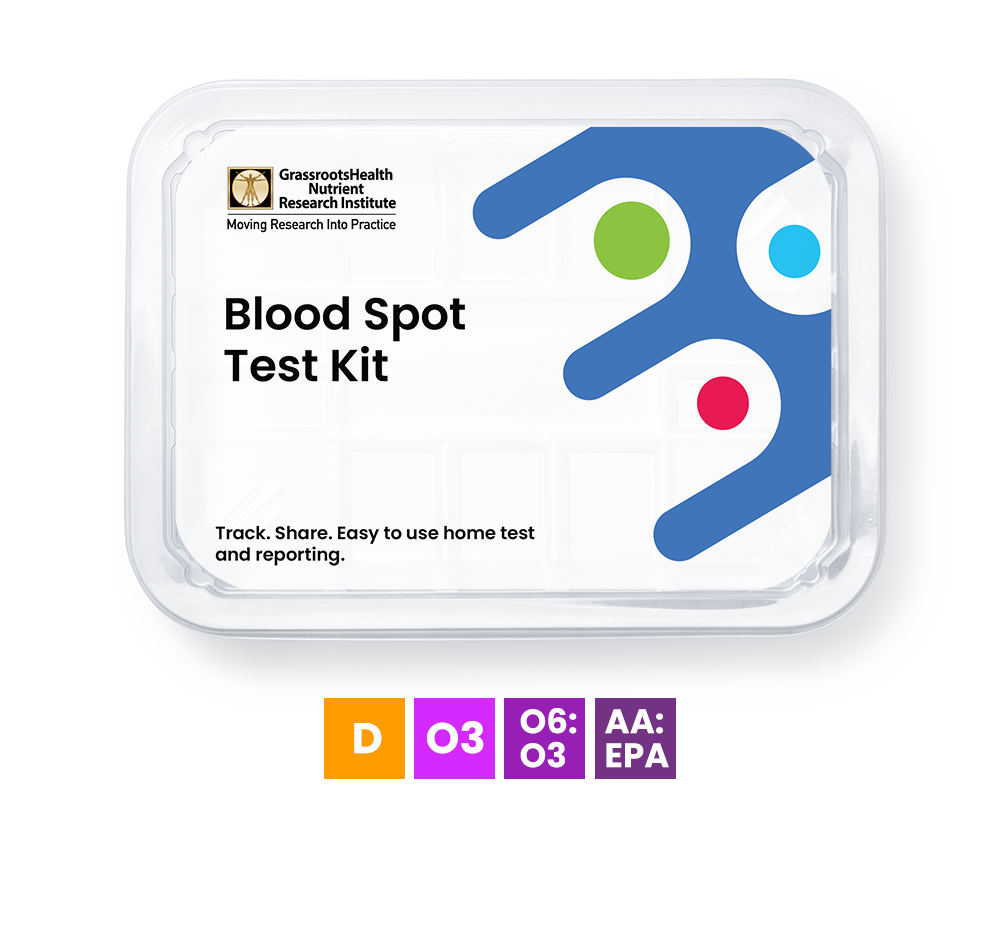
Discover Your Levels Today with Your Home Test Kit Order | All purchases support vitamin D research and education. Measure your vitamin D and other important levels at home as part of the D*action project! Create your custom home test kit or choose from our top products below. |
| How Much Vitamin D do YOU Need to Get to 40 ng/ml (100 nmol/L)? | | Did you know that everyone responds differently to vitamin D supplement amounts - by up to 6 times!? | | Have a Beautiful and Healthy Day! Onwards, | | |
GrassrootsHealth
315 S. Coast Hwy 101, Suite U-87
Encinitas, CA 92024
(760) 579-8141
| |  | | | | |