What You'll Find in this Newsletter | |
Advocacy: How bad are data centers?
Conservation: Every Bird Counts
Education: Urban Might of Chimney Swifts
Upcoming Events
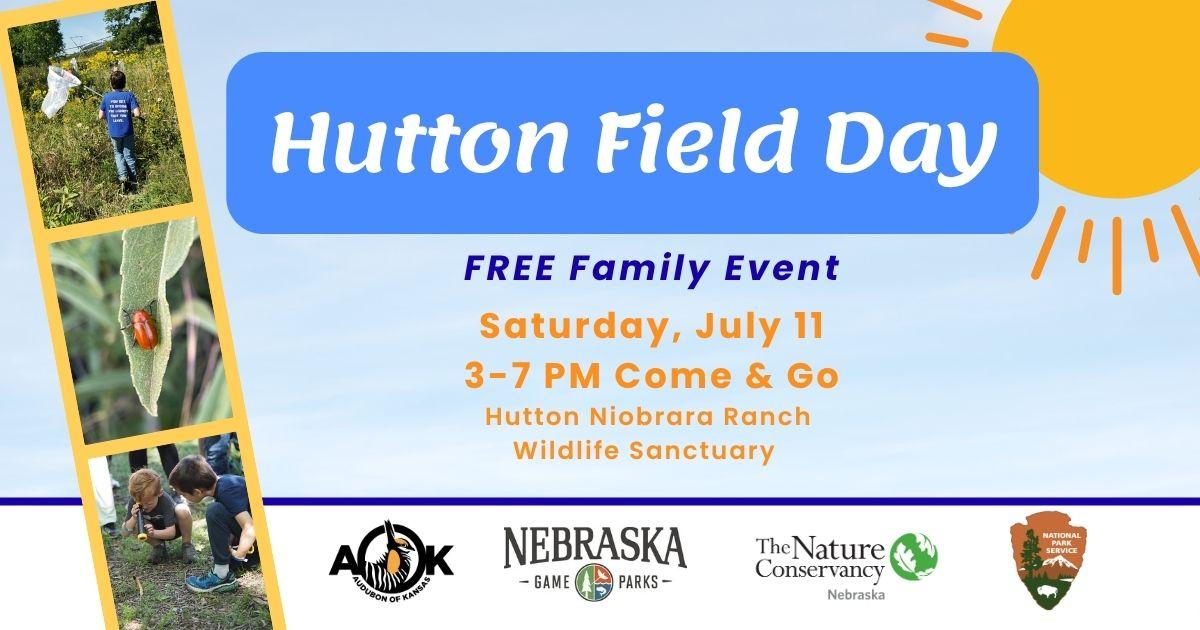
- Featured Event 7/11: Hutton Field Day
Philanthropy Corner: Calling crane champions!
We're Hiring: Hutton Niobrara Ranch Manager
Chapter Spotlight: Sperry-Galligar Audubon Society
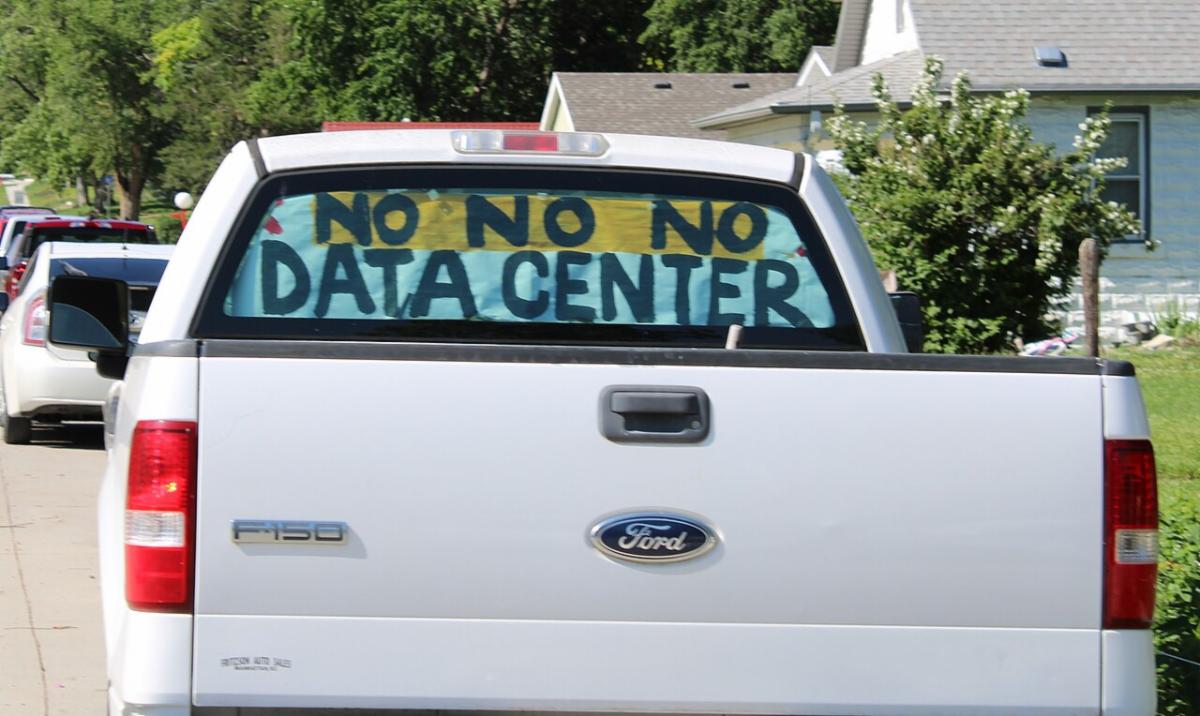
| | Anti-data-center sentiment in rural Kansas neighborhood by Catboy69 | |
How bad are data centers?
by Dr. Jackie Augustine
Data centers are specialized facilities that house thousands of computer servers, data storage drives, and networking equipment. The proliferation of data center proposals in Kansas may stem from SB98 which gives a 20-year tax abatement for data centers. Throughout Kansas, we have seen local communities unite in their opposition to data center development proposals. Opponents cite environmental concerns including water use, environmental impacts, noise, and light pollution. Let’s look at these concerns in more detail.
- Water use: Computers can produce a lot of heat and water consumption is associated with cooling the facility.
- Environmental impacts: Like any other development, location has a huge impact on the environment.
- Noise: The cooling systems, diesel generators, and fans of data centers create a low level white noise which can be heard for hundreds of feet around them.
- Light pollution: Some data centers are illuminated with bright lights that ruin the dark sky.
- Electrical use: Data centers in some areas have caused local electricity rates to sky rocket. Indirect pollution resulting from power generation is also a concern.
Given these concerns, you might be surprised that I don’t recommend an outright ban. Rather, I believe there should be a set of standards for data centers that should be met in order for construction to begin such as:
- Water use: The facility should be water-neutral and use recirculating water or other cooling systems so that their water needs are minimal.
- Environmental impacts: The facility should be constructed on commercial or agricultural land adjacent to cities, and should not impact the few remaining prairies, wetlands, or riparian forests we have in Kansas.
- Noise: A noise study should be conducted to estimate how the noise will percolate through the landscape. Facility design to reduce noise, such as creation of natural or artificial noise barriers, should be required for construction.
- Light pollution: DarkSky International recommends avoiding over illumination, implementing the 80-degree cutoff angle, using smart lighting controls, and prioritizing warmer color temperatures (3000K or less).
- Electrical use: Over half of Kansas’ electricity come from renewable sources. In some ways, that makes Kansas an ideal place to host these data centers. The Kansas Corporation Commission has taken steps to ensure that data centers do not affect other ratepayers.
What you can do:
- Voice your concerns. SB98 stipulates that tax credits can only be given to companies that enact water conservation and sustainability practices. Another stipulation seeks to make sure that the community benefits from the purchase of electricity. However, it is local communities that must make sure that water conservation and electrical concerns are addressed in addition to noise, light, and other environmental concerns. In other words, it takes local citizens showing up and demanding these protections at local planning and zoning commission meetings to ensure steps are taken to eliminate these concerns.
- Lessen your digital footprint. Over half of data stored at data centers is “dark data.” Dark data is data that is stored but never used. Think about duplicate copies of photos you have taken. Or little videos. All those things add up. If you store these things on “the cloud” you are contributing to the proliferation of data centers. Go through your cloud data and delete what you no longer need.
Note: These are the opinions of Dr. Jackie Augustine, and are not necessarily the stance of AOK. AOK is currently investigating this developing issue and would welcome feedback. Email your data center concerns to aok@audubonofkansas.org.
| | Every Bird Counts: Breeding Bird Surveys | | |
After the brilliant colors and eager songs of spring migrants have moved north across Kansas, many birders slow down for the summer season. From the comfort of our homes, we enjoy the songs which reliably return to our properties year after year - the phoebe who nests underneath the awning, the Gray Catbird skulking in the shrubs, and the House Wren that occupies grandma’s old bird house. Slowly, and sometimes unexpectedly, we grow close to these visitors, and their delayed return, or absence, can evoke sorrow.
While it is no secret that bird populations in the United States are rapidly declining, down 30% since 1970; you may wonder where these numbers come from, and how scientists gather information to make such broad evaluations. With the rise of community science efforts, and new tools such as eBird and iNaturalist, researchers are now able to tap into massive volumes of observations from around the world. Coordinated annual birdwatching efforts, driven by both professionals and committed volunteers, include the Christmas Bird Count (December 14th - January 5th), the Great Backyard Bird Count (mid February), and the North American Breeding Bird Survey which is generally conducted between mid May and June, while nesting activity is at its peak in the US.
Earlier this month, AOK staff conducted annual breeding bird surveys at each of our Protected Areas in Kansas, as well as the Hutton Niobrara Ranch Wildlife Sanctuary located in northern Nebraska. Numbers from these surveys provide our organization with valuable information for evaluating the effectiveness of our habitat management. We hope that practices, such as rotational patch burn grazing, girdling of large invasive trees, and the restoration of oak savanna ecosystems helps create more heterogeneity in the landscape capable of supporting a broader array of plants, insects, and of course, birds.
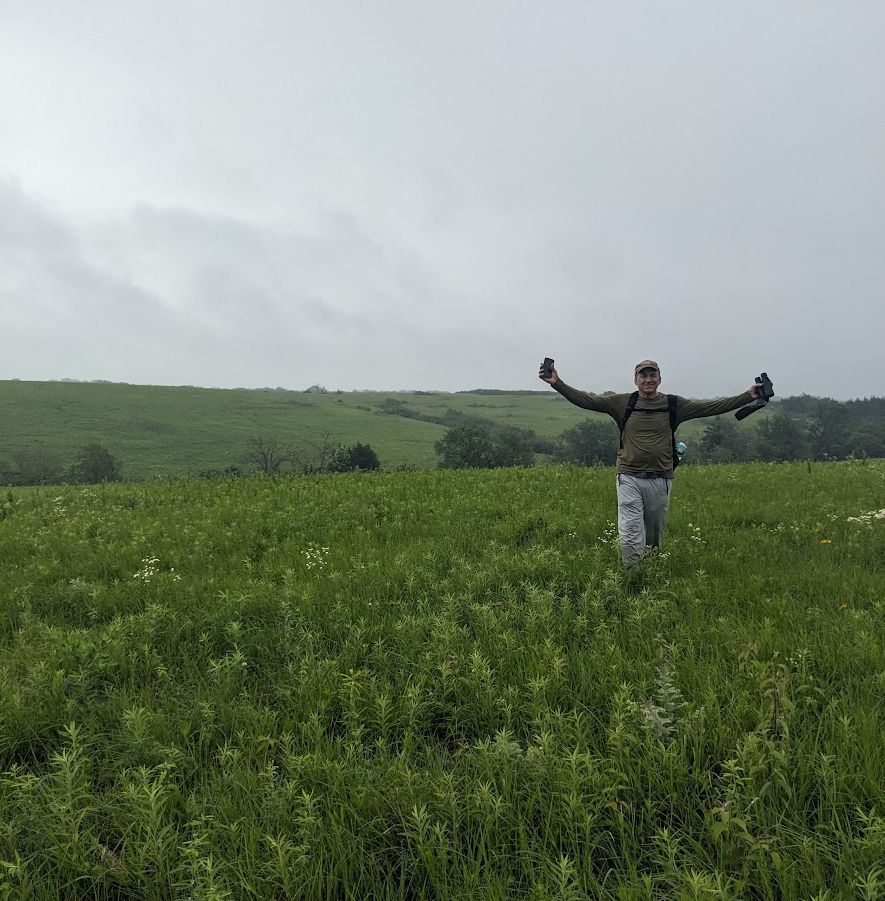
Photo: Randy Carman, AOK Board of Trustees, assisting with the annual breeding bird survey at the Howell and Carmen Johnson Wildlife Preserve
| | Urban Might of Chimney Swifts | | |
A summer evening trip to any Kansas downtown sparks excitement for a variety of reasons - cool nights, bustling local shops, and seasonal festivals, but for many birders this trip is incomplete without a certain chattering heard above-head - that of the Chimney Swift. Despite its average-sized and dull appearance, the sight and sound of these birds gracefully swooping overhead as they catch insects on the wing sparks a bit of excitement for many.
Historically, Chimney Swifts resided in the forests of the eastern and midwestern United States - a true cavity nester, reliant on caves and the hallowed trunks of mature trees. As much of these forests have been cleared, this bird has made a remarkable transition to inhabiting man-made buildings including chimneys, smokestacks, and silos, granting new life to many abandoned structures. These birds congregate in huge flocks during their migration from South America, and roost in impressive numbers upon arrival back in the United States. During mating, pairs will disseminate from the flock and inhabit smaller cavities in the area, building cup-style nests out of sticks held together by the bird’s sticky saliva (not too dissimilar from hot glue) mounted directly on the interior wall of the cavity.
While this may seem like a success story for us to point at and celebrate the adaptability and resilience of nature, it is still being written. According to the 2025 State of the Birds Report, the Chimney Swift has been labeled as a “tipping point species”, meaning that it has lost 50% of its population in the past 50 years. Attention is being drawn to the matter, and people are taking action. As individuals, there are certain things we can do to help including reducing insecticide use, not capping historic chimneys on our homes, avoiding cleaning our chimneys during nesting season, and ensuring newly constructed chimneys have a wide opening and rough interior surface which is necessary for the birds to be able to cling and construct a nest. Additional efforts are being made to create supplemental housing for Chimney Swifts in natural areas.
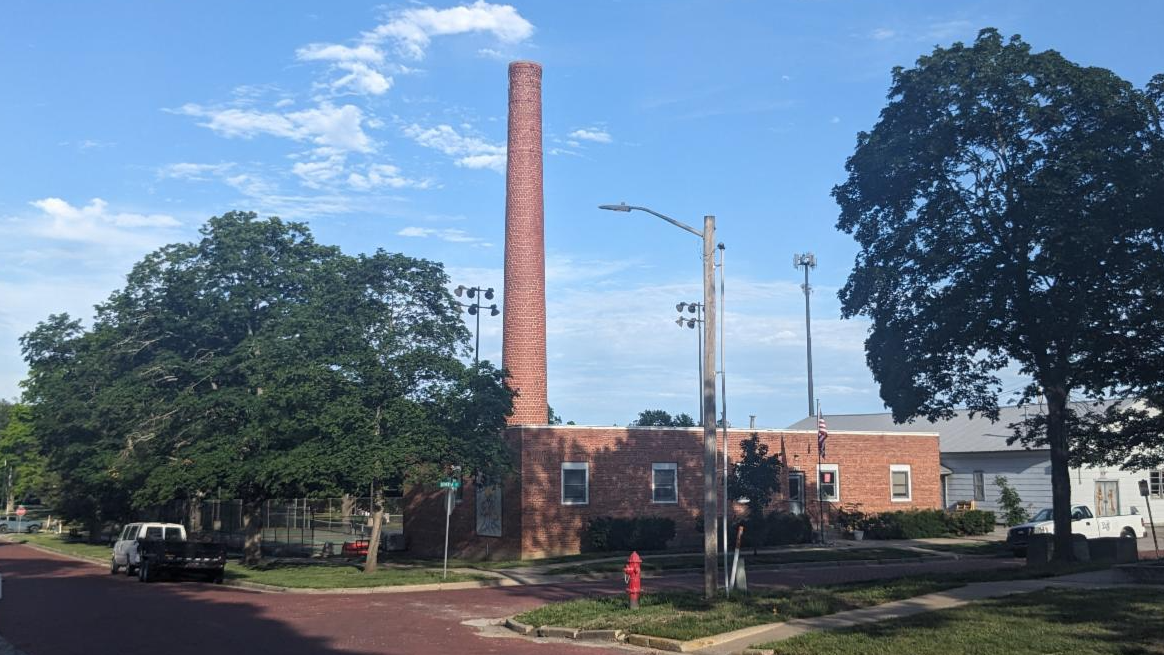
| | Old smokestack located in Baldwin City, Kansas that serves as a popular roosting spot for chimney swifts | | These flocks have now inhabited our cities for as long as many of our families. Let's hope for a future in which we incorporate our understanding of the natural world to support the wildlife that also calls this place home by preserving our historic structures, planting native, and placing an emphasis on long term sustainability. | |
July 2 | Youth Program: Dinosaurs are not extinct!
Kismet Public Library
501 Main Street
Kismet, KS 67859
10:00 AM
This program for children will feature reading the book, Dinosaurs are not extinct! by Drew Sheneman. Afterwards, we will chart the similarities between birds and dinosaurs, look at feathers, and act like dinosaurs.
July 2 | Public Talk: Plants for Birds
Kismet Senior Center
502 Main Street
Kismet, KS 67859
12:30 PM
Birds are declining in part due to habitat loss. Dr. Jackie Augustine, AOK Executive Director, will describe how you can make your backyard a wildlife haven by planting native trees, shrubs, and wildflowers.
July 6 | Ribbon Cutting:Vigilance
Flint Hills Discovery Center
315 South 3rd Street
Manhattan, KS 66502
9:30 AM
Join the Flint Hills Discovery Center Foundation on Monday, July 6, 2026, at 9:30 a.m. for the official ribbon cutting ceremony celebrating Vigilance, a remarkable new public sculpture located at the Flint Hills Discovery Center in Manhattan, Kansas.
Created by renowned Kansas artist Alan Tollakson and generously gifted by John and Karen McCulloh in honor of Jan Garton, Vigilance depicts a protective bison cow and calf carved from native Flint Hills limestone. When Jan Garton was President of the Kansas Audubon Council (precursor to AOK), she rallied people to restore and protect Cheyenne Bottoms.
The ceremony will include an official ribbon cutting, remarks from special guests, photo opportunities, and light refreshments.
|
|
July 11 | FREE Family Event: Hutton Field Day
Hutton Niobrara Ranch Wildlife Sanctuary
88923 453rd Ave
Bassett, NE 68714
42.713228, -99.422205 (Apple Maps Recommended)
3:00-7:00 PM (Come & Go)
Spend an afternoon exploring the natural world at Hutton Field Day, a free family-friendly event for nature enthusiasts of all ages.
Participants are invited to come and go throughout the afternoon, visiting interactive stations at their own pace and experiencing hands-on activities focused on the wildlife and habitats along the Niobrara River.
Activities include:
- Bird discovery, including opportunities to explore bird adaptations and learn how to use binoculars
- Mammal investigations featuring scat and track identification
- An insect safari with bug nets and collecting jars
- A hands-on stream table demonstrating how rivers respond to dams, flooding, and changing water conditions
Stations will be located near the Hutton Ranch house, providing convenient access to shade, seating, and air conditioning during the event.
A light meal will be available while supplies last, including campfire pudgy pies and cold water.
RSVPs are appreciated, but not required.
Come discover birds, bugs, mammals, rivers, and more while enjoying the great outdoors.
This free event is made possible through a partnership between Audubon of Kansas, Nebraska Game and Parks Commission, The Nature Conservancy in Nebraska, and the National Park Service.
For questions about the Hutton Field Day, call 785-340 3609.
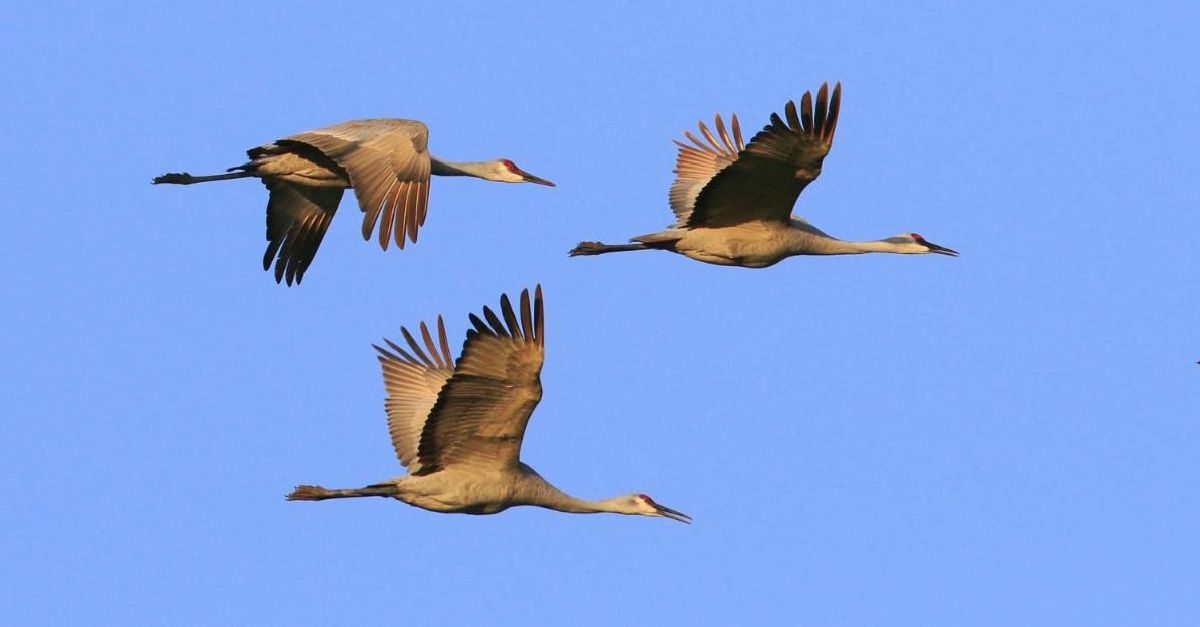
| | Sandhill Cranes by Bob Gress | | |
AOK is now accepting sponsorships for Celebration of Cranes 2026. Celebration of Cranes provides the public with an opportunity to enjoy the amazing assemblage of cranes and other birds that gather at Quivira National Wildlife Refuge during the fall migration.
Celebration of Cranes continues to grow as a platform for education, conservation, and advocacy—all thanks to community support.
Sponsorship benefits include guided van tour tickets at Quivira, recognition in event communications, placement on event signage, and other visibility opportunities.
Interested?
Reach out to Kathryn Chambers, Director of Philanthropy, at kathryn@audubonofkansas.org.
| | |
Hutton Niobrara Ranch Manager | | |
Audubon of Kansas is seeking a Hutton Niobrara Ranch Manager to oversee habitat management, property maintenance, visitor engagement, and stewardship at our 5,000-acre Hutton Niobrara Ranch Wildlife Sanctuary near Bassett, Nebraska.
If you're passionate about conservation, enjoy hands-on land management, and want to help protect one of the Great Plains' remarkable landscapes, we encourage you to apply.
| |
Thank You, Amy!
Join us in thanking Amy Meyer for her dedication to AOK and the Hutton Niobrara Ranch Wildlife Sanctuary.
Since joining AOK in 2023, Amy has cared for the sanctuary, overseeing habitat management, coordinating events, welcoming visitors, and helping share the unique story of the Nebraska Sandhills.
While we're sad to see her leave AOK, we're excited that she'll continue making a difference as she joins the Sandhills Task Force, where she'll help advance conservation and sustainable ranching across the Nebraska Sandhills.
Thank you, Amy, for everything you've done for AOK. We wish you all the best in this next chapter!
| | |
Based in Pittsburg, Kansas the Sperry-Galligar Audubon Society (SGAS) serves southeast Kansas through educational programs, conservation, and community engagement. SGAS continues to provide monthly programs on the Pittsburg State University (PSU) campus, bringing together members and the public to learn about a wide variety of natural history topics. Recent presentations have explored gray bat migration, the hidden life of ponds, and the evolutionary history of birds. The chapter welcomed Dr. Jackie Augustine, AOK Executive Director, as a special guest at the annual May picnic!
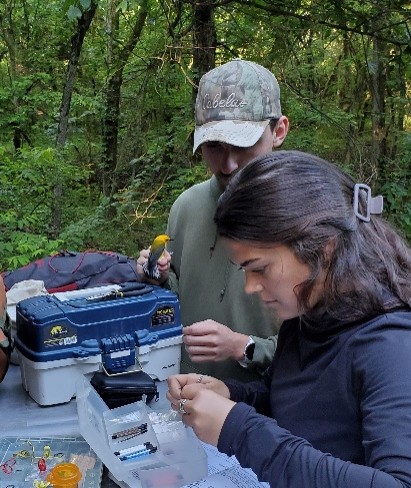
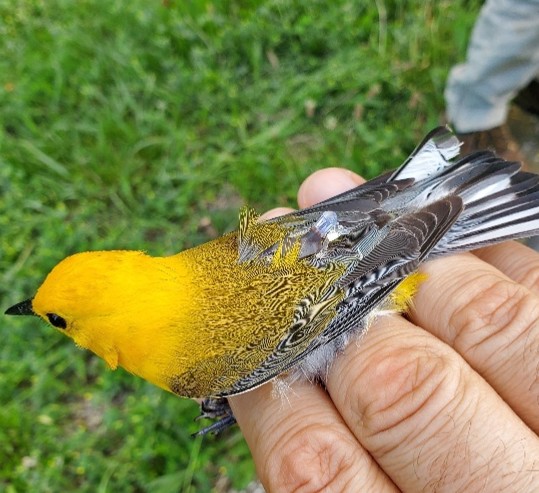
SGAS supports ongoing conservation projects in the region, including an ongoing Prothonotary Warbler study led by PSU graduate student Gabe McClain. Members worked with Gabe to build and install nearly 300 nest boxes across southeast Kansas, which are being used to study the breeding ecology and productivity of this brilliant golden songbird. Special thanks to the landowners, students, volunteers, and community partners who have made this project possible.
| | Photos: (left) PSU graduate student Gabe McClain and undergraduate student Kenzie Snell band a Prothonotary Warbler near Pittsburg, KS and (right) a Prothonotary Warbler equipped with a light-level geolocator, which will allow researchers to study its migratory path between Kansas and South America | |
| | | |