|
Four Key Considerations Before Scaling
1. Cash Flow Resilience
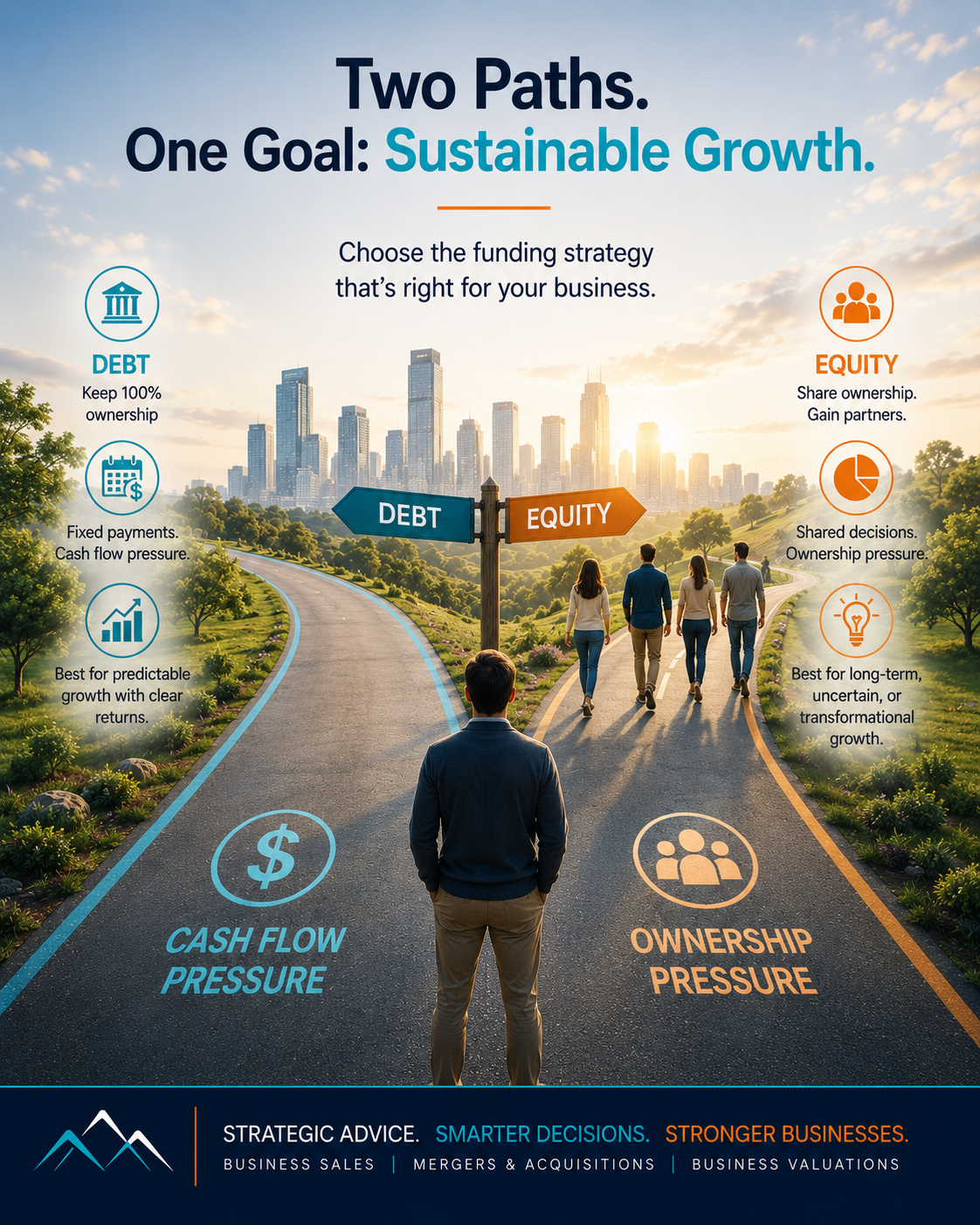
The most critical question with debt is not whether you can secure it, but whether your business can comfortably service it. Growth rarely follows a straight line. Delayed payments, slower-than-expected ramp-ups, or unforeseen expenses can quickly strain cash flow. Debt works best when revenue is predictable and timelines to profitability are clear.
2. Control and Decision-Making
Equity investors are not passive participants. They often require input on major decisions, from strategic direction to exit timing. This can be highly beneficial if aligned but problematic if not. Before pursuing equity, consider how much control you’re willing to share and whether you’re prepared to manage investor relationships over time.
3. The True Cost of Capital
Debt may feel expensive due to interest payments, but equity can be significantly more costly in the long run. Giving up a percentage of your business means sharing in all future upside. What seems like a reasonable trade today can become a substantial cost if the business scales successfully. It’s important to evaluate not just immediate affordability, but long-term impact.
4. The Type of Growth You’re Funding
Not all growth initiatives are created equal. Debt is typically best suited for investments with clear returns and timelines—such as equipment purchases, inventory, or expanding an existing, proven operation. Equity is often better aligned with longer-term or uncertain initiatives, like entering new markets, developing new products, or building out infrastructure.
Matching the funding strategy to the nature of the growth initiative is one of the most overlooked but most important factors in scaling successfully.
|