|
Cancer News Digest, December 2023
Visit our website
CFC #11967
| |
|
Staying healthy through the holidays – and all year!
Keeping on track with your health goals becomes especially important around the holiday season and as we go into the new year. Obesity or being overweight increases the chance of developing many different types of cancers. After giving up smoking, maintaining a healthy weight is one of the best things you can do to decrease your chance of getting cancer. Watching your portion size (smaller plates will help), minimizing foods high in fat, salt, and sugar, and prioritizing fruits, vegetables, and whole grains that you enjoy eating will help to keep you on the right track. Additionally, the importance of some physical activity (even in cold weather) can’t be emphasized enough. And avoid some of the bad advice (such as snacking all day or eating before going to a party!) Read more about what we recommend to help you during and after the holidays.
| |
|
Let the FDA make sure these medical tests are accurate!
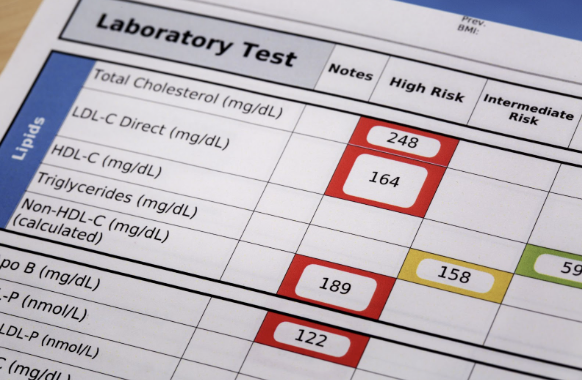
Did you know that hundreds of thousands of diagnostic tests to detect cancer, COVID-19, birth defects, and genetic abnormalities are not tested for accuracy by the Food and Drug Administration (FDA)? When the tests are made by companies, they are regulated by the FDA, but not if they are made by independent laboratories, such as those at academic medical centers and even large labs such as Quest. Unfortunately, that means that many of these tests are not accurate, and patients can’t rely on them for medical information. Legislative efforts to fix this outrageous situation have been unsuccessful, so the FDA plans to implement this authority instead. Unfortunately, the FDA is facing powerful lobbying opposition from many academic centers and clinical labs that do not want to prove their benefits to the FDA. They convinced many Members of Congress that the Centers for Medicare & Medicaid Services (CMS) is ensuring the accuracy of these tests. That’s not true, so we explained to Bloomberg Law that CMS does not have the authority or resources to ensure that these tests are accurate – that’s the job of the FDA. Let Congress know what you think, and read the article here.
| |
We're Speaking Out For You | |
|
FDA should require better evidence to confirm that treatments work!
In response to the FDA’s request for public comments, we urged the FDA to require stronger scientific standards to confirm that cancer drugs and other drugs are effective. The gold standard for proving a drug is safe and effective is a randomized, double-blind clinical trial in which some patients get the new drug, and some get an older drug or placebo; neither the patient nor physician knows which patients are getting the new drug. Those clinical trials are better than so-called “real world evidence” that can’t control for many of the differences between the patients getting the new drug and those that don’t, for whatever reason. Patients deserve drugs that are proven to work, not drugs that may possibly work. See our comment here.
| |
|
Coalition calls for stronger standards for medical devices
As a leader of the Patient, Consumer, and Public Health Coalition, we worked with coalition members to respond to the FDA’s 3 requests for public comments regarding standards for medical devices through the 510(k) pathway. More than 95% of all medical devices are allowed to be sold in the U.S. through the 510(k) pathway, which is a shortcut used to sell devices that are similar to products already on the market, instead of requiring clinical trials to prove the new devices are safe and effective. Unfortunately, the FDA’s standards of what is “substantially equivalent” are often questionable.
We urged the FDA to require stronger standards for equivalence, such as devices that are identical in terms of materials or mechanism of action, and those with scientifically credible evidence of equal safety and effectiveness based on clinical trials or other credible clinical data. The coalition comments also specified that equivalence to a device already on the market should meet the FDA’s “best practices” to be cleared through the 510(k) process. If it doesn’t, the device should be submitted to a more rigorous review to ensure patients’ health and safety. For example, if the new device is substantially equivalent to a device that has been recalled, the new device should not be cleared through the 510(k) pathway. We wondered: Isn’t that obvious? You can read our comments on the 510(k) pathway here, here, and here.
| |
|
Let's improve patient medication information guides
FDA requested public comments on their proposed draft guidance to create a one-page patient medication information guide that is standardized, easy to read, and contains the most important information. We agreed that plain language health information is important to reduce misinterpreting medication information. However, we suggested several recommended improvements. For example, we recommended that the FDA include information regarding the absolute benefits or risk reduction of the drug, rather than the relative risk or benefit. In other words, if a treatment reduces the chances of being hospitalized from 10% to 8%, that should be described as a 2% reduction in hospitalization, rather than a 20% reduction (even though 8 is 20% less than 10). That higher statistic is misleading since each patient only benefits by 2%. We also recommended including information about problematic drug interactions with specific medications that patients may also be taking, as well as emphasizing the importance of aiming for a 7th or 8th-grade reading level since that is the average reading level of U.S. adults. Read more here.
| |
|
Biden backing out of banning menthols
The Biden administration is delaying the banning of menthol cigarettes until next March, in a disappointing reversal of a plan to restrict the sale of the cigarettes originally planned for April 2022. Critics of the ban, many supported by the tobacco industry, state that this move would unduly target Black communities. The menthol flavor is known to enhance addiction, and the delay raises concerns about the potential harm to children getting addicted and its impact on Black lives. Health advocates worry that this delay will put the entire plan to ban menthols in jeopardy. For more details, find out more here.
| |
|
Why are more women diagnosed with lung cancer?
A new report in JAMA Oncology has found that more women ages 35-54 are getting diagnosed with lung cancer, compared to their male counterparts. Historically, lung cancer has been seen as a “male disease” since it is often caused by smoking, but even as smoking rates have decreased, the cancer rate among women has increased. The cancer rate is almost double for non-smoking women compared to non-smoking men, and we need to find out why. Lung cancer is the top cancer killer of U.S. women, more than breast, ovarian, and cervical cancer combined. Women have been underrepresented in lung cancer research, and more efforts are underway to close this research gap, such as funding better research on women. You can read more about this study here.
| |
|
Patient advocacy groups in PhRMA’s pocket
Our Cancer Prevention and Treatment Fund does not accept money from companies that make the products that we evaluate. Most nonprofit organizations that focus on cancer and other health issues can’t say that. In fact, a recent report by Public Citizen revealed that from 2010 to 2022, the Pharmaceutical Research and Manufacturers of America (PhRMA), the drug industry's largest lobbying group, provided $6 billion in funding to more than 20,000 organizations. Notable examples include The American Heart Association, which received $61.4 million, and The American Cancer Society, which received $23.1 million. Support from PhRMA makes it harder for these groups to take a stand against pharmaceutical companies' ” high drug prices and companies’ lobbying for lower FDA approval standards. Find out more here.
| |
|
Living in a food swamp tied to high breast cancer mortality
A new study has found that living in communities dominated by fast-food restaurants contributes to breast cancer mortality rates. While both a “food desert” and a “food swamp” lack easy access to healthy food, food swamps are worse because they are inundated with an abundance of unhealthy food options. Both lead to worse health outcomes for their residents, who are disproportionately low-income. Strategies to reduce overweight and obesity, such as walkable communities and community gardens, may help to reverse this trend. Find out more here.
| |
Check us out!
Did you know that artificial turf and rubber playground surfaces contain carcinogens? Are your children or grandchildren getting exposed when they play? Follow us @safe.to.play
| |
|
|
Cancer Prevention and Treatment Fund
Facebook: @CancerPreventionAndTreatmentFund
| |
|
|
Your Contribution Can Make a Difference
We do not accept any funding from drug companies, device companies, chemical companies, or other sources that could influence our work and compromise our integrity. That's why so many people turn to us when they need help. Donations of any size are greatly appreciated (and tax deductible.)
Please consider giving to the Cancer Prevention and Treatment Fund online or by mail to the address below.
| |
To sign up for these monthly updates, click here.
| |
Cancer Prevention and Treatment Fund | 1001 Connecticut Ave NW, Suite 1100
CFC# 11967
| | | | |