How to Talk About Exploitation

With Youth


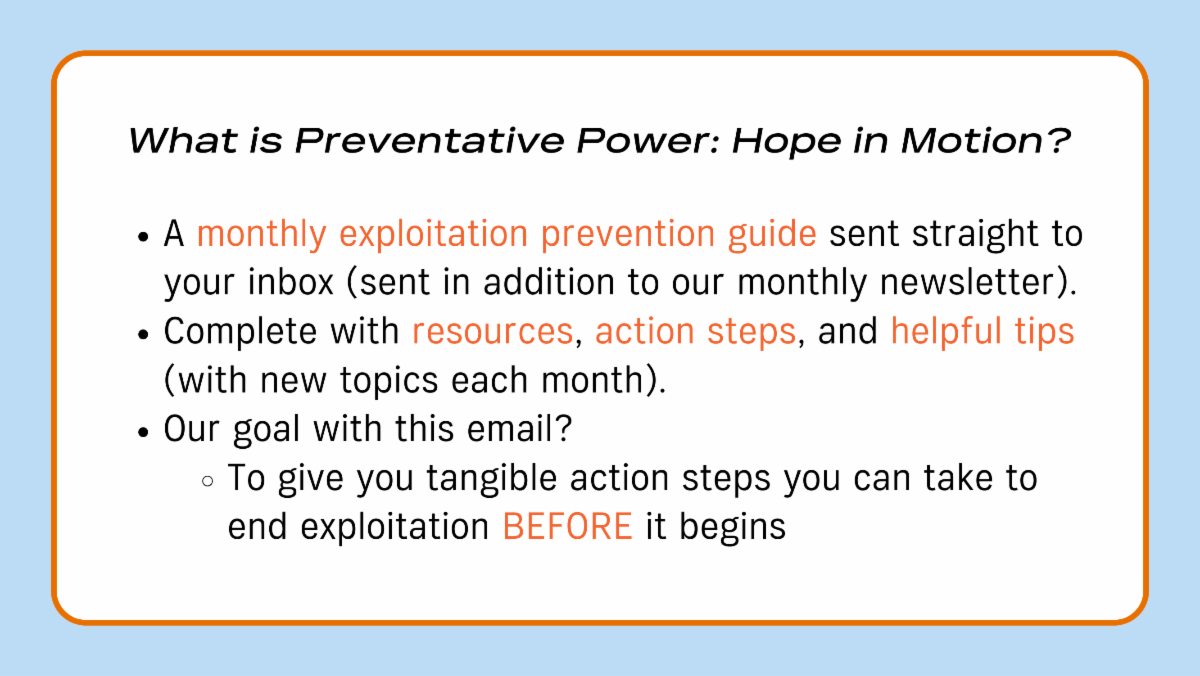
In this month's guide, we want to help you start the conversation about exploitation with your loved ones. In this guide, you will learn:


  • The definition of sexual exploitation
  • Conversational starters & tips
  • How to talk about this topic with young children
  • How to talk about this topic with teens


WHAT IS SEXUAL EXPLOITATION?


Sexual exploitation means causing harm sexually for gain. Think of exploitation as an umbrella that includes things like:


All of the items listed above are forms of sexual exploitation, but each item is unique and has it's own specific definition and characteristics.


CONVERSATIONAL STARTERS & TIPS


Talk Early & Often

  • Anytime is the right time to talk with your child


Environment: Activity & Comfort

  • Find opportunities to talk where you are not looking directly at each other (Ex: car ride or going for a walk together)
  • Create a cozy atmosphere where a child can feel safe and loved (Ex: curl up on the couch with a cup of hot cocoa together)


Conversation: Ask for Input from Your Child

  • Ask your child what is important to them — when you understand what matters to them, you understand where there are vulnerabilities (Ex: what games and apps do they use most, wanting to be accepted by friends)
  • Situational Drills — talk through potential situations and brainstorm with your child what they can do (Ex: what should you do if your friend shows you an embarrassing photo of a classmate on the bus? How can you do this while keeping a good relationship with your friend?)


Source: Committee for Children

Source: Power Over Predators

Read CFC's Full Guide HERE


TALKING ABOUT THIS TOPIC WITH YOUNG CHILDREN


  1. Start conversations early and often. Don't wait for "the talk" but normalize having these types of conversations in your home.
  2. Create a culture where your child can ask questions and know that you will listen and believe them if they share difficult or scary things with you.
  3. It is ok not to have all the answers. Be honest with your kids about it. If your child asks you something and you're not sure of the answer, say "that's a great question — let me look into that so I can get you the best answer." Or "let's look into that together."


Source: RAINN

List of Talking Points for Young Kids HERE
Safety Tools for K-5 Grade


TALKING ABOUT THIS TOPIC WITH TEENS


  • Use media to make it relevant (ask their opinion on social media, new movies, popular TV).
  • Use your own experience to tell a safety story.
  • Talk about caring for their friends (gives you a chance to communicate safety practices).
  • Talk about sexual assault directly (it may not be on their radar or they may have misconceptions about the topic).
  • Create situational drills — ask them how they would respond if something comes up at a sleepover, on the school bus, or with friends.


Source: RAINN

Explore Talking Points for Teens HERE
Internet Safety Tools for ages 5-17


Looking For More Resources?


Want additional talking points, situational drills, and a person to have direct Q&A? Request a FREE virtual or in-person speaker from C.A.S.T. for topics like:


  • Human Trafficking 101
  • Parent Workshops
  • Youth Presentations
  • Round Tables (small groups sessions for brainstorming and Q&A)
Request a Speaker HERE


Want to Share With Us How You Are Taking Steps Toward Prevention?

Fill Out Our (Anonymous) Feedback Form HERE


P.O. Box 251001,

Woodbury, MN, 55125

www.castmn.org

Facebook  Instagram