A glimpse into the Program in Human Biology at Stanford University | | |
|
Director's Message
Dear Human Biology Alumni, Students, and Friends,
Happy Holidays from the Main Quad! We have had a fantastic and busy autumn quarter of the 2024-2025 academic year, including our annual reunion open house, an inaugural Democracy Day event, and a number of wonderful student workshops and events; all this, in addition, of course, to our usual full portfolio of HumBio courses.
As the calendar year draws to a close, I am grateful for our incredible community and for the energy, innovation, and kindness exemplified by our students, alumni, faculty, and friends.
I hope that you enjoy this new edition of HumBio Highlights and, as always, I encourage you to share your thoughts with us.
On behalf of the entire team here at the Program in Human Biology, I wish you all a wonderful holiday season and, looking ahead to 2025, a happy new year!
Lianne Kurina
Bing Director of the Program in Human Biology
| | |
|
Ruth O'Hara and Team Receive
$70 Million NIH Grant
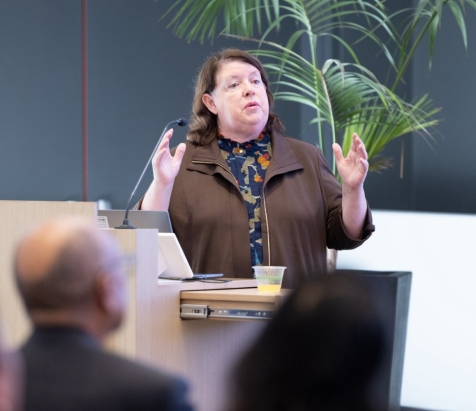
Congratulations to Dr. Ruth O’Hara and her research team at Stanford Medicine, who recently received a $70 million Clinical and Translational Science Award from the National Institutes of Health.
The grant will allow principal investigator O’Hara and Stanford Medicine researchers to identify, optimize, evaluate, and then transfer relevant health discoveries to patients and
their communities.
O’Hara is the senior associate dean of research and the Lowell W. and Josephine Q. Berry Professor in the Department of Psychiatry and Behavioral Sciences. In HumBio, O’Hara teaches HumBio 164, Autism Spectrum Disorder with Dr. Joachim Hallmayer and
Dr. Sophia Colamarino.
| |
|
Rodolfo Dirzo Appointed as a
2024 Bass University Fellow
Congratulations to Dr. Rodolfo Dirzo, who was appointed the Sapp Family University Fellow, an appointment under the Bass University Fellows. The fellowship recognizes faculty for their extraordinary contributions to undergraduate education.
Dirzo is the Bing Professor in Environmental Science and professor of biology in the School of Humanities and Sciences, professor of earth system science and the Associate Dean for Integrative Initiatives in Environmental Justice at the Doerr School of Sustainability. He studies species interactions in tropical ecosystems in California, Latin America, and other tropical areas. He teaches HumBio 112, Conservation Biology: A Latin American Perspective.
| |
|
Steven Crane '12: A Stanford Researcher Who Walks His Talk
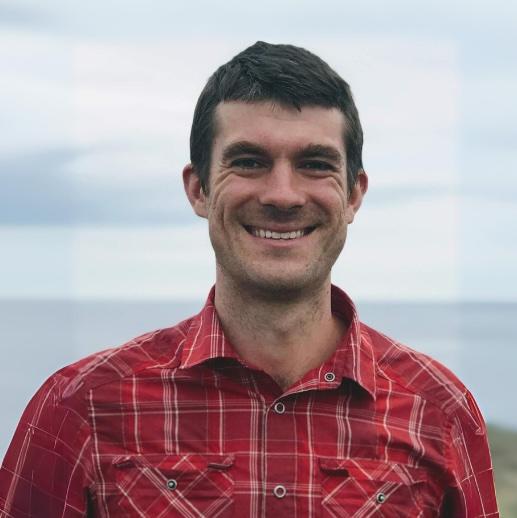
Alumnus Steven Crane ‘12 explores how simple lifestyle changes and daily habits–such as walking, diet, and stress management–can improve long-term health and longevity. His approach combines scientific inquiry with a personal commitment to health, demonstrating how small, sustainable changes can significantly impact our lives and well-being.
Crane is currently a social health researcher with the Stanford Lifestyle Medicine Initiative. He also serves as Head of Social Connection Science for Sunny, a non-profit organization that promotes social well-being by helping people build meaningful connections.
| |
|
Selena Niemi '26: Virtual Reality
for ADHD Understanding
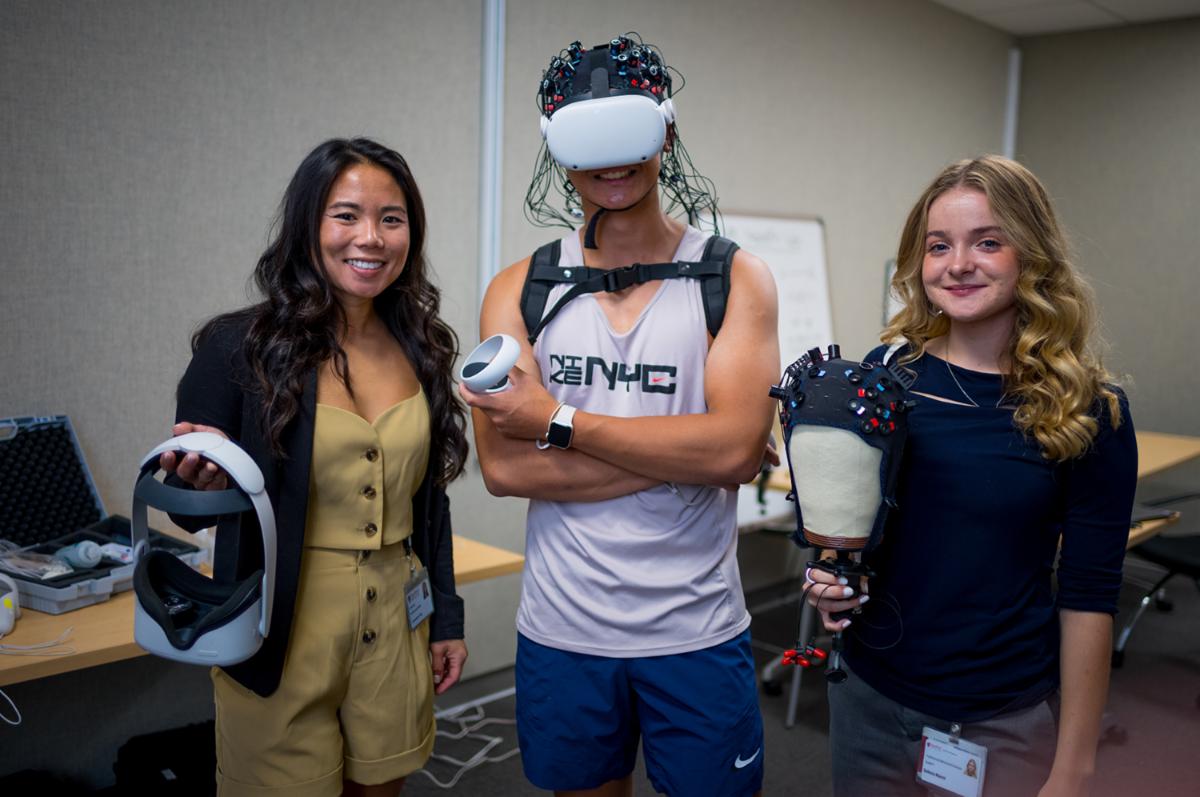
Last summer, more than forty HumBio students completed research through the HB-REX and Bio-X programs. Selena Niemi ‘26–mentored by Dr. Allan Reiss in the Deparment of Psychiatry and Behavioral Sciences–spent her summer exploring how exercise-based virtual reality (VR) games impact brain function and cognitive skills in students with ADHD. Her work addresses the growing need for effective practices to improve cognitive and physical well-being among under-resourced populations.
Niemi is a HumBio junior concentrating in the neuroscience of human behavior and development. Niemi is particularly interested in socioeconomic disparities and hopes to continue advancing her commitment to equity in health.
| |
|
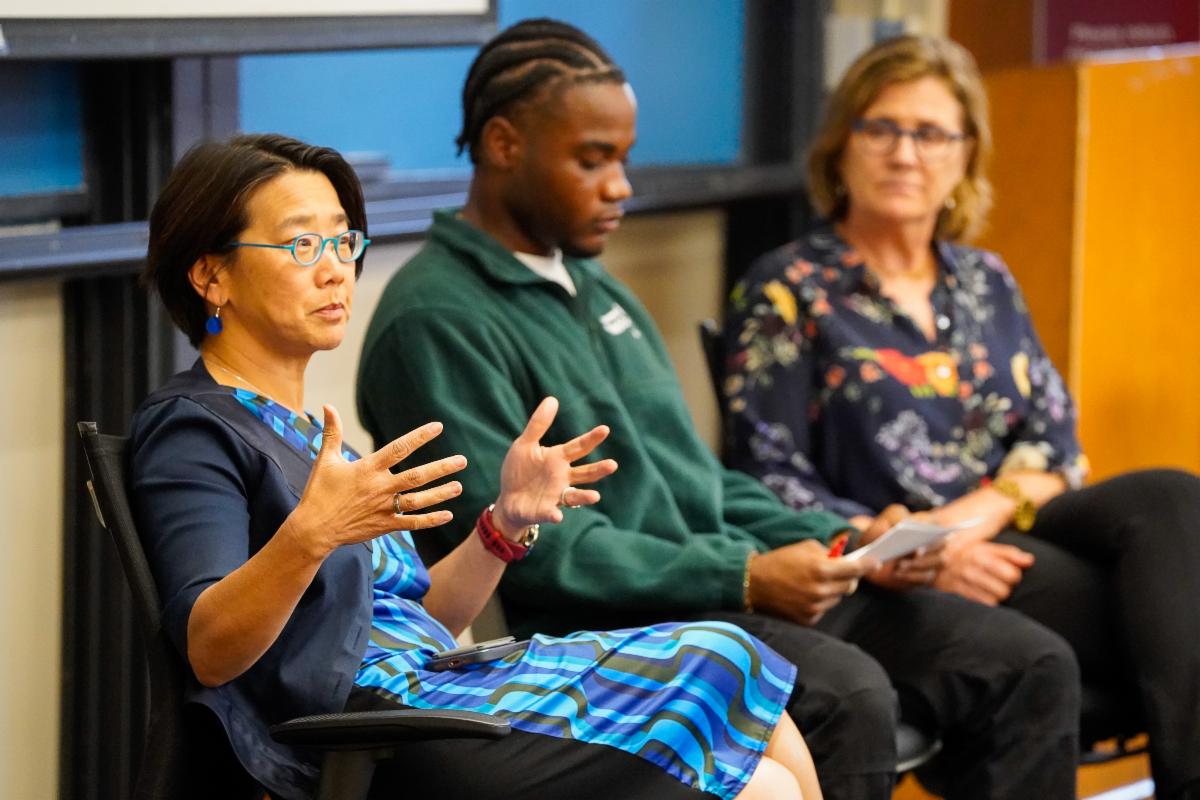
On November 5, 2024, as part of Stanford’s Democracy Day events, nearly 100 students, faculty, and staff from across the university gathered for an illuminating conversation with Dr. Sara Cody ‘85, Director of Public Health for Santa Clara County, and Dr. Erica Pan ‘92, California State Epidemiologist, both distinguished alumni of the Human Biology program. Democracy Day, Stanford’s annual civic celebration, features student-run programming to promote civic engagement, respectful dialogue, and voter education. The event, titled Voting for Health:
The Public’s Role in Shaping Healthcare Policy in 2024, offered attendees a candid glimpse
into public health careers, values, and the evolving challenges of the field, particularly in the wake of COVID-19. Read more.
| |
|
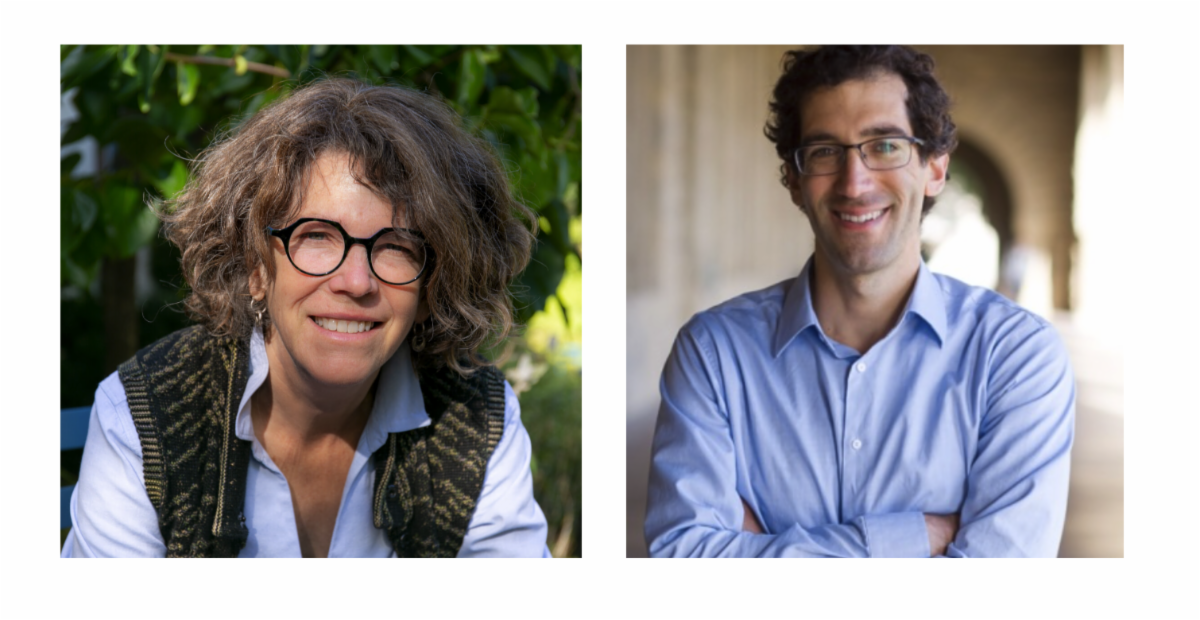
In the vast tapestry of human existence, scenes of “madness” are not merely a product of individual experiences but are rather interwoven with threads of society and culture. Questions about how we distinguish between sanity and insanity, reason and unreason, and mind and body are as old as humanity itself. HumBio 146, Culture and Madness, led by Dr. Tanya Luhrmann and Dr. Daniel Mason, explores mental illness at the intersection of anthropology and psychiatry, offering students the opportunity to delve into the complex interplay between culture and mental illness. The course challenges preconceptions and helps students gain a deeper understanding of the human psyche and diverse manifestations of “madness” across different societies and historical contexts. Read more.
| |
Human Biology’s committed faculty come from across the School of Humanities and Sciences and the Medical School. Our faculty have long been at the forefront of groundbreaking research, innovation, and creativity. Expand your knowledge, build on your HumBio degree, and learn from these leading scholars from the comfort of your own home in these recorded presentations, panels, and seminars. You never know what you might discover! | |
|
Holly Tabor: On Ethics, Adapting to COVID, Finding Hope, and More
In this episode of the BRC & Friends podcast, Tabor discusses ethical challenges in healthcare, especially during the COVID-19 pandemic. Tabor shares insights into clinical ethics, the role of surrogate decision-making, and the impact of the pandemic
on communities, mental health, and health disparities, emphasizing the importance
of communication and human-centered
care in medicine.
Dr. Holly Tabor is a professor of medicine (primary care and population health) and, by courtesy, of pediatrics. She is also Director of the Stanford Center for Biomedical Ethics at Stanford Medicine. In HumBio, she co-teaches HumBio 171E, Modern Ethical Challenges in Neuroscience and Organ Transplantation, with Dr. Karen Hirsch.
| |
|
Judy Chu: A Healthy Masculinity Expert Interview
Promoting healthy masculinity is crucial for supporting boys and men in developing authentic identities and emotional well-being. Chu discusses how societal expectations restrict emotional expression and impact relationships and underscores the importance of creating environments where boys can express their feelings, fostering empathy and connection instead of competition and isolation.
Dr. Judy Chu is a lecturer in the Human Biology program and an affiliate of Stanford’s Clayman Institute for Gender Research. In addition to advising HumBio students, she teaches the upper-division course, HumBio 144, Gender, Relationships, and Psychosocial Development.
| | | | |