Volume 2 Issue 3 - December 2021
It's hard to believe 2021 is coming to an end! We hope that you have been spending plenty of time in the outdoors this season and are now enjoying a freezer full of game. With that said, your measurement of success should not only be whether or not you successfully harvest an animal, it should take into account your hunt as a whole. Find a positive to take away from each trip outdoors and learn something new with each outing. Remember, it's all about the journey, not just the destination. Happy Holidays, as we look forward to 2022! See you outdoors!
|
|
Small Game:
-
Gray Squirrel: 9/1/21-2/28/22
-
Rabbit and Hare: 10/16/21-2/28/22
-
Snowshoe Hare: 11/20/21-1/31/22
|
|
Deer:
-
Archery: 9/15/21 Please refer to guide for specific closing dates. Private Land (Zones 11 and 12): 1/1/22 - 1/31/22
-
Landowner: 11/1/21-12/31/21
-
Muzzleloader: Private Land: 12/8/21-12/31/21 State Land: 12/8/21-12/21/21
Upland Birds and Turkey:
-
Pheasant: 10/16/21-2/28/22
-
Chukar and Hungarian Partridge: 10/16/21-2/28/22
|
|
|
2021 Hunter Education Review |
Please welcome the 2021 graduates of Hunter Education to our hunting community. This year, 2,350 students attended one (or more) of our 140 classes in Firearms, Bow, and Trapping. While still maintaining COVID-19 protocols, we were able to offer classes from March to December, with only one weather cancellation; although some days were quite cold, and some were wet and rainy. Thanks to all who attended despite some uncomfortable weather conditions to receive this important safety training.
We are looking forward to 2022 having even more opportunities for students, including some traditional classes. Additionally, we expect the return of some of our advanced hunter education classes, including Venison Processing, Wild Turkey Hunting, Waterfowl Hunting, and more. These events will be announced through Hunter Highlights and registration will be taken through the hunter education registration system. Please visit the site frequently so you don’t miss out on these great programs. |
|
Changes Coming to Hunting and Trapping Guide |
The 2022 Connecticut Hunting and Trapping Guide is now available online HERE. This digital format allows you to quickly check a law, confirm legal hunting hours, look up season dates, and more – from anywhere, anytime. A downloadable PDF will be available in the near future, which can be accessed on a mobile device while out in the field. A Spanish version will also be available in 2022.
The magazine style guides for hunting and fishing published in previous years are being replaced by limited copies of guides printed with text only and no color, images, or advertisements. Those who do not have access to the internet through a computer or mobile device will be able to get a printed copy if needed. By using digital guides in place of printed ones, you are helping save valuable dollars for fish and wildlife. Outdoor users are encouraged to find the guides (fishing, hunting and trapping, boating) on the DEEP website as e-books or downloadable PDFs, as well as related information, on our new webpage: Connecticut Outdoor Guide Books.
The downloadable PDFs of the guides can be saved to your mobile device for reference even if you do not have cell service. Hunters and trappers will also be able to download and print harvest tags, permission slips, and a listing of public hunting areas, as well as find out how to report harvests from the website. Any new updates or changes that occur during the year related to hunting and fishing can also be found readily on the website so that you can have the most recent information at your fingertips.
|
|
Venison Processing Seminar Coming Early in 2022! |
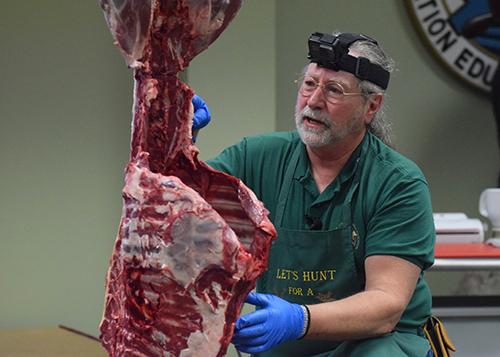
The hunter education program will again be holding the annual Venison Processing Seminar. The seminars will be held in early February at the Franklin and Sessions Woods Wildlife Management Areas. Registration will open prior to the first seminar on the hunter education registration system. Dates will be released in January. Participants will be guided by a professional butcher through skinning, quartering, trimming, and packaging for a white-tailed deer. Take advantage of this seminar to gain knowledge on butchering your own deer!
|
|
Connecticut Hunters from the Field! |
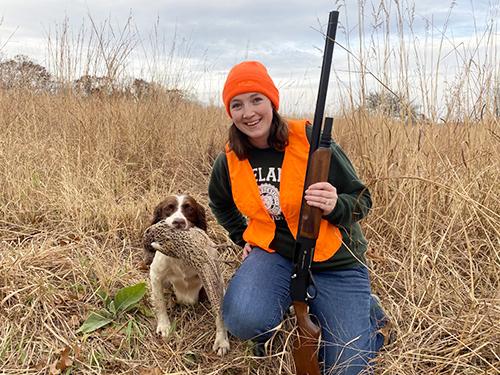
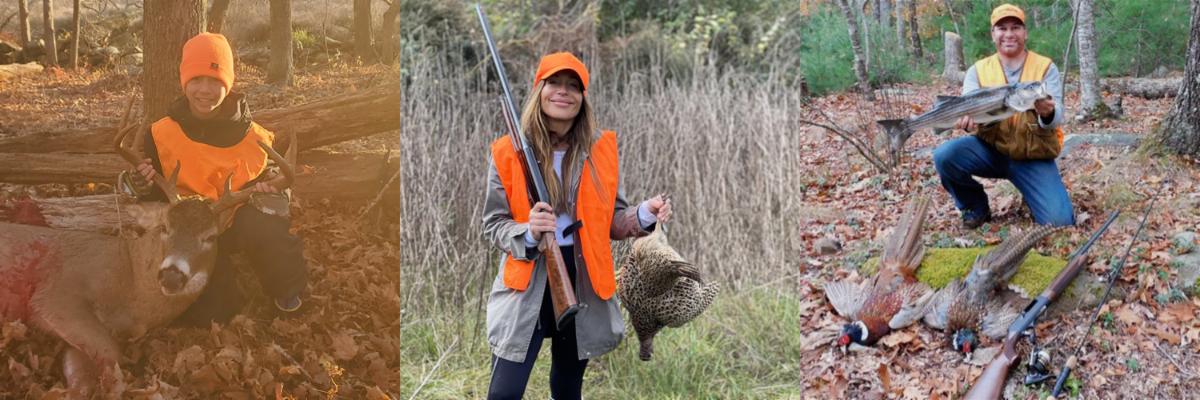
Congrats to junior hunter Angel (left) for harvesting his first deer (and a real nice one, too) in Canterbury this season! Melissa (middle) didn't waste much time harvesting her first pheasant in Kent after recently graduating from hunter education, and Joel Martin (right) enjoyed his annual "cast and blast" trip to Barn Island Wildlife Management Area where he came away with two rooster pheasants and a nice 31-inch striped bass!
Would you or someone you know like to be a featured hunter in our next issue? If so, please send a photo and brief write-up to deep.ctwildlife@ct.gov. If you would like some tips on taking harvest photos, we've got you covered! See our article in Connecticut Wildlife magazine HERE. |
|
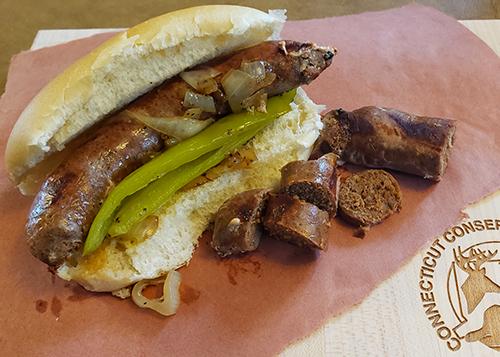
Seasonal Recipes: Venison Chorizo |
Ingredients:
- 1 lb. ground venison
- 8 oz. ground pork butt
- 5 cloves garlic, minced
- 2 tbsp. ancho chile powder
- 1 tbsp. sweet paprika
- 1 tsp. smoked paprika
- 1 1/2 tsp. salt
- 2 tsp. dried oregano
- 1/2 tsp. freshly ground black pepper
- 1/2 tsp. ground cumin
- 1/2 tsp. ground coriander
- 1/4 tsp. ground cinnamon
- 1/4 tsp. ground cloves
- 4 tbsp. cider vinegar
Cooking Instructions
Combine venison, pork, and all seasonings in a bowl. For a slightly different texture, refrigerate for 2-3 days. Check daily and empty any liquid that drains from the meat.
This chorizo can be eaten fresh, or packaged and frozen for later use. Scale the recipe for larger amounts. This makes great ground chorizo and link chorizo. If link chorizo is desired, stuff into casings as you would any sausage.
|
|
Habitat and Hunting Area Update |
The Barn Island WMA culvert replacement and road maintenance project began the week of November 8. Undersized culverts will be replaced at some of the coastal impoundments and the entire dike road will be resurfaced. Phase 1 of the project will include Impoundments 1 and 2 and should be completed by mid-December. During that time the dike road off Palmer Neck Rd will be closed to pedestrian traffic. Phase 2 should begin in January.
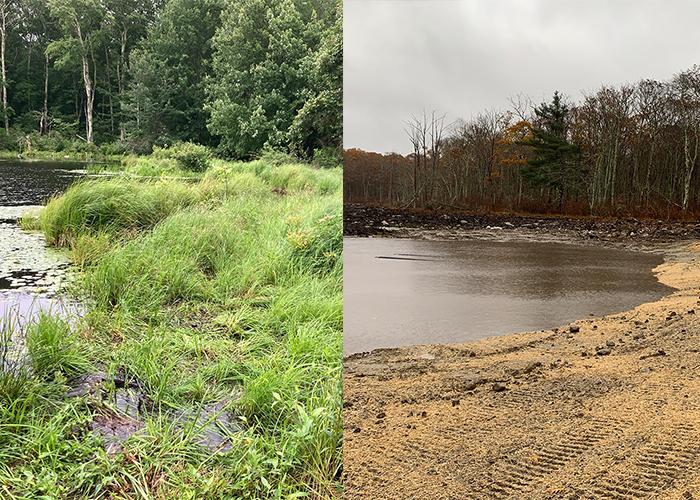
In November 2021, the Wildlife Division and Ducks Unlimited completed a restoration project at Papineau Marsh in Eastford, CT (pictured). Located within Natchaug State Forest, this 24-acre wildlife impoundment previously featured a non-functioning water control structure and a dam in need of repair. The project involved the installation of two new water control structures and extensive repairs to the dam and spillway, which will allow biologists to manage water levels and create more optimal habitat conditions. In the coming years, this site will provide valuable freshwater habitat for waterfowl and other waterbirds, and provide the public with a variety of wildlife-based recreational opportunities, such as hunting and birdwatching.
From September through November, no additions were made to hunting areas within the state.
Please note: Recently acquired parcels need to be border marked and so indicated as open before hunting can take place. If you have any questions, please contact the district biologist for the area (East: 860-295-9523; West: 860-424-3011).
|
|
Tips for Packaging and Freezing Game |
Now that the 2021 hunting season is winding down, it is time to consider the best way to store our harvest for the coming months and year. The proper packaging and storage of game is a necessary step to preserve the nutritional contents of the game and lengthen the time it can remain in the freezer.
- Rotate the remaining meat in the freezer. If you have game left over from last year, bring it to the front (or top) of your freezer and consume it before consuming the new meat.
- Air is your enemy. Just as heat, dirt, and moisture spoil game in the field, air is the enemy of meat in the freezer. If using paper, double wrap the meat in plastic wrap first, then use paper. Wrap the packaging tightly around the meat to remove the air. If using vacuum sealed packaging, ensure that all air is completely removed, and the bag is sealed properly.
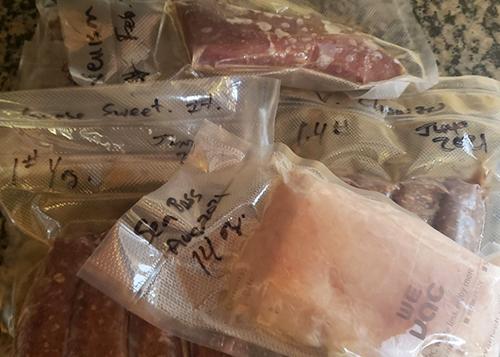
- Flatten packages of ground meat. Storing ground meat in flat packages (about an inch thick) makes for easier stacking and organization in the freezer. An added benefit is that the flat packages freeze and defrost faster. The faster meat freezes, the less time there is for ice crystals to form on the meat. If vacuum sealing the ground meat, be sure to work the meat into the corners of the packages to prevent air from being in the bag.
- Properly label packages. Clearly mark your packaging with the date, species, cut of meat, and weight. This makes finding and rotating the meat in your freezer much easier. A permanent marker is the best option as it will not fade over time.
- Packing meat with bones -- Make sure there are no splintered bones that can poke through the packaging. If splintered bones are present, reinforce the packaging using extra paper, or a second vacuum sealing bag. Splintered bones can cause tiny holes that will expose your meat to air.
- Vacuum sealing wet meats -- Wet meats, such as fresh fish or marinated cuts of meat, can affect the seal of the bag. Tightly wrap the meat in plastic wrap prior to vacuum sealing it. This prevents the vacuum sealer from pulling the moisture out of the meat and guarantees a good seal on the bag.
- Check your freezer temperature frequently. If your freezer is not full, store full jugs of water in the freezer to ensure the freezer runs efficiently. In the event of a power outage, the frozen jugs of water will also keep the freezer temperature from rising quickly.
- Freeze meat quickly. Meat should be frozen as quickly as possible to prevent or slow down the growth of bacteria. If space allows, spread out the newly-packaged meats to enhance airflow and quicker freezing. Ideally, meats should be frozen at 0 degrees.
|
|
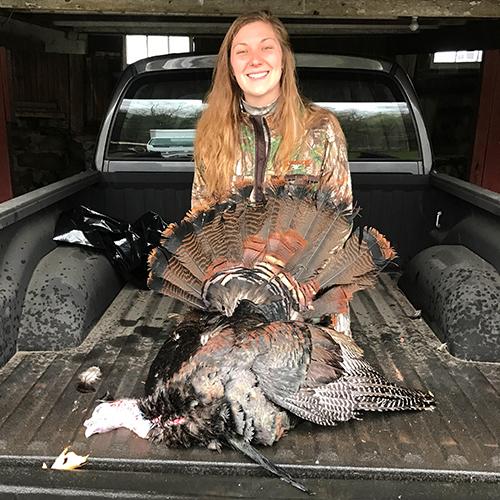
Hunter Profile: Kaylee Resha |
Would you like to be our next featured hunter?! If so, please send us a short write-up (less than 500 words) about yourself and a photo to deep.ctwildlife@ct.gov, and you may be featured in our next issue!
Some of my earliest memories are hiking with my family in Northwestern Connecticut, my dad quizzing me on what trees and wildflowers we passed. When I turned 11, I took my first hunter education course to learn about firearms hunting. From then on, my family and I would shoot regularly. I always had an interest in hunting, especially turkey hunting, but never had an opportunity.
That changed when I went to college. I became immersed in the hunting culture being surrounded by my peers that grew up hunting. During my sophomore year, I attended a workshop called Conservation Leaders for Tomorrow (CLFT). CLFT teaches non-hunting wildlife professionals about hunting and how to communicate with hunters. It culminated with an optional pheasant hunt, in which I participated. I found myself walking through a field in the morning as the fog lifted, mesmerized by the dog searching for our quarry. It felt natural, like I should have been there my whole life. I harvested a male pheasant that day and proudly took him home to share with my family. I returned to school practically begging anyone to take me hunting. I was extremely fortunate to have a few friends willing to help teach me. That first year I hunted for deer, raccoon, squirrel, and duck.
My hunting career really bloomed after my first deer harvest in 2012. I joined an archery club and found every one of the members to be welcoming and helpful. Having these guys to talk to and occasionally hunt with was one of my greatest resources. Deer hunting came naturally to me. I was able to combine my knowledge of wildlife and my mentors’ experiences to become successful.
Turkey hunting has been my biggest challenge; it took me 5 years to harvest my first turkey. I was very lucky to have a family friend that is an avid turkey hunter. For the first couple of years, they came out with me and called birds in to our set ups. Unfortunately, I was a turkey jinx and could never get a shot lined up. If it could go wrong . . . it did. Eventually, if I felt bad wasting my friend's time and went out on my own. During my first year on my own, I called very little and hoped to use my knowledge of where a bird would be to intersect a bird - that didn’t work. The second year hunting on my own, I knew I would have to use my turkey calls, so I started practicing a month before the season opened. On opening day of 2018, I was finally able to call in my own bird and harvest him off my family’s farm!
When you are hunting, you aren’t just in the forest, you are part of the forest. You know the sound a squirrel makes moving from tree to tree, and you know exactly what bird will sing first as the sun comes up. Hunting isn’t just about taking from nature, it’s about being part of nature.
|
|
You are making a difference and we thank you for your support!
|
|
Need to contact the DEEP Wildlife Division? Send email to deep.wildlife@ct.gov or call 860-424-3011
|
|
The Connecticut Department of Energy and Environmental Protection is an Affirmative Action/Equal Opportunity Employer that is committed to complying with the requirements of the Americans with Disabilities Act. If you are seeking a communication aid or service, have limited proficiency in English, wish to file an ADA or Title VI discrimination complaint, or require some other accommodation, including equipment to facilitate virtual participation, please contact the DEEP Office of Diversity and Equity at 860-418-5910 or by email at deep.accommodations@ct.gov. Any person needing an accommodation for hearing impairment may call the State of Connecticut relay number - 711. In order to facilitate efforts to provide an accommodation, please request all accommodations as soon as possible following notice of any agency hearing, meeting, program or event.
|
|
|
|
|
|
|