Volume 3 Issue 3 - September 2022
Several hunting seasons are now taking place with several more upcoming. We wish you the best of luck in the field and hope you find plenty of time to get out and experience the outdoors this fall! Please consider sharing your harvest photos with us so we can highlight your success in future editions of this newsletter. You can share your photos to deep.ctwildlife@ct.gov. |
|
2022 Youth Training Days:
-
Waterfowl: 10/1, 11/5
-
Pheasant: 10/8
-
Deer: 11/5 - 11/12
Small Game:
-
Gray squirrel: 9/1/22 - 2/28/23
-
Rabbit and hare: 10/15/22 - 2/28/23
-
Snowshoe hare: 11/19/22 - 1/31/23
-
Woodchuck: 3/15 - 11/15
Deer:
-
Archery: 9/15 See guide for area-specific closing dates.
-
Shotgun State Land No-Lottery: 11/16 - 12/6
-
Shotgun State Land Lottery: A: 11/16 - 11/25, Regular: 11/16 - 12/6
-
Shotgun/Rifle/Revolver: Private Land: 11/16 - 12/6, Landowner: 11/1 - 12/31
-
Muzzleloader: Private Land: 12/7 - 12/31, State Land: 12/7 - 12/20
|
|
Upland Birds and Turkey:
-
Pheasant: 10/15/22 - 2/28/23
-
Chukar and Hungarian Partridge: 10/15/22 - 2/28/23
-
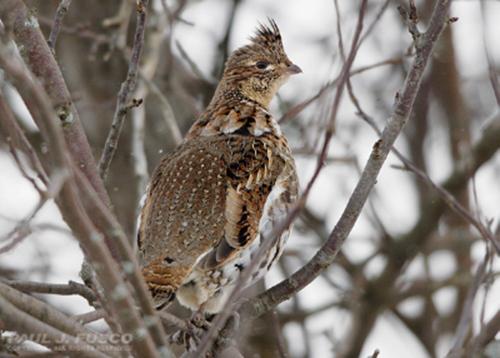
Ruffed Grouse: 10/15 - 11/30
-
Quail: 10/15 - 10/31 (see guide for areas under extended seasons)
-
Crow: 8/13 - 10/7 (W, F, Sat.) and 10/15 - 11/30 (W, F, Sat.) (see guide for area-specific closing dates)
-
Turkey Fall Archery: 9/15 (see guide for area-specific closing dates)
-
Turkey Fall Firearms: 10/1 - 10/31
Migratory Birds:
|
|
|
• Yale Forest season permits will be available in the Online Sportsman’s Licensing System beginning with the 2023 season, available 12/1/22. Small Game/Waterfowl and Turkey permits will be available. Permits will not be issued after March 31, 2023.
• Grouse hunters, the Wildlife Division is requesting your participation in a new study. Biologists are asking you to record details about your hunts in Connecticut and submit them throughout the season. Learn more at the Ruffed Grouse Hunter Log Page.
• Hunters should be aware that late summer/fall is when we get the most mosquito activity and mosquito-borne pathogen activity. Weekly updates on virus activity is posted on the Mosquito Management Program web site ( portal.ct.gov/mosquito). West Nile virus isolations in mosquitoes have been steadily increasing (four human cases so far in 2022) and people outdoors should use repellents and other measures to minimize exposure to mosquito bites – this goes for ticks too!
• The 2022 Connecticut Wild Turkey Brood Survey has closed. Preliminary analysis of electronic submissions shows an increase in reports from last year. Participants submitted 458 unique online records reporting 821 hens, 2,542 poults, and 90 toms or jakes. Poults per hen dropped slightly, 3.3 in 2021 to 3.1 this year, poults per brood remained the same at 3.9.
Questions about public hunting areas? We've got you covered! Our interactive hunting area maps includes State Forests, Wildlife Management Areas, State Parks, Permit-Required Areas, Waterfowl Closures, and other areas managed or leased by DEEP.
|
|
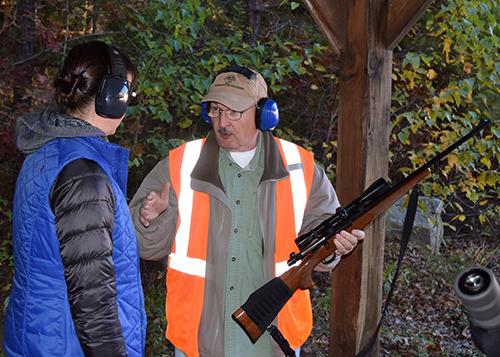
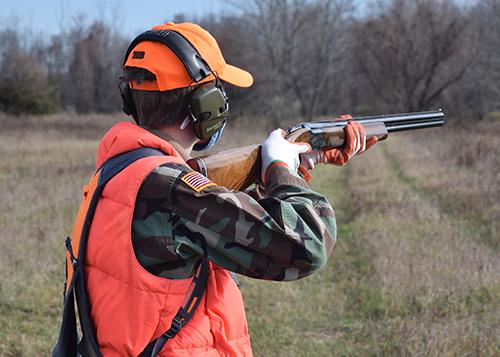
Hunters love this time of year. The season openers, whether archery deer, waterfowl, small game, or firearms deer hunting, are right around the corner and we do everything we can to prepare ourselves for the first hunt. For most, preparation includes scouting, setting up tree stands, and trimming shooting lanes; for others it includes knowing you have a processor lined up to drop off your harvest. It means getting all our gear ready, making sure we have the proper ammunition, and purchasing the required tags. But for many others, one integral step in the preparation is often missing: sighting in and being proficient with your hunting implement, whether bow, shotgun, or rifle.
Too many hunters put their firearm away at season’s end and don’t take it out until the following season is about to begin. But, a greater emphasis should be put on one’s shooting skills. When sighting and becoming proficient with your hunting implement, you should do so using the same ammunition or broadheads you will be using on your hunt. Additionally, if you plan to hunt from a ground blind or tree stand, you should practice and become proficient shooting from such. Practicing and becoming proficient with your hunting implement is not just about being able to hit the target. It is about learning your limitations as a hunter and learning the limitations of the broadheads or ammunition you are shooting. It is about quality practice that will build positive muscle memory and increased confidence when you pull the trigger or let the arrow fly.
As much as we have a responsibility to ourselves and other hunters to be safe and responsible hunters, we also have an ethical obligation to the game we are hunting to be proficient and make a quick, clean, ethical harvest. A lack of proficiency can lead to poor shot placement, resulting in non-vital injuries to the animal or a slow and painful expiration. As you sight in and become proficient with your firearm, you are one step closer to becoming a safe, ethical, and responsible hunter.
|
|
Attention Waterfowl Hunters: Common Eider Request |
Following an unusual episode of mortality caused by avian influenza this spring, the Canadian Wildlife Service (CWS) anticipates a decline in the number of common eiders in the St. Lawrence Estuary in 2023 and beyond. Many of these birds migrate south to winter in southern New England. In order not to further jeopardize the situation of the species, CWS is calling on the cooperation of New Brunswick, Nova Scotia and Prince Edward Island hunters to:
- Reduce, on a voluntary basis, their harvest of common eiders for the 2022-23 season.
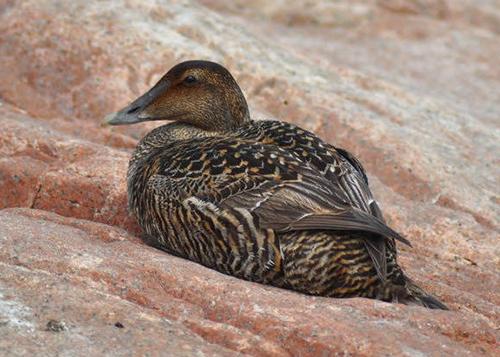
- Refrain from harvesting female common eiders or young. Females and young are brown in color, while males are white and black.
- For about 20 years, the population of common eiders nesting in Québec’s colonies in the St. Lawrence Estuary has been stable. One of the reasons the population is not increasing is that recruitment (percentage of young in the population) is probably just sufficient to replace adult mortality (from natural causes and hunting).
In spring 2022, an outbreak of highly pathogenic avian influenza (H5N1) struck at some of the largest eider colonies in the estuary, and a non-exhaustive count of carcasses recovered allowed CWS to estimate that between 5 and 15% of nesting females died. Many nests were abandoned by the females, and very few crèches (groupings of adult females with their broods) were observed in the estuary. As a result, CWS biologists expect the number of young birds for 2022 to be particularly low and the population to be lower in the coming years.
While daily bag for eiders in the Atlantic Flyway states is currently limited to no more than three, of which only one can be a hen, we are also asking Connecticut hunters to also voluntarily refrain from shooting "brown" eider.
Southern New England is the wintering terminus for many eiders breeding in Canada. It is irresponsible to ask Canadian hunters to forgo harvesting hens and young birds only to have them shot when they arrive here. In order to allow time for eiders to recover from the recent avian influenza outbreak (the same one that decimated the Northeast poultry industry and caused egg prices to skyrocket), we are asking our responsible waterfowl hunters to also pass on the hens and young eiders that cross in front of their barrels this year.
|
|
Habitat and Hunting Area Update |
Approximately 631 acres are being added to Goshen Wildlife Management Area, located off of Beech Hill Road in Goshen, Connecticut. With this additional acreage, the property is now 1,584 acres ( see map). The new acreage is now open to all regulated hunting, including small game, wild turkey, pheasant, deer, and waterfowl hunting. For more information or if you have questions, please contact Western District Biologist Peter Picone at 860-424-3032.
The Barn Island WMA culvert replacement and road maintenance project is complete! Four new culverts were installed, the dike road stabilized and re-graveled.
The Wetlands Habitat And Mosquito Management (WHAMM) team will be assisting in minor road repairs, brush clearing, and field and dam mowing for the next couple months at WMAs and some state forest impoundments around the state. Additionally, they will be spraying to conduct phragmites control at select sites until the first frost.
A culvert replacement project will begin on September 26, 2022, on DelReeves Road within Meshomasic State Forest in East Hampton. The current culvert, which carries Mott Hill Brook under DelReeves Road, is scoured out at the outlet, blocking brook trout from moving further up the watershed beyond this culvert. As a result, DEEP's Engineering and Support Services, Fisheries, and Forestry Divisions have collaborated to replace the culvert to allow for fish passage, as well as increase water flow capacity as the brook has washed out the road on several occasions during periods of very high water flow (such as during and immediately after a tropical storm or hurricane). This road will be closed during construction, with an anticipated completion date of December 24, 2022. The contractor doing the work will be installing physical barriers near the nearest turn around areas and also installing signage at the project site.
In April, 269 acres were added to Robbins Swamp WMA and Housatonic SF respectively as the parcel was bisected by Route 7.
Please note: Recently acquired parcels need to be border marked and so indicated as open before hunting can take place. If you have any questions, please contact the district biologist for the area (East: 860-295-9523; West: 860-424-3011).
|
|
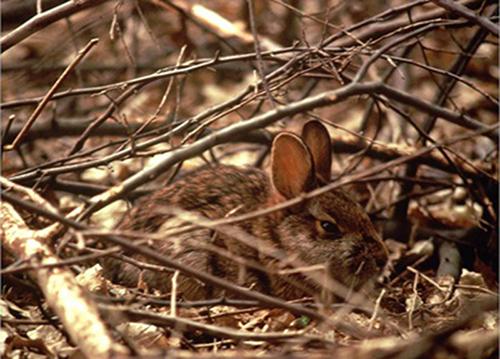
A Message on Rabbit Hemorrhagic Disease |
Rabbit hemorrhagic disease (RHDV) is a fatal disease in rabbits and is considered a foreign animal disease in the United States. As of September 2022, RHDV2 has been confirmed in 27 states (including Connecticut) with cases involving domestic, feral, and wild rabbits and hares.
The Connecticut Department of Agriculture has confirmed Rabbit Hemorrhagic Disease Virus Type 2 (RHDV2) at a private residence in Hartford County. Although there are no confirmed cases in wild rabbits in Connecticut, hunters and trappers should avoid taking rabbits that appear sick. Wear disposable gloves when handling game, double-bag carcasses and other remains and put them in the trash, and thoroughly clean knives and other equipment. Harvested rabbits should be cooked to a temperature of 165 degrees Fahrenheit.
|
|
Notice to Waterfowl Hunters Traveling to Canada to Hunt |
The USDA Animal and Plant Health Inspection Service (APHIS) implemented restrictions in September 2022 on hunter harvested wild bird meat/carcasses from all of Canada, regardless of province, due to the risk of transmitting highly pathogenic avian influenza (HPAI). APHIS has been working with stakeholders and other federal agencies to provide options for importing hunter-harvested wild bird meat/carcasses that address the HPAI transmission risk to our domestic poultry.
|
|
Junior Pheasant Hunter Training Day Opportunities |
Fall hunting season is just around the corner, and that means the return of the Wildlife Division's mentored junior pheasant hunts! These events are held free of charge for hunters between 12 and 15 years of age at select sportsmen’s clubs in Connecticut. At each event, participants will be coached on shooting clay targets on a trap or skeet field prior to participating in the hunt. Mentored hunts are staffed with Certified Volunteer Hunter Safety Instructors and experienced hunters, along with a well-trained bird dog and its handler. Note: Youth participants must possess a 2022 junior hunting license and 2022 Connecticut Resident Game Bird Conservation Stamp, as well as complete and submit a 2022 Junior Pheasant Hunt Day Application. September and October hunts are posted for registration now, with November and December to be added later this fall.
|
|
Hunter Profile: Paul Benjunas |
Would you like to be our next featured hunter?! If so, please send us a short write-up (less than 500 words) about yourself and a photo to deep.ctwildlife@ct.gov, and you may be featured in our next issue!
I did not grow up in a hunting family. I took my hunter safety course back in the early 2000s, but without any kind of mentor, it would be years until I would actually start my hunting career.
Fast forward to early 2017 when I started working for the DEEP Wildlife Division's Hunter Safety Program as a seasonal resource assistance. I was instantly surrounded by staff that have a very strong passion for hunting. More importantly, these were all people that were more than willing to answer my questions on how to get started. From selecting the right gear to pointers on how to find good spots to then asking me to join them and their friends in the field, I am thankful for the help and guidance they have given me along the way.
For an activity that has seen declines nationwide, it is critical to help others discover this passion for the outdoors and our natural resources, and it cannot be understated how important the participation in hunting and the shooting sports helps conserve wildlife across the country. I look forward to one day helping newcomers discover hunting as others have done for me. |
|
You are making a difference and we thank you for your support!
|
|
Need to contact the DEEP Wildlife Division? Send email to deep.wildlife@ct.gov or call 860-424-3011
|
|
The Connecticut Department of Energy and Environmental Protection is an Affirmative Action/Equal Opportunity Employer that is committed to complying with the requirements of the Americans with Disabilities Act. If you are seeking a communication aid or service, have limited proficiency in English, wish to file an ADA or Title VI discrimination complaint, or require some other accommodation, including equipment to facilitate virtual participation, please contact the DEEP Office of Diversity and Equity at 860-418-5910 or by email at deep.accommodations@ct.gov. Any person needing an accommodation for hearing impairment may call the State of Connecticut relay number - 711. In order to facilitate efforts to provide an accommodation, please request all accommodations as soon as possible following notice of any agency hearing, meeting, program or event.
This program receives Federal financial assistance from the U.S. Fish and Wildlife Service.
Under Title VI of the 1964 Civil Rights Act, Section 504 of the Rehabilitation Act of 1973, Title II of the Americans with Disabilities Act of 1990, the Age Discrimination Act of 1975, and Title IX of the Education Amendments of 1972, the U.S. Department of the Interior prohibits discrimination on the basis of race, color, national origin, age, sex, or disability. If you believe that you have been discriminated against in any program, activity, or facility, or if you need more information, please write to:
Office of Diversity, Inclusion and Civil Rights
U.S. Department of the Interior 1849 C Street, NW
Washington, D.C. 20240
|
|
|
|
|
|
|