|
MAY 2025
Hygienic Design and Machine Safety
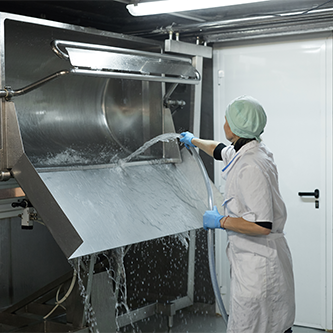
There are times when machine safety may involve more than remediating common industrial hazards such, but not limited to, mechanical, electrical and ergonomic hazards. For example, hygiene risks generated from product debris or micro-organisms may need to be remediated and controlled to prevent product contamination. These requirements are necessary for certain industrial sectors such as food and beverage, pharmaceuticals, biotechnology and many others which require disinfected machine surfaces.
| | |
As with many other aspects of machine safety, there are standards and regulations in place to provide requirements for hygiene and cleanability. For example, the standard EN 1672-2 provides essential guidelines for designing, constructing, and maintaining food machinery to ensure food safety by minimizing contamination risks and ensure easy cleaning.
A few requirements listed within EN 1672-2 include the requirements for the machine to have smooth, non-toxic, corrosion-resistant, non-absorbent, and durable surfaces; self-drainability to prevent contamination; and seals, fasteners, and joints must minimize gaps to avoid bacteria build-up. It is important to note, that these requirements are also for the control elements if the control panel is located within the contamination area.
| | | |
By outlining specific requirements for food contact surfaces, joints, fasteners, control buttons, cable entry points, and cleaning procedures, EN 1672-2 ensures that food safety regulations are met while maintaining operational efficiency. Compliance with materials, accessibility, and drainage guidelines helps prevent microbial growth, chemical contamination, and physical hazards in food production.
| | |
H SERIES COMMAND AND SIGNALING DEVICES FOR HYGIENIC APPLICATIONS
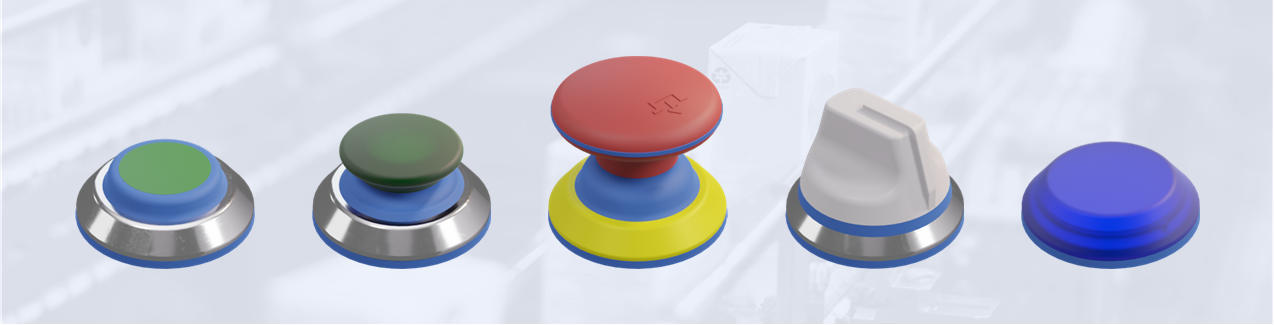
The NEW H series from Schmersal is a full range of new command and signaling devices specifically designed to the latest international regulations for hygiene-sensitive applications. Characteristic features of the range are gap-free transitions between sealing elements and surfaces, with an absence of protruding parts. The command elements are easy to clean and so well sealed that they can withstand regular cleaning with high-pressure cleaners and aggressive cleaning agents.
147 command devices such as pushbuttons, mushroom buttons, E-Stop, selector switches and main disconnect switches in a variety of color options are now available and suitable for all food, beverage, pharmaceutical, medical, and other applications requiring hygienic cleaning.
Learn more on our INNOVATIONS - Command device H Series page
| | SCHMERSAL PRESENTS:
Hygienic Command Devices | |
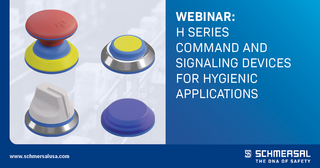
Learn more about the H Series of command and signaling devices in this 1-hour product introduction webinar.
> Watch on YouTube
| | |
|
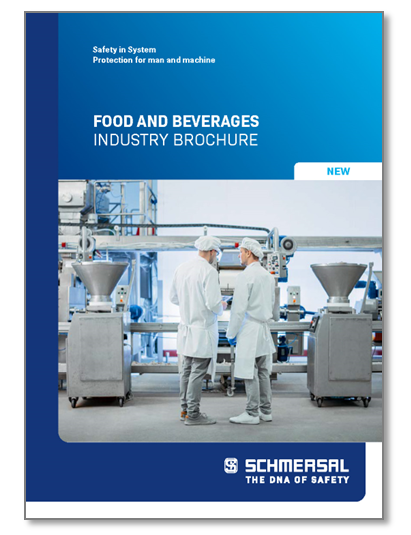
BROCHURE
FOOD & BEVERAGE INDUSTRY
Our overview of the food and beverage industry and the machine guarding solutions available from Schmersal.
PDF, 32 pages.
| |
|
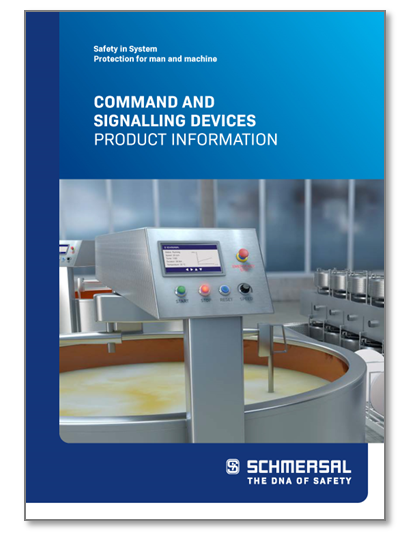
BROCHURE
COMMAND & SIGNALING DEVICES
Our brochure focused on the various lines of command and signaling devices, two hand controls, and joysticks.
PDF, 160 pages
| |
|
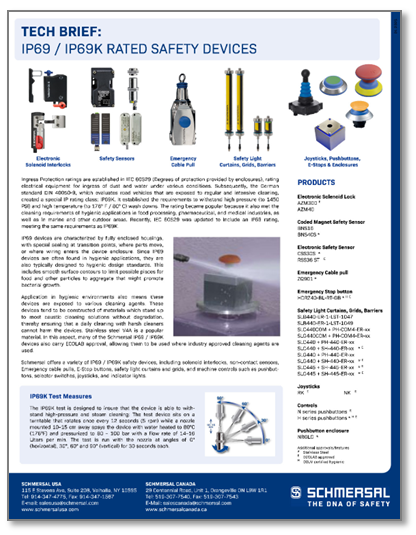
TECH BRIEF
IP69 / IP69K RATED SAFETY DEVICES
A one page summary of our IP69 Rated machine guarding devices suitable for high temp and high pressure washdown applications.
PDF
| | |
CLEAN BUSINESS
A new series of command and signaling devices from Schmersal has been designed to ensure maximum hygiene. The extensive range of command devices can be flexibly adapted to the requirements of machine engineering, such as with pluggable contact carriers.
> Read the article: Clean Business
An overview of US and Canadian standards for food industry. Hygiene and sanitation are key issues in the food processing industry to prevent food borne illnesses. It influences the design of machines used in areas that need to be constantly cleaned. It is important when selecting safety devices or command devices for food processing machines that they meet hygienic or sanitary standards.
> Read the article: Sanitary and Hygienic Design Standards
| | SCHEDULE - UPCOMING EVENTS | |
Product Presentation: Electronic Safety Controllers
This one-hour webinar will introduce you to our SRB-E Electronic Safety Controllers and how advanced monitoring and troubleshooting capabilities enhance safety and productivity.
Wednesday, May 7 | 2 pm Eastern (11am Pacific)
> Register here
| | | | | TÜV RHEINLAND FUNCTIONAL SAFETY TRAINING COURSE | |
Interested in in becoming a TÜV Certified Functional Safety Engineer for Machinery?Take the TÜV Certification course with us, online this May (5/12 - 5/21)
> Course details and to enroll
| | |
National SAFER Workplace Day
Let's reduce workplace accidents together on this nationally recognized day founded by our tec.nicum engineering services group. The SAFER Workplace initiative promotes workplace safety to reduce the potential of near misses, accidents, and injuries.
Join us in promoting machine safety on National SAFER Workplace Day:
Friday, June 27, 2025
> How you can participate
| | | | Engineering Safety Control Measures | |
Discover how engineering controls play a pivotal role in protecting workers by isolating hazards, and explore effective solutions, standards, and often-overlooked safety aspects across industries.
> Watch this session
| | |
Hosted by: Machine Design magazine
Presenter: Devin Murray
| | | |
A Great Place To Work
Schmersal USA is officially Great Place To Work-Certified! This recognition reflects our commitment to fostering a positive, inclusive, and rewarding workplace for our incredible team.
Thank you to our employees for making Schmersal USA a truly great place to work!.
Learn more: Working at Schmersal Inc. | Great Place To Work®
| | |
Devin Murray
TUV Functional Safety Engineer
ID-No. 4274/11
| | |
Question: What is the purpose of EN 1672-2 and how does it address hygiene risk reduction with food processing machinery?
Answer: EN 1672-2 sets hygiene and cleanability requirements for food processing machinery to minimize contamination risks and ensure food safety.
The standard introduces an iterative hygiene risk reduction process, which includes hazard identification, risk assessment, and mitigation through hygienic design, technical measures, cleaning/disinfection, and additional controls to ensure food safety.
Do you have a question? Ask Devin: dmurray@schmersal.com .
| | | | |